


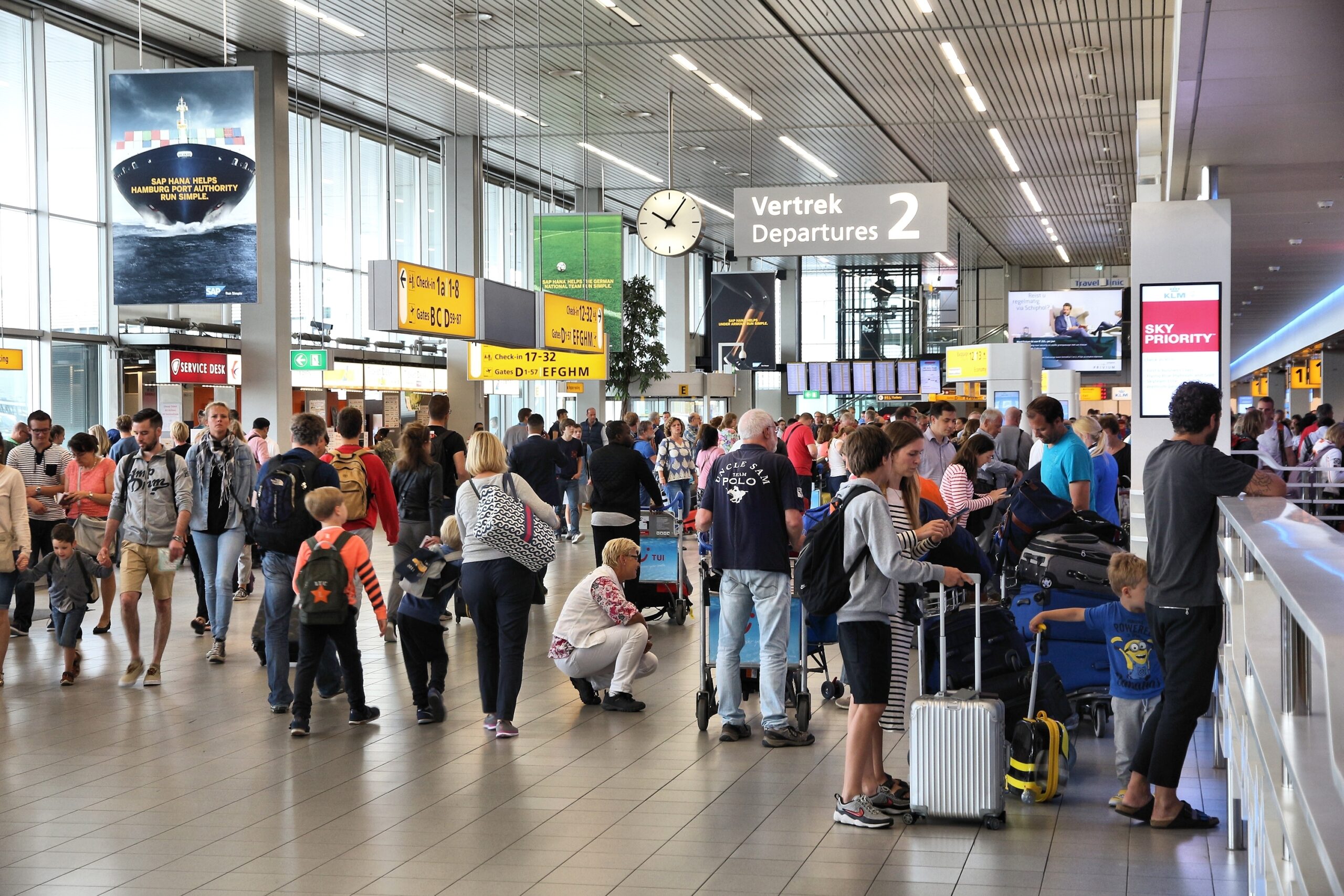
Kelly Watt, Programme Manager at Dallas Fort Worth Airport, examines how Motional Digital Twins provide real-time demand forecasting, congestion prediction, and dwell-time optimisation — unlocking measurable gains in operational efficiency and non-aeronautical revenue.
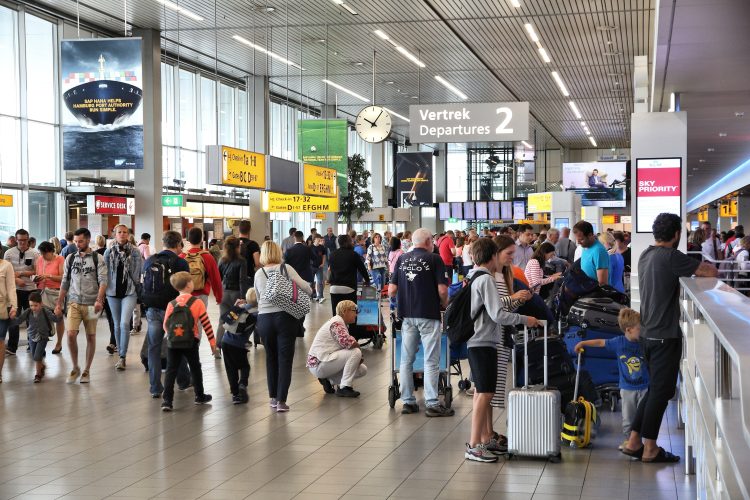
By combining LiDAR data with flight, video and operational information, motional digital twins (MDTs) create a continuously updated 3D model of people, baggage, vehicles, and aircraft across the entire airport.
Airports are facing rapid growth in passenger volumes, rising service expectations, and a shrinking workforce. At the same time, airports are expected to deliver seamless, predictable journeys. To bridge the gap, Motional Digital Twins (MDTs) create a continuously updated 3D model of people, baggage, vehicles and aircraft across the entire airport.
By combining LiDAR data with flight, video and operational information, MDTs provide real-time insights that transform airports from reactive to proactive management.
What is a Motional Digital Twin?
A Motional Digital Twin is a real-time digital representation of the airport environment that continuously tracks the movement of people, equipment and aircraft. It processes live spatial data from native 3D sensors such as LiDAR and augments it with inputs from video, operational systems and flight databases to deliver true spatial intelligence.
Airport challenges MDTs help to resolve
Many airports still rely on fragmented data and operator intuition when making time-critical decisions. MDTs change that by:
- Monitoring in real time how passengers, assets and processes behave across the airport
- Accumulating historical patterns to simulate scenarios and test “what if” conditions
- Forecasting demand surges and resource constraints before they create disruption.
This enables airports to optimise staffing, reduce congestion, shorten connection times, and support airlines with more predictable and efficient turns. Commercial stakeholders benefit from precise dwell-time insights and personalised routing that increase revenue opportunities.
By continuously monitoring, MDTs provide detailed insights into flow, wait times, behaviour and movement across various operational scenarios. These insights support:
- Smarter resource allocation
- Proactive congestion mitigation
- Higher commercial conversion
- More predictable airline operations.
Passengers ultimately enjoy a smoother, lower-stress journey with better access to services, accurate real-time navigation, and more time in concession areas.
Live, high-fidelity data also informs long-term planning. Airport planners can use MDT data to run traffic studies, evaluate space utilisation, and test flow simulations, resulting in more resilient designs that support future growth.
Current data challenges faced by airports:
- Delayed response: issues detected too late.
- Fragmented data: too many tabs, overwhelming to process.
- No single view: congestion points not connected.
Airports are dynamic environments, constantly in motion. MDTs provide operators with much-needed feedback, including predictive queue management, adaptive retail guidance, enhanced ground crew efficiency, and real-time occupancy tracking, even under low-visibility conditions.
The numbers: quantifiable ROI from Motional Digital Twins
Motional Digital Twins (simulations, real-time monitoring and forecasting) drive data-driven decisions that transform operations, optimise passenger flow, queue times, commercially effective dwell time, and crisis response, effectively increasing airport revenues and decreasing risks. The following peer-reviewed and industry benchmarks provide senior leaders with the financial justification to consider MDTs.
Shorter wait times:
- Improved traveller experience
- Improved NPS scores
- Improved airline turn times
- Fewer missed flights.
Increased dwell time:
|
Department / stakeholder |
KPI / impact |
Exact quote from source |
|
Concessions, food and Beverage |
Dwell time +10% → F&B revenue |
“A 10% increase in dwell time is associated with an increase of 8% in food and beverage revenues.” [2] |
|
|
Queue reduction by 10 minutes → spend |
“Spending decreases 30% for every 10 minutes we stand in a screening line.” [3] |
|
|
Dwell time +1 minute → spend |
“One minute longer dwell time increased spend per passenger by +3–5%.” [4] |
|
Retail |
Dwell time +10% → retail revenue |
“A 10% increase in dwell time is associated with an increase of 6% in retail revenues.” [2] |
|
Non-aeronautical revenue CFO, Commercial Director |
Dwell time +10% → total non-aero revenue |
“A 10% increase in dwell time implies a 5% increase in non-aeronautical revenues.” [2] |
|
Parking and landside |
Parking share of non-aero revenue |
“Car parking revenue increased from 21% to 24% of non-aeronautical income between 2019 and 2023.” [5] |
|
Airline operations and aeronautical revenue COO, Airline Relations |
Faster aircraft turns → additional rotations |
“One or two extra rotations per gate per day can add US$15–25 million in annual aeronautical revenue.” [6] |
|
Passenger experience Customer experience, IT Director |
Traveller perception of proactive support |
“48% of travellers perceive proactive support as a key element of human connection.” [7] |
CAPTION: Outsight.ai dashboard used by DFW Airport. Credit: DFW Airport.
For a typical medium-to-large hub, these combined effects deliver 8–12% improvement in non-aeronautical revenue.
The new operating reality
Global passenger traffic is projected to increase by 4-6% annually until 2030, while 30-40% of the experienced airport workforce approaches retirement age. This has stressed airport infrastructure as they compete for new airline routes and rush to improve facilities. Airport authorities are pressured to increase throughput and revenue without expanding physical space in the short term. Airlines also face intense competition and must stay profitable by reducing schedule delays, protecting fuel efficiency and ensuring on-time performance. On top of this, passengers demand more as the digitally savvy traveller anticipates accurate real-time information, intuitive navigation and minimal friction throughout their journey.
To meet these challenges, airports must elevate situational awareness and optimise resource use at every touchpoint. Motional Digital Twins provide the real-time visibility and predictive intelligence needed to do so.
Airport stakeholders and outcome alignment
The success of digital twins relies on aligning business problems with the priorities of those responsible for operational and commercial outcomes. Let’s consider below some airport stakeholders’ needs and how MDT can help address them when considering use case deployments:
|
Role |
Challenges |
Outcome |
|
CEO/Airport Authority |
Reputation, event readiness, long-term growth |
Calm, predictable operations and strong passenger feedback |
|
COO – Operations |
Peak-period chaos, staff burnout, smooth flow |
Real-time monitoring, trending, simulations, and demand forecasting provide early bottleneck warnings, resource optimisation, and proactive response. Fewer fire-drill responses |
|
CFO – Finance |
CAPEX scrutiny, revenue, infrastructure utilisation, uncertain ROI |
Minimise expensive operational interruptions, increase passenger spending, optimise workforce resources, and existing infrastructure utilisation to meet demand. |
|
CIO/CDO – IT |
Integration sprawl, data silos, technical debt, increased platform support, cyber risk |
Federated data, fuse various monitoring sensors/technologies into a single operational interface, open standards, reduced vendor lock, and technical debt. |
|
Passenger experience, commercial leaders |
Queue times, complaints, quality experience scores, low retail spend, smooth flow |
Personalised wayfinding, short wait times, airport service utilisation, increased passenger spend |
|
Parking and ground transport |
Congestion, optimisation of shuttle and connections, revenue leakage |
Real-time occupancy, dynamic pricing, optimised staging, and shuttle route utilisation |
|
Airport planning |
Insufficient flow data for designing and modelling traffic, occupancy, and space utilisation. |
Full continuous monitoring, historical trend data, improved model accuracy, painless design simulations and layout optimisation, emergency scenario planning, |
|
Emergency management, first responders, security |
Situational awareness, delayed communication, insufficient real-time decision-making information. |
Real-time data on flow from curb to gate, flight context, passenger counts, wait times, location, movement, speed, suspicious behaviours, and alerts. |
|
Airlines |
On-time performance and gate conflicts |
Forecasts of last-passenger arrivals and improved turn-time predictability |
|
Concessions, retail, airport services |
Operational disruptions, low passenger dwell time, and passengers unaware of service/location. |
Quick, stress-free check-in and security lead to longer dwell times in commercial areas, personalised passenger journeys, real-time wait times, and clear wayfinding. |
A Motional Digital Twin becomes the unifying source of truth that lets every leader see how their priorities are addressed through one coherent programme rather than dozens of siloed tools.
Airport touchpoints and real-time impact
Every passenger journey passes through a common sequence of touchpoints. With a Motional Digital Twin, each becomes visible, measurable, predictable, and controllable. Utilising the MDTs for continuous tracking drives value beyond touchpoint measures, where cross-airport insights drive across the full journey, where a disruption during parking or a security checkpoint impacts a Duty Free or concession spend downstream.
- Curb and parking – Real-time parking occupancy and demand predictions minimise circling and congestion, improve pre-book revenue, and provide a calm start to the journey.
- Terminal entry – Accurate entry counts support staffing and security planning, and curbside shuttle counts for optimisation of shuttle operations.
- Check-in and bag drop – Predictive queue analytics optimise staffing and reduce late passenger arrivals.
- Security screening – LiDAR-enhanced wait-times and forecasting help to optimise security resources while improving throughput and reducing queue lengths.
- Retail Zones and Lounges – Understand, model, simulate, and forecast passenger behaviour flows to optimise resources and support smart infrastructure like digital signage and advertising.
- Terminal navigation and dwell – Personalised routing and congestion-free paths increase dwell time and commercial exposure.
- Gate and boarding – Predictive last-passenger arrival times improve boarding efficiency and on-time departures. LiDAR monitoring at the apron can support improved turnaround times and ground crew compliance.
- Baggage reclaim – Accurate first/last bag predictions minimise passenger frustration and storage time. Monitoring congestion helps prevent larger issues in baggage areas.
- Exit and ground transport – Real-time demand forecasting optimises shuttle, taxi and rideshare operations.
When combined, airport service quality (ASQ) / net promoter score (NPS) scores improve because passengers are happier with less stress and congestion. They navigate airport resources more efficiently, increasing revenue per passenger and resulting in fewer airline delays.
Conclusion
Airports are operating in an environment where rising passenger demand, workforce constraints and service expectations can no longer be managed through reactive decision-making. Motional Digital Twins provide the real-time spatial intelligence needed to anticipate issues before they disrupt operations. By unifying live data on people, assets, vehicles and aircraft, MDTs enable airports to optimise flow, reduce delays, strengthen safety, and increase both aeronautical and non-aeronautical revenue, before expanding physical infrastructure.
More than a monitoring tool, an MDT becomes a strategic decision layer that improves staffing, planning and daily orchestration across the entire airport. As global traffic grows and competition intensifies, airports that adopt predictive, data-driven operations will be best positioned to deliver reliable performance and an exceptional passenger experience.
For airport leaders mapping the next stage of digital transformation, the opportunity is clear: begin building the real-time intelligence foundation that high-performing airports will depend on. MDTs will soon be essential infrastructure, and early adopters will secure a lasting operational edge.
 Kelly Watt is a digital transformation leader specialising in digital twin technology for aviation and critical infrastructure.
As Programme Manager for Digital Twin, AI/ML, and LiDAR at Dallas Fort Worth International Airport, Kelly leads an enterprise-scale operational digital twin integrating BIM, ESRI GIS, real-time IoT, controls, and generative AI across five terminals and ~40 buildings, while road mapping DFW’s first Motional Digital Twin.
Kelly is also Co-Founder and Senior Consultant at digitaltwinconsulting.com, he delivers strategic master planning and the proprietary DTAP™ assessment process to airports worldwide.
A frequent collaborator with Georgia Institute of Technology, University of Texas at Dallas, and Mohawk College (where he developed a digital twin course), Kelly is an industry leader in digital transformation. He also serves as Ambassador for the Digital Twin Consortium’s Mobility & Transportation Working Group, and supports many other industry consortiums.
Footnotes
[1] Lidar-based curbside monitoring + Motional Digital Twins (2025) [7] https://www.outsight.ai/resources/whitepapers,
[2] Wu, Y., Morlotti, C., & Mantin, B. (2024). “Shopping or dining? On passenger dwell time and non-aeronautical revenues.” Journal of Air Transport Management, 118, 102620. https://doi.org/10.1016/j.jairtraman.2024.102620
[3] Ariadne Inc. (2025). Airport Heatmap: Unlocking Retail Potential. https://www.ariadne.inc/resources/blogs/airport-heatmap/
[4] SEA Group / Milan Malpensa Airport (2023), cited in “The outlook for Europe’s airports amid slowing passenger spend,” The Moodie Davitt Report, 2023. https://moodiedavittreport.com/analysis-the-outlook-for-europes-airports-amid-slowing-passenger-spend/
[5] Cheglatonyev, S. (2025). “Maximizing Non-Aeronautical Revenues: Key to Airport Financial Sustainability,” ACI World Insights Blog. https://blog.aci.aero/airport-economics/maximizing-non-aeronautical-revenues-key-to-airport-financial-sustainability/
[6] Operational benchmarking via Motional Digital Twin deployments, Digital Twin Consulting, 2025.
[7] ACI World (2025). “ASQ Global Traveller Survey 2026: Key Trends Shaping Air Travel.” https://aci.aero/2025/11/19/aci-world-reveals-key-trends-shaping-air-travel-in-2026/
