Support CleanTechnica’s work through a Substack subscription or on Stripe.
Desperate times call for desperate measures, as the saying goes, and US President Donald Trump is desperate to avoid losing. But, losing he is. Take his ferocious, no-holds-barred attack on the thousands of workers employed by the US offshore wind industry. While successfully obliterating many wind jobs during the course of 2025, last week the president racked up three big losses in a row, when three different federal judges allowed work to continue on three major offshore projects.
Losing The Offshore Wind War
For those of you new to the topic, the US offshore wind industry is particularly vulnerable to partisan political obstruction because it depends almost entirely on offshore areas leased from the federal government, through BOEM (the Bureau of Ocean Energy Management in the Department of the Interior).
The president has deployed that authority to his advantage, but as with all things Trump, pretty much all of his orders have been challenged in court. That includes stop-work orders issued earlier this year against Empire Wind in New York and Revolution Wind in Rhode Island, in partnership with Connecticut. Construction was already well under way at both sites. In both cases, BOEM cited national security concerns that did not pass the smell test. The judges in both cases allowed work to resume.
Earlier this year the Trump administration also attempted to interfere with other projects in the pipeline. They are losing that case as well, and bigly. On December 8, a federal judge affirmed that the president has the authority to stop issuing new offshore leases, but the same judge also ruled that the president has no blanket authority to obstruct projects that have already obtained leases and are fully permitted to begin construction.
Losing Rounds 1, 2, and 3
Clearly peeved at the decision, on December 22 BOEM barreled ahead with a stop-work order on five major offshore wind projects that are deep — in some cases, very deep — into construction: Vineyard Wind in Massachusetts, Revolution Wind (again), the Coastal Virginia Offshore Wind project, Empire Wind (again), and another New York project, Sunrise Wind.
And now, Trump is losing those cases as well — and this time he can’t complain that “woke” left-wind judges are conspiring against him. On January 12, the Trump administration lost Round 1 out of 5 when a Reagan-appointed federal judge lifted the stop-work order against Revolution Wind. On January 15, Trump-appointed District Judge Carl J. Nichols allowed work to continue on Empire Wind, handing a Round 2 loss to Trump.
The Round 3 decision came down on January 16, when a Biden appointee ruled that the Coastal Virginia Offshore Wind project can resume construction.
Why Is This Losing Loser Losing So Bigly?
In all five stop-work orders, BOEM cited an indescribable but extremely urgent matter of national security, an emergency so extreme that there was no time to let the Governors of the affected states know what danger was lurking in their own backyards until the order was already issued.
As it turns out, the emergency wasn’t all that extreme. How could it be? After all, the turbines in a third offshore wind farm in New York, the South Fork Wind project, have been spinning merrily along for a full two years without touching off any national security alarm bells.
To make the national security claim even more ridiculous on its face, many of the turbines at the 800-megawatt Vineyard Wind site have also been in operation. According to the local news organization Vineyard Gazette, as of last summer 17 turbines were up and running. In a court filing on January 15, Vineyard Wind stated that the project is now 95% complete, with 44 out of 61 turbines fully operational at a capacity of 572 megawatts. The Vineyard Gazette was also among those reporting that in December, BOEM quietly granted Vineyard Wind permission to continue operating the turbines that were already in action.
What National Security Emergency?
Don’t just take my word for it. The Texas-based firm Bracewell, which specializes in offshore wind law, compiled some relevant national security observations from experts in an email message following the January 16 ruling, including this pithy remark from Commander Kirk Lippold, USN (Ret.):
“Asserting the false claim of national security to undo legally approved projects erodes our nation’s credibility and diminishes the real national security threats many of us have spent our careers defending against.”
Particularly relevant is a submission to the court from David Belote, who served as the the first Executive Director of the DoD’s Military Aviation and Installation Assurance Siting Clearinghouse, from July 2010 to June 2012.
As described by Belote, the Clearinghouse is the Defense Department’s central coordinator for proposed energy projects, tasked with assessing their potential impact on on military readiness as well as homeland defense.
In his submission, Belote stated that the stop-work order “lacks any possible rational basis in national security,” partly because the Interior Department failed to fully avail itself of the “well-understood, fully vetted Clearinghouse mission compatibility evaluation.”
Next Steps For The US Offshore Wind Industry
So, why didn’t BOEM take full advantage of the resources and findings of the Clearinghouse? Your guess is as good as mine. I’m guessing BOEM knew that the assessments coordinated by the Clearinghouse would not support a new claim of national security, so they ignored it.
Meanwhile, Dominion Energy — the developer of the Coastal Virginia Offshore Wind project — is already rolling up its sleeves. “Today the U.S. District Court for the Eastern District of Virginia granted Dominion Energy’s request for a preliminary injunction allowing construction to resume on the Coastal Virginia Offshore Wind (CVOW) project while Dominion Energy’s lawsuit challenging the agency’s action proceeds,” Dominion noted in a brief press statement on January 16.
“Our team will now focus on safely restarting work to ensure CVOW begins delivery of critical energy in just weeks,” Dominion continued, drawing attention to the Trump administration’s pointless obstruction of a major, 2.6-gigawatt energy project on the cusp of commissioning.
To be clear, as Dominion indicates, the legal battle has yet to fully play out. A preliminary is just a temporary receive. However, the count is now up to three actions taken by three different judges against the stop-work order.
Stay tuned for word on Sunrise Wind and Vineyard Wind. The Vineyard Wind case should be particularly interesting, considering that the majority of turbines at the site are already in operation. In its request for a preliminary injunction on January 15, Vineyard Wind also took the opportunity to point out that Trump has regularly criticized “windmills” on aesthetic grounds, a habit traceable to his personal fight — which he lost — against an offshore wind farm in Scotland (see more background on the Scottish wind farm fight here).
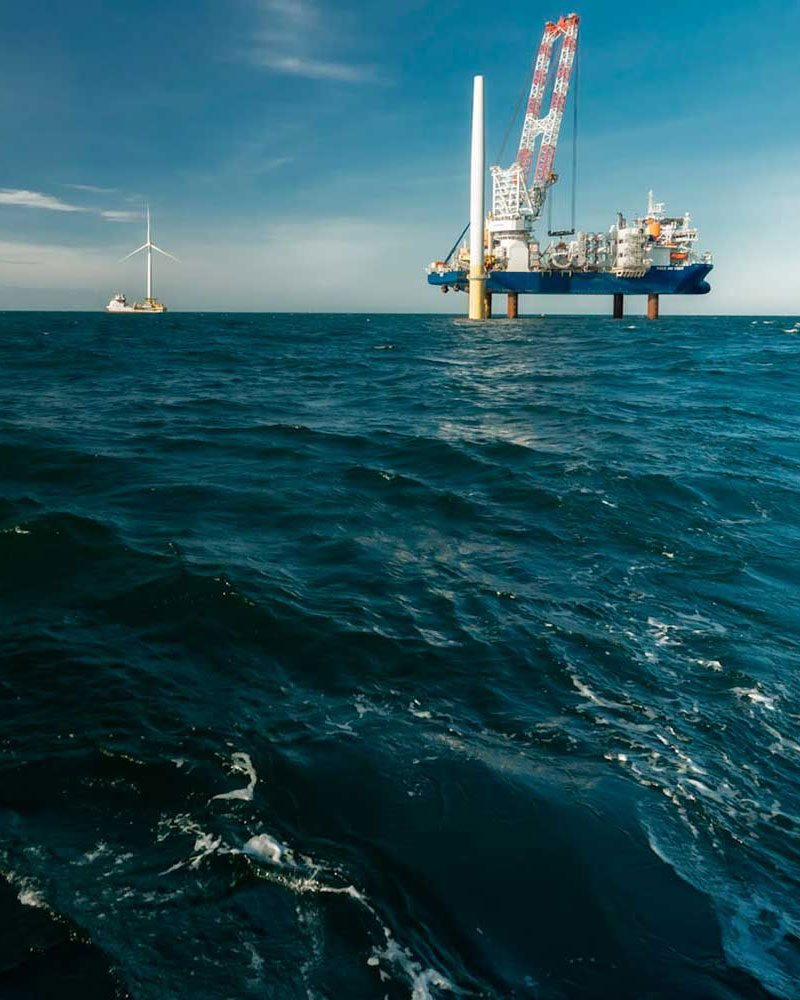
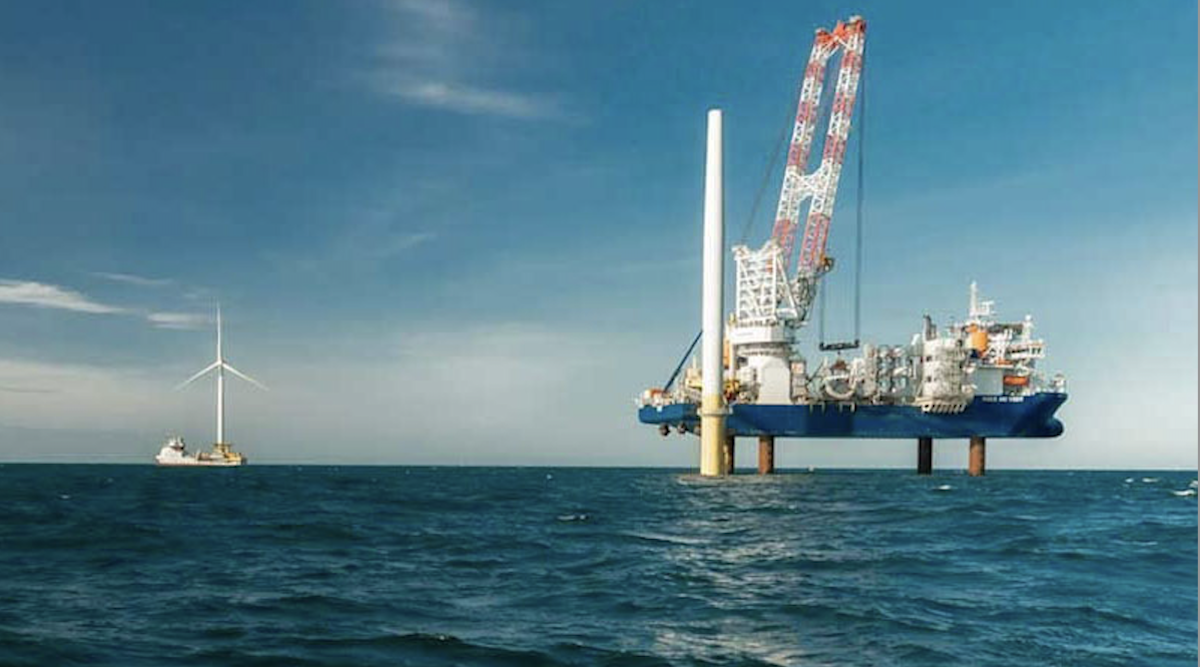
Photo: The gigantic, 2.6-gigawatt Coastal Virginia Offshore Wind project can resume construction, handing yet another loss to US President Donald Trump (cropped, courtesy of CVOW).
Sign up for CleanTechnica’s Weekly Substack for Zach and Scott’s in-depth analyses and high level summaries, sign up for our daily newsletter, and follow us on Google News!
Have a tip for CleanTechnica? Want to advertise? Want to suggest a guest for our CleanTech Talk podcast? Contact us here.
Sign up for our daily newsletter for 15 new cleantech stories a day. Or sign up for our weekly one on top stories of the week if daily is too frequent.
CleanTechnica uses affiliate links. See our policy here.
CleanTechnica’s Comment Policy