


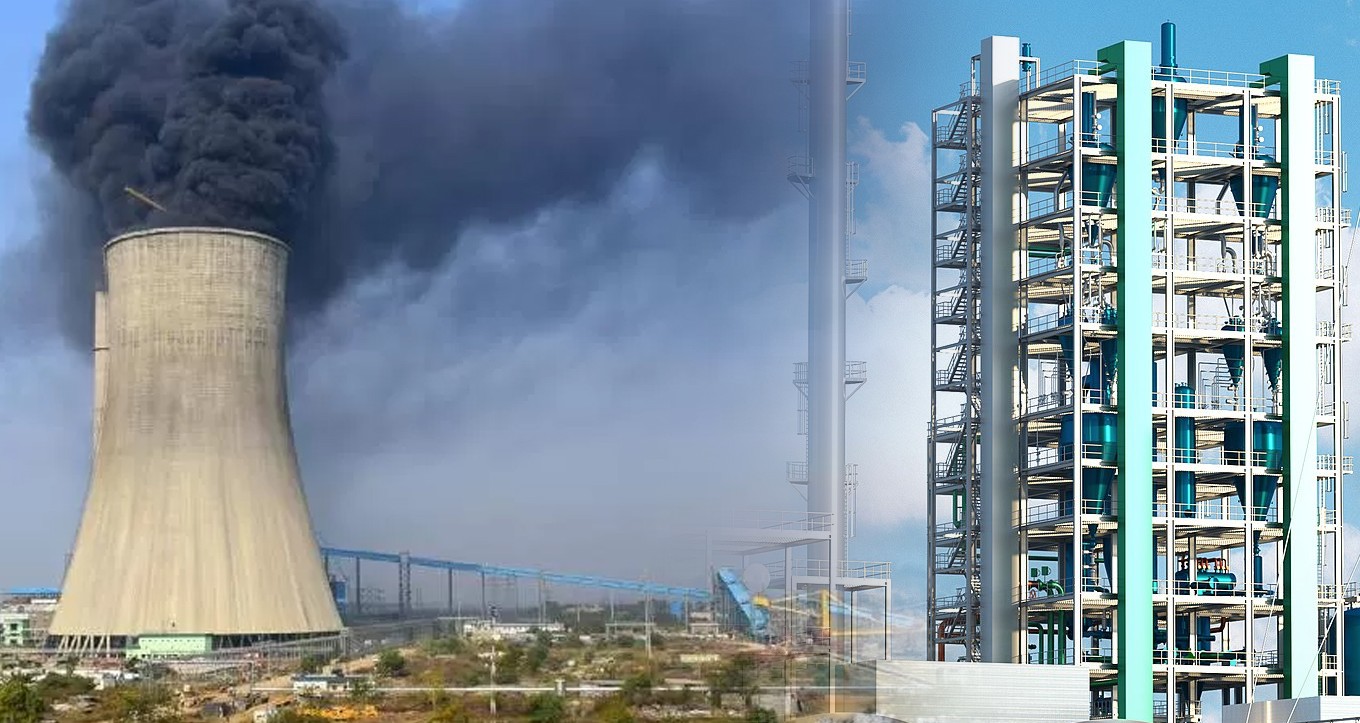
India’s coal-gasification programme has moved from policy ambition to project-level participation, with seven applications received in the first round of the Centre’s ₹37,500-crore scheme. Adani Enterprises has submitted three separate urea proposals, while NTPC, Talcher Fertilisers, Gallantt Ispat and Shyam Sel & Power have also entered the race.
The first-round response gives the government a significant early indication of industry interest in using domestic coal and lignite to produce higher-value products rather than relying solely on conventional coal combustion.
The seven proposals cover urea, synthetic natural gas, syngas and direct reduced iron (DRI).
Adani submits three urea projects
Adani Enterprises is the most prominent participant by number of applications, submitting three separate projects, all targeting urea production.
The complete first-round list is:
| Applicant | Proposed end product |
|---|---|
| Adani Enterprises – Project 1 | Urea |
| Adani Enterprises – Project 2 | Urea |
| Adani Enterprises – Project 3 | Urea |
| Gallantt Ispat | DRI and Syngas |
| NTPC | Synthetic Natural Gas |
| Shyam Sel & Power | Syngas |
| Talcher Fertilisers | Urea |
The applications were submitted under the Request for Proposal issued by the Ministry of Coal on July 7, 2026.
Why the response matters for PSUs and industry
Coal gasification is emerging as a strategic route for India to convert its domestic coal resources into syngas and downstream products such as urea, ammonia, methanol, hydrogen and synthetic natural gas.
For PSUs, the technology creates potential opportunities beyond traditional coal mining and power generation.
NTPC’s synthetic natural gas proposal is particularly notable because it represents a potential extension of the power major’s role into alternative gas production.
Talcher Fertilisers’ urea proposal aligns with the government’s broader effort to use domestic resources to strengthen fertiliser security.
Private-sector participation adds another dimension. Gallantt Ispat’s DRI and syngas proposal links gasification directly to the steel value chain, while Shyam Sel & Power is targeting syngas.
Import substitution at the centre
The government’s economic case for coal gasification is closely tied to import substitution.
According to the Ministry of Coal, India imported approximately ₹2.77 lakh crore worth of LNG, urea, ammonia and methanol in FY2024-25.
The new scheme seeks to encourage domestic production of such products using coal and lignite as feedstock.
The government has set a national target of 100 million tonnes of coal-gasification capacity by 2030, including 75 million tonnes under the new scheme.
₹2.5-3 lakh crore investment opportunity
The ₹37,500-crore scheme was approved by the Union Cabinet in May 2026.
The government estimates that it could catalyse ₹2.5 lakh crore to ₹3 lakh crore of investment in gasification projects and related infrastructure, while creating employment across the value chain.
The programme follows the earlier ₹8,500-crore financial incentive scheme approved in January 2024, under which eight gasification projects are currently under implementation.
Round 2 opens as government seeks wider participation
The seven Round 1 proposals will now undergo detailed evaluation under the scheme guidelines and RFP.
At the same time, Round 2 opened on September 8, with application windows scheduled to open every two months.
The next challenge will be converting applications into viable projects, financial closures and ultimately operating plants.
For India’s PSU and energy landscape, however, the first round is already significant. The applicants span power, fertilisers, steel and private industry, suggesting that coal gasification is beginning to emerge as a cross-sector industrial strategy rather than a narrowly defined coal-sector initiative.
