

350-Tonne Coal-Laden Vessel Stranded in Ganga Near Mokamaghat, Disrupts Coal Supply to NTPC Barh – Indian PSU

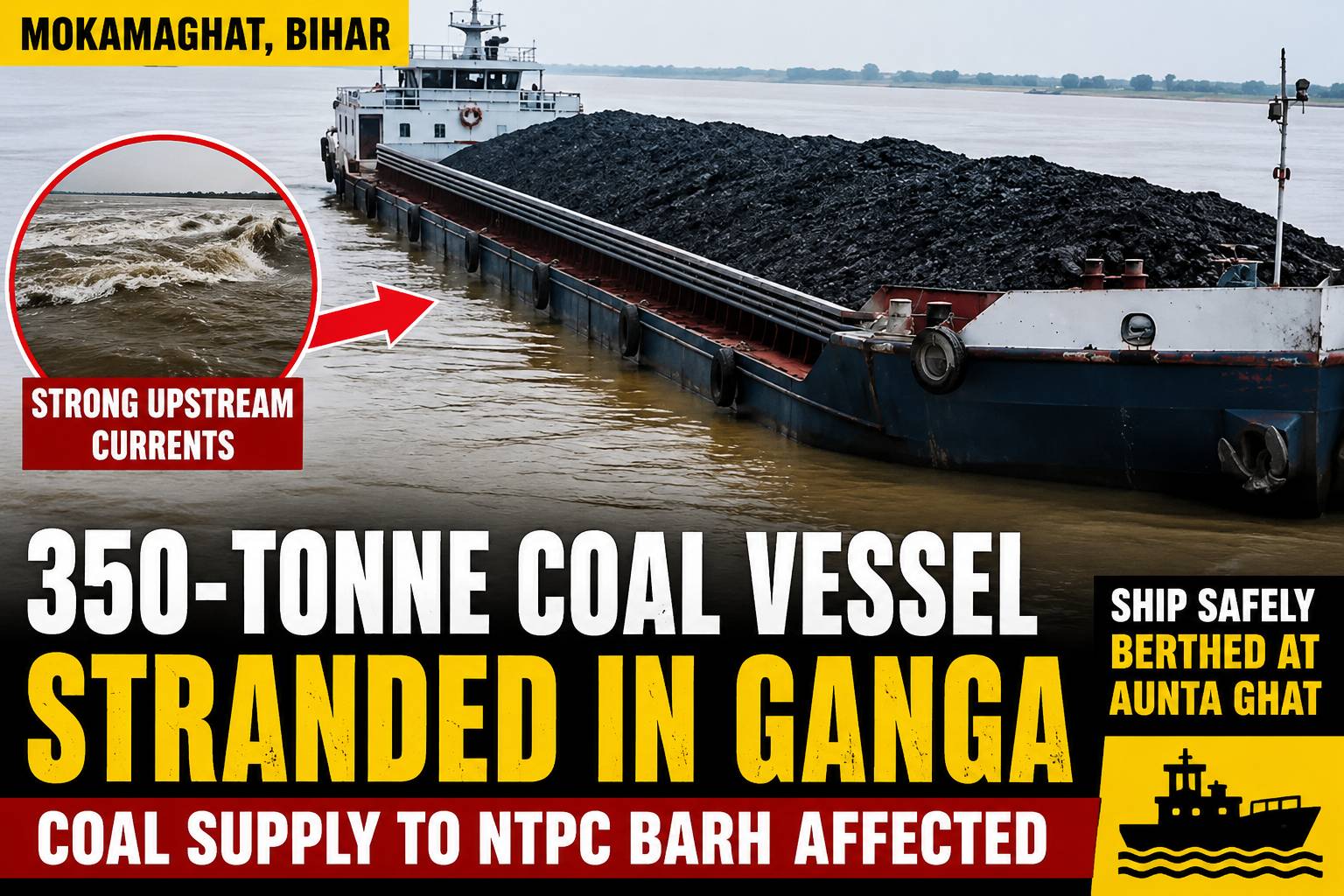
A 350-tonne coal-laden cargo vessel transporting fuel to NTPC Barh Thermal Power Station has been stranded in the Ganga near Mokamaghat in Bihar after failing to overcome strong upstream currents. The incident has temporarily disrupted scheduled coal supplies to the power plant, underscoring the operational risks associated with inland waterway transportation during the monsoon season.
The vessel had departed from Sahibganj in Jharkhand carrying coal destined for the NTPC Barh project. However, upon reaching the Mokamaghat stretch of the river, it encountered unusually strong upstream currents that prevented it from making further progress despite repeated attempts by the crew.
Vessel Safely Berthed at Aunta Ghat
After several unsuccessful efforts to navigate through the current using the vessel’s full engine power, the crew decided to move the ship to a safer location. The cargo vessel has now been securely berthed along the banks of Aunta Ghat, where both the vessel and the coal consignment remain safe.
Officials confirmed that there is no damage to the vessel or the cargo, and the crew continues to remain on board while awaiting further technical assistance.
Technical Options Under Consideration
Authorities and technical experts are currently evaluating two possible solutions to resume the voyage:
- Enhancing propulsion capability or obtaining technical clearance to proceed under existing conditions.
- Deploying one or more support vessels to tow the stranded cargo vessel upstream to NTPC Barh.
If required, additional tugboats or cargo vessels may be mobilized to assist in towing operations. A final decision will be taken after a detailed technical assessment by inland waterway specialists.
Coal Supply to NTPC Barh Temporarily Delayed
The delay has affected the scheduled delivery of coal to NTPC Barh, although officials indicated that the situation remains under control and that efforts are underway to restore normal transportation at the earliest.
The incident is not expected to have an immediate impact on plant operations, but prolonged delays could affect logistics planning if adverse river conditions persist.
Growing Importance of Inland Waterways
The movement of coal through the National Waterway-1 (NW-1) on the Ganga has become an increasingly important component of India’s multimodal logistics strategy. Coal, cement, food grains, fly ash and other bulk commodities are now routinely transported via inland waterways to reduce logistics costs, decongest highways and lower carbon emissions.
However, the current incident also highlights the seasonal operational challenges faced by inland water transport during the monsoon, when fluctuating water levels, changing river morphology, strong currents and shifting channels can complicate navigation even on established cargo routes.
Industry experts note that while inland waterways offer significant economic and environmental advantages, improving river navigation infrastructure, real-time hydrographic monitoring, and the availability of high-powered towing support will be crucial for ensuring reliable year-round cargo movement.
Why This Matters
The temporary disruption serves as a reminder that although inland waterways are emerging as a strategic logistics corridor for the power sector, operational resilience remains essential. As thermal power plants increasingly rely on multimodal coal transportation, investments in navigation support systems, river management and emergency towing capabilities will play a critical role in maintaining uninterrupted fuel supply chains.
