


Airline group IAG is in talks with satellite internet provider Starlink to equip its aircraft with the company’s inflight WiFi product. IAG is also considering alternatives, including Amazon’s Kuiper Systems.
IAG weighing up inflight Starlink WiFi
IAG Group – the parent company of British Airways, Aer Lingus, Iberia, Vueling and LEVEL – may become the latest to opt for Starlink’s inflight connectivity (IFC) solution. In an interview with Bloomberg, IAG’s head of innovation, Annalisa Gigante, said the airline group is holding discussions “both with Starlink and with Amazon’s Kuiper” to deliver free inflight WiFi to its customers. Gigante said,
“We’ve got some really exciting things coming up, but that’s going to be for next year.”

Photo: Starlink
A host of global airlines have chosen Starlink’s product, including Air France, Qatar Airways and United Airlines. By all reports (including a review of the product from Simple Flying), Starlink’s WiFi delivers excellent and reliable connectivity at 35,000 ft, which explains why many airlines are choosing it over the competition.
Related
How Does Starlink Aviation Work & Which Airlines Use It?
Starlink is rolling out for aviation and more and more airlines are announcing their plans to install it on their fleets.
While inflight connectivity solutions have been around for years, Starlink’s product stands apart as it is powered by a Low-Earth Orbit (LEO) satellite constellation, compared to other systems that primarily rely on satellites in geostationary orbit (GEO). However, Amazon is also in the process of launching its own constellation—dubbed ‘Project Kuiper’—which will see over 3,000 satellites launched into space by the end of the decade.
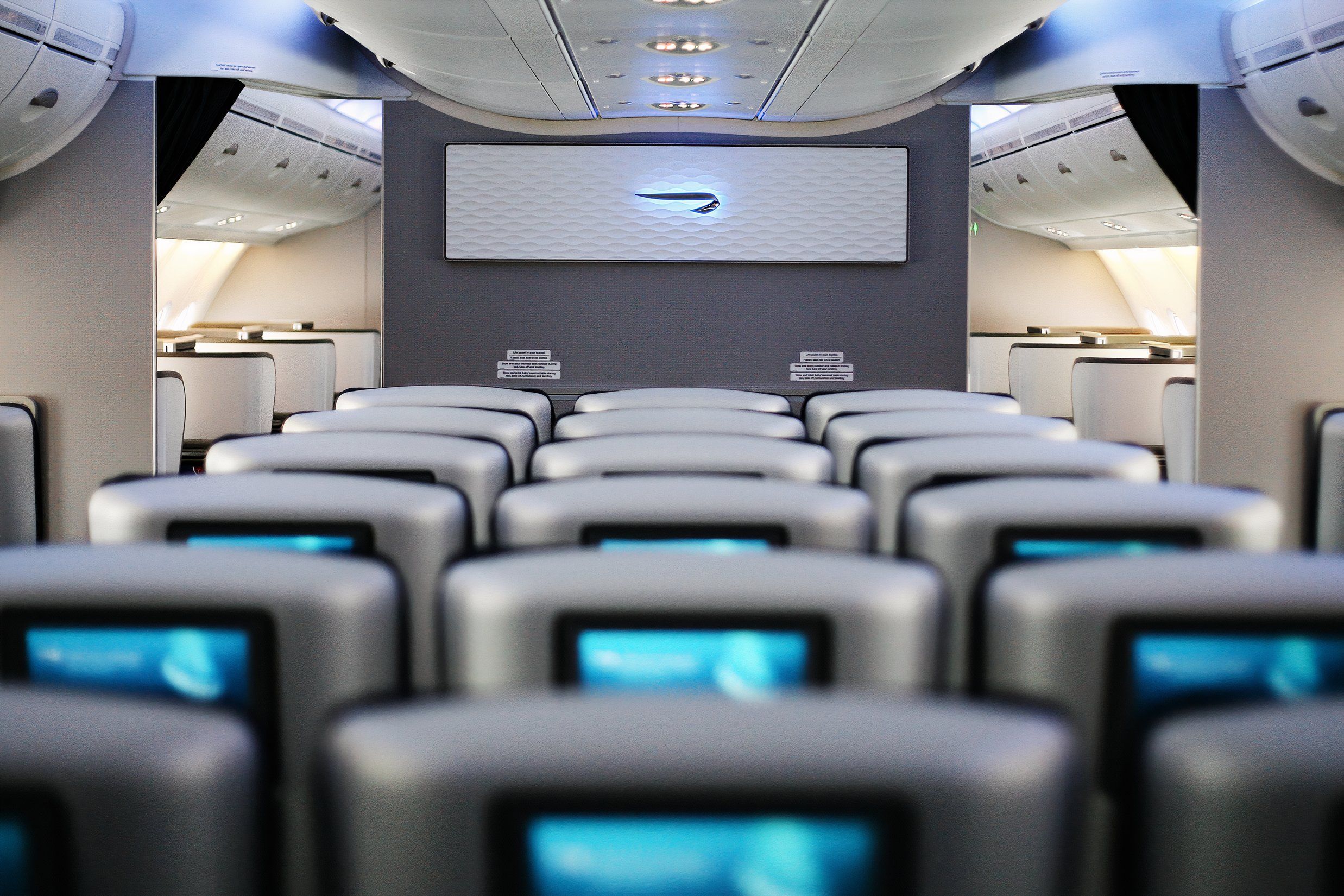
Photo: British Airways
Amazon’s venture hasn’t gotten off the ground yet, with the first satellites due to launch early next year before the service goes online before the end of 2025. The company currently has two test satellites in orbit which launched in October 2023 – in comparison, Starlink has approximately 7,000 functioning satellites and continues to conduct regular launches to expand its constellation.
IAG currently has a deal with internet provider Inmarsat, which was taken over by Viasat last year. British Airways has previously stated its intentions to equip its entire fleet with WiFi capability by 2025 – the majority of its long-haul aircraft have WiFi onboard, although its short-haul fleet is lagging behind in this regard.
Possible regulatory hurdles
According to Gigante, IAG will face greater regulatory challenges in getting Starlink onboard and operational compared to carriers in the United States. This is because the Federal Aviation Administration (FAA) has already certified Starlink for use on aircraft, but European authorities have not, meaning airlines must undergo separate certification processes.
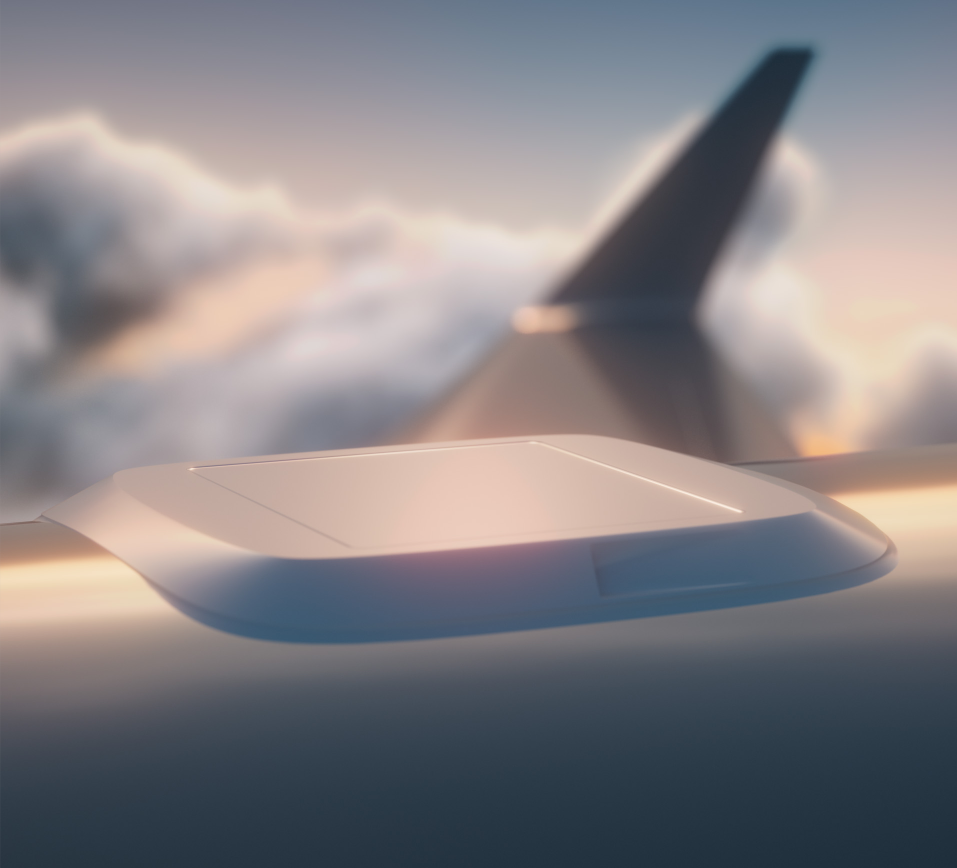
Photo: Starlink
As a result, IAG is weighing up how long it may take to get Starlink up and running on its fleet, hence why it is considering alternatives. However, in response to this, a Starlink spokesperson told Bloomberg by email that “this is not accurate.”
Related
The Airlines Introducing Fast & Free WiFi Next Year
Air Canada, Air France, airBaltic, and United Airlines are just some of the airlines that should offer free WiFi in 2025.
Airlines that have currently signed up for Starlink include:
- airBaltic
- Air France
- Air New Zealand
- Hawaiian Airlines
- JSX
- Qatar Airways
- United Airlines
- Zipair
Of these airlines, Hawaiian Airlines, JSX and Qatar Airways have already installed the product on some of their aircraft. Hawaiian recently completed equipping its entire Airbus A330 fleet with Starlink, while Qatar Airways has it on select Boeing 777s. As for European airlines, airBaltic is hoping to become the first on the continent to offer Starlink’s product and said in September that it is still on track to equip its entire Airbus A220 fleet with it.
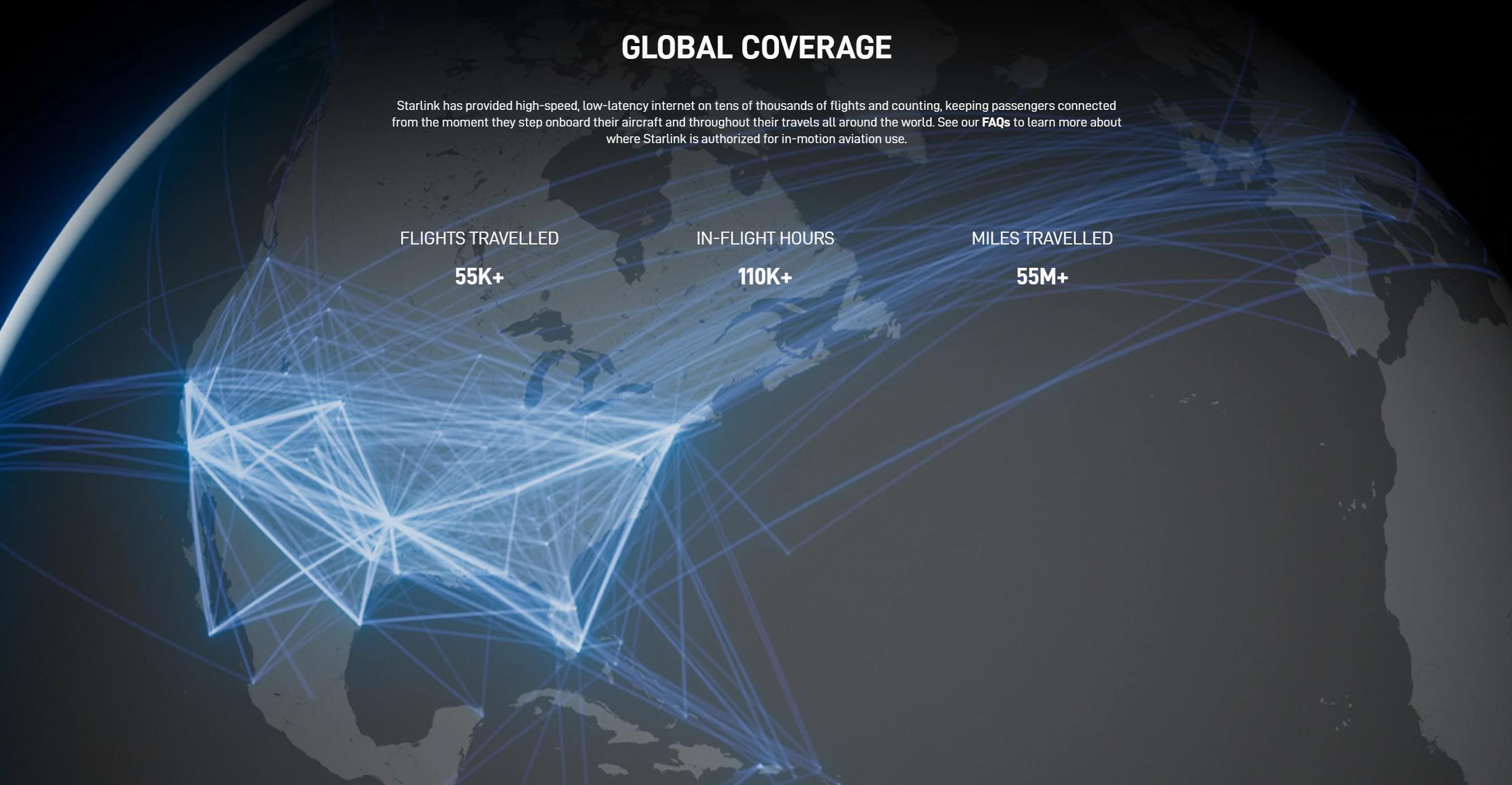
Photo: Starlink
Starlink’s deal with United Airlines was a particularly big win for the provider, with the agreement covering the entirety of United’s fleet, which currently consists of almost 1,000 aircraft. Onboard WiFi is becoming a common expectation for passengers flying today; it usually comes with an added cost, but the industry is trending towards complimentary WiFi for all cabin classes (at least full-service airlines anyway).
