


As the commercial aviation industry is moving towards a net-zero emissions future, Lufthansa Group
member carrier Austrian Airlines
is doing its part in ensuring more sustainable aircraft operations with the introduction of “shark skin” technology onboard some of the it Boeing 777-200ER
aircraft.
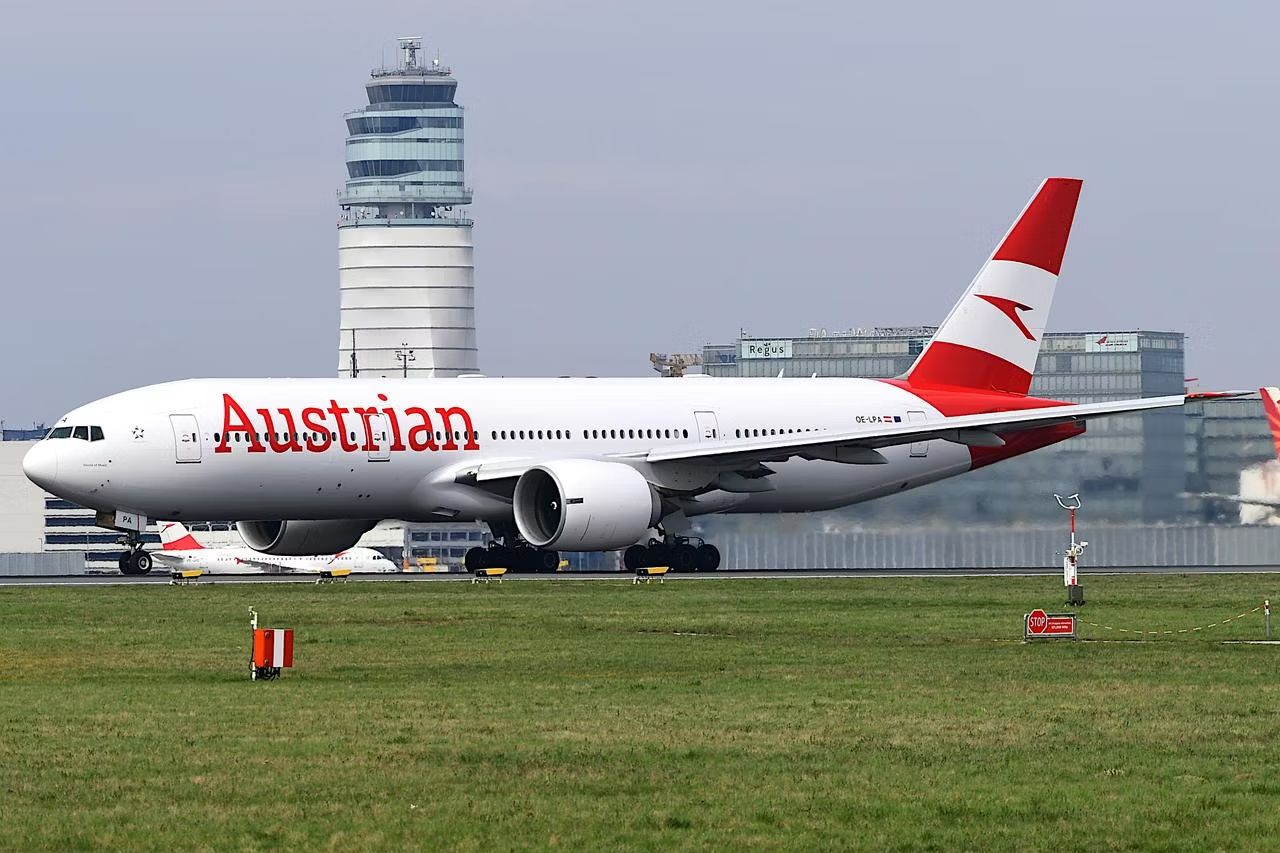
Photo: Austrian Airlines
A “shark” in the the sky
At 00:18 local time on January 14, Austrian Airlines flight OS 26 lifted off from Bangkok Suvarnabhumi Airport
bound for Vienna. After an uneventful 12 hours in the air, the flight landed in Vienna at 05:00 local time, concluding the first Austrian Airlines flight to be conducted with AeroSHARK technology.

Image: Flightradar24, flightradar24.com
The aircraft that conducted the January 14 flight, OE-LPC, is a 23-year-old Boeing 777-200ER. The aircraft was originally delivered to now defunct Austrian Airlines leisure subsidiary Lauda Air in 2002 before moving into the official Austrian Airlines fleet in 2005. The aircraft has been in the fleet since. Currently, the Lufthansa Group carrier has plans to equip four of its fleet of six 777-200ER aircraft with the novel technology, with all the modifications expected to be completed by March of this year.
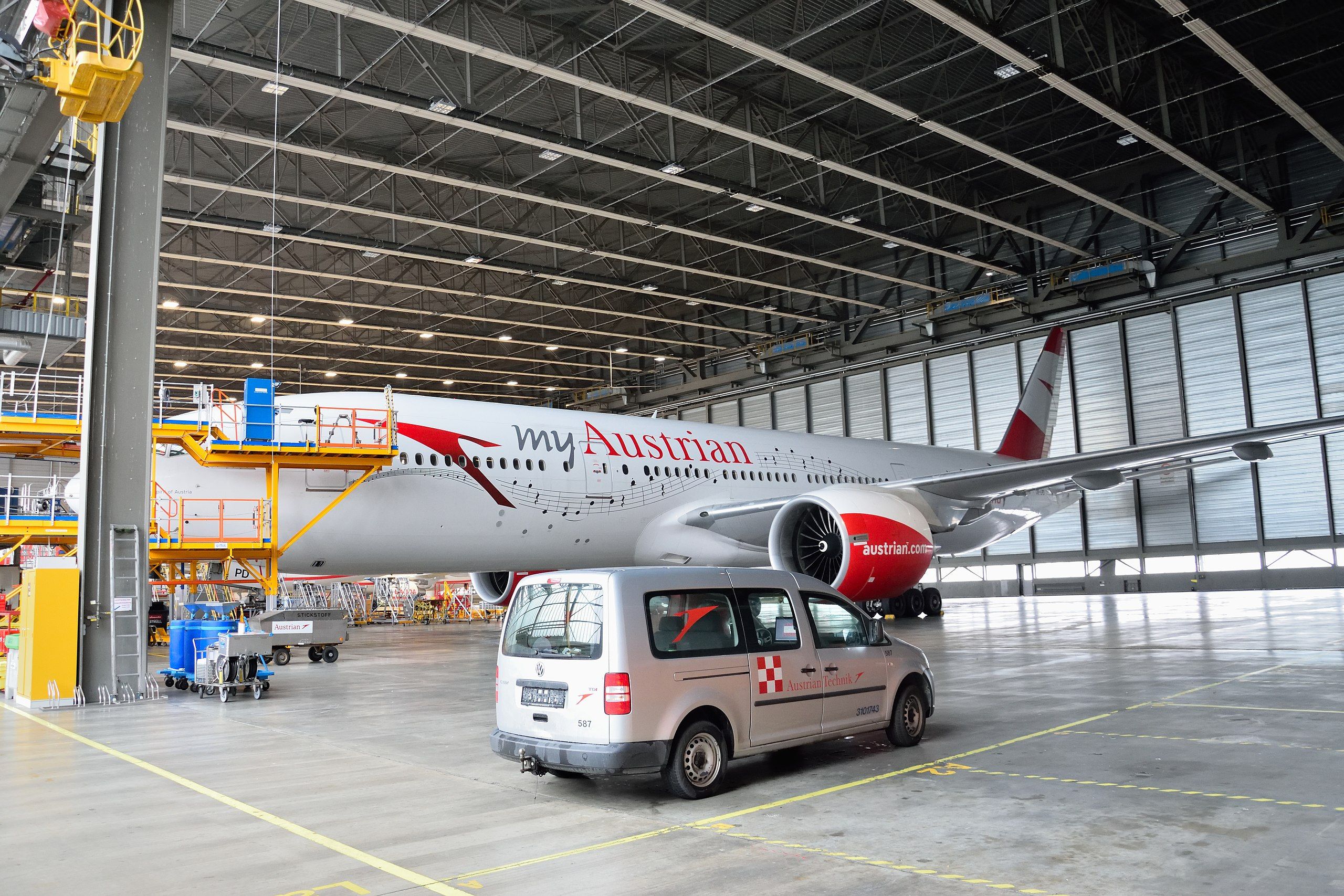
AeroSHARK is a “surface film technology”, which was developed as a joint venture between the aircraft maintenance and engineering division of Lufthansa, Lufthansa Technik
, and a materials and chemical corporation called BASF. Made of “transparent ribs” called “riblets”, when applied to conventional aircraft skin – the outside of an aircraft (such as a 777) – the technology imitates more aerodynamic aircraft skin, leading to fuel savings of around one percent. Lufthansa Technik doesn’t specify if that one percent in fuel savings is over one flight or the lifetime of an aircraft.
In any case, according to Austrian Airlines, the application of the skin to its four 777 aircraft will save the carrier around 2,650 tons of fuel, or around 8,300 tons of equivalent CO2 emissions until 2028. This equates to around 46 flights worth of fuel being saved, which is both a win for the airline and the environment. Each 777-200ER requires 830 square meters of “riblet film” (AeroSHARK) across the surface of the aircraft fuselage and engine nacelle (the outside structure housing a jet engine).
Francesco Sciortino, COO of Austrian Airlines, is proud of the airlines’ strides towards sustainability.
“Reducing our CO2 emissions in flight operations is at the centre of our sustainability efforts. The application of the ‘sharkskin’ developed by Lufthansa Technik is an important investment that will enable us to fly our long-haul aircraft more efficiently”
In order for the “shark” skin to be applied, Lufthansa Technik had to apply and receive an extended Supplemental Type Certificate (STC) from EASA. These are needed when what is classified as a “major change” is performed on an aircraft, including the skin, engines, and aerodynamic profile of the aircraft.
Photo: Photofex_AUT | Shutterstock
In the press release announcing the achievement, Chief Operating Officer of Lufthansa Technik, Harald Gloy, said this:
“With this certification, the fleet-wide implementation of our sharkskin technology on 777-200ER aircraft can begin, supporting airlines worldwide to enhance operational efficiency and achieve their environmental goals”
A lofty environmental goal
The aim of all Lufthansa Group carriers – Lufthansa, SWISS Airlines, Brussels Airlines
, and Austrian Airlines among others – is to reduce CO2 emissions by 30.6 percent by 2030. While this might not seem like a lofty sustainability goal, it’s definitely better than some other major airlines such as  Delta Air Lines
, which only aims for the use 10% SAF fuel across its fleet by 2030.

Photo: Lufthansa Cargo
Currently, a total of six airlines from Lufthansa Group and a few major airlines around the world have a total of 22 Boeing 777 aircraft equipped with AeroSHARK technology. In the future, BASF and Lufthansa Technik aim to develop the technology so that it can be applied to other aircraft types as well.
As is the case with nearly every industry reliant on fossil fuels, the time is nigh for a transition to more sustainable alternatives in order to keep with the goal of many nations around the world to cap global warming at 1.5 degrees Celsius. While this future is arriving faster than predicted, it’s not coming fast enough, as the world has already passed the 1.5 degree warming limit in 2024 set by the Paris Climate Accords in 2016.
