Support CleanTechnica’s work through a Substack subscription or on Stripe.
Nature-based solutions work. They’re cost effective. They advance climate mitigation, adaptation, and biodiversity protection.
They do need more financing strategies, however. To meet global biodiversity, climate, and land restoration targets, nature-based investment must increase 2.5 times to $571 billion annually by 2030—equivalent to just 0.5% of global GDP, states the UN Environment Program in its 2026 report.
Why do We Need More Nature-Based Investments?
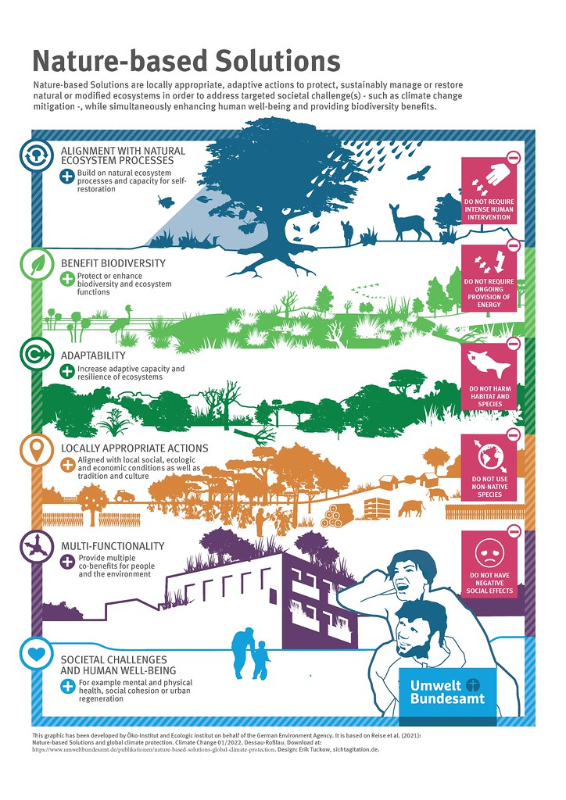
Half of the carbon we pump into the atmosphere each year is reabsorbed by the planet. Nature-based solutions address societal problems in ways that benefit both people and nature and play a significant role in addressing the climate and biodiversity crises we currently face. In fact, nature-based solutions have the potential to lift a billion people out of poverty, create 80 million jobs, add an additional $2.3 trillion of growth to the global economy, and prevent $3.7 trillion of climate change damages. Investing in biodiversity conservation and restoring ecosystems have a lot going for them. They are the major drivers of human and planetary health, address climate change impacts, and build in resilience. Restoring and protecting nature’s ecosystems complements tech-based actions to eliminate fossil fuels.
Now it’s up to investors to acknowledge this potential and direct the funds where they’re needed.
Financial institutions are seeing firsthand the results of being too exposed to material risks linked to nature loss and ecosystem degradation. From cleared forests to polluted rivers and streams, investors and companies worldwide are recognizing the economic cost of nature and biodiversity loss and acting to protect the global economy that depends on thriving ecosystems. The realization is that over half of global economic sectors are highly dependent on nature.
These risks—both physical and transitional—pose systemic threats to asset performance and long-term financial stability, says the World Resources Institute in a 2026 guidebook.
“Climate change, biodiversity loss, and rising regulatory expectations further compound these risks, making traditional investment models increasingly unsustainable.”
Financial strategies that incorporate nature-based investments allows institutions to be ahead of nature-related risks and to comply with quickly changing regulations. As consumer demands for sustainability increase, this transition “not only enhances long-term financial performance,” says WRI, “but also supports global goals for biodiversity, climate resilience and inclusive economic development.”
Are Nature-Based Investments Really Too Expensive?
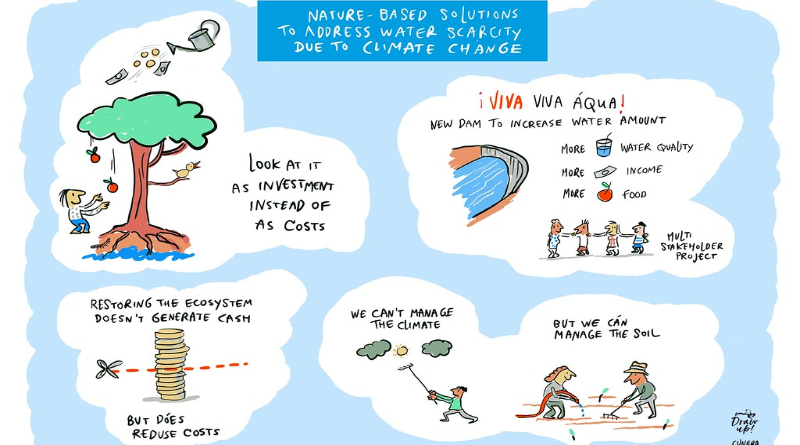
A common argument against nature-based investment is that it’s too expensive to implement. Not everyone agrees. In Climate capital: Investing in the tools for a regenerative future, Tom Chi argues that our economy can be aligned with the processes that support the biosphere and still continue to diversify, be resilient, and be adaptable to changes and shocks. In fact, Chi says that we are passing into the era where “it is too expensive to not address climate destabilization.”
He suggests that a net positive approach needs to be addressed for air, water, soil, and biodiversity. It will take a new ideology to move beyond a core framework of extraction and exploitation into nature-based investments. “The wealth comes from benefiting as many organisms as possible with each proton,” Chi explains, “and accumulating wisdom for future generations from what these organisms have created and learned for us.”
To reach the business climate where nature-based investment is not only viable but commonplace, though, institutional barriers will have to be dismantled.
Research presented by the Climate Policy Initiative has identified a consistent set of obstacles to nature-based investment.
- Project variability: Projects differ widely in size, geography, and design, driving up transaction complexity.
- Lack of standardization: Without harmonized data and due diligence, each project requires bespoke analysis, increasing costs, and delaying disbursement.
- Limited borrower documentation: Producers, cooperatives, and community-led enterprises often lack credit histories and formal financial records, complicating underwriting.
- Fragmented MRV systems: Providers have limited incentives to harmonize methodologies or automate processes, resulting in inconsistent monitoring and reporting.
- Low data comparability: Inconsistent and fragmented data make it difficult for investors to compare projects, undermining confidence and slowing investment.
Yet businesses are not all alike. There are inherent differences in business management and finance that emerge from individual size, geographic location, area regulations, and industry sector. No single method to measure and manage impacts and dependencies is suitable for all businesses nor the decisions they have to make — multiple methods or metrics will often be necessary.
So what’s needed to make nature-based investment a scalable asset class?
Project variability and high transaction costs limit investment readiness and scale. Investment processes needed to be transparent, predictable, easy to audit, and aligned with global standards. By integrating investor requirements, developing auditable protocols, building investor trust, and strengthening verification mechanisms, nature-based investment can evolve from fragmented, high-cost projects into a stable, institutional-grade investment opportunity capable of generating significant environmental and social impact.
Biodiversa+ organized a foresight workshop to explore the relationship between nature-based solutions and transformative change. Participants developed “images of the future” to explore successful integration that focus on nature. Their main takeaways were as follows:
- Silos don’t work: These solutions can contribute to systemic change only when embedded in broader governance reform, economic transition, and societal shifts.
- Governance, finance and justice matter: Scaling requires rethinking incentives, subsidy systems, stewardship models, and the distribution of costs and benefits.
- Indicators and long-term learning are essential: Clear frameworks and locally relevant indicators are needed to assess how solutions grounded in nature contribute to transformative pathways over time.
- A socio-ecological approach is key: Transdisciplinary research, place-based perspectives, and attention to values and equity are crucial to designing effective pathways.
Final Thoughts
In Animate, science writer Michael Bond challenges the supposed boundary between humans and other animals, arguing that it is neither fixed nor ancient. As the environmental consequences of our actions increasingly threaten our own survival, humans are reminded that we are part of Earth’s system, not its masters. Animate shows that to better understand ourselves, we must pay more attention to the other beings with whom we share our world.
We need to look no further than Jamaica’s massive damage after Hurricane Melissa. The devastation has required residents to join together in a gestalt where nature-based investments go hand-in-hand with reconstruction. Nature-based investment in emergencies and everyday strategizing can make a huge impact on society and the planet.
Resources
- Animate. Michael Bond. Simon and Schuster. August 2026.
- Climate capital: Investing in the tools for a regenerative future. Tom Chi. Joe Wiley & Sons, Inc. 2026.
- “Financial sector guidebook on nature-based solutions investment: Aligning investment with impacts and showcasing examples.” World Resources Institute. June 18, 2925.
- “Nature-based Solution foresight workshop report.” Biodiversa+. December 2025.
- “Scaling nature-based solutions finance through standardization, data, and transparent processes.” Phillipe Käfer. Climate Policy Initiative. March 2, 2026.22 January 2026 Report
- “State of finance for nature 2026.” United Nations Environment Program. January 22, 2026.
Sign up for CleanTechnica’s Weekly Substack for Zach and Scott’s in-depth analyses and high level summaries, sign up for our daily newsletter, and follow us on Google News!
Have a tip for CleanTechnica? Want to advertise? Want to suggest a guest for our CleanTech Talk podcast? Contact us here.
Sign up for our daily newsletter for 15 new cleantech stories a day. Or sign up for our weekly one on top stories of the week if daily is too frequent.
CleanTechnica uses affiliate links. See our policy here.
CleanTechnica’s Comment Policy