


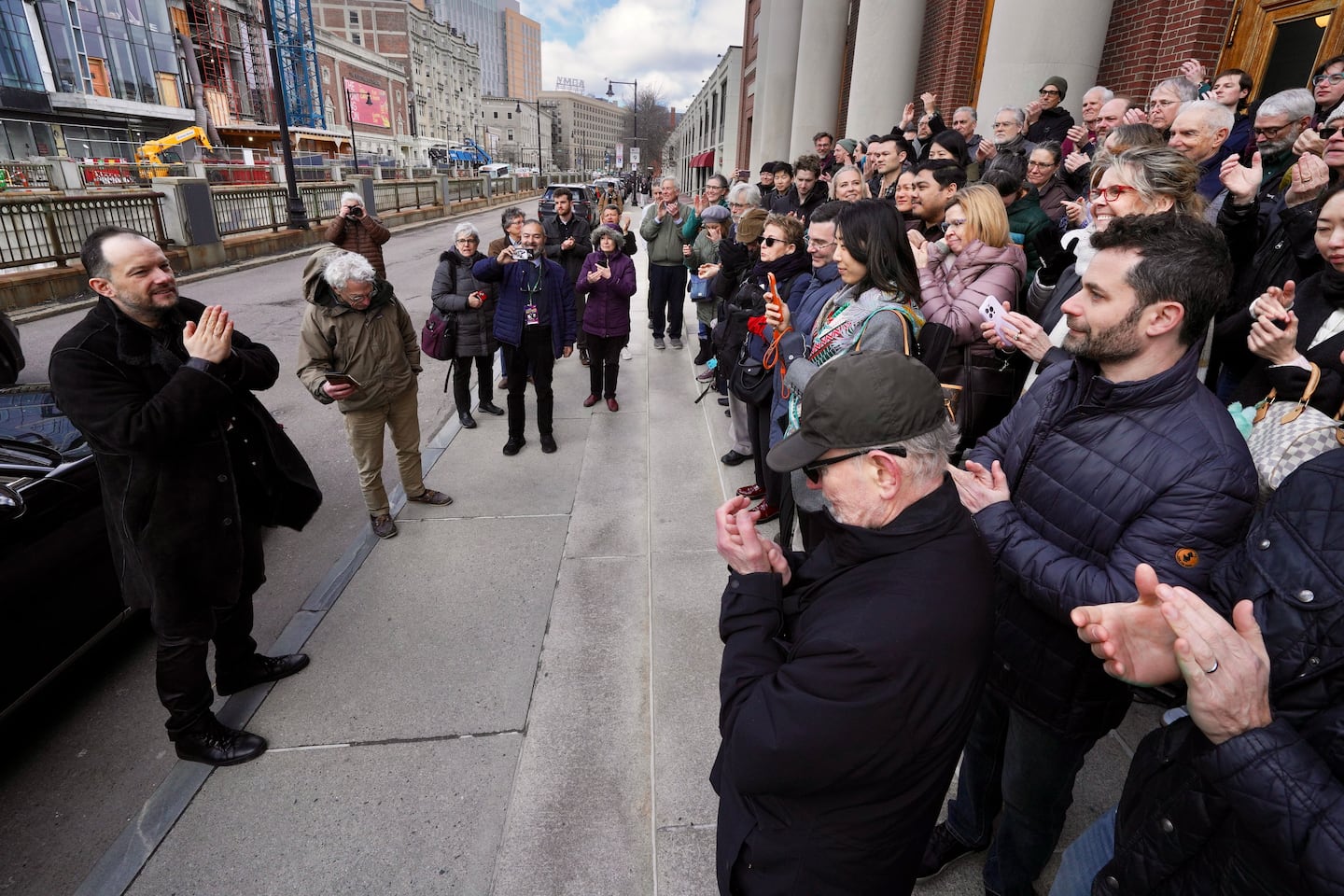
Judging by the immediately horrified reactions of the musicians, staff, volunteers, and others who spend any time at Symphony Hall, the “BSO” that no longer wants Nelsons probably only includes the board of trustees, chaired by Barbara Hostetter, and Smith, plus whatever allies he might have. No one else seems to know what that group’s future vision for the orchestra actually is.
Much digital ink has been spilled already on the subject of Nelsons’ inconsistency as a conductor, some of it by me. I am not, and have never been, a Nelsons ride-or-die. I remember snapping a hair elastic on my wrist to keep myself awake through one Mahler Symphony No. 2. I compared one performance of Strauss’s “Alpine Symphony” to watching a tedious vacation slideshow when I was promised I’d be transported to the mountains.
However, when Nelsons brings it, he brings it, and he brings me with him. I remember the gently luminous, consoling Brahms on election night 2016; any number of stunning Shostakovich symphonies; the Mozart/Strauss 2025-26 season opener that looked humdrum on paper but instead burst with radiance. I’ll always remember last week’s “Manfred,” which the orchestra played the night of Nelsons’ return to Symphony Hall and which practically dared anyone to accuse it of a flop era under Nelsons.
Other critics, particularly The New York Times, have been harsh on Nelsons. However, the BSO has said nothing criticizing Nelsons’ performance, and in the conductor’s letter to the players in the wake of his dismissal, he wrote that his contract had not been terminated for anything related to performance quality or achievements. The players love him, meanwhile. Musical esprit de corps has never been higher than during his tenure. After the announcement of his dismissal, the BSO Musicians social media accounts woke up from hibernation months ahead of this summer’s scheduled contract negotiation season, rallying community support for the conductor.
Why, then?
Hostetter and Smith seem bent on not telling anyone. A recent letter to BSO personnel and subscribers from the board provided a master class in saying nothing, citing broad-strokes financial difficulties and a “strategic framework” that no one actually seems to have seen. “We recognize that change is hard,” it said. “”We are eager to engage with you openly.”
Comical, almost. Such a perfunctory attempt at communication smacks of delusion. Might as well propose a toast to the future with a shattered glass.
The leadership has apparently been orchestrating the finale of the Nelsons era for some time. The New York Times’s Adam Nagourney, citing orchestra officials, reported that “talks with Nelsons began last September in an attempt to negotiate a quiet exit.” Was that before or after Smith accompanied Nelsons to a live appearance on Boston Public Radio and professed to enjoy working with him, I wonder?
Personally, I predicted, dare I say hoped, that Nelsons’ stint at the head of the BSO might naturally and comfortably conclude within the next five years. I was prepared to see an announcement that he had decided to move on, or as Smith said to the Globe in January 2024, that the ”unfortunate day” would come “when Andris decides he’s been here X amount of time.”
Between now and then, whatever happened to “Andris decides?” Organic turnover is healthy for any ecosystem. But by booting him out in such an abrupt disdainful fashion, the leadership is leaning toward the Silicon Valley-esque philosophy of change: “move fast and break things,” a la Facebook. Break things including the community’s confidence in the leadership to steer the organization responsibly and with any degree of consideration for the rest of the people who make it.
Throughout the season, I’ve been calling out the comparatively scanty attendance at Symphony Hall. Only recently did I notice that Nelsons’ face has been almost completely missing from the orchestra’s online program listings and advertisements, when ads for the BSO appeared at all. I don’t have proof of any deliberate attempt to shuffle Nelsons out of the spotlight, but the pattern suggests something along those lines might not be far-fetched.
Some musicians are even hypothesizing that Smith might have sweetened the deal with the board of trustees by telling them the musicians actually knew and approved of the leadership’s strategic plan. Given last week’s assertion by the players’ committee that Smith “no longer has the trust or buy-in of the musicians,” combined with the sea of red flowers pinned to lapels onstage Thursday night, it seems likely that if the musicians approved anything, it wasn’t this. Note to any would-be leaders: If you don’t want an orchestra to respond to authoritarian and clandestine behavior, don’t let them play all 15 Shostakovich symphonies. That man knew a thing or two about protesting.
And ever since that Friday news dump, speculation has surfaced about what the leadership’s vision that conflicted with Nelsons’ could be. More Pops programming, perhaps? An American music director who in theory might make their home in Boston? Maybe more themed festivals, with a belief they will bring in the big bucks? But those have drawn middling crowds by my reckoning, with one exception being last January’s Beethoven marathon, not the most imaginative programming by any standard. But there’s no denying those halls were full and the audiences were on their feet for those old chestnuts, under the baton of music director Andris Nelsons.
What’s the vision might not be the right question, then. It might be: Does the vision even exist?
If the leadership doesn’t lay off the corporate platitudes and actually give us some information — and soon — I’ll assume they’re flying blind, flying into a storm of their own creation.
A.Z. Madonna can be reached at az.madonna@globe.com. Follow her @knitandlisten.
