


A lot is happening at CoHo Productions, and you should probably know what it is. Since the passing of its beloved and visionary leader Philip Cuomo five years ago, CoHo has been in a state of flux. Yet largely because of the framework he established, the theater has managed to stay afloat.
At the best of times, in a nickel-and-dime industry like theater, keeping a nonprofit afloat is a daunting proposition. But sustaining a small, nonprofit theater against a backdrop of pandemic, massive social upheaval, political unrest and war, and then massive structural upheaval at the office, raises the undertaking to Herculean proportions.
CoHo hasn’t just survived, it has thrived and is ascending, and that is largely thanks to the foundation that Cuomo, himself a leader of tremendous wisdom, warmth and imagination, laid with the young artists who have come up after him. His unique brand of laissez-faire guidance empowered Phil Johnson, Morgan Clark-Gaynor and Laurel Wilde, and then Olivia Matthews, with the knowledge and skill set to move CoHo into its next incarnation and thereby, quite possibly, advance the cause of Portland theater.

Since its inception nearly thirty years ago by founders Gary Cole and Robert Holden (hence, the name) CoHo has been a theater where artists come to pursue their own vision one project at a time, without all the necessary meta-work it takes to maintain a producing infrastructure. Over the years that model has morphed and evolved, but its essence has stayed the same. For almost a decade that vision was guided by Philip Cuomo, a respected Portland actor and revered proponent of clown as an art form.
Cuomo also had an unwavering commitment to giving young artists the opportunity to find out what they are made of. After his passing, that belief empowered those same young artists to re-create CoHo in their own image. “Laurel and Phil and I really tried to figure out how to collectivize the workload that Philip had been carrying for so long,” says Morgan Clark-Gaynor, managing director, “and divvy it into three leadership roles. We’ve been figuring it out and building it ever since.”
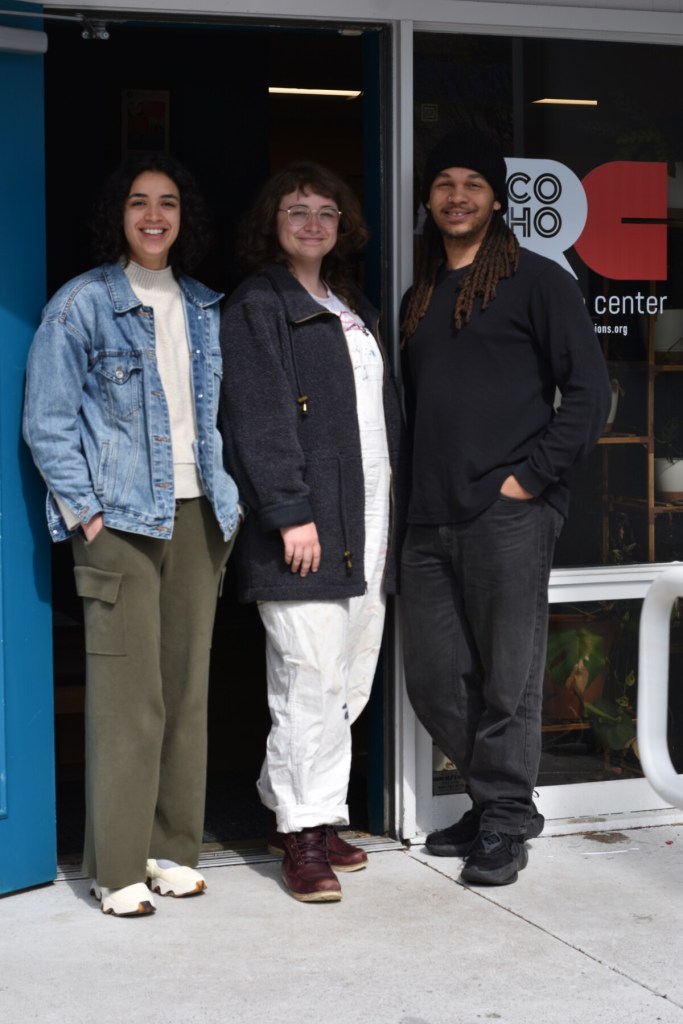
Phil Johnson, program director, had met Cuomo in 2019. Initially, Johnson was hired to do some over-hire work at CoHo. One afternoon, after the day’s work was done, Cuomo and Johnson sat in the theater and talked for three hours about art, industry, economics, and whatever else came to mind. A friendship was born. Immediately the connection between the two men was very strong, and they became close.
They collaborated on projects like Radical Listening, the podcast hosted by Johnson and Clifton Hoznagel, and Cuomo threw Johnson into the deep end, having him produce projects such as From These Streets I Rise at CoHo in the heart of the pandemic. “I think the genius of Philip [was] that he knew what position to put you in,” Johnson recalls. “He would do this thing where he’d be like, ‘Here’s this insane thing you have to do. Go do it.’”

Clark-Gaynor speaks reverently about the impact Cuomo had on her career and bringing her back to theater. Cuomo had been her mentor with the Institute for Contemporary Performance (ICP), the Portland Experimental Theatre Ensemble (PETE)’s training program. She was finding her voice in the art of clown, and Cuomo was there to hear it. When the pandemic hit, Clark-Gaynor had to step away from theater. But then Cuomo offered her a way back in, providing Clark-Gaynor essential experience to learn the business of theater. “He just kept throwing opportunities at me,” says Clark-Gaynor, “because he thought that I could do it.”
The third leg of CoHo’s leadership body, Olivia Matthews, didn’t know Cuomo personally, but nonetheless feels profoundly impacted by his presence. “So many people I love and deeply respect professionally have been completely changed by him,” says Matthews. After a couple of years of scanning emails, checking papers and doing whatever basic tasks were necessary, she took over bookkeeping and much of the communication workload when Laurel Wilde stepped away. “I started as Phil, Morgan and Laurel’s assistant and I’m some variation of that job now but with more responsibility,” Matthews says, laughing.
During this time of transition in leadership, CoHo had an internal crisis when its board, not seeing a way to purchase the Northwest Portland building where it produced its shows, decided to walk away. Losing its artistic head and its entire board within a year is a tectonic shift that most theaters don’t come back from. But the new young leadership team at CoHo decided that this was a moment of opportunity, and devised a plan with Third Rail and PETE to hold on to the space.
“Because we lost our board, our patrons, and had a change in leadership,” says Johnson, “we were able to envision what would be interesting to us in terms of programming in such a way that we built CoHo back with majority youth, diverse, queer audiences. All these tenets that we all talked about and specifically Philip (Cuomo) would dream about on the phone, we were able to do because we weren’t beholden to anybody.” Their new board, their programming and how they do business all reflect those same tenets.
“As I was coming up in theater,” says Clark-Gaynor, “I couldn’t help but notice that there were a lot of closed doors and everything was extremely competitive. It was difficult for people to get a chance to make art. At CoHo, that is our thing. We believe that art-making and theater-making is a human right that everyone should get to do. Even if you don’t want to make theater you should get to see it and you should get to be a part of it.”
Accessibility is a word that keeps coming up. Theatre is an expensive enterprise. It’s expensive to make. It’s expensive to see. CoHo sees shaking up that dynamic as essential to their model.
“People are invited in to be both makers and supporters in a space that feels more conducive to sustained community participation,” says Clark-Gaynor, “because it’s about the people and what they want to make and what they want to see.”

Johnson adds that “it’s really important to build rigorous third spaces for people to commune and intersect. CoHo is building third spaces that are accessible, that are cost-effective to participate in and are support hubs. That feels important and necessary to be built in this world right now.”
The defining component of the new CoHo is its Resource Center, developed in response to research conducted by Crave Theatre’s Sarah Andrews. That report focused on what theater artists needed to create that they did not have, such as space, recording equipment, expensive software for designers, or sometimes even food and beverages. “Our resource center is very intentionally built to give artists what they need to be artists,” Clark-Gaynor says.

One of those needs is community. “The most exciting days here,” says Matthews, “are when I walk in and there are people designing on the computers, and there’s someone in the recording studio and there’s a group having a meeting about their next rehearsal, and all those people are mixing and mingling in the kitchen.”
But accessibility is not just about artists, it’s also about audience. “We were phone-banking,” remembers Johnson, “and I called a woman who said that she hadn’t been able to take her family of five out for years. It was too expensive. She was able to spend $20 and come to Clownfest because it’s pay-what-you-can. She enjoyed the show, and it made her feel valuable, competent and better about herself.”
This had been a principle that Johnson and Cuomo had bonded over. “When we first met,” says Johnson, “he had already switched tickets to pay-what-you-can. And I was like, ‘Yeah, because theater should be free. We’re trying to tell people something, how are you going to charge them to hear you tell them? It just doesn’t compute for me.’”
“The image that I get,” says Clark-Gaynor, “is CoHo as these open doors that people are able to come in and out of as they are able and as they want to.”
To accomplish all this, of course, they have to hold on to their building. Space is always at a premium in theater, and when the world is splitting apart at the seams, that dynamic only becomes more pressing. Luckily, CoHo is not alone: It has teamed up with two of the more prestigious theater companies in Portland, Third Rail and Portland Experimental Theatre Ensemble, or PETE. Together, the three companies form the Cuomo Theatre Fund, and their intention is not only to keep the building but expand on it.
“The CTF is inextricable from our mission going forward and the way we see ourselves developing,” Matthews says. “The capital campaign that we’re in now [is meant] to fully acquire the building and secure that future.”
“If you can imagine CoHo as the operational, industry-level place where you go to tap in on resources and have accessibility to the stage,” Johnson suggests, “PETE would be the educational training program, and Third Rail would be the mainstage, producing plays the weight of that. Ultimately, what we’re trying to create is a performing arts center that nurtures Portland artists whether they’re coming out of college or high school or other programs in general — nurtures them, puts them in position to create their own work.”
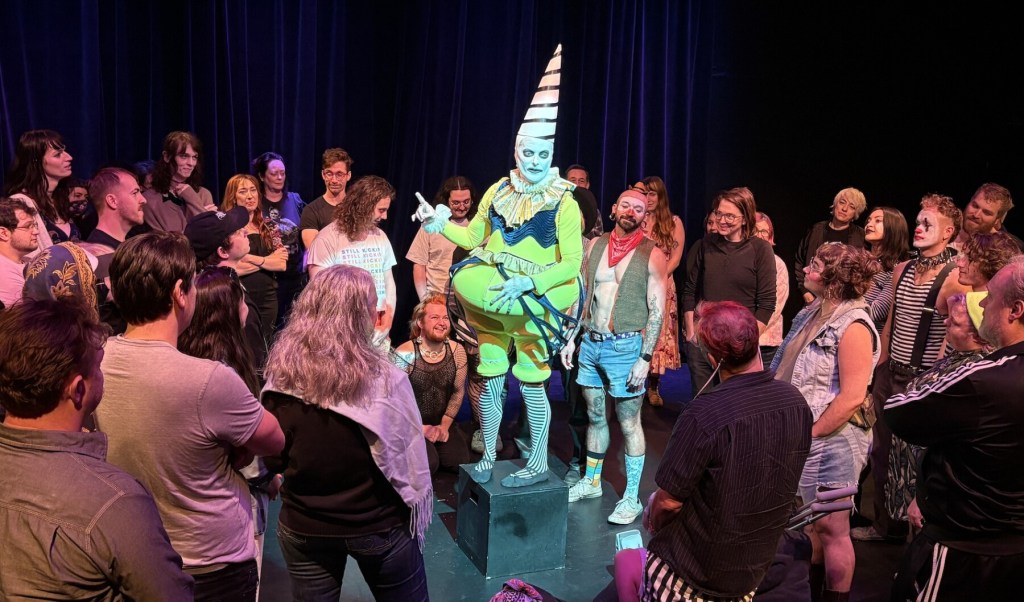
Among so many things CoHo has going on, it would be remiss not to mention the annual ClownFest and the company’s artists residency, two projects that distill the essence of what CoHo is all about.
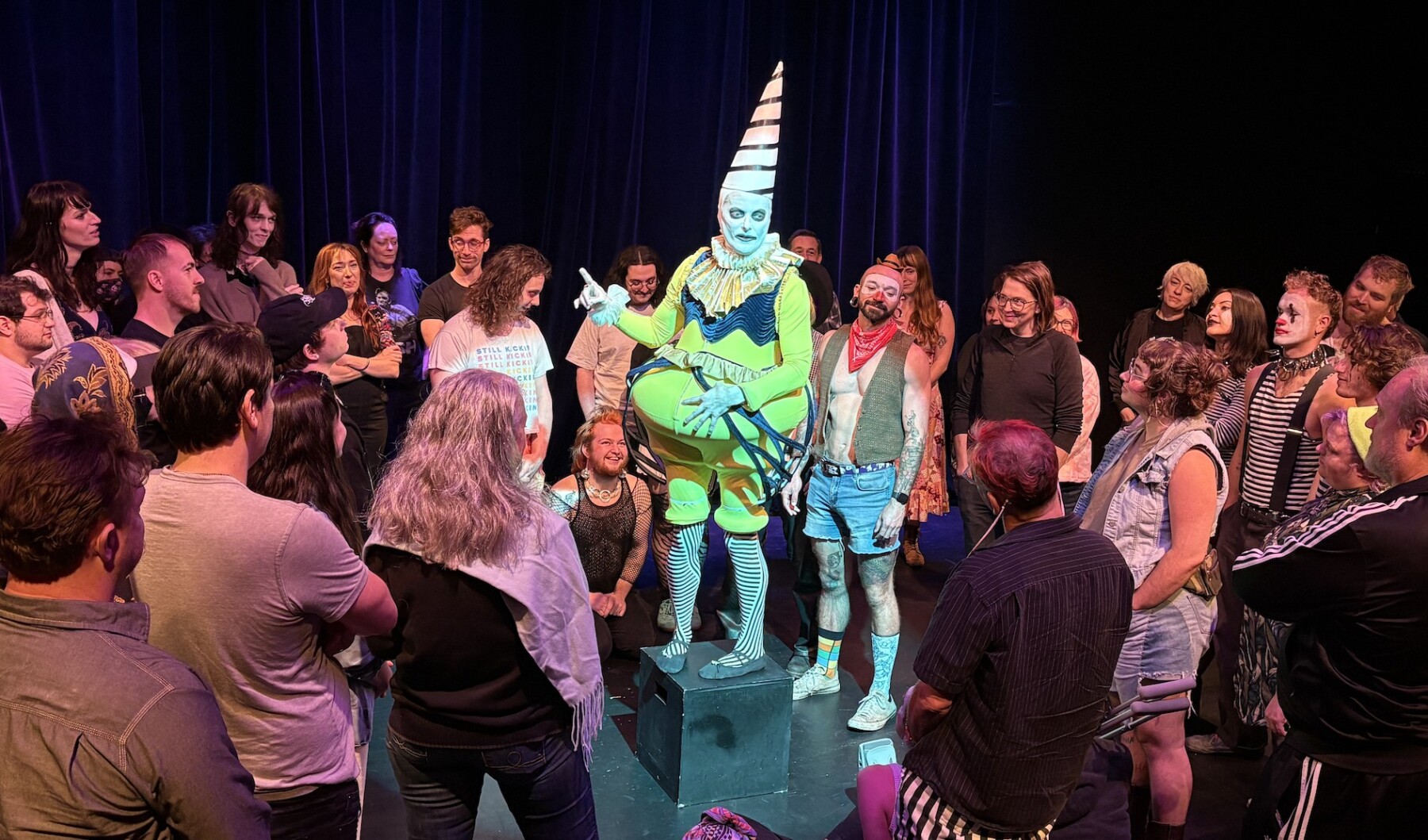
ClownFest began as a gleam in the imagination of the Phils Cuomo and Johnson and became manifest in 2022. ClownFest was first imagined as a type of circus and then evolved into a festival that hosts a variety of types of programming, including traditional clown shows, a dance ritual party, a clown parade, and workshops. Now, in 2026, it’s still going on strong and has brought in an entirely new audience. “I don’t think it was until this year that people have fully processed what ClownFest is,” says Johnson. “ClownFest is extremely popular with non-theatergoers and fringe performers.”
“With ClownFest,” confirms Matthews, “we have people coming from all over the world, all over the country, to put up their fringe clown, physical comedy or dance expressive theatre piece.”
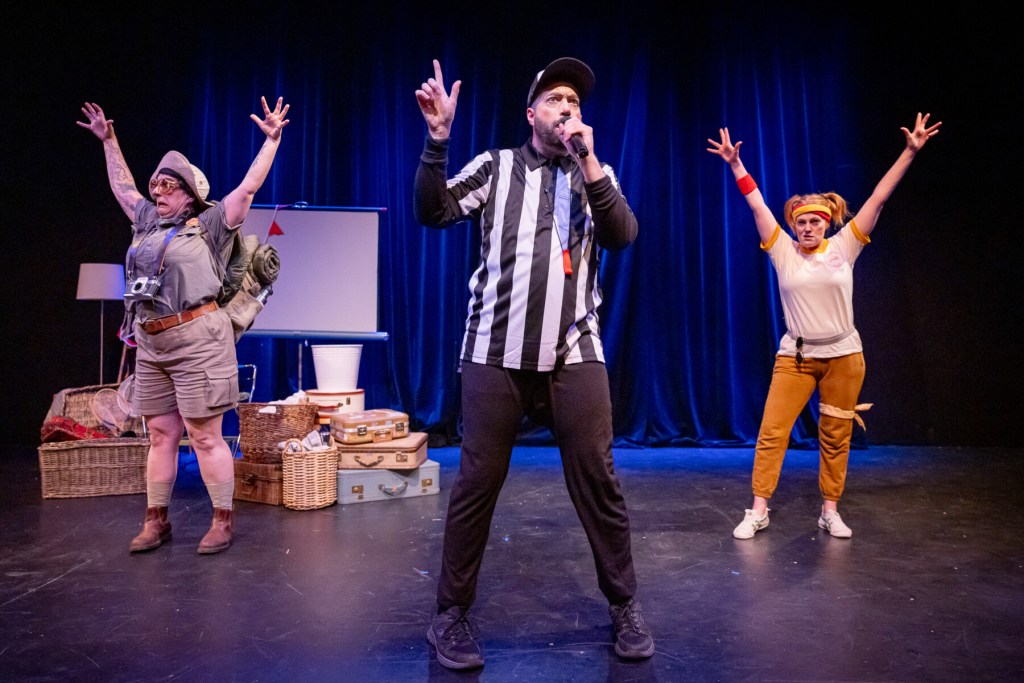
The company’s artists residency is likewise egalitarian in its artistic ambitions. “We have three artists a year who have six months of being nurtured and being supported by CoHo with a stipend and with time in the space to make their piece,” says Matthews. This year’s residency includes Julia Bray, Monel Chang, and Kayla Kelly.
Making theater is hard, complicated work, and these are hard, complicated times. The vision that Johnson, Clark-Gaynor and Matthews have set for themselves and their team is not an easy one, but the first thing that is necessary is belief in what they are doing, and they seem to have that in spades.

“CoHo is appreciating and honoring new art that is genuine and comes from the people of our city and is openly available for the people of our city,” says Clark-Gaynor. “Free art, not just in that it doesn’t cost money but in that it’s liberated art, that gives an opportunity for the people of this city to speak into the culture of the city and develop it. Not everybody understands why that is important. Not everybody understands why bringing someone who’s never had the chance up onto a stage is important. But CoHo is willing to fight that fight.”
