


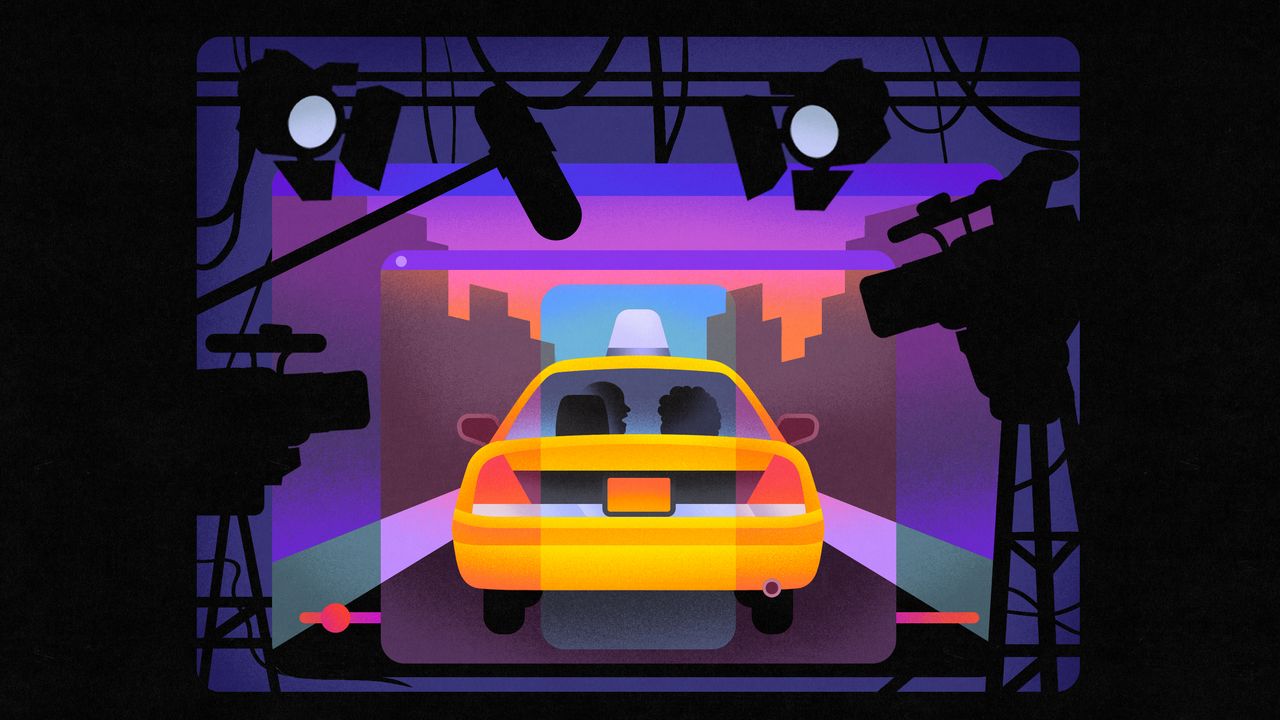
Everything on the internet now is a “show.” No longer can we consider selfies, pithy text posts, or even monologues on front-facing cameras as a universal medium of exchange. No: the successful new standard is the video series, a set of short-form clips, shot by multiple cameras, like a traditional television show. The shows tend to follow a repetitive format, which instantly becomes shtick. “Track Star” is a game show in which celebrity contestants identify the artist behind a given song to earn increasing amounts of money. “Boy Room” follows its host, Rachel Coster, as she investigates, mocks, and then renovates the decrepit bedrooms of twentysomething men. “Sidetalk” is a series of chaotic person-on-the-street interviews in New York, with participants’ faces filling the camera’s vertical frame. “A View, from a Bridge” has subjects pick up a phone mounted on a bridge and share an emotional autobiographical anecdote or lesson. These series and their ilk, hosted by accounts on TikTok and Instagram, have accrued millions of followers and become the successor to cable news and late-night talk shows as mandatory stops for musicians, actors, and politicians looking to self-promote. If the show is the medium, the clip is the message: an entire video shoot reduced to its catchiest few seconds, reaping the maximum amount of attention with the minimum of content.
One of the most successful of these shows is “Subway Takes,” created by Andrew Kuo and the New York comedian Kareem Rahma, in 2023. In each episode, Rahma sits next to his subject, whether established celebrity or opinionated rando, on the train, and asks them for their spiciest opinion, which they deliver and then defend. (Jennifer Lopez recently appeared and caused an online firestorm with her take that one must be born in New York City to qualify as a real New Yorker.) The formula has turned Rahma into a ubiquitous new-media figure—the Subway Takes Guy, a beloved TikTok talking head. Now he’s pursuing a new phase of his career, as something more like a traditional TV host, though the substance of what he’s making has barely changed. Before “Subway Takes,” he had a different TikTok show, “Keep the Meter Running,” which showed him jumping into New York City taxis and having the drivers take him to visit their favorite places. In May, he revived that conceit for a series of twenty-ish-minute “Keep the Meter Running” episodes, uploaded to YouTube every Wednesday.
Judging by the first five episodes, the relaunched “Keep the Meter Running” sits uncomfortably between old-style cable production and online-first video. Its credits cite more than twenty people, including producers, a mixer, a casting director, and a colorist—not quite the D.I.Y. YouTube operation of yore. The show is narratively ambitious; social-media commenters have been quick to compare Rahma to Anthony Bourdain, a garrulous travelogue front man. Rahma, whose late father, an Egyptian immigrant, was a cabdriver, accompanies the drivers on anthropological outings to such destinations as a Cuban dance lounge, a Russian bathhouse, and a taxi-driver clubhouse. Each episode ends with a Bourdain-esque coda in which the host delivers a brief, pat conclusion: After playing soccer with Hanny, an Egyptian driver, Rahma says, “Now that I’m a father, I see my dad in myself.” After partying with Homero on a double date at the Cuban lounge, he says, “Sometimes all it takes is a couple of passion-fruit mojitos, a new pink suit, and a stranger willing to teach you the merengue at lunchtime to remember that it’s O.K. to be a little spontaneous.”
To follow in Bourdain’s capacious footsteps is no crime (and, if it is, many people are guilty of it), but Rahma is a surprisingly downbeat, reticent passenger, particularly compared with his teasing, provocative persona on “Subway Takes.” The editing of the show is frenetic, the better to hold a distractible YouTube audience’s attention and provide fodder for clips, and as a result much of the dialogue comes across as choppy, with Rahma inserting quick punch lines. (Instead of commercial breaks, there are ads abruptly spliced in, at least if you don’t pay for a YouTube subscription.) The premise wears thin; viewers don’t learn much about the locations they vicariously visit. The stars of the show are the drivers, who recite their biographies in sound bites: Norman, who takes Rahma to a bowling alley, explains that he raised his younger siblings from the time he was nine, and that he met his now wife while participating in a bowling league. He is initially a staid presence but begins to tear up while recounting his childhood as Rahma listens from the back seat; then the emotion is undercut with a goofy scene at a “rage room” in which the pair smash china and computer monitors. There’s a thwarted, in-between quality to the proceedings: the show is not long or intimate enough to go very deep, and it’s not always focussed enough to be funny. Rahma strives for a cinema-verité aesthetic, with footage sometimes shot on vintage digital cameras, but the show’s style can’t overcome the limits of its format.
