


Photo-Illustration: Melinda Sue Gordon/Universal Pictures (Odyssey), Getty Images (Remaining)
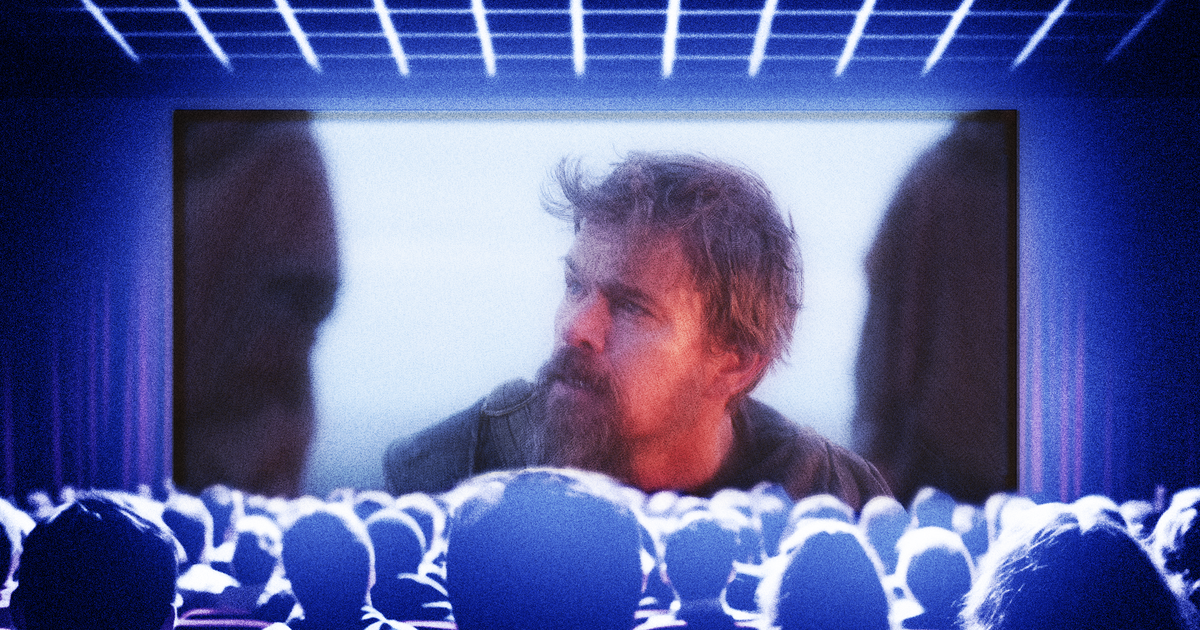
On a recent Wednesday morning, I paid $29.18 for one ticket to see The Odyssey at the Regal Deer Park Imax on Long Island. The screen there measures 50 feet wide by 31 feet tall — enormous compared with my television but modest next to the screens most people imagine when they hear the word Imax. It’s also the wrong shape. Christopher Nolan shot The Odyssey with Imax cameras, which capture a tall picture designed to fill the company’s original massive, nearly square screens — some over seven stories high — with images bulging above and below the borders of an ordinary movie. Deer Park’s screen is just a standard rectangle, lit by a single laser digital projector that can’t display the film’s full aspect ratio. So for my $29.18, I watched one of the most visually ambitious films ever made with its head and legs chopped off.
Meanwhile, 40 miles west at the Imax inside the AMC Lincoln Square 13, The Odyssey is playing the way Nolan intended — off a 70-mm. film print on a screen 101 feet wide and 76 feet tall. Lincoln Square is one of only 25 theaters in the U.S., and 41 on earth, that can show the movie this way. Face value for those tickets is $33, but good luck finding one: Odyssey screenings at Lincoln Square have largely sold out through mid-August. Pairs of seats have traded on eBay for nearly $1,000, and one guy told Gothamist he’d come all the way from Florida just to catch a 7 a.m. screening.
Everything about Imax is annoying. The prices are outrageous. Screenings often fill up as soon as they go on sale — some 70-mm. showings of December’s Dune: Part Three have already sold out. Imax has also diluted its own brand so aggressively that the same four letters can describe both the Great Wall of Lincoln Square and suburban screens barely bigger than the ones in the adjacent auditoriums — a bait and switch that moviegoers long ago dubbed “LieMax.” Yet the hysteria exists for a reason and it isn’t just screen size. It’s that an Imax theater has, over the past decade and a half, become one of the last places where audiences can count on a movie actually being shown well.
Today there are 417 theaters bearing the Imax logo in the U.S., and many share little in common. Only about 50 have the squarish screens the company was built on, and just half of those still have projectors that can run 70-mm. film. Nine are domes at places like science museums. Others, like the one at the Regal New Roc in New Rochelle, which opened in 1999, have giant film-era screens but aren’t able to show The Odyssey on 70-mm. The rest are retrofits like my local theater — ordinary multiplex auditoriums Imax began converting in the mid-aughts, giving them somewhat bigger screens, upgraded sound, and hefty surcharges. Some have new laser projectors; others still run legacy 2K systems that deliver fewer pixels than the TV in your living room. (To write this story, I consulted a crowdsourced spreadsheet of screen dimensions and projector specs maintained by hobbyists because Imax wouldn’t confirm them itself.)
The movies are just as inconsistent as the theaters. Exactly one feature film in history — The Odyssey — was shot entirely with Imax film cameras and fills a traditional Imax screen from floor to ceiling for its whole run time. A second group — Oppenheimer, Sinners, many other blockbusters — uses the format only for some scenes so the picture grows and shrinks as it plays. A third group — increasingly just most wide-release movies — contains no Imax footage but plays on Imax screens anyway. These films more or less fill a retrofitted screen, while on a traditional Imax screen they occupy a strip across the center. Which version you’re buying on any given night depends on what kind of movie it is and which Imax theater you’re sitting in, and the Fandango app doesn’t explain any of this at checkout. The label on the ticket usually just says “Imax.”
The good news for Imax was that while it was muddying the meaning of its own name, the rest of the movie-theater business was self-imploding. If you’ve been to a multiplex lately and suspected the movie looked dim, blurry, or crooked, you weren’t imagining it. At ordinary theaters across the country, the basic craft of putting a bright, sharp picture on a screen has collapsed. Around 2009, the major theater chains — AMC, Regal, and Cinemark — swapped the 35-mm. film projectors in their standard auditoriums for digital ones in large part so they could cash in on 3-D showings of the original Avatar. Studios saved on mailing film prints, and theater owners got to fire their projectionists, skilled engineers who monitored the screen and fixed anything that broke. Projection problems now usually fall to the same overworked theater employee selling popcorn, and a real malfunction can wait weeks for an outside technician or longer if nobody complains. Meanwhile, Avatar-era digital projectors, many made by Sony, which has since abandoned the cinema-projector business, are dying of old age, losing color and brightness as they decay. (AMC and Regal are replacing their projectors with new laser-powered ones, but AMC’s upgrade covers only about half its screens, Regal’s has just started, and lasers don’t solve the neglect problem.)
All of which brings us to Imax’s actual advantage. Your more expensive ticket isn’t just paying for a bigger screen, though you’re often barely getting one. It’s buying quality control. Every Imax auditorium around the world is wired with microphones and image sensors that report back to Imax head-quarters, which monitors the entire fleet of screens around the clock. The sound system runs automated calibrations daily; a sensor adjusts the picture in real time. When something breaks in a way the machines can’t fix, Imax can see it and dispatch a technician.
In other words, an Imax ticket comes with a promise of baseline quality that used to be free with every movie ticket. You can gamble on a standard screening instead, but even standard tickets aren’t that cheap anymore — a regular non-Imax evening seat at Deer Park costs $20.68, which makes Imax’s more certain experience seem like a relative bargain. Certainty, it turns out, is a growth business: Dolby Cinema, the premium format found mostly at AMC, works the same way; Dolby owns the equipment and monitors it remotely. And this spring, when Disney announced Infinity Vision, a certification program for theaters that meet its presentation standards, it reportedly received more than 7,500 applications. Still, today, all this vigilance covers less than 2 percent of America’s roughly 40,000 movie screens.
So should you see The Odyssey in Imax? Yes, obviously, and if you live near one of the 25 theaters that are able to run the 70-mm. print, you can see the real version. But my screening at Deer Park was terrific too. The picture glowed, the sound was clear; nothing blurred, slanted, or bled off the screen. Watching the cropped version, I didn’t miss the treetops or Matt Damon’s feet. I can’t vouch for all 417 Imax locations, but I see a lot of movies and I’ve never walked out of an Imax showing feeling ripped off. I walk out of standard screenings feeling that way all the time.
The trouble is that plenty of people faced with the same math have taken the third option: staying home. Yes, The Odyssey opened to $264 million worldwide, and the U.S. box office is on track to have its best year since 2019. But the rebound is mostly a pricing illusion. Tickets have never been more expensive — Imax is of course exhibit A — and the higher prices disguise how much smaller the audience is. About a third fewer tickets were sold in the first half of 2026 than in the same months of 2019. For scale, The Atlantic just declared “the end of reading” on the strength of a 40 percent decline, over nearly two decades, in the share of Americans who say they read for pleasure on any given day. Moviegoing has been recovering for six years and is still down almost that much. The minimum standard became a luxury product, and fewer people are buying it.
