


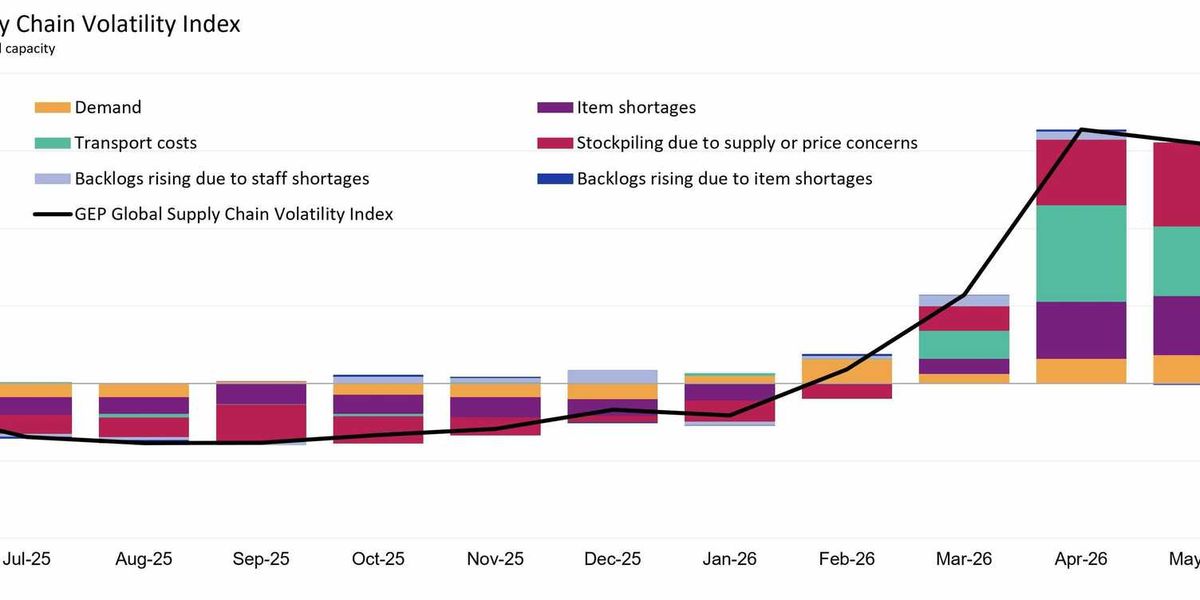
Global supply chain pressures remained elevated in June despite falling oil prices and lower transportation costs, reflecting uncertainty surrounding the US-Iran ceasefire, according to a report from New Jersey supply chain technology vendor GEP.
And relief isn’t forecast to arrive anytime soon, GEP said. Reports from manufacturers of backlogs rising due to shortages of critical inputs were their highest since late 2022. The data suggests supply-chain bottlenecks are likely to persist into at least the third quarter as businesses wait for materials needed to complete customer orders.
To guard against further disruption, manufacturers continued building buffer inventories in June. Reports of safety stockpiling increased again and remained at their highest level since January 2023.
The analysis comes from GEP’s “Global Supply Chain Volatility Index,” which is based on a monthly survey of 27,000 businesses.
“The rise in stockpiling and persistent order backlogs point to one clear conclusion: businesses still don’t trust the global trading environment to remain stable,” said John Piatek, vice president, consulting, GEP. “Despite lower oil prices and easing transportation costs, companies continue buying ahead because they expect further disruption. While this is encouraging for the global economy in the near term, it also shows manufacturers remain very cautious and are planning for more disruption in international trade.”
