


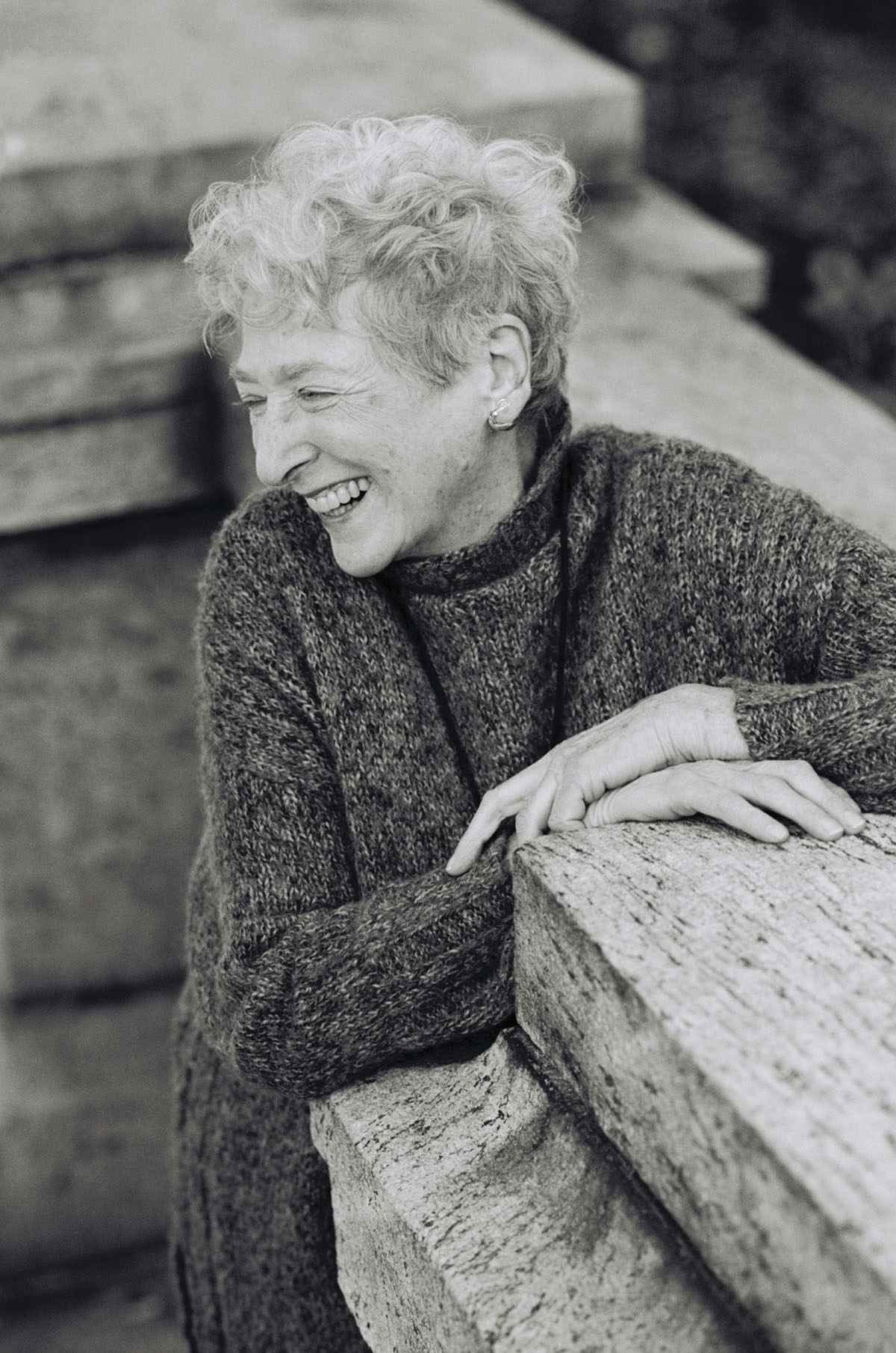
My teacher was one of the people I most wanted to see whenever I visited New York City. Usually I’d call her as soon as I was settled, and when she answered the phone, I’d say, “Hi, this is Jane Bernstein,” and she’d say, “Jane Bernstein!” with such delight. For all I knew, she would have been just as pleased to hear from the plumber or housecleaner; it didn’t matter. It was thrilling to hear her voice and then to arrange a time when we might meet. But in the summer of 2024, I put off making the call. That was the summer I turned 75 and she was 96. Each time I thought about phoning her, I feared that when I said my name, she would say, “Who?” When I thought of her no longer knowing who I was, I was so bereft, it was as if she was already gone.
Her name was Lore Segal, but often, when I spoke of her to friends or to my own students, I referred to her as “my teacher,” though nearly 50 years had passed since I’d sat in a classroom with her. We’d met in the fall of 1975, when I was in my first semester in the MFA program at Columbia University’s School of the Arts. I was 26 and too tender to show off my writing, so although I’d finished a novel and some lumpy, plotless stories, almost no one had seen a single word of anything I wrote. When I sat at the seminar table in the shabby room in Dodge Hall, all I knew about the woman who’d be teaching our class was that she’d recently been widowed. I’d never heard her name or read anything she wrote. I hadn’t known that she’d been on the Kindertransport, the first children’s transport out of Austria in 1938 after the Nazis came to power, and that at 10 years old, she had arrived in England alone and then lived in one house after another.
The woman who took her place at the end of the table was small and self-assured, at least to me, with a pale face and untamed curls. I couldn’t have guessed her age, though at that time in my life, 40 and 60 seemed pretty much the same. She was wry and particular, her whole demeanor changing when someone expressed something pompous or sentimental, and she said with conviction that no one ever again needed to describe someone smoking a cigarette or getting into and out of a car. She also said that for a reader to remember a particular detail, you had to write it one and a half times. (This last “rule” is both impossible to follow and true.)
What I remember best about that semester was the smell of mimeograph fluid on student manuscripts, the empty bookshelves in a room so grim that I imagined myself asking for permission to paint the walls during semester break, and my teacher reading sections from published works—a few paragraphs of Gogol, a page-long story by Leonard Michaels. She had an edge of accent I might have described as European, sophisticated, and when she leaned toward a text, I saw the obvious pleasure she took in sharing a passage and felt the pleasure welling up in me. When had I last heard a story?
Lore held student conferences at her apartment on the Upper West Side, not far from school. When it was my time to meet with her, I stood outside her building, fluttery and excited. The place seemed so grand—the cool lobby of her building, with its tiled floor, reverberating with an echo when I spoke her name at the desk; the black door to her apartment; the bright living room with a baby grand piano and books and comfortable chairs. Lore set a tray of cookies and tea in delicate china cups on a coffee table, and we sat beside each other while she went page by page through my novel-in-progress manuscript.
No one had ever before read my work so closely. Or seen anything special in me. My mother hadn’t: If praise had been in her heart, out of superstition she did not articulate it. Neither had my previous teachers. I was a quiet girl, an unmemorable student. I’d done well enough as an undergraduate because I liked to read and write, and still, I hardly remembered that girl—why should anyone else? And now this extraordinary moment, my teacher reading my words and laughing.
Lore taught only in the fall semester, so nine months passed before I would see her again. I still had not read anything she’d written, though one of the pleasures of graduate school was getting a chance to sink into books during the day: Once, still in my pajamas, I read Anna Karenina for so many hours, the rumble of the subway that ran beneath my building became a Russian train. I don’t believe I bypassed her work because I feared being awed or disappointed; it was rather that she occupied a kind of holy space that left no room for anything else. I didn’t think of her as a writer, with her own practice and her own distinguished body of work.
The next fall I returned to the same classroom, took in the scent of mimeograph fluid and the still-empty bookshelves, sat at the same place I’d occupied the year before, and waited. Lore, wrapped in loose garments, walked briskly into the room and took her place at the head of the table. She looked the same, with her small, pale face and unruly curls, and so, I thought, did I, but she did not nod or greet me, not that first day or the ones that followed, so I was left with this feeling that whatever had transpired the year before was not worth her remembering.
I read and reread that note as if some deeper meaning was beneath the simple sentences. But no: What she wanted to say was right up front. I’m making the introduction. Don’t hold me responsible for whatever happens next.
Again, though, when it was time for our conference, I walked through the cool, high-ceilinged lobby of her building, took the elevator upstairs, nervous, excited. We sat over tea and cookies in this well-worn room worthy of its name: You could tell people lived here, that they read and talked and played piano. She went over my sentences, page by page. Lore never said of my manuscript, This is good. She never said, Keep going. I recall no words of praise, only her interest in an occasional passage, the way she looked up, brightening, and as a consequence, I learned that it was okay—more than okay!—to spend time worrying over words and sentences. I’d previously thought that tussling with sentences was a problem, the sign of an unhealthy perfectionism, but I realized now that it was something a writer did.
I could tell what parts of my manuscript Lore liked, but I could not gauge the depth of her interest until the following spring, when she sent a short letter suggesting that when I completed the draft of my novel, I send it to her agent, who I soon learned was famous in literary circles. I spent half a day sitting at the rickety kitchen table in my apartment, working on a thank-you note. None of my banal expressions of gratitude seemed good enough to mail to her. I ripped up one note after another until there was only a single card left in the box. This I reluctantly sent.
Lore responded with a second note I imagine she dashed off. Maybe it’ll work out with this agent, maybe not; whatever happens, don’t hold me responsible. That was the gist. I read and reread that note as if some deeper meaning was beneath the simple sentences. But no: What she wanted to say was right up front. I’m making the introduction. Don’t hold me responsible for whatever happens next.
Lore’s agent passed it to her assistant, who declined. A few months later, I found a new agent who placed the novel, and I began to think of myself as a writer. Of course I already was a writer, but I didn’t believe I had the right to call myself one, and I hid behind other, easier labels—magazine editor, graduate student—until my book was published.
I can’t remember when we began to meet or what it took for me to overcome my shyness and call Lore, though surely I was the one who initiated our meetings. In the early years, we went out for dinner. Later, we met for lunch instead, and after she turned 90, I brought food to her apartment. No matter how much time had passed—20 years, 30, 40—when I walked into the lobby of her building, the awed, fluttery feeling returned and I briefly became that young student, afraid of spraying cookie crumbs when I spoke. But as soon as we were together, my nervousness vanished, and so did our long-ago history, and I felt the pure pleasure of being with this singular woman whose interest never dimmed.
Lore always asked whether I was still writing; when I started to teach, she was eager to know what my students were reading. Once, back at her apartment, we tried to reconstruct our seminar from decades back, and I did my best to fill her in on who had published a story or book and who had turned to other endeavors. She was a serious reader of literature, but life interested her just as much: She watched The Real Housewives of Beverly Hills, fascinated by the mores of these women on TV. Her delight in language and in all that a sentence might contain was such that she liked it when a stranger in the airplane seat beside her struck up a conversation. Even on international flights? I remember asking in horror.
Even then.
She never complained and had no interest in any kind of grumbling—about the glossy high-rises that shot up on Broadway or the little shops forced out of business, about crime or avarice or the ups and downs in a writer’s life. She was candid, almost amused, it seemed, about her physical infirmities: One year when I visited, she asked me to reach down to plug the electrical cords into the outlets—her housecleaner was always pulling them out and it was too difficult to plug them back in. Later, when she couldn’t take the dishes from the cabinets while using her walker, she asked me to set the table for our dinner. When I visited in later years, I admired the way she faced what was— instead of seeing aging as a tragic, downward trajectory.
Maybe it was for the best that a few years passed before I began to read Lore’s fiction. Her voice and playfulness, even when the subject was grim, enthralled me. Her ear for English was brilliant, and her scenes bristled with the absurdities and misunderstandings in her characters’ flawed efforts to communicate.
It’s one thing to love a writer’s work—before taking Lore’s workshop I’d been obsessed with Grace Paley’s stories, and it had done me no lasting harm to try (and fail) to write like her. But to know my teacher as a writer with such a distinctive sensibility might have made me more self-conscious about my pages, impossibly so. All I know is that by 1991, when I moved to Pittsburgh to join the creative writing program at Carnegie Mellon University, I had read and reread everything she’d ever written, including her children’s books, which my daughter adored and were complicated in the same ways as her fiction for adults. (And now, writing this, I remember Lore’s extolling the virtues of work that was “nicely complicated.”)
At the start of Her First American, Lore’s groundbreaking third novel, protagonist Ilka tells Carter Bayou, the Black intellectual and first “real” American she meets, “I have believed I am being in Utah, isn’t it?” As the novel progresses, Ilka’s language improves, and when readers meet her again in “The Reverse Bug,” a story Lore would later read at Carnegie Mellon, Ilka is a teacher of conversational English. In the story, Lore deftly captures the students’ various Englishes and Ilka’s no-nonsense corrections. When Gerti, one of the students, tells the class, “I have lived before in Uruguay,” Ilka says, “We would say, ‘Before that I lived …’ ” Gerti, then trying to recount her history, explains that she needs to “tell all the people to bring my father out from Vienna before come the Nazis and put him in concentration camp.” “In ‘the’ or ‘a’ concentration camp,” Ilka tells her. A symposium is being offered the following night. The theme, Ilka informs her students, is this: “ ‘Should there be a statute of limitations on genocide?’ with a wine-and-cheese reception …”
The scene is bleakly amusing and also unsettling—genocide, complete with wine and cheese!—and reminded me of the Nazi officials at Wannsee, who sat for a formal dinner, with crystal glasses, polished silver, and fine china, while they discussed the “Final Solution to the Jewish Question.”
The writing remains delightful as the story continues, and the symposium Ilka mentioned is disrupted by a scream of unknown origins. A character attempts to find the source of the scream and decides that there is a “need to understand how the scream of Dachau is the same, and how it is a different scream from the scream of Hiroshima …” Here’s horror, then, free of platitudes or sentimentality, unyielding. It’s no surprise that in 2010 Jennifer Egan chose to read this story on the New Yorker fiction podcast, and the story was chosen for the podcast again in 2016 by Alice Mattison.
Lore was the first writer I invited to Carnegie Mellon. At the beginning of the evening, before she read “The Reverse Bug,” I stood at the lectern in an auditorium where all the seats in the tiered rows had been taken. I looked out at the audience and felt great affection for the students filling the seats: the ones who were on fire, who read with the same kind of hunger as my own and who shared the same fervent, impractical, unstoppable desire to write stories, alongside the ones who just wanted to try out writing a story and enjoyed being in class.
Though I’d hoped to speak about her extemporaneously, I was worried I’d go blank, so I had written down some sentences culled from reviews, on paper that was rolled up and softening in my sweaty hand: that her first book (Other People’s Houses) had been called “immensely impressive, unclassifiable,” and her third book (Her First American) may have brought her “closer than anyone to writing The Great American Novel.” I often told impatient students that it typically took many drafts to get a story ready to send out—many, many drafts—and yet, I did not notice while writing these formal notes that Her First American had appeared 18 years after Other People’s Houses.
That night, I turned to my teacher, then looked out at my students and could not catch my breath. My voice wobbled, as if I were speaking at a memorial service.
I struggled as a writer, and though I tried to tell myself that “struggling” went with “writer” the way “love” once went with “marriage,” I was bogged down by this feeling that I had failed to grasp what was second nature to other writers, and it was the reason why I was so slow, and why I failed so often. In the years when my children were young, I was always hiding in places where I could not be found—the medical school library, coffee shops in distant neighborhoods. I was unavailable for morning appointments, said no to lunch dates, thought of weekends as a time when maybe I could carve out some hours to write.
Enough work came to fruition for me to be promoted and tenured, and I’d received grants and positive reviews and other affirmations, but not enough to spare me from a feeling of futility, an awareness that being a writer left me no time to devote to the tender, wounded world around me, that I could be a better citizen and friend if I quit. And yet, the thought of not writing filled me with panic.
By the 21st century, my despair was shared by other writer friends. Legacy publishing houses had been absorbed by media conglomerates headed by CEOs obsessed with the bottom line. Editors of a certain age were fired. The appetite for fiction had dwindled, and work that had once found a readership no longer had a home. My agent, unable to place one of my manuscripts, said, “I can’t give away novels written by women in their 50s and 60s.”
One night, at dinner with Lore, I spoke of my frustrations, the way I might have with my other writer friends. She was in her late 70s then, and beautiful to me, still with her untamed curls and pale, delicate face, her playful tone of voice and alertness. This was 2004, and nearly 20 years had passed since her Great American Novel had garnered such admiring reviews. When I mentioned her name, it was a rare person, even among serious readers, who knew her work. All I’d seen of her fiction that year was a story in a pretty good literary journal I’d thought might consider something of mine.
What would I do if I didn’t write? she said in a cheerful way. What do people do?
I sat without speaking, as if I honestly could not say.
Tell me, she insisted. What do people do all day long?
As if I were still her student, I felt compelled to list some possibilities: They organize their photographs or visit their friends. They take up birdwatching or read. They watch TV, go to yoga classes, volunteer.
I didn’t think to ask if she was ever overcome by a sense of futility, or how she worked through fallow periods when no editor was interested in her work. I did not think to ask what she had felt in those 18 years she’d labored over Her First American, if it had been hard to keep going, or if she believed she was writing a great book. What did it take to believe enough in your own work that you keep on going for decades, if necessary? I didn’t think to ask these questions because angst was no more a topic of conversation than our sexual proclivities, and anyhow, I knew, in a way, that for her, writing was as necessary as food, the process severed from the hoped-for conclusion.
I’d been invited to Lore’s 90th birthday party, and guests had been asked not to bring gifts. The day before the event, I wrote—typed, really—a letter to her. I had not planned what I’d wanted to express, but the words came in a great, emotional rush, unlike with the handwritten thank-you note I had labored over 41 years before. As soon as I began to write, I realized it was a love letter, and that I was saying what I had not fully understood and never could have spoken because I’d read her reserve and in turn was reserved with her, and because until I saw my own sentences, I didn’t realize the depth of my feelings for her. It was no longer gratitude, not after so many years, nor was it awe, though I found her work to be remarkable. What I felt was built on our history and complicated by all that was unsaid. I loved Lore. I loved listening to her and conversing with her and hearing her say, “Jane Bernstein!” It was love, though different from the love I had for my children or husband or closest friends, as if with Lore I was a younger, more vulnerable version of myself.
I walked to her building empty-handed, except for the letter I’d tucked into my shoulder bag. As I headed west toward the Hudson River, I felt the biting March wind. The lobby of her building was unchanged from when I’d first entered as her student. I said her name at the desk and stepped into the elevator. A few guests stood around her dining room table, where a large salmon served as a centerpiece. The older, decidedly unglamorous group included a few neighbors, a cellist who would play for us later that afternoon, and a famously irritable writer whose work I admired, though not as much as Lore’s.
I didn’t realize the depth of my feelings for her. It was no longer gratitude, not after so many years, nor was it awe, though I found her work to be remarkable. What I felt was built on our history and complicated by all that was unsaid.
Eleven years earlier, a small press had published Shakespeare’s Kitchen, linked stories, many that had appeared years before in The New Yorker. After the book was a finalist for a Pulitzer, a different press reissued Lucinella, Lore’s second novel, in 2009. Then, in 2014, Half the Kingdom was published. One might think that suddenly, in her later years, she had begun working hard, when anyone who knew her could say she’d never stopped writing.
I chatted with a few of the guests and listened to the cello recital. Then, when no one noticed, I took the letter from my bag, stashed it under a canister in the kitchen, and rejoined the guests.
She never mentioned the letter when we later met, and neither did I, but now I felt my love for her and ached from it, while I waited to see her one more time.
Lore answered the phone and said, “Jane.” Her voice was faint and breathless, as if speaking my whole name would take too much effort. Then she said that her daughter was keeping her social calendar because she could no longer do it. Get in touch with her to arrange our visit, she told me.
I found her daughter’s email and contacted her promptly.
I’d known Lore for nearly half a century, shared many meals with her in neighborhood restaurants. I knew that she had a daughter and son and three grandchildren, was in a reading group with three formidable women writers, and felt at home on the Upper West Side, where she had lived for more years than I’d known her. Once, when we were walking down West End Avenue, I asked whether she still had friends nearby, and she pointed to one building and then another saying, “there” and “there.” She knew my older daughter, and soon after I remarried at 70, I took my spouse to meet Lore. Most people who asked about his work quickly backed off after hearing the preliminaries; Lore got him to explain the arcane details of his research in affective computing.
And yet, there was so much we didn’t know about each other. Maybe because she saw complaining as a waste of time, she never mentioned her ailments or surgeries, though over the years, she’d had many health problems. When she told me to contact her daughter to set up a date, she did not say that the month before, while the two of them were visiting friends on Shelter Island, she’d collapsed and gone “from being able to walk to not being able to walk in the space of a day,” as her daughter later explained to Matthew Shaer, whose New York Times Magazine profile of Lore would appear that fall. I didn’t know that she had lost vision in one eye and was in hospice in her apartment, and that Shaer was spending as much time with Lore as she could manage in an effort to capture her spirit and will in her last days.
My mother tires very easily. That was all Lore’s daughter wrote. If I was free, I could stop by on Sunday for no more than 30 minutes.
Sunday was perfect. I was relieved, eager to see her, even if only for a few minutes.
But on Saturday, Lore’s daughter contacted me again to say she’d erred in giving me that particular time. She was terribly sorry and hoped I’d understand. These last weeks had been very difficult.
I thought I understood. Even so, I persisted. Please. Was there another time I could see her, just for a few minutes?
Many people love and want to see my mother, she wrote.
In the summer of her dying, when the physical act of writing was too demanding, Lore dictated a story to her daughter and daughter-in-law. “I tell them where the words go, and they put them down and read them aloud, and then I change them, and together we change them again until it’s what I want,” she explained to Shaer. When I read that I thought, Yes, of course she did. That dictated piece, “Stories About Us,” would appear in The New Yorker a week before she died.
That same summer, my teacher, whose writing thrummed with all that could not be overtly stated, found time for me. It meant everything to pause and compose myself, and trust what had always been shown.
I remember nothing of our last conversation. The heat of my grief seemed to incinerate every word.
Now, though, I can hear Lore’s voice and the sound of her laughter, can recall her asking, What else would I do? A particular phrase of hers occurs to me at unexpected moments. Nicely complicated—like the best stories, like the stories she left me, left all of us.
