

SECL Leads India in Scientific Mine Closure, Converts Abandoned Mines into Sustainable Community Assets – Indian PSU

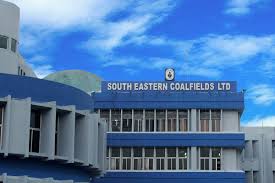
South Eastern Coalfields Limited (SECL) has emerged as India’s leader in scientific mine closure, successfully completing the scientific closure of 28 abandoned mines—the highest among all subsidiaries of Coal India Limited. The company now accounts for nearly 67% of all scientifically closed abandoned coal mines in the country.
A remarkable 25 mines were scientifically closed during FY 2025-26 alone, marking the highest number achieved by any organisation in India in a single financial year. The achievement highlights SECL’s growing focus on sustainable mining practices and responsible environmental stewardship.
At SECL, mine closure is treated as an integral phase of the mining lifecycle rather than merely the end of coal extraction. Once mining operations cease, the emphasis shifts to securing abandoned mine workings, restoring ecosystems, reclaiming degraded land and preparing it for productive future use through scientific rehabilitation.
Phased Closure Plan
Out of 54 abandoned mines identified for scientific closure, SECL completed the closure of three mines during FY 2024-25 and another 25 mines during FY 2025-26. The company has set an ambitious roadmap to scientifically close 11 additional mines in FY 2026-27 and the remaining 15 during FY 2027-28, thereby completing the rehabilitation of all identified abandoned mines.
To ensure better planning and stakeholder participation, District Mine Closure Advisory Committees (DMCACs) have been constituted across all ten operational districts of Chhattisgarh and Madhya Pradesh where SECL operates.
Scientific Reclamation and Productive Land Use
SECL’s scientific mine closure process includes permanent sealing of underground mine openings, demolition of obsolete infrastructure, treatment of subsidence areas, installation of safety measures, land reclamation, plantation and ecological restoration.
The reclaimed land is subsequently evaluated for productive utilisation, including renewable energy generation, community infrastructure, livelihood creation and environmental conservation. Currently, the company is implementing eight mine repurposing projects.
Among the flagship initiatives, the Kenapara Eco Park at Bishrampur has already been completed on reclaimed mine land. A 5 MW solar power project integrated with an eco park is under implementation at Vivek Nagar Underground Mine.
The company has also commissioned 20 MW solar power plants at Bhatgaon and Bishrampur, while a 40 MW solar project at Pinoura Underground Mine is under implementation. In addition, a 55 MW solar power project covering Jamuna Underground and Govinda Underground mines has been planned, further expanding renewable energy generation on reclaimed land.
Abandoned Mines Become Community Assets
Several reclaimed mine sites have been transformed into valuable public infrastructure benefiting nearby communities.
Reclaimed land at Korba 3 & 4 Underground Mine has been integrated into the Bal Vihar Higher Secondary School campus. North Jhagrakhand Underground Mine now accommodates a public park and a water filtration plant, while a former service building at Subhash Incline has been converted into a municipal water treatment facility.
Similarly, South Jhagrakhand 5 & 6 Underground Mine now houses a CISF post, South Jhagrakhand 10 & 11 Underground Mine has been developed into a public park, Banki 7 & 8 Underground Mine supports a health centre and weekly market, and Banki 5 & 6 Underground Mine has been converted into a community centre.
Environmental Restoration and Livelihood Generation
Environmental restoration remains central to SECL’s mine closure programme. At Chachai Underground Mine alone, nearly 35,000 saplings have been planted following the sealing of mine openings and demolition of obsolete structures.
Dense plantations have also been developed at Ramnagar Underground, Korea Underground and Malga Underground mines, while naturally regenerated vegetation has been preserved at Rajgamar 8 & 9 Underground and Pure Chirimiri Underground mines to support biodiversity and ecological recovery.
Beyond ecological restoration, SECL has organised skill development programmes and health camps across reclaimed mine areas. Local communities have received training in computer education, tailoring, handicrafts, mushroom cultivation, pickle making and other income-generating activities.
The company is also promoting sustainable livelihoods through pisciculture on reclaimed mine water bodies. These initiatives are expected to produce around 25 tonnes of fish annually, create employment for 206 people and generate potential annual incomes of approximately ₹3 lakh per participating family.
Future mine repurposing plans include eco-tourism, pisciculture, poultry farming and masala processing at Jamuna Open Cast Mine; honey processing, turmeric cultivation and cage culture at Baiga Open Cast Mine; and a training centre, compressed bio-gas (CBG) plant and fruit-bearing plantations at Banki Underground Mine.
CMD Harish Duhan on Sustainable Mining
SECL Chairman-cum-Managing Director Harish Duhan said scientific mine closure represents the responsible completion of the mining lifecycle and reinforces the company’s commitment to sustainable mining. “At SECL, mine closure is not the end of mining but the beginning of a new chapter. Our objective is to restore land, protect the environment and convert reclaimed mine areas into productive assets that generate clean energy, support livelihoods and serve local communities. Every scientifically closed mine reflects our commitment to responsible mining and sustainable development,” Duhan said.
