


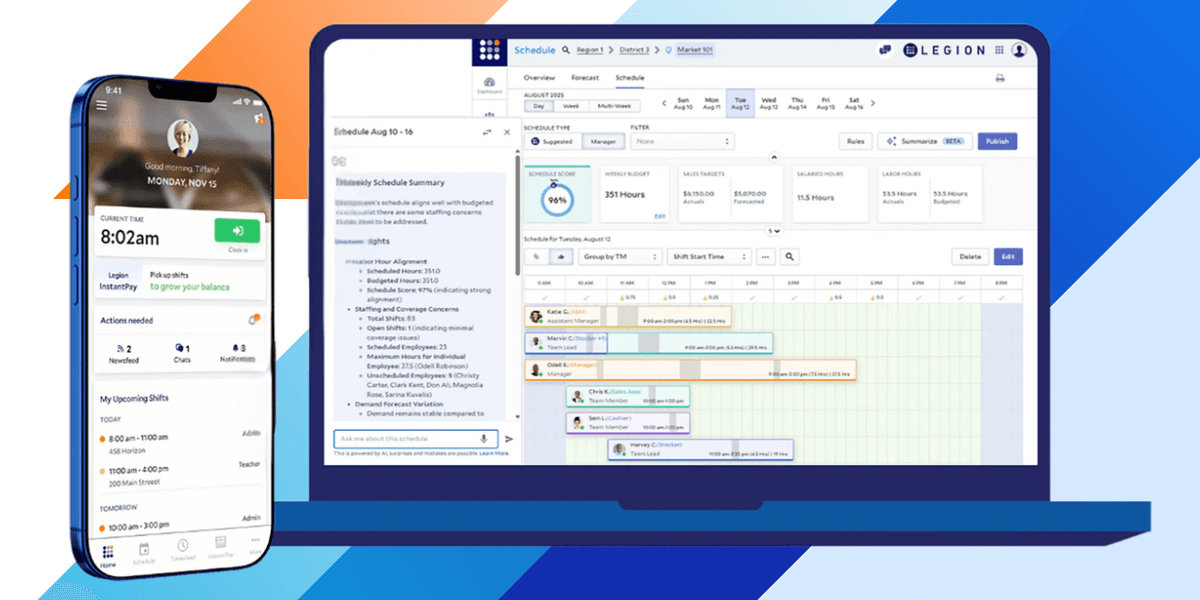
Workforce modernization software that uses AI to schedule workers’ shifts is beginning to deliver on two goals that had long been seen as competing priorities—helping organizations operate more efficiently while also giving employees greater flexibility—according to a study from California-based Legion Technologies, a workforce management platform vendor.
The study also pointed to future opportunities in modernization, such as using AI to improve manual tasks like scheduling, while giving managers more time to lead teams. Those results came from Legion’s “2026 State of the North American Hourly Workforce” report, which surveyed 1,044 hourly employees and 846 managers across 11 industries, including retail, fashion, grocery, warehousing and distribution, and transportation.
The survey showed that employees and managers reported consistent priorities across various industries. Specifically, employees want schedules that better reflect their preferences, more control over when they work, and greater flexibility in accessing their pay. And managers want technology that makes it easier to create and adjust schedules, balance employee needs with business requirements, and lead their teams.
According to Legion, that progress comes as employers continue to face significant workforce management pressures. Staffing shortages and turnover remain persistent challenges, while many employees are seeking more hours than they currently receive or are considering leaving their jobs in the next 12 months. The research suggests that these issues are closely connected: better matching can help qualified, available employees access the hours they want while reducing the manual work required of managers to build schedules that work for both employees and the company.
Additional findings showed that:
- Hourly workers prioritize flexibility in both scheduling and pay. 53% of employees say their top priority is control over their schedule, which ranks second only to pay, and 38% say early access to wages is a top incentive. On scheduling, 82% of employees say technology helps their manager accommodate schedule preferences.
- Managers see the same needs for flexibility from an operational perspective: 53% of managers say if they can’t offer flexibility, it leads to retention challenges. Delivering flexibility can help alleviate staffing shortages and turnover, which 51% of managers say are their biggest workforce challenges.
- AI has the potential to connect employees with more of the hours they want, match employees to the right shifts, and ensure that shifts are properly staffed. This is good news for the 35% of employees who say they want more hours than they currently receive. In fact, employees who don’t receive enough hours are twice as likely to consider leaving their job within six months as employees who do receive enough hours. At the same time, 72% of employees want to be reassured that AI will not replace their jobs or reduce their hours.
- As companies modernize, managers report spending less time on administrative work. The share of managers who spend three or more hours per week on scheduling declined from 58.5% to 51%, while time spent tracking attendance also declined from 52% to 45%. With less time spent on administrative work, 39% of managers say they would spend the time coaching and developing their teams. However, one major manual process remains: 49% of managers still fill open shifts by calling or texting employees individually, highlighting an opportunity to automate more routine work.
