


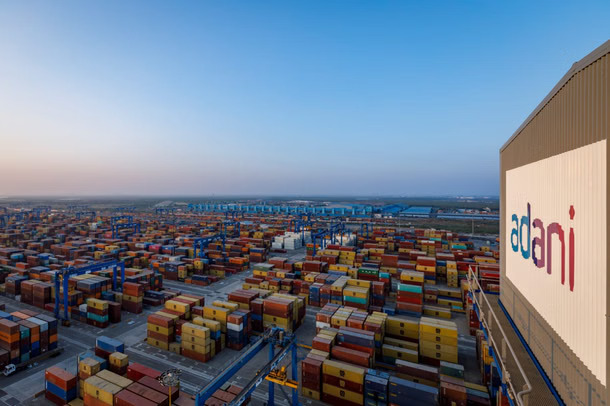
MUNDRA: A significant development has emerged in the ongoing dispute over empty-container handling at Mundra Port, with Adani Ports and Special Economic Zone Ltd (APSEZ) restoring the empty depot codes of yard operators that had been frozen earlier this month.
The development is expected to bring an end to the prolonged disruption involving empty-container depots and transport operators at Mundra and facilitate a gradual return to normal operations.
The breakthrough follows discussions between the Mundra Empty Container Yards & Allied Services Provider Association (MECYASA) and senior APSEZ representatives, resulting in an understanding aimed at resolving the differences over the handling and movement of empty containers.
New Charge Mechanism Agreed
Under the arrangement reportedly reached between the stakeholders, APSEZ will levy a charge of ₹2,500 for a 20-foot container and ₹3,500 for a 40-foot container on shipping lines for empty containers delivered to or collected from Mundra Port.
The shipping lines are expected to recover the applicable charges from their customers.
APSEZ is also expected to formally withdraw its earlier decision concerning the freezing of depot codes of empty-container yards operating outside the port premises, thereby enabling these facilities to resume their role in the container logistics chain.
Dispute Triggered by Change in Empty-Container Routing
The dispute originated following APSEZ’s decision to introduce a revised system for handling empty containers at Mundra.
Under the earlier arrangement, shipping lines could nominate empty containers to depots located outside the port area. The revised mechanism sought to direct such containers towards designated yards within the Mundra Special Economic Zone (SEZ).
APSEZ had maintained that the new system was intended to improve operational efficiency by reducing unnecessary movement of empty containers, easing road congestion, improving truck turnaround times and reducing transportation-related costs and emissions.
The port operator had also cited stronger controls over container inspection, safety and security as among the objectives behind the proposed system.
However, the change met with resistance from operators of empty-container yards outside the port area, eventually resulting in a wider disruption involving container transporters serving Mundra.
Wider Impact on Mundra’s Container Ecosystem
The dispute assumed significance because of Mundra Port’s critical role in India’s containerised trade. The port handles a substantial share of the country’s container traffic, while empty-container movements form an important link in the smooth functioning of import-export supply chains.
The disruption involving empty-container yards and transporters had therefore raised concerns across the shipping, logistics and freight-forwarding community, particularly over potential delays in container availability and increased operational costs.
The latest understanding between APSEZ and MECYASA is expected to provide greater clarity to shipping lines, depot operators, transporters and cargo stakeholders while restoring predictability to empty-container movements around Mundra.
Focus Shifts to Smooth Implementation
With the depot codes being restored and a new commercial mechanism emerging from the discussions, industry stakeholders are now expected to focus on implementing the agreed arrangement and ensuring that empty-container operations return to normal.
The resolution also highlights the importance of coordination among port operators, shipping lines, container depots and transporters in maintaining an efficient container logistics ecosystem.
For Mundra, one of India’s key gateways for containerised cargo, a stable and predictable empty-container network will remain crucial to supporting uninterrupted EXIM trade and maintaining supply-chain efficiency.
