


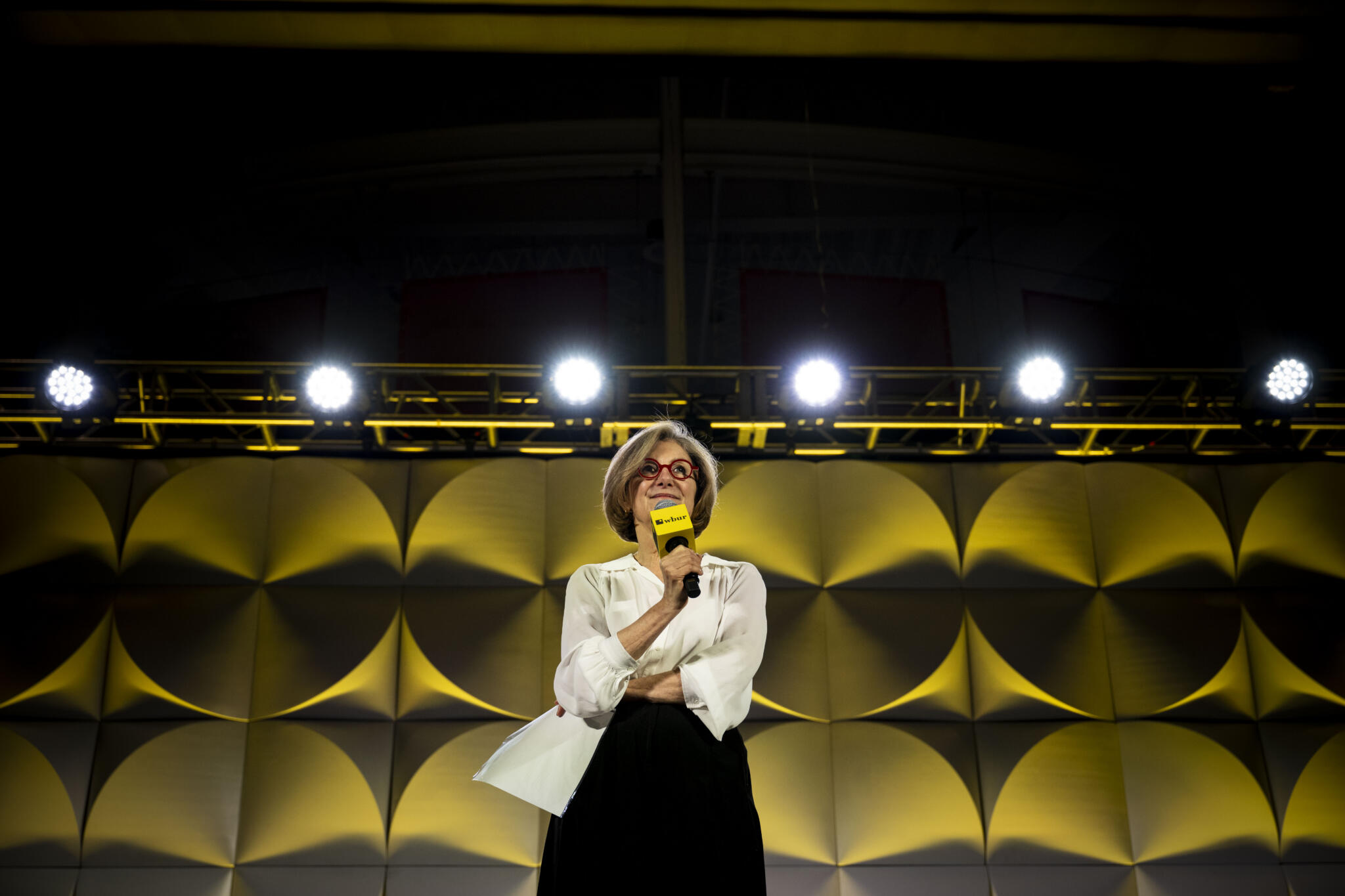
WBUR CEO Margaret Low will step down in late June, ending a tenure of more than half a decade leading Boston’s NPR news station.
“WBUR is in extraordinarily good shape,” Low said in an interview Tuesday morning. “I thought it was a really beautiful time to pass the baton.”
Low, 67, plans to stay on the job until the end of June 2027 and announced the decision in an email to staff Tuesday. She will join WBUR’s Board of Directors the following fall.
A Belmont native, Low joined NPR at age 23 as an overnight production assistant and rose to senior vice president for news, the network’s top editorial job. She then spent five years running The Atlantic’s live events division before becoming WBUR’s first CEO in January 2020 – “just in time for a global pandemic,” she said.
“She was hands down just the right hire at the right time,” said WBUR’s Board of Directors Chair Paul Gannon, who also led the search that hired Low. He credited her with “transformational results” at WBUR, pointing to ratings, journalism awards and a financial turnaround.
“I’ve been working essentially eight days a week for 45 years,” Low said, adding, her role at WBUR has “been the job of a lifetime. I’ve loved absolutely every minute of it.”
The board has identified a firm to lead a search for Low’s successor, according to Gannon.
Low has led WBUR during a turbulent period for public radio. In July 2025, Congress approved President Trump’s request to claw back $1.1 billion in federal funding for public media. The cuts cost WBUR roughly $1.6 million a year — or 3% of its annual budget. Listeners responded, with a huge increase in new members for WBUR and successful fundraising drives.
Low also pushed WBUR’s effort to expand beyond the airwaves. She built out the programming at CitySpace, the station’s events venue, and in 2025, launched the WBUR Festival — which she calls “WBUR’s love letter to Boston.”
“In the moment we’re in, the act of gathering feels even more important,” said Low.
But Low, who started her career cutting tape during overnights at NPR for Morning Edition, said broadcast radio remains central to WBUR’s mission, noting in her email to staff that WBUR is the top rated station in Boston’s market.
“There is something so powerful and intimate about audio,” she said.
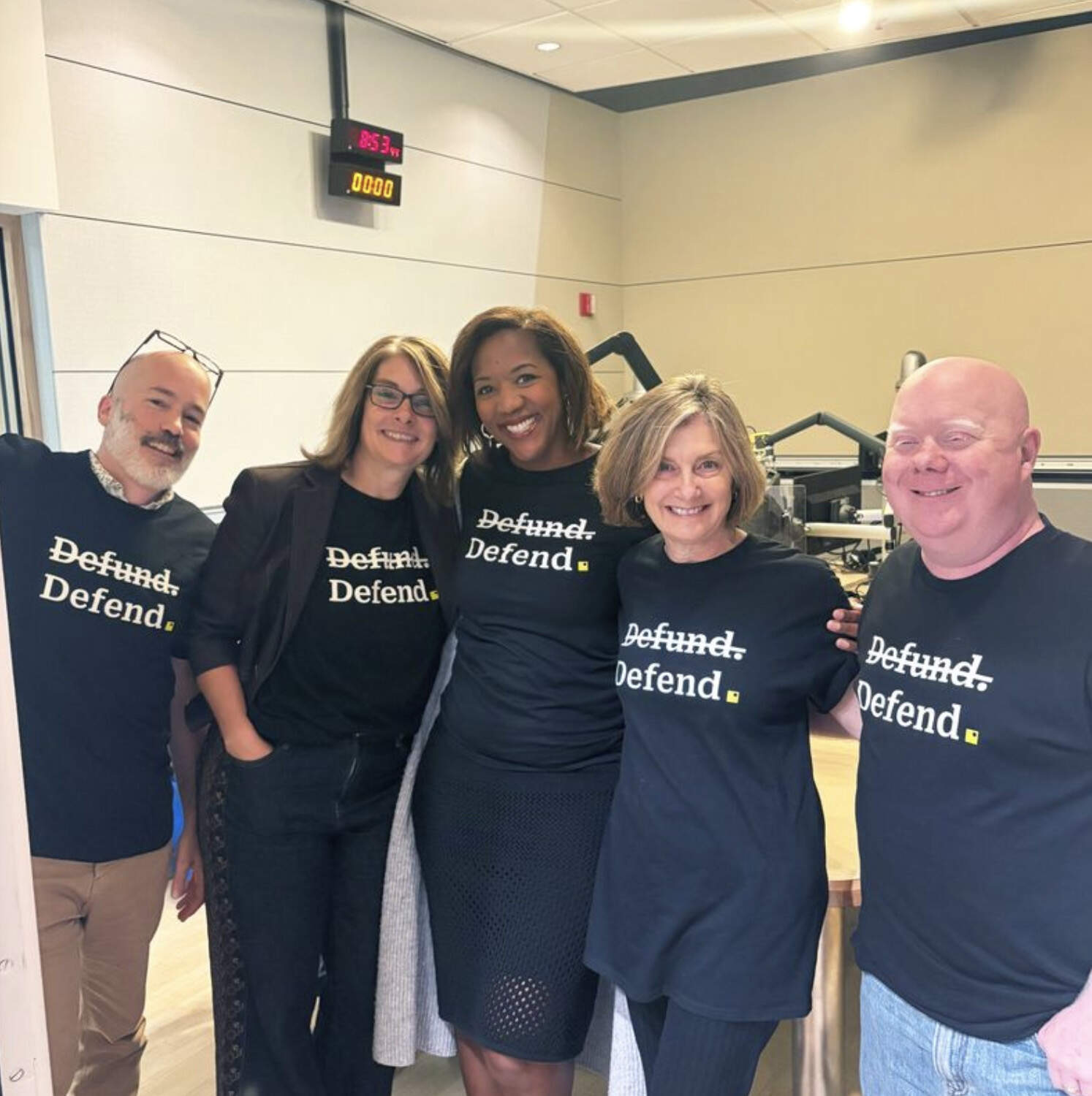
WBUR Morning Edition host Tiziana Dearing said Low will be greatly missed.
“It’s hard to imagine us without her. She’s one of the best leaders I’ve ever worked with,” Dearing said. “She knows the business deeply. She loves the work and the people who do it, and she’s a fierce protector of and advocate for journalism and our audiences’ interests. I know we’ll be OK, because she’s only made us stronger during her tenure — culturally, financially, with her vision.”
Executive Editor for News Dan Mauzy echoed Dearing’s sentiments, saying Low “believes deeply in the power of journalism to make a difference” and be “a force for good that requires discipline and demands the best of us.”
“She cares just as much about the people behind the work,” he added. “She champions the work and goes to the mat to support it. You see that in every corner of this organization and where it stands today — strong, nimble and resilient.”
Robert Siegel, NPR’s longtime All Things Considered host, reported alongside Low for years and called her “the best producer I had ever worked with.” Siegel recalled a powerful series the two worked on about Alabama’s parole system, which was cut “with tape and razor blades.”
Siegel also remembered a famous Oval Office interview with former President Bill Clinton on the day his affair scandal broke. Low produced it, and Siegel conducted the interview along with Mara Liasson.
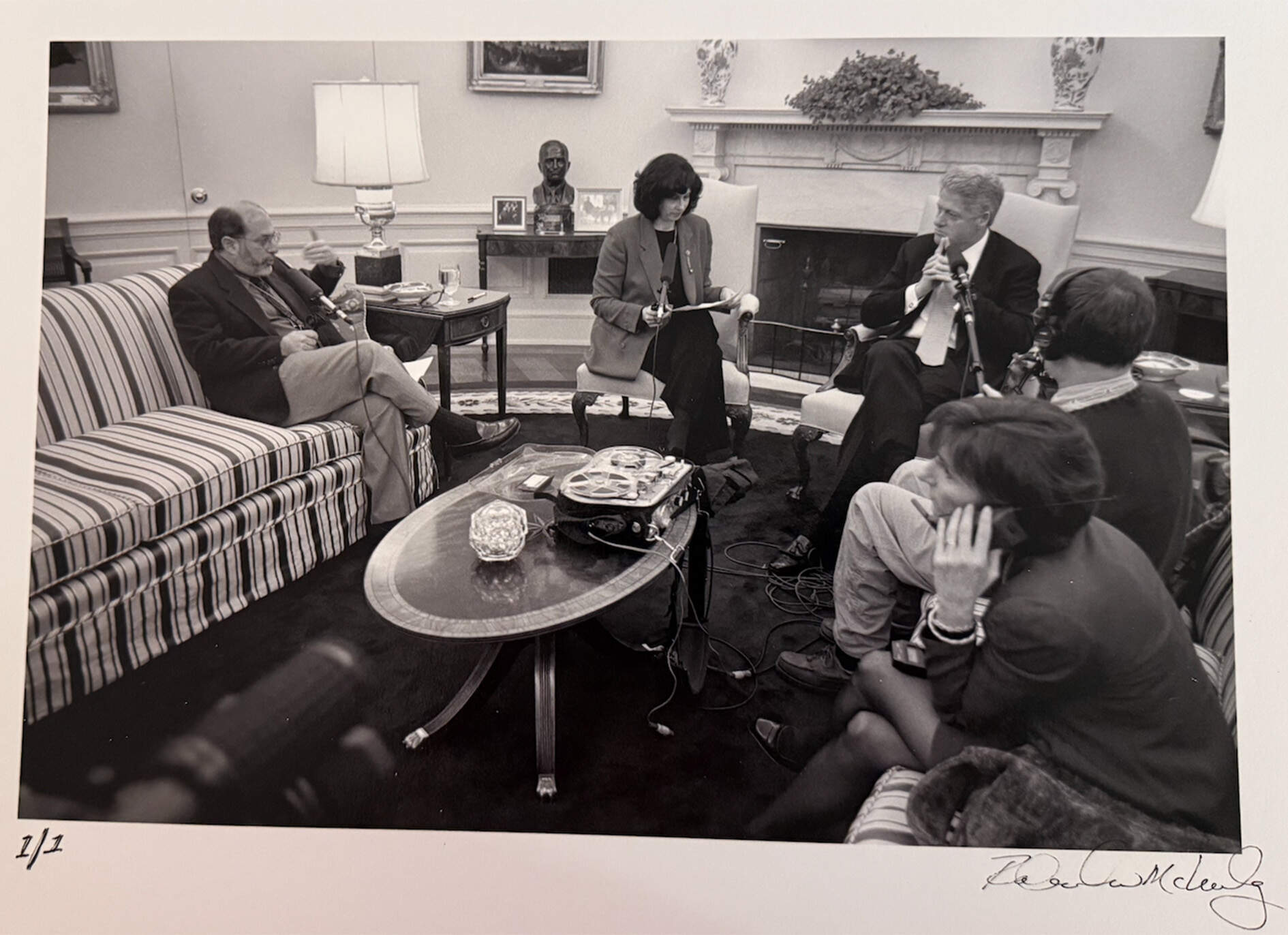
A photo of that interview hangs in Low’s office, a memento from her more than four decades in journalism. “That was a moment,” said Low, remembering how she and Siegel kept the live interview on-air with stopwatches after their cell phones died.
Asked what advice she’d leave her successor, Low paused, then said: “WBUR is gold. Keep soaring.”
WBUR’s Patrick Madden reported this story, and WBUR’s Lisa Creamer is the story editor. Under standard practices for reporting on WBUR, no other BU or WBUR staff were allowed to review the story before publication.
