


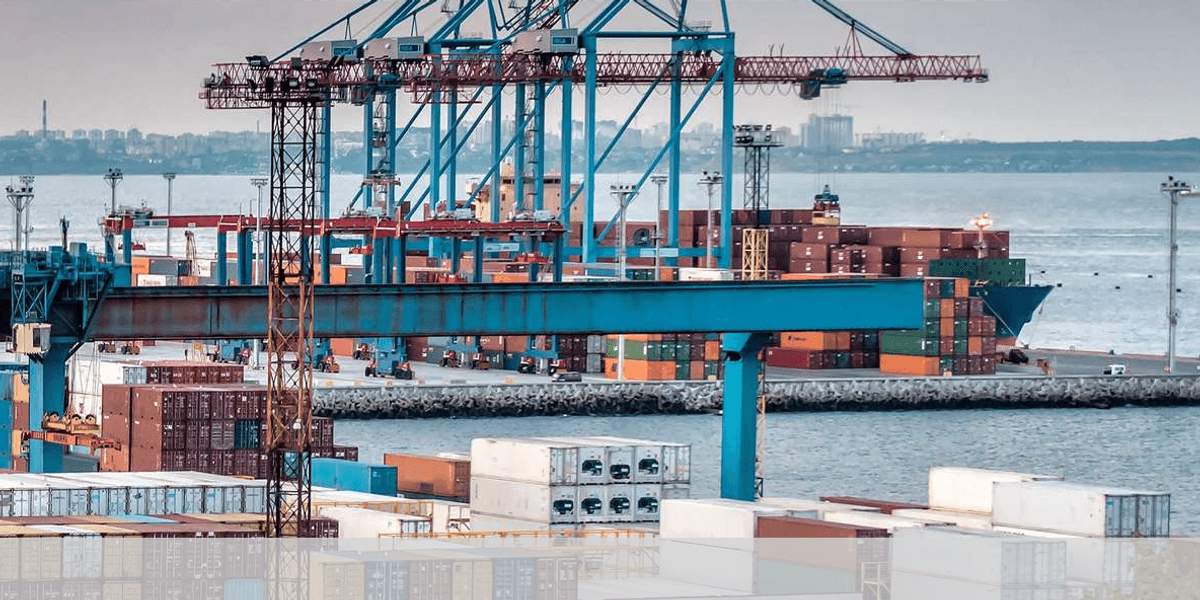
Despite strong U.S. container import volumes, warehouse vacancy rates near seaports rose 20 basis points to 7.7% through July, up from year-end 2025 and above the national rate of 6.8%, according to Cushman & Wakefield.
The reasons for the empty warehouse space include shifting distribution networks and an oversupply of new warehouse supply, the commercial real estate firm said in a report titled “From Port to Property: Resilient Import Volumes Amid Shifting Trade Patterns and Industrial Demand.”
The drop-off in rental rates came as imports at 10 major U.S. maritime ports increased 0.5% year over year through July, exceeding 14.5 million twenty-foot equivalent units (TEUs). And monthly imported container volumes exceeded 2 million TEUs in May, June and July.
But instead of renting inventory storage space at ports, companies have been storing their goods elsewhere. In fact, inland markets captured 83% of U.S. industrial net absorption in the first half of 2026, their highest share since 2010.
Inland markets have attracted occupiers because they offer lower labor, rent, and energy costs than port markets, the report said. In addition, growing imports from Mexico have supported demand for distribution facilities served directly by truck and rail, without goods first passing through a U.S. maritime port.
“Cargo volumes tell only part of the warehouse demand story,” said Jason Price, Head of Americas Logistics & Industrial Research at Cushman & Wakefield. “Goods continue to arrive, but where companies choose to store and distribute them is changing. Inland markets offer cost advantages, while imports arriving through Mexico can move directly into inland distribution networks. At the same time, port markets are still absorbing space delivered during the construction boom.”
Despite the overall improving leasing activity, risks remain, the report warned. Inflation, elevated interest rates, and rising energy prices could constrain consumer spending and occupier demand, while further changes in trade policy could alter cargo flows and distribution decisions.
