


Third-party logistics (3PL) providers are keeping a close eye on the results of next week’s mid-term elections, since the results could have a big effect on the American business climate for the coming two years, according to an analysis from market research firm Armstrong & Associates.
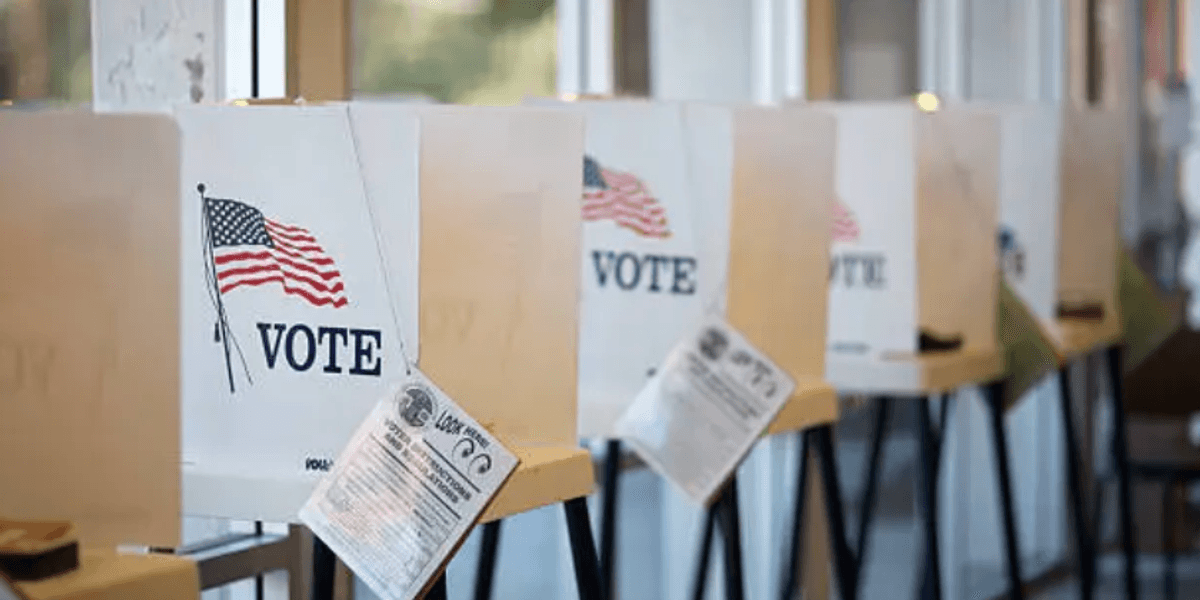
American voters will go to the polls on November 3 to cast their votes for every sitting member of the U.S. House and one-third of the Senate. Of course, logistics policies aren’t on the ballot, but many of the decisions that shape costs and demand for the 3PL sector in 2027 are, including: tariffs and trade policy, highway and infrastructure funding, freight broker liability, and driver supply and labor.
Many of those issues are complex, but the results of the vote should be clear by the following day, since America has a long tradition of free and fair elections, and modern courts have never found significant fraud in national vote counts.
According to Armstrong & Associates, 3PLs can judge the results for themselves by keeping an eye on three basic scenarios for the outcome:
- Same party controls Congress and the White House: expect current trade and regulatory policy to continue, with a better chance of a highway bill and freight broker liability reform passing on the President’s terms.
- Split Congress: more oversight of tariffs and FMCSA rules, fewer new laws, and a higher chance of another short-term highway extension.
- Either way: tariffs stay largely an executive decision, so 3PLs should plan for continued trade volatility in 2027 and keep contracts flexible.
Digging into the policy details, Armstrong & Associates described the possible impacts of the election for each of the four topics it is tracking.
The first is tariffs. Since the Supreme Court struck down the IEEPA-based tariffs and the Section 122 surcharge expired on July 24, tariff policy has moved to Section 301 and Section 232 actions. Those don’t need a vote in Congress, so tariffs will largely stay an executive-branch decision whatever the outcome. What changes is the oversight: a Congress controlled by the President’s party is less likely to limit tariff authority, while a split Congress brings hearings, pressure for tariff exemptions, and more uncertainty for importers. That uncertainty means more stop-and-go ordering, which helps freight forwarders and warehouse operators in the short term, but makes planning harder for everyone.
The second is highway funding. The bipartisan 2021 Infrastructure Investment and Jobs Act’s highway and transit authorization was set to expire September 30 until Congress passed a short-term extension that runs to December 11. The next long-term bill will be written either by the outgoing Congress in its final weeks or by the new one in 2027. That bill sets highway funding, and it’s also where truck size and weight, driver training, and freight broker rules get decided.
The third is freight broker liability. On May 14, the Supreme Court ruled unanimously in Montgomery v. Caribe Transport II that freight brokers can be sued under state law for negligently selecting a carrier. Freight brokers are pushing Congress for a federal carrier-selection standard, and the highway bill is the most likely vehicle, so the makeup of the next Congress will help decide whether liability exposure stays a matter of state-by-state lawsuits or gets a national standard.
And fourth is drivers, labor, and fuel. The FMCSA’s non-domiciled CDL rule and stricter English-proficiency enforcement are shrinking the driver pool. J.B. Hunt estimates 214,000 to 437,000 drivers could be affected over two to three years. Combined with record diesel prices ($6.53 a gallon the week of September 21), that’s tightening truckload capacity and pushing rates up. These are regulatory actions, but Congress controls the budget and oversight that decide whether they continue as they are. Likewise, immigration policy affects warehouse labor in the same way, and the Value-Added Warehousing and Distribution sector depends heavily on hourly workers.
