


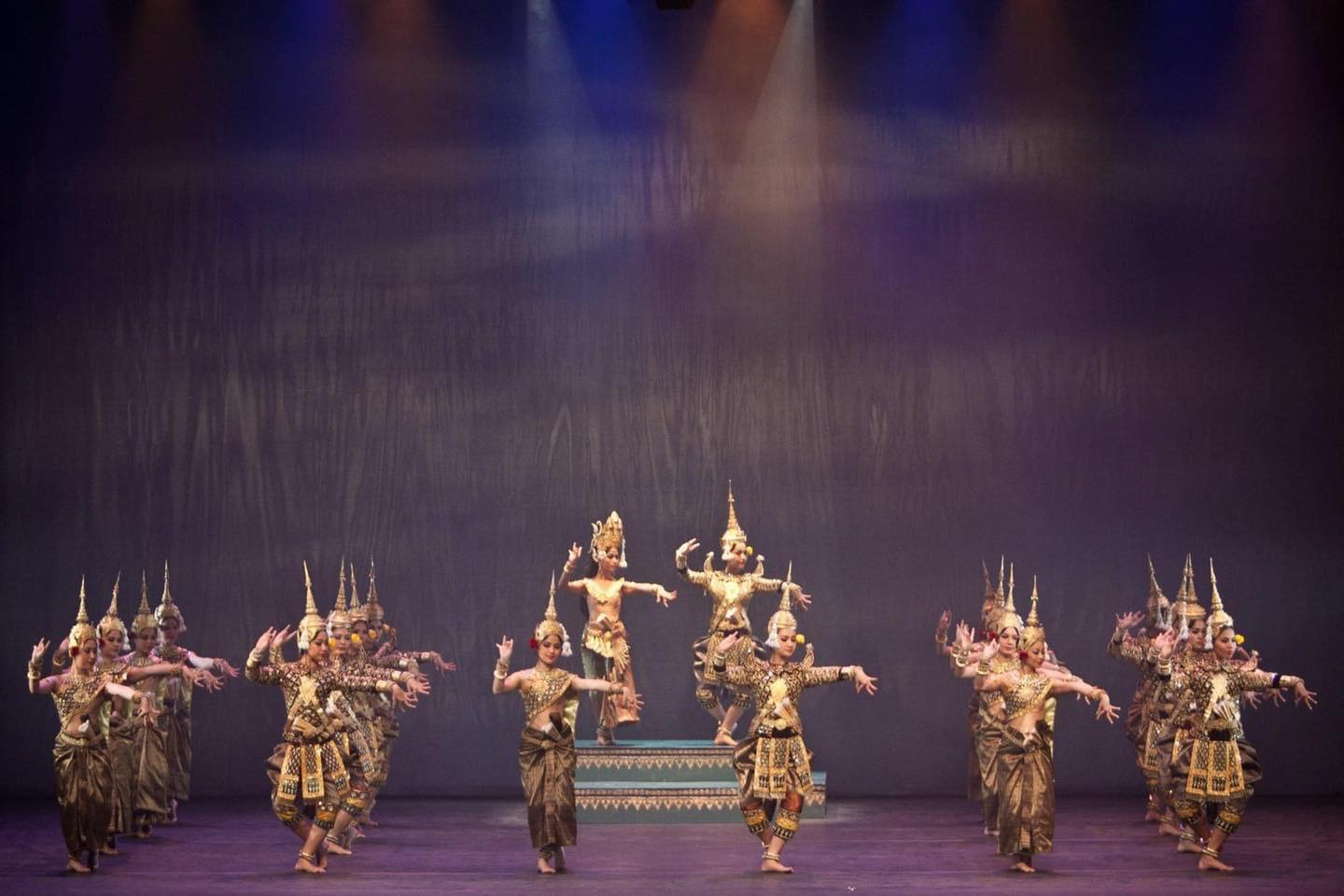
Photo shows Royal Ballet dance performance in 2025. Photo by Ministry of Culture and Fine Arts
PHNOM PENH — The Royal Ballet is often described as one of Cambodia’s most mesmerizing classical art forms. Yet behind its beauty lies a growing concern: without deeper public understanding, this centuries-old tradition risks being slowly diminished.
Experts say the issue is awareness, not admiration. Performances are sometimes staged in unsuitable settings or paired with incorrect costumes—choices that, however unintentional, erode the dance’s sacred meaning.
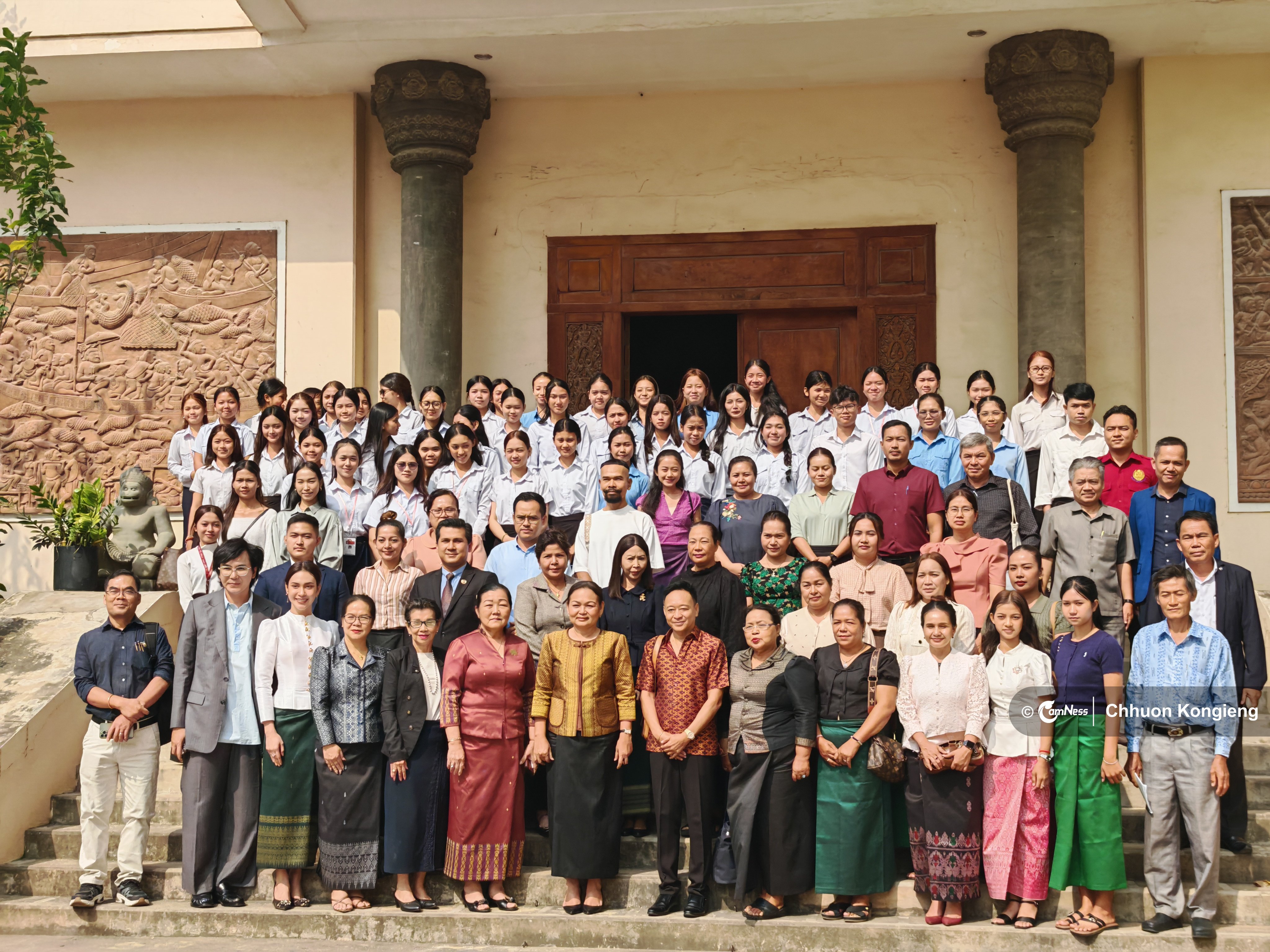
These concerns were at the center of a recent workshop organized by the General Directorate of Cultural Techniques on April 2, bringing together teachers, researchers, designers, and cultural officials to reflect on the future of the Royal Ballet.
Chay Chankittiya, Deputy Director General of Technical Culture, outlined four key challenges. At the heart of them is a fading recognition of the dance’s spiritual and cultural significance.
Financial constraints continue to limit opportunities for dancer training, while career pathways remain uneven. At the same time, the absence of clear guidelines has sparked debate—particularly over evolving practices such as male performers taking on traditionally female roles.
There was a shared sense in the room that something essential must be protected—not just the form, but the meaning behind it.
Respecting the Stage, Respecting the Dance
For Soth Somaly, a Royal Ballet expert and deputy secretary at the Ministry of Culture and Fine Arts, the issue begins with something as simple and as symbolic as the stage itself.
She recalled seeing performances conducted directly on the ground, without proper elevation. To her, this was more than a technical oversight; it was a quiet form of disrespect.
The Royal Ballet, she emphasized, should only be performed in spaces that reflect its dignity. Even the name carries weight. “Royal Ballet,” she argued, should be reserved strictly for performances held for the King or officially sanctioned by the ministry. Elsewhere, it should be referred to as classical Khmer dance.
Her words carried both pride and caution. The tradition, once performed to honor divine beings, has evolved into a cultural expression accessible to the public. But that accessibility, she suggested, must not come at the cost of its identity.
“We are luckier than our teachers,” she reflected, noting its recognition by UNESCO as intangible cultural heritage. “They were the ones who carried it through.”
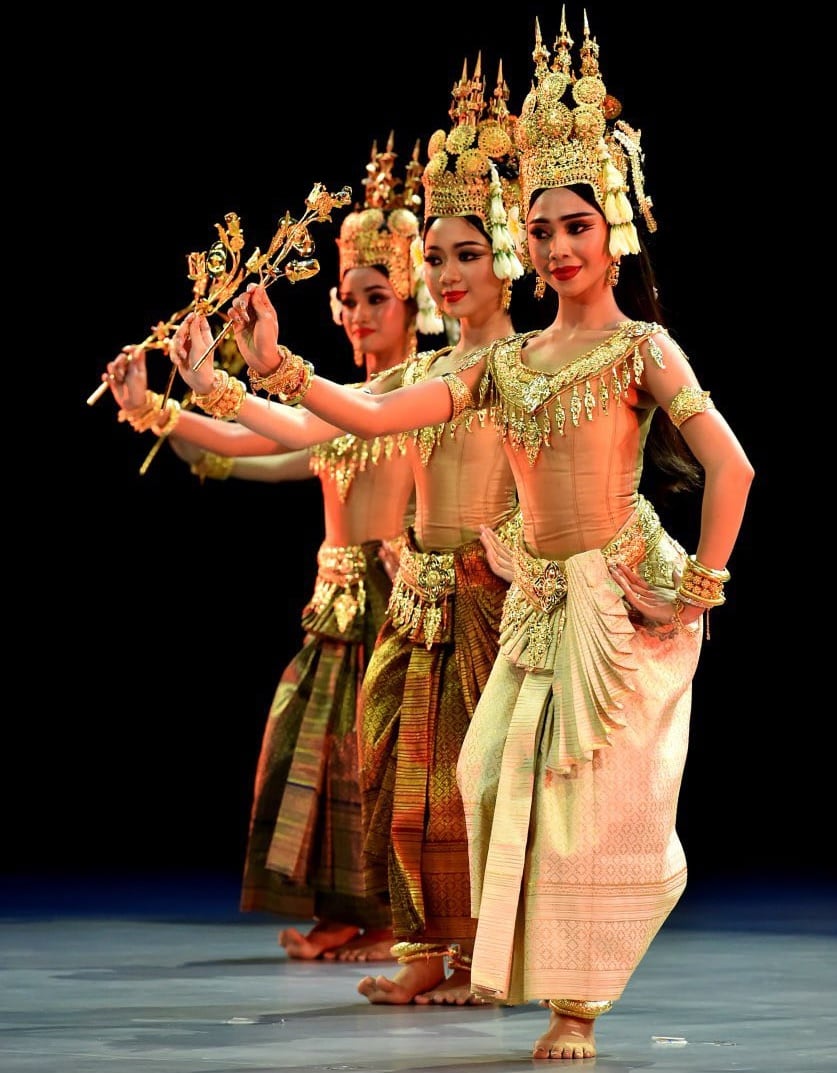
Still, change is inevitable. More male dancers are now entering the field—a shift she does not oppose, but one that raises questions about how far the tradition can stretch without losing its essence.
When Costumes Lose Their Story
Beyond the choreography, another quiet erosion is taking place in the costumes.
Proeung Chhieng, an advisor to the Ministry and a dance expert, warned that some designers lack a full understanding of traditional attire. In trying to innovate, they sometimes blur historical lines—mixing elements from different eras or even different cultures.
For Nim Kakada, a master embroiderer, the issue is not creativity, but context.
“A crown from one era, clothing from another,” he explained. “It may look modern, but it doesn’t belong to the dancer or to the tradition.”
Each detail, from the curve of a crown to the embroidery of a skirt, carries meaning. Without that understanding, even well-intentioned designs risk distorting the story the dance is meant to tell.
Holding Onto the Past, Carefully
Prince Sisowath Tesso, president of the Norodom Buppha Devi Dance School, spoke with a sense of inheritance—both personal and cultural.
He learned the art of preservation from his father, Prince Sisowath Essaro, who dedicated his life to safeguarding the Royal Ballet. Rather than reinventing the costumes, his father made only the lightest of adjustments—softening colors here, refining details there.
It was never about change for its own sake but about continuity.
The Royal Ballet, Prince Tesso suggested, is already rich—alive with color, movement, and meaning. It does not need to be reshaped to remain relevant. It needs to be respected.
Culture as Soft Power—and Shared Responsibility
Beyond preservation, experts also see the Royal Ballet as a powerful cultural ambassador for Cambodia.
Nam Narim, head of the Phnom Penh Department of Culture and Fine Arts, believes its potential as soft power remains underdeveloped. Awareness, she said, must grow across generations—from children in classrooms to audiences abroad.
She pointed to the role of public figures and influencers, who can carry Cambodian culture onto global stages. But with that visibility comes responsibility: to represent it accurately and thoughtfully.
She compared this effort to promoting the Khmer sbai, where understanding details such as size and length is important, especially for young people.
“We also need famous people, celebrities, or idols to help promote and raise awareness, as they can share our culture with a wider audience. Since they are well known internationally, they should understand and represent our culture properly,” she said.
She also hopes that those who promote Cambodian culture abroad will build strong relationships with international media.
There were also creative ideas. Master embroiderer Kakada suggested designing toys inspired by traditional hand gestures—small, tactile ways for children to connect with the dance from an early age. Social media, too, emerged as an untapped force, though it must extend beyond platforms popular only within Cambodia.
Teaching the Next Generation
Education remains one of the clearest paths forward. Proeung Chhieng said that children can spend just one hour learning basic knowledge and hand and leg movements as a first step, so that interested students can choose to learn the dance voluntarily rather than feel pressured.
He also said that dancers need strong flexibility, so starting at a young age, around five to six years old, is very beneficial. He said that public schools may have only one hour for art classes, which is often not enough to develop strong skills.
But challenges persist. Training requires flexibility, discipline, and time—ideally beginning as young as five or six. Yet limited class hours and a shortage of qualified teachers often stand in the way.
There is also a deeper imbalance: skilled performers do not always become effective teachers, and graduates of fine arts programs do not always find jobs in schools.
Narim acknowledged the fragility of an arts career. Many young dancers come from families already rooted in the tradition. Others hesitate, uncertain if passion alone can sustain a future.
Still, there is movement. The Department of Performing Arts is exploring ways to expand opportunities, even if that sometimes means unconventional venues—from formal stages to public events.
Yet competition is fierce. Lower-cost performance groups are often favored, leaving others without work. And perhaps the greatest challenge is perception. Too many still believe that culture belongs only to artists.
Chheang Chordapheak, head of the Department of Performing Arts, pushed back against that idea.
“If there is no water, the fish will die,” he said, likening dancers to fish and audiences to water. “Even if we are not dancers, we can still be supporters.”
Culture, he insisted, survives only when it is shared—when people see it not as someone else’s responsibility, but as their own.
“When will our culture thrive? When all Cambodians feel that culture is theirs,” he said emphatically.
A Legacy Carried Forward
The Royal Ballet’s survival has never been accidental. It has been carried, generation by generation, through dedication and care.
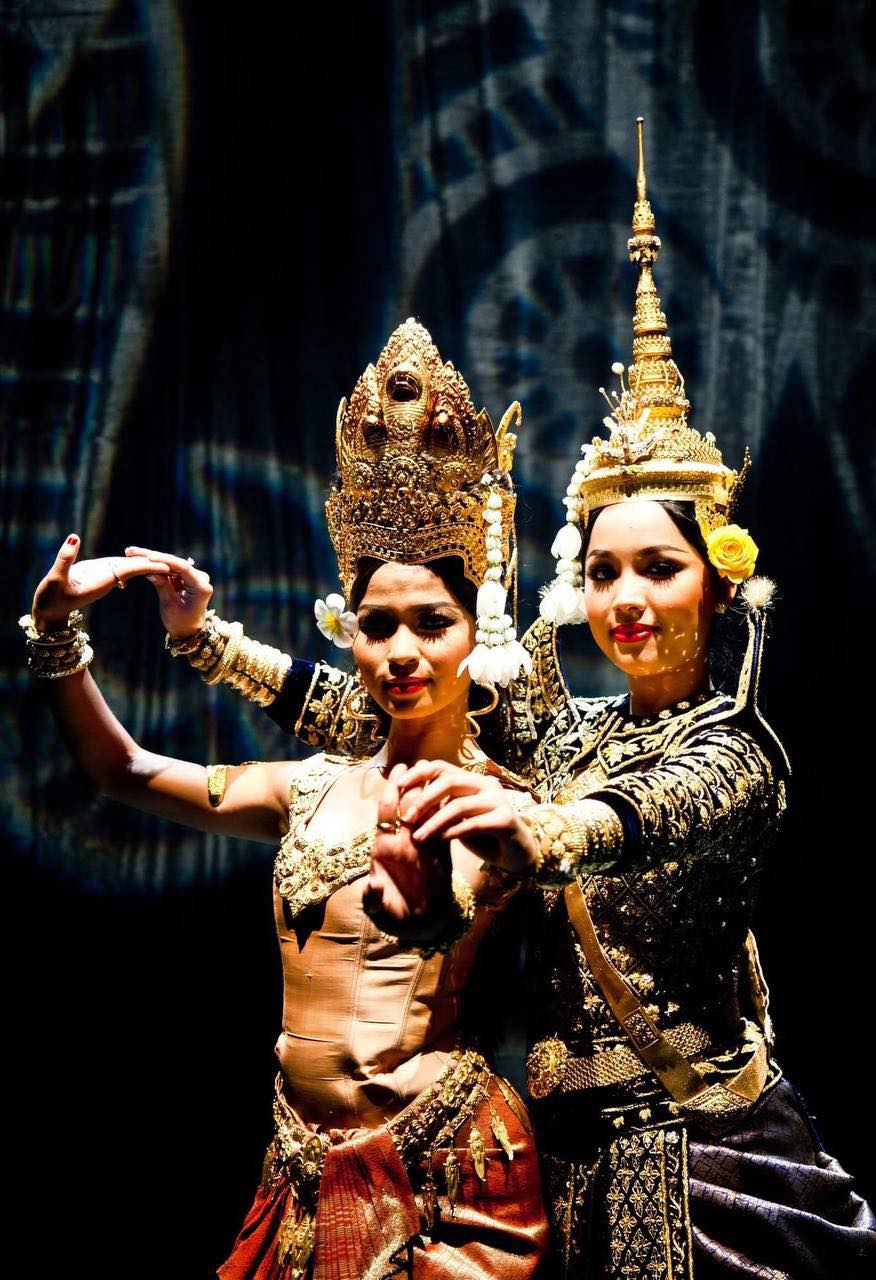
Figures like Queen Sisowath Kossamak played a pivotal role in reviving and reshaping it in the 20th century, ensuring its place in modern Cambodia.
Its recognition by UNESCO in 2003 affirmed its global value. But recognition alone is not preservation.
That depends on something quieter, more personal—a collective decision to understand it, respect it, and carry it forward with intention. Only then can the Royal Ballet continue not just to survive, but to truly live.
