Adam Sklute’s final and 20th season looks to be stirring artistic valedictory – The Utah Review

Twenty years ago, when Adam Sklute, former dancer and associate artistic director at The Joffrey Ballet, arrived in Salt Lake City to become Ballet West’s artistic director, the board of directors tasked him with three objectives. One was to strengthen the caliber and quality of the dancers and production. Another was to increase the national and international recognition of the company. The third was to build the Ballet West Academy in size, scope, and prominence.
Ballet West ‘s 63rd season is going to be one for the history books. In the arts as in any industry or business of historical importance and longevity, the most effective leader is a steward who tempers ego with humility in committing to the high standards that have forged the relationship with the community.
The evidence is incontrovertible that Sklute has accomplished the trio of objectives in superb form. With that, last spring, he announced that he will step down at the end of the 2026-2027 season. His 20-year tenure as artistic director is the longest in Ballet West history, even eclipsing that of Willam Christensen, the founder.
In an interview with The Utah Review, Sklute said that time has “really been flown by,” adding that the experience has been gratifying, thanks to a team that he credits for working so hard to build the organization into one of the country’s top ten ballet companies and an academy ranked as one of the largest destination schools in the U.S.
“When I arrived [in 2007], the academy had fewer than 150 students and the board was discussing whether or not to close it down because it was draining money from the organization,” he recalled. At the time, Peter Christie, current director of education and outreach, was working valiantly, as Sklute described it, to rebuild it. However, Christie was juggling three roles simultaneously—as director of the academy, Ballet West II and as education and outreach director. “I am so grateful for everything that he has brought to the organization and I agreed with him we have to narrow it down,” Sklute said.

It was an important lesson about taking on multiple roles for Sklute, as well. From September 2016 to October 2017, Sklute took on the dual position of CEO and artistic director. While he wanted to see if he could fulfill both roles, it wasn’t long before he realized that only one high-profile role could be satisfied fully. “The two things that I did right during that time were realizing that I wasn’t good at both of those things and putting together the search committee to find a CEO,” he said. It was Michael M. Kaiser, currently chairman of the DeVos Institute of Arts and Nonprofit Management and president emeritus of the John F. Kennedy Center for the Arts, who led that search. This year, Kaiser will work with the board of directors to guide their search for Sklute’s successor.
No doubt, as an example, Sklute’s working relationship over the last nine years with Michael Scolamiero, as executive director, has cemented a long string of stupendous achievements for Ballet West on and off the stage. When Sklute started at Ballet West, the operating budget was $7.8 million and has grown to more than $22 million, but the objectives of sustainability and accountability always stay upfront, especially as the company’s reputation and artistic profile continue to be strengthened.
As Sklute enters his final season with the company, the Ballet West Academy, with 1,000 students (a tenfold increase), is preparing to open its fifth campus. Graduating academy students have a 100% placement rate in professional careers and nearly two-thirds of the main company dancers come through the Ballet West education and training pipeline.
One recent striking example was the exciting results of last month’s inaugural Ballet West Summit Festival: Where Art Meets Elevation in Park City. In the five days of the choreographic workshop presented by Ballet West Academy in partnership with artÉmotion, the young dancers learned their respective assigned world premieres which were created by four internationally renowned choreographers. Their performances clearly telegraphed their potential for professional careers.
Ballet West’s national and international profile has expanded in every direction. During his tenure, Ballet West has performed six times at the Kennedy Center in Washington, D.C., notable considering that before his arrival, it had been nearly two decades since the company’s last appearance there. There have been multiple performances at The Joyce Theater in New York City as well as special performances at the Guggenheim Museum. They performed works by Balanchine and Jiri Kylian at Wolf Trap in Virginia, as well as tours to Canada and major American cities including Dallas, Los Angeles and Minneapolis. “We have worked hard to show ourselves to be one of the major cultural ambassadors for the state of Utah,” Sklute added.
Ballet West also found visibility on the Breaking Pointe reality series which aired for two seasons on The CW cable network. The series’ 15 episodes aired in 2012 and 2013 and drew a solid following. But, it also became a sharp reminder that ballet artists are more than just dancers.
A more compelling demonstration came in 2021, with the documentary series In The Balance: Ballet for a Lost Year, which was directed by Diana Whitten and Tyler Measom, well known filmmakers in the Utah community. In a year of pandemic shutdowns, Ballet West persevered. The series dismantled several conventional myths about the ballet art form. In The Balance succeeded in making ballet less intimidating, humanizing both choreographers and ballet artists and revealing how the Ballet West community is striving sincerely to not just being socially relevant but also fulfilling meaningful goals of what inclusion, diversity, equity and accessibility truly mean in an art form that often is beset in its struggles to evolve and expand with a 21st century rhythm and meaningful context.
Indeed, the concerns about whether or not Ballet West would be able to proceed with its November 2020 performances, which included two world premieres, with audience capacity in the theater limited for social distancing purposes, anchored the intense emotional arcs of the documentary narrative. Sklute worried that their efforts would be halted completely if Salt Lake County closed the Capitol Theatre with barely a day’s notice. In fact, after Ballet West had completed its run of the production featured in the series, the county did close the theater in response to the pandemic numbers.
The series also revolved around two choreographers who set the world premieres featured in the series: Jennifer Archibald, the founder and artistic director of Arch Dance Company and at that time the resident choreographer at the Cincinnati Ballet, and Nicolo Fonte, then Ballet West’s resident choreographer. Episodes extended into other areas, which elicited some of the series’ most emotional epiphanies. The COVID-19 pandemic had accentuated the sense of vulnerability for artists. Indeed, the experience was difficult, especially for young artists or those in mid-career stages, trying to decide how to weather the storm. As the pandemic halted all live performances, some artists saw many months of work erased and now many realize that it might take two, three or even more years to rebuild the momentum they had achieved prior to the pandemic. And, artists were affected and shaped by other events outside of the studio: the largest wave of protests since the late 1960s in support of the Black Lives Matter movement and the tense anticipation of the 2020 presidential elections.
One additional lasting artistic legacy will be the fact that during Sklute’s tenure, more new works have been created in-house than in any other period of Ballet West history. The Innovations series expanded and morphed into The Choreographic Festival which united Ballet West with large and small companies from around the world as well as the U.S. and Utah to share the stage; and Works from Within, focused on original works set by Ballet West dancers. A good number of Ballet West dancers have produced new repertoire for companies around the world and in 2023, Emily Adams received the distinguished Princess Grace Choreography Honoraria Award.
2026-2027 BALLET WEST SEASON
The forthcoming season perfectly captures markers of Sklute’s artistic leadership, leading to a rich mix of “something new, something old and something borrowed,” as he described it.
With more than 50 dancers, special effects and flight choreography, Ben Stevenson’s Dracula will open the season (Oct. 23-31), marking the company’s third revival of this ballet. The company opened its 60th anniversary season three years ago with nearly 13,000 attendees for Dracula. The record-breaking sales for Dracula represented a company high for performances other than The Nutcracker production.
In the last chapter of his distinguished career, Stevenson, who died last spring just days before his 90th birthday, was the longest-serving artistic director in Texas Ballet Theater history, after an even longer tenure at Houston Ballet. Even after he retired, he continued to periodically show up to work with dancers just weeks before his death In a Pointe Magazine tribute, several former Texas Ballet Theater and Houston Ballet dancers recalled how Stevenson went beyond the regimented technique-driven expectations of working in the studio for focus on the significance of the story and emotion being conveyed in the dancers’ movement. Dominic Walsh, a former Houston Ballet principal and current artistic director of Oregon Ballet Theatre’s second company, said, “I remember him saying, ‘It has to mean something… That pirouette has to be an expression of this sensation that you feel. He was a master of sensation, of movement.” The ballet’s score features John Lanchbury’s arrangements of music by Franz Liszt.
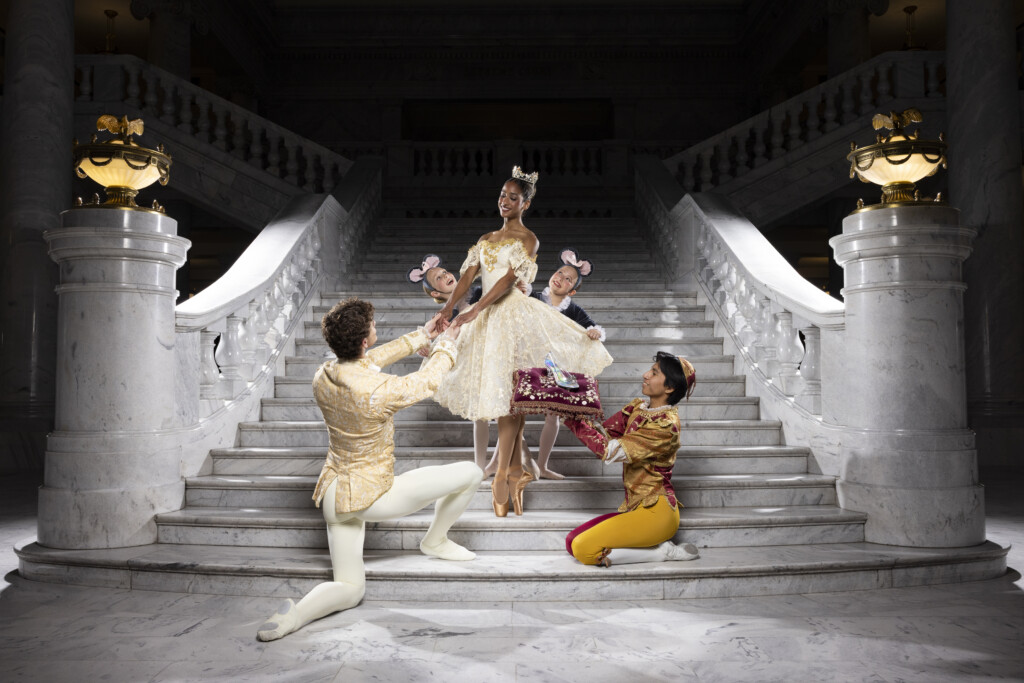
The Glass Slipper. Photo: Beau Pearson.
A November production, Rolling with the Stones (Nov. 6-14), will feature a quintuple-bill, including three pas de deux pieces and two major Utah premieres. The trio of pas de deux pieces are Christopher Wheeldon’s Je ne t’Aime Pas (featuring music by Kurt Weill) and This Bitter Earth (featuring music by Dinah Washington as recorded by Max Richter), and Ben Stevenson’s Three Preludes (featuring music by Sergei Rachmaninoff).
One of Ulysses Dove’s last works, Dancing on the Front Porch of Heaven, featuring Arvo Pärt’s Cantus in Memory of Benjamin Britten, will have its Utah premiere. The Royal Swedish Ballet premiered the work in 1993 and received its U.S. premiere three years later at a Lincoln Center benefit to raise funds for AIDS research and treatment, just days after Dove died. He created the three-movement work to channel his grief after losing 13 loved ones to death and illness in one year. Two years ago, Ballet West presented Dove’s Red Angels which crossed back and forth across the realms of the sacred and profane, with music associated with images of demons and devils. As Sklute explains, this latest Utah premiere transports the dancers and audiences to heavenly skies. “It’s incredibly moving and emotional because, I think, he was choreographing his farewell,” Sklute said.
Completing the quintuple-bill will be the Utah premiere of Christopher Bruce’s Rooster, a 1991 work with eight dances, each set to a Rolling Stones song. The vibe switch will rivet the audience, as the choreography incorporates jazz, disco and contemporary dance techniques, along with elements especially seen in contemporary dance, including pedestrian movement, gesture, social and folk dance. For those who know the Rolling Stones catalog well, it will be intriguing to see how Bruce has selected movement motifs to align with a specific song track. “It’s fun for the audience and it’s fun for dancers,” Sklute explained, “but it’s also really good dancing and reminds us that there is art in popular culture.”

Of course, the season would not be complete with Willam Christensen’s creation of The Nutcracker (Dec. 4-26) in its usual holiday season run. This version, which Christensen first staged in 1944 in San Francisco, is now formally acknowledged as America’s 1st Nutcracker™ and was named by the State of Utah in 2024 as a Living Historic Landmark, the first such distinction for a performing arts production in the U.S.
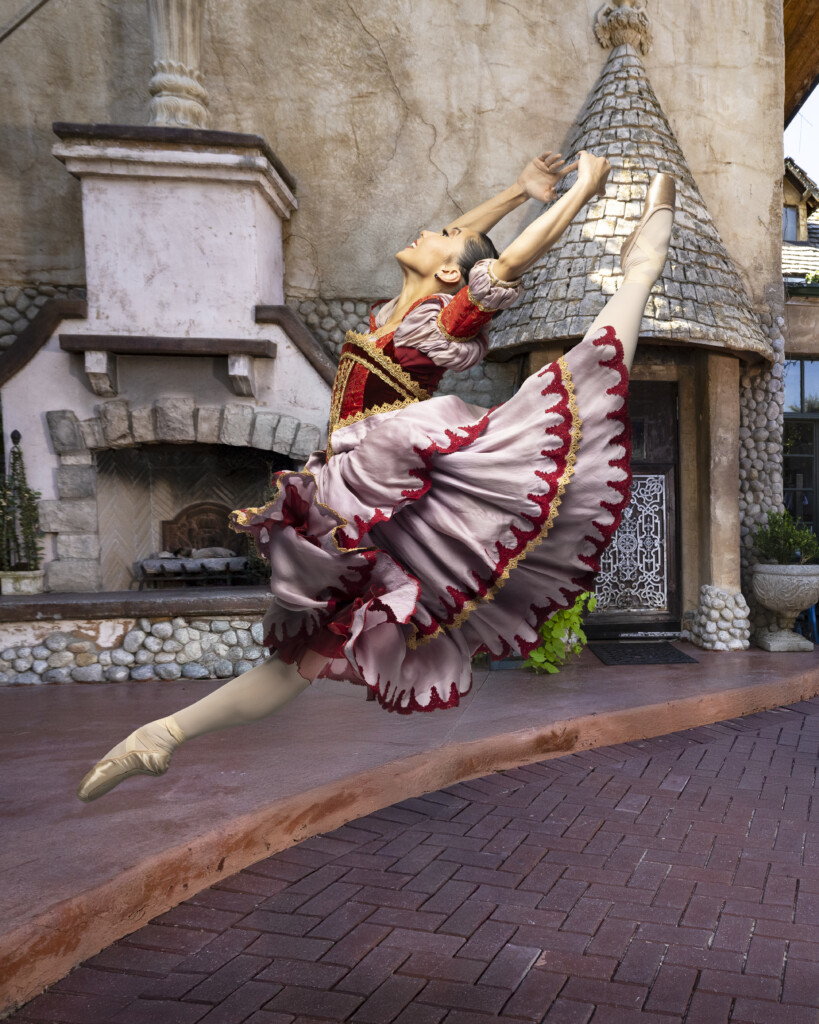
Opening the 2027 portion of the season will be the return of Anna-Marie Holmes’ Don Quixote (Feb. 12-20) which the company last presented 15 years ago. Based on Cervantes’ novel and Ludwig Minkus’ score, this comedic ballet highlights Holmes’ adaptation of the original choreography by Marius Petipa, which the Ballet of the Imperial Bolshoi Theatre of Moscow premiered in 1869. When Holmes, who became the first female ballet artist from the West to dance with the Kirov Ballet during the Cold War, came to Salt Lake City 15 years ago, she said in a Salt Lake Tribune interview, that “all great ballet companies should have a Swan Lake, a Sleeping Beauty, a Giselle and a Don Q.” Holmes’ version includes an all-male flamenco scene performed exclusively to stomping feet and clapping hands. “Her version is light and upbeat and we don’t have a lot of the big classics that are comedies and that’s such a joy,” Sklute said. “I’ve been wanting to bring it back for years so I am excited.”
The 2011 Utah premiere was especially memorable for Sklute and, more importantly, Beckanne Sisk, who was 19 at the time and was a corps dancer for the company. Assuming that she was the understudy for the character of Kitri, who is tasked with embellishing 32 fouettés in an Act III variation with triple pirouettes, Sisk discovered that she would dance the role on opening night. It was the evening that paved the way for her career to become a principal artist—an impressive achievement considering that she had only joined the main company that season after dancing just one year at Ballet West II. Today, she and her husband, Chase O’Connell (who also danced with Ballet West), are principal dancers with the National Ballet of Canada.
The spring Family Classics Series will feature an expanded staging of The Glass Slipper (April 2-3), by Pamela Robinson Harris’s Cinderella-inspired work, which premiered in 2021. The cast will comprise Ballet West II dancers, along with academy trainees and students.
The major spring production (April 9-17) promises to be on a blockbuster scale, involving the entire Ballet West company as well as Ballet West II, augmented as well by a good number of Ballet West Academy dancers. Add in the Ballet West Orchestra and a full chorus, and the production will be a fitting valedictory for Sklute’s final season as artistic director.
On word from Stravinsky, George Balanchine, well known for using classical music to shape his neoclassical ballet technique, learned that Bizet’s Symphony in C Major, which was believed to have been lost, was rediscovered. Bizet wrote the work in 1855 when he was 17 and was studying with Charles Gounod at the Paris Conservatory. It was found in the conservatory’s library and published in 1933.
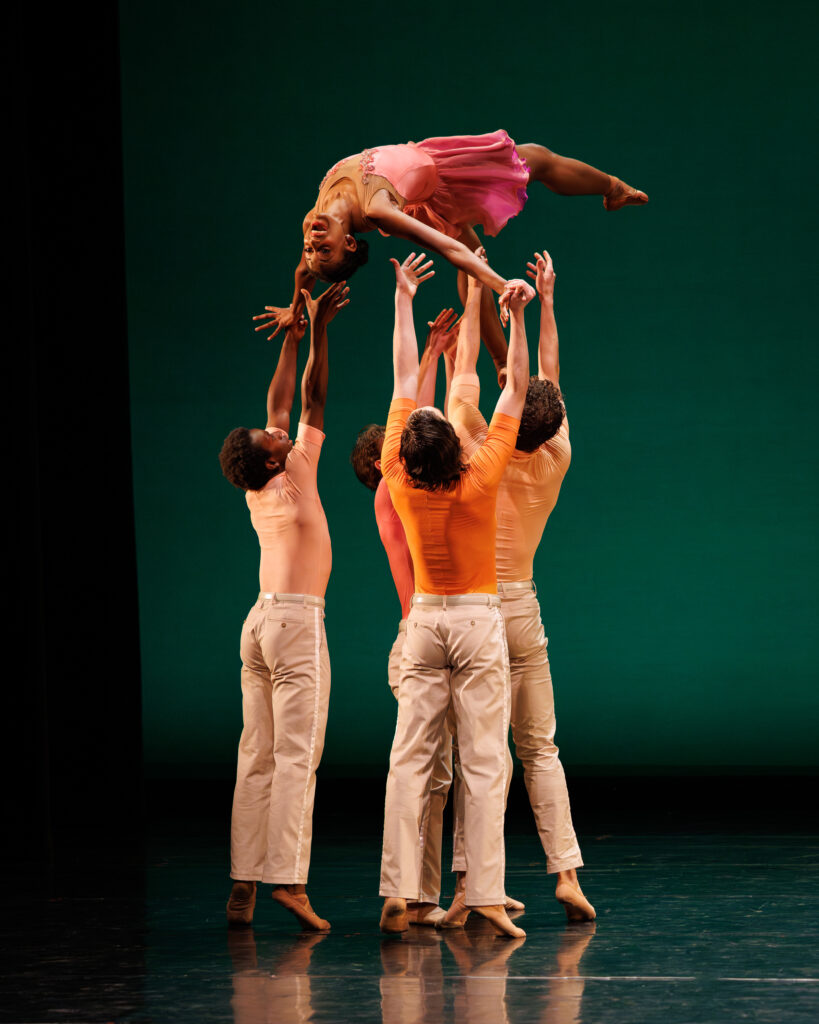
Balanchine immediately took to the symphony, which demonstrated that the young Bizet certainly matched the composing skills of Mozart and Mendelssohn in their early works. He set the work in just two weeks at the Paris Opera Ballet in 1947, where he was a guest ballet master. A year later, he ditched the original title (Le Palais de Cristal) when he recast the work for the New York City Ballet. Symphony in C requires more than 50 dancers who are covered in Swarovski elements.
Carmina Burana is a work that has long been a part of Ballet West history. In the 1970s, Christensen brought John Butler’s famous 1959 adaptation of Carl Orff’s 1936 cantata, which has been a major pop culture touchstone for generations. Likewise, Butler’s version, which included full orchestra and chorus, became an audience favorite. The logistical problem was eliminating seats to accommodate the chorus which lined the boxes and sections of the balcony.
In 2017, with the objective of placing the full chorus on the stage, Sklute, who marked his 10th anniversary that season, commissioned Nicolo Fonte, then a resident choreographer for Ballet West, for a new version, which features more than 60 dancers, in addition to the chorus and orchestra. A 2017 review at The Utah Review by Heather King summarized the premiere: “Throughout the hour-long performance, Ballet West’s dancers rose to Fonte’s physically demanding choreography—concluding with the final duet (Ave formosissima) between principals Beckanne Sisk and Chase O’Connell. A short video produced by RadioWest follows the intricate moves and explains the significant departure from the traditional staging audiences have come to be familiar with.”
The company will close out the season with the second edition of Works from Within II (May 12-15). Sklute introduced the program in 2025, which signifies how the company’s culture of regularly welcoming new work into its repertoire has been ingrained in Ballet West dancers, especially for those exploring their own choreographic voice. The inaugural edition proved to be an excellent showcase for highlighting the choreographic strengths of five of the company’s dancers.
For tickets and more information, see the Ballet West website.