


By Melinda Henneberger
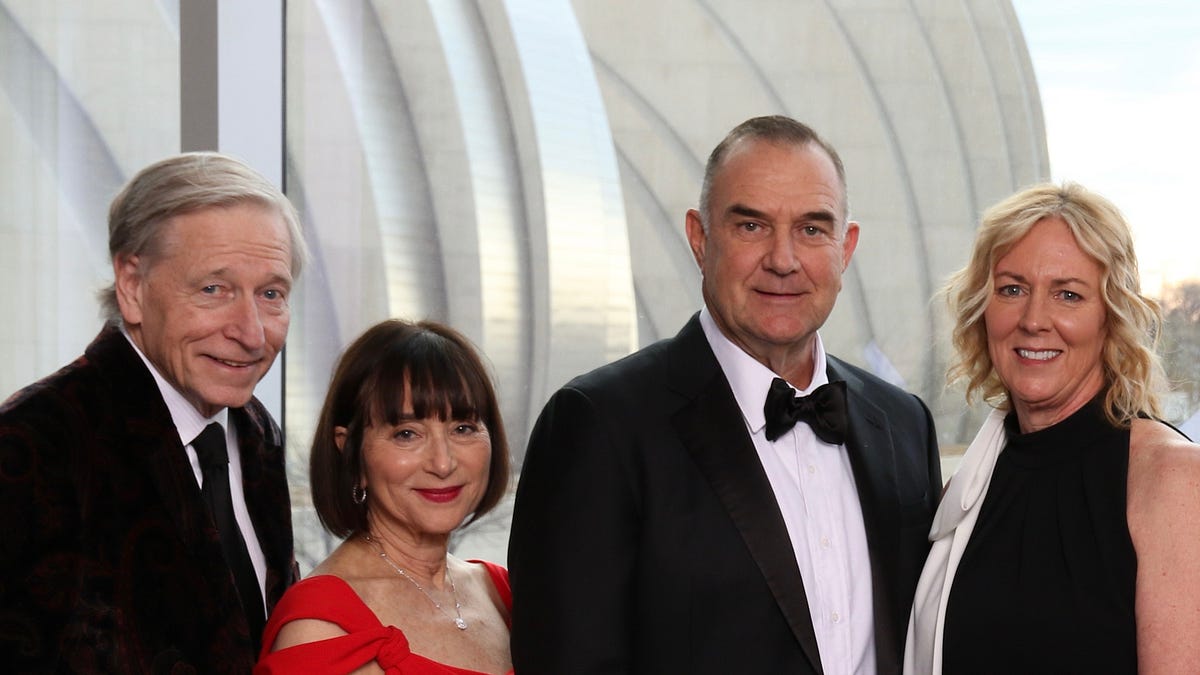
There were no headlines, and there was no press release. But I don’t think it’s going too far to say that Deborah Sandler Kemper, who is leaving the Lyric Opera of Kansas City at the end of the season that opens this Saturday, saved the opera with the $2.5 million she quietly won from the state last year.
“It’s really not something we’ve talked about,” said LOKC board chair Tony Durone, co-managing partner at the law firm Berkowitz Oliver. But it was Sandler, he said, who both came up with the idea that they could create an income source by building opera sets and renting them out to other companies, and also Sandler who sold that idea.
“Coming out of COVID, all performing arts organizations were suffering,” Durone said, “so we had to take some drastic steps to limit performances. Deb took it upon herself to pursue every avenue to get some unprecedented funding to get that infusion we needed, and she got us through a very difficult time.”
Here’s the language, in fiscal year 2025 appropriations, with the money coming through the Missouri Humanities Council Trust Fund. I know it sounds like they’re trying to hide what it’s for, but all appropriations are written this way, in wording so opaque you’d never know what it was for just from reading it.
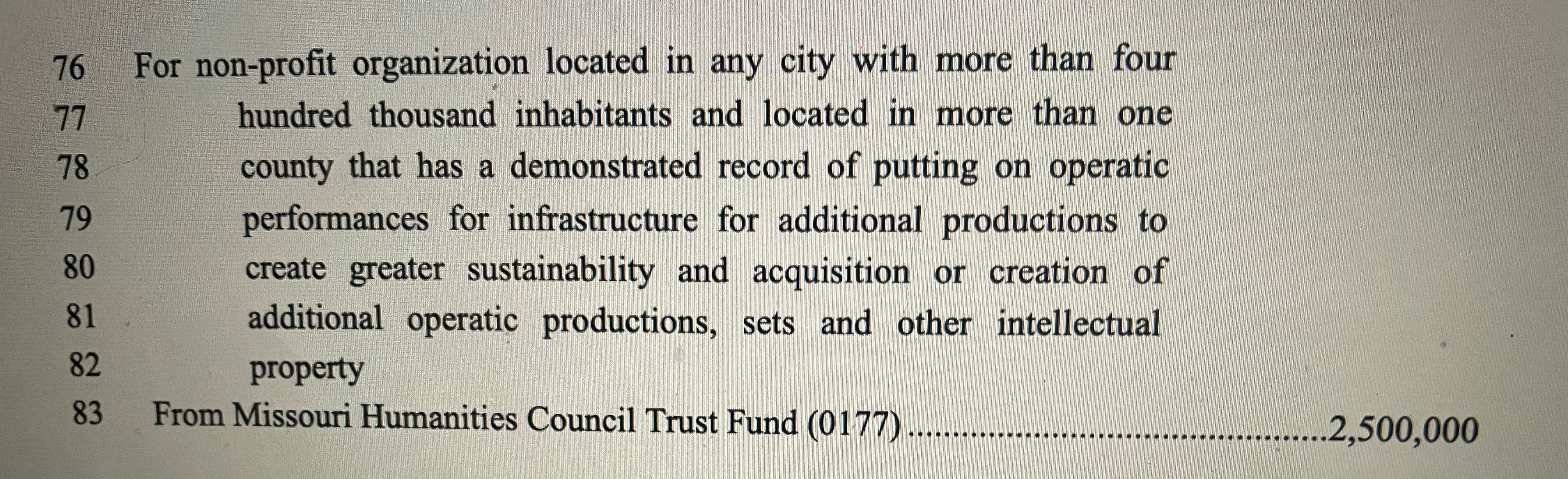
News stories about funding last year instead talked about the very real state budget cuts to the arts, including to the opera. No one noticed the way-in-the-weeds boost that came from Sandler’s brainstorm about how the company, which has the space to build huge sets, might also build a lucrative side hustle.
She personally talked to Republican Gov. Mike Kehoe, who attended Gounod’s ‘Roméo et Juliette’ in Kansas City with his wife Claudia Kehoe in 2024. The Kehoes attended the annual ball supporting the LOKC, too.
That’s on the money side of her job as CEO and general director, and there’s of course much more to what she does, artistically and administratively. But then, her whole nearly 15-year tenure here has been smooth as — just kidding, as anyone who has ever tried to make any organization better already knows.
In fact, when she first arrived here from Louisville in the summer of 2012, knowing nobody, some longtime patrons did not see why this new woman and her new ideas had been imposed on them at all.
“Basically, there were two camps,” said Robert Trussell, who at the time was covering opera as well as theater for The Kansas City Star. (Yes, children, there was such a day.)
“The old guard – people who loved going to traditional opera – also had a lot of what I took as rooted in some very old attitudes about women. This one old arts supporter I talked to, and it only took me a few minutes to realize he was going to be a useless interview” on the subject of the new leadership, was beside himself. “Just a horrid woman!’’ he kept saying.
And the other camp? “I thought she seemed very sharp,” Trussell said, “and whatever opinion she had about what an opera company should be doing was based on her intelligence and her experience” running companies in New Jersey and Kentucky. “As time went by, she was doing some pretty interesting things.”
In 2018, for instance, she put on West Side Story, just one of the productions some dismissed as not a real opera and oh no, just a musical, “not taking into account the complexity and difficulty of that show. She knew what she was doing,” though, in producing some non-traditional works — Dead Man Walking and Everest, as well as favorites like Tosca and Turandot. “There are always going to be some people who don’t like that.” But from the beginning, Trussell said, “she was looking at ways to underscore the relevance” of the Lyric Opera for future generations.
“She earned my respect,” he said. “I wish artistic directors at regular theaters thought as adventurously.”

Sandler is a Philly girl, the daughter of a school counselor and an engineer. She was “always a music kid,” she said in an interview in her office — someone who played piano by ear at age 3, loved singing in the all-city choir, and was a music major at Temple.
She earned a Master of Arts in Musicology from NYU, where she also finished her doctoral coursework. “I thought I’d get my PhD and teach,” but instead moved back to her hometown and started writing grants for the Chamber Orchestra of Philadelphia, where she went on to become general manager. “That suited me better,” she said. “I course-correct a lot.” She was also general director of the Opera Theatre of New Jersey, and of the Kentucky Opera.
When she came here, after being recruited to take the opera to the next level, there were “a couple of bumps,” she said, but “I make no apology for being ambitious and for aspiring” to make this a company worthy of the then-new world-class Kauffman Center for the Performing Arts. Until then, the Lyric Opera had been “a little bit like a family operation.”
Nancy Leazer, who ran the Municipal Correctional Institution, better known as The Farm, until the city foolishly closed it in 2009, feels about opera the way the most ardent Chiefs fan you know feels about football, and she was a lot more blunt in her before-and-after comparison: She said she rarely attended the opera in her hometown pre-Sandler “because it was so painful to do. She brought it big steps forward, particularly in the quality of the singers.”
When Sandler arrived in July of 2012, some shows for that fall had not yet been cast. By beginning multi-year planning and casting more like 18 months out, more choices were available. She began partnering regularly with other companies, sharing productions that neither might have afforded on their own.
She commissioned three operas for young people, began a partnership with local public schools and in 2016, started an artists in residence program. In 2022, Sandler was named one of the top thirty music professionals by Musical America, and in 2024, the company was honored with a Grammy nomination for its recording of The Shining.
Whenever I go to the LOKC, I always love seeing all the young people who come glammed out for “date night,” which she also launched, against the advise of many who warned her that kids hate dressing up.
“We don’t have a ‘Nutcracker’” — the cash cow that keeps the ballet afloat — so the opera has to be inventive to raise over $5 million every year, Sandler said. And in ways both visible and unseen, it has become that.
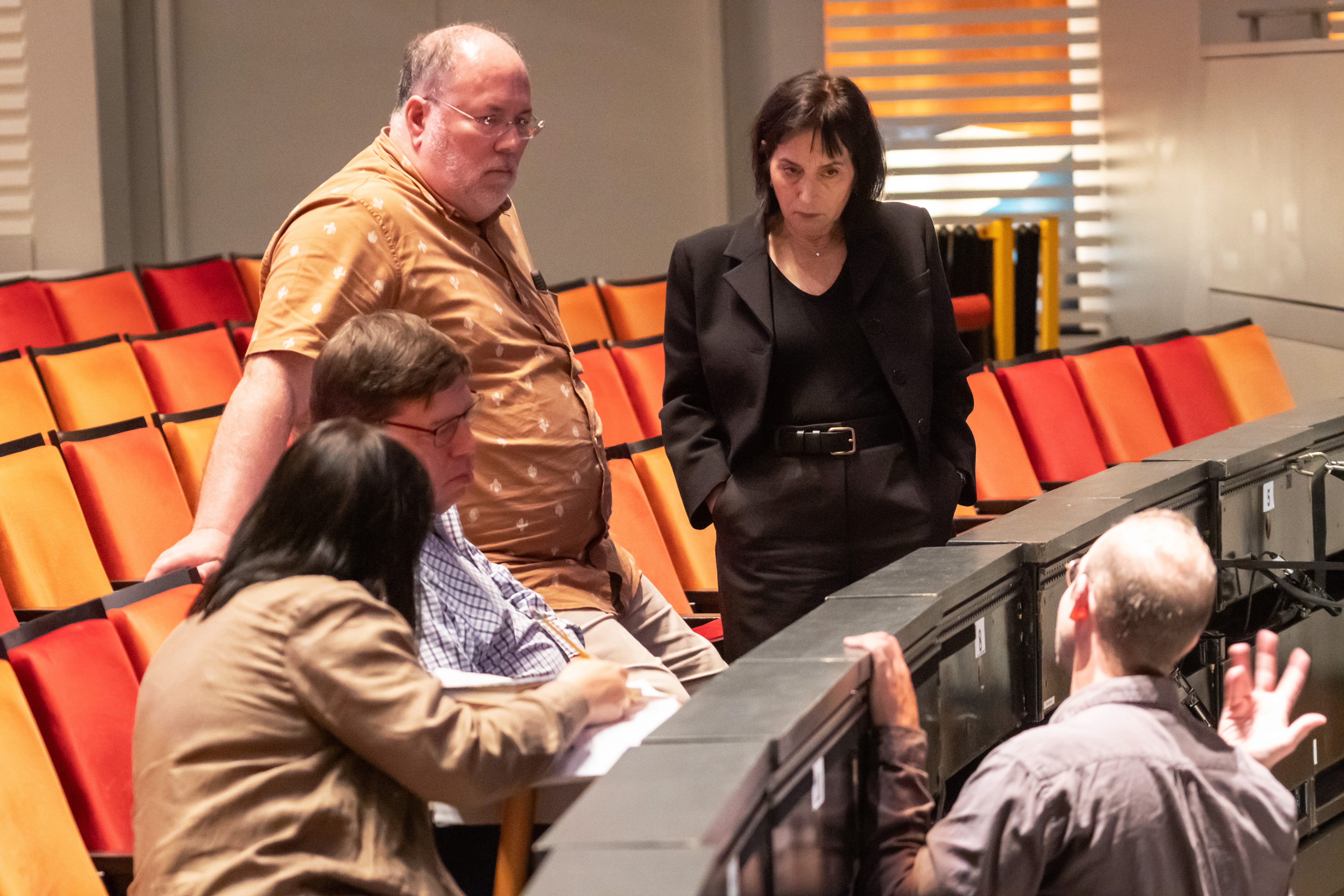
Following Sandler around at a rehearsal earlier this week for the season’s first opera, Puccini’s La bohème, which opens on Saturday, was a blast for me. But Mimi wasn’t the only one dying up there during the orchestra’s first run-through with the cast, because missing monitors in the pit meant that the conductor, Christopher Allen, couldn’t hear the singers — “at all” he said during a break.
“It’s terrifying!” he told Sandler, artistic administrator Brad Trexell, director Garnett Bruce, chorus master Elena Kholodova and director of production Tracy Davis‑Singh. “I conduct a lot of Puccini but I’m not that good!”
There were other notes from Sandler and her colleagues — makeup that wasn’t quite right, a tablecloth askew in the cafe scene, some lingering differences of opinion on staging.
“Act II of Bohème is always a trainwreck” before it isn’t, Sandler said minutes later. “But we’re getting there. Actually we’re in really good shape.” I laughed, but also believed her.
Because when did making art ever not involve making a mess? And more than that, because I am convinced that nothing about this production will be left to chance: “You’ve invited people to your house and you want the experience to be great,” Sandler said.
Why is she leaving work she so obviously still loves? She wants to enjoy other things, she said, like hugging her grandchildren in Maine more often, and getting to travel in a way that’s less rushed.
The board chair, Tony Durone, said the search is on for her replacement, but her “impeccable” artistic vision and the team she’s put in place — ‘‘Her department heads are so strong” — have already set the company up for success well into the future.
I said I heard not everyone saw that the minute she hit town. “It only took a decade-plus,” he answered, laughing. “She had to fight for her vision of what the Lyric Opera could be,” but it paid off.
And now? “I think she’s going to have a hard time detaching. I’m sure I’ll still get some calls.”
