


Engine issues with airBaltic’s Airbus A220 fleet has forced the carrier to begin suspending routes and slashing frequencies across its network this summer as it struggles with the lost capacity. “Several” aircraft will be grounded during what is generally considered the peak season for airlines.
Route and frequency cuts
airBaltic says that this summer it will have to temporarily suspend 19 routes, and slash frequencies across frequencies on a further 21 others. It notes that overall, 4,670 flights will be canceled overall, impacting an estimated 67,160 passengers.
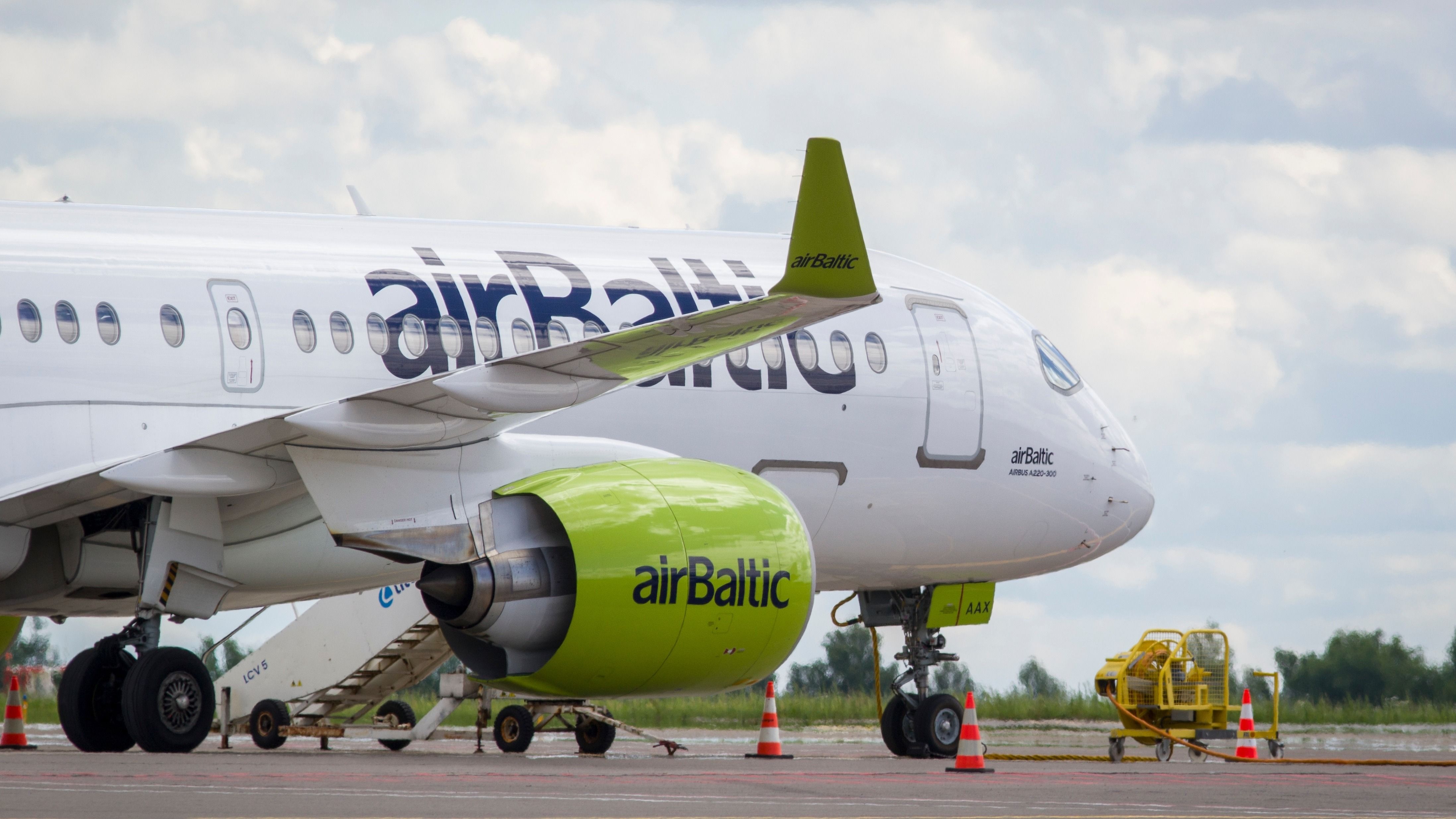
Photo: Renatas Repcinskas | Shutterstock
The airline pinned the blame on manufacturer Pratt & Whitney which supplies the engines for the company’s 49 A220 planes. airBaltic said:
“The engine manufacturer’s inability to meet its timely maintenance obligations has impacted the operational capabilities of airBaltic’s Airbus A220-300 fleet, forcing the airline to adjust its summer schedule.”
Related
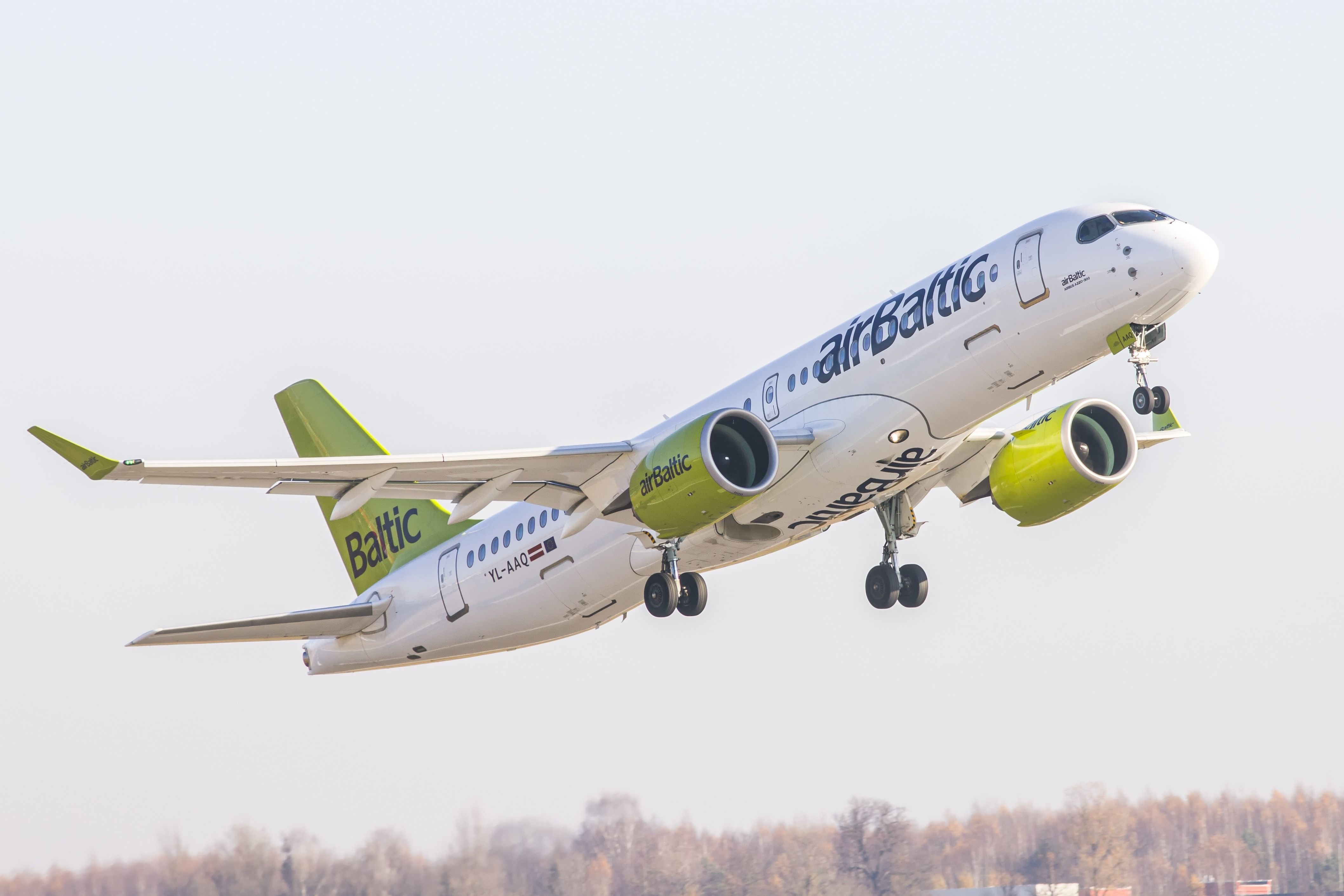
airBaltic Expects Pratt & Whitney Airbus A220 Engine Pains To End In November
If all goes to plan, the airline should be able to cut the number of wet-leased aircraft in its fleet from six to zero.
The airline adds that the disruption is due to unexpected delays and “prolonged engine maintenance” undertaken by P&W.
“Like many other airlines worldwide, airBaltic has been facing external factors beyond its control, including global supply chain issues and maintenance constraints. The airline deeply regrets the disruption caused by these forced cancellations and remains fully committed to supporting affected customers through rebooking options or full refunds as needed.
Minimizing disruption and maintaining reliable service remain top priorities for the airline. airBaltic continues to work closely with Pratt & Whitney to resolve the maintenance delays and find a sustainable solution.”
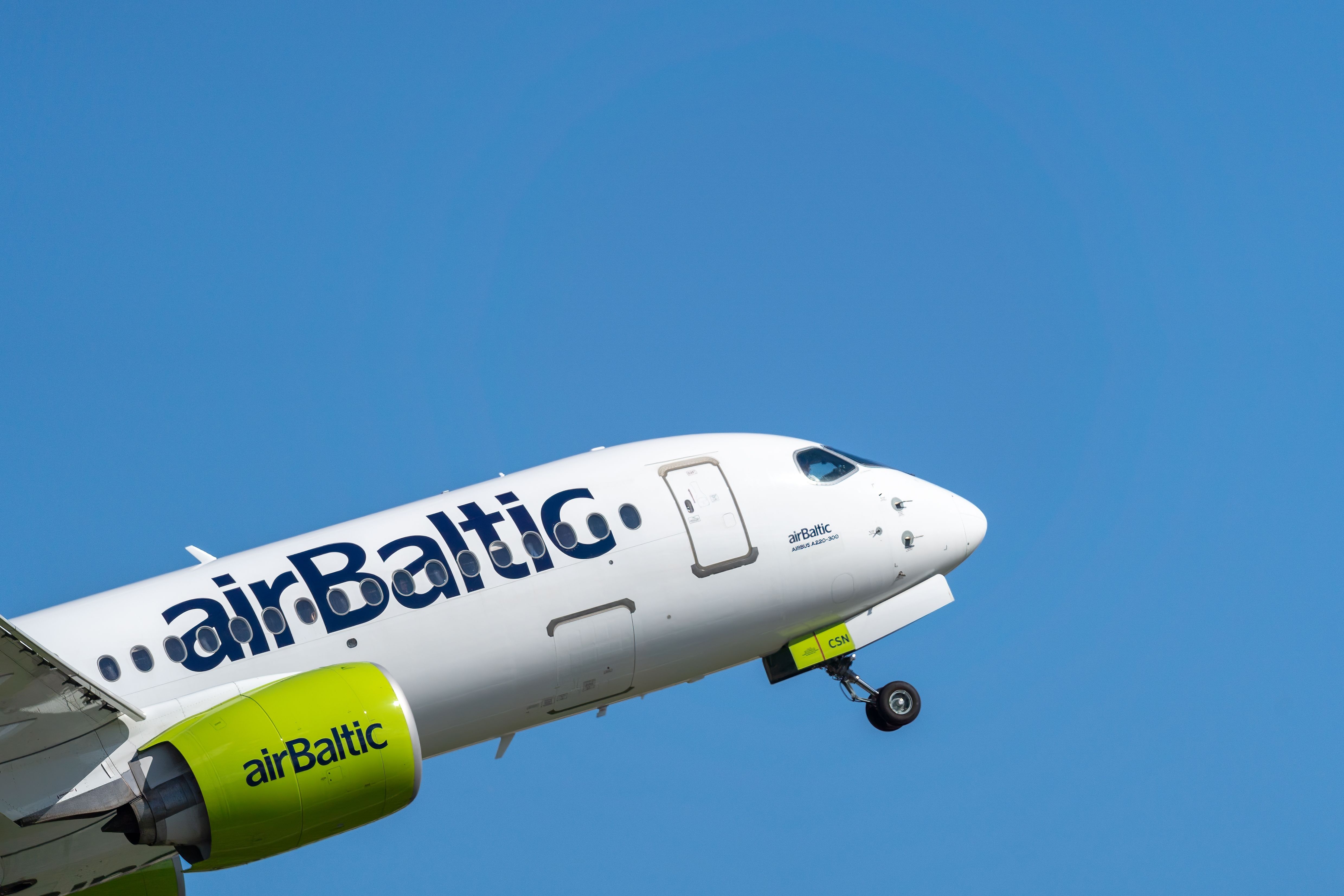
Photo: Valdis Muiznieks | Shutterstock
Number of planes affected & the specific routes canceled
The exact number of planes that will be impacted by the P&W engine issues is unclear. When contacted by Simple Flying, airBaltic said:
“At this time, airBaltic cannot disclose the exact number of anticipated grounded aircraft through 2025, as this figure remains subject to change.”
The airline was also asked if it could share the exact list of routes that would affected by the grounding. Those that will be suspended completely are listed below, from four bases across the Baltics, namely Riga (Latvia), Tallinn (Estonia) and Vilnius (Lithuania). Tampere in Finland will also see a route axed from the network.
- From Riga: Aberdeen, Belgrade, Cluj-Napoca, Yerevan, Gothenburg, Mykonos, Pristina, Rzeszow, Skopje, Stavanger
- From Tallinn: Dubrovnik, Hamburg
- From Vilnius: Dubrovnik, Ibiza, Rhodes, Chisinau, Tel Aviv, Valencia
- From Tampere: Rhodes
airBaltic adds that it is notifying affected passengers individually, offering either alternative airBaltic services or a full refund.
The Lufthansa Group wet-lease
Several compounding events are coming into play at the same time. First and foremost, there are the engine issues outside of airBaltic’s control. However, the second event that is likely playing a key role in this situation, is that of airBaltic’s expanded Airbus A220 wet-lease with Lufthansa.
Related
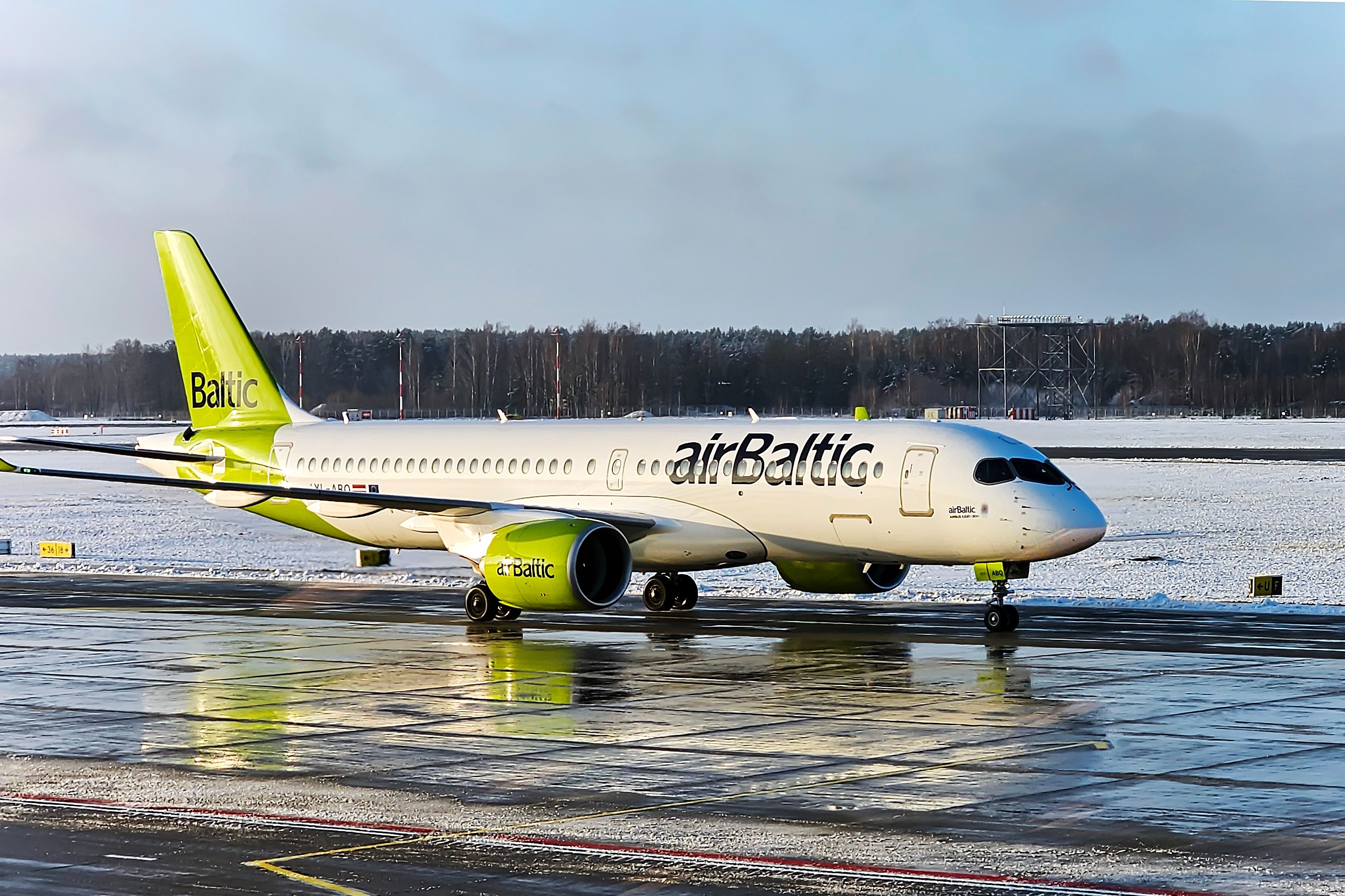
Austrian Airlines Will Begin Wet-Leased airBaltic Airbus A220 Flights In March
Amsterdam will see the most airBaltic-operated Austrian Airlines Airbus A220s over the upcoming summer season.
As we have previously reported, the wet-lease agreement covers up to just under half of the airline’s entire A220 fleet. Specifically, the contract covers 21 planes. Great news for the Lufthansa Group, of course, who will benefit from additional capacity during the peak season. On the flip side of the coin, airBaltic’s operation no longer benefits from the flexibility a larger fleet had brought with it.
The airline assures that it will be able to operate the majority of its schedule, though.
“Despite these challenges, airBaltic will continue operating most of its flights – over 70 destinations across Europe and beyond – ensuring the Baltic States remain connected to the rest of the world.”
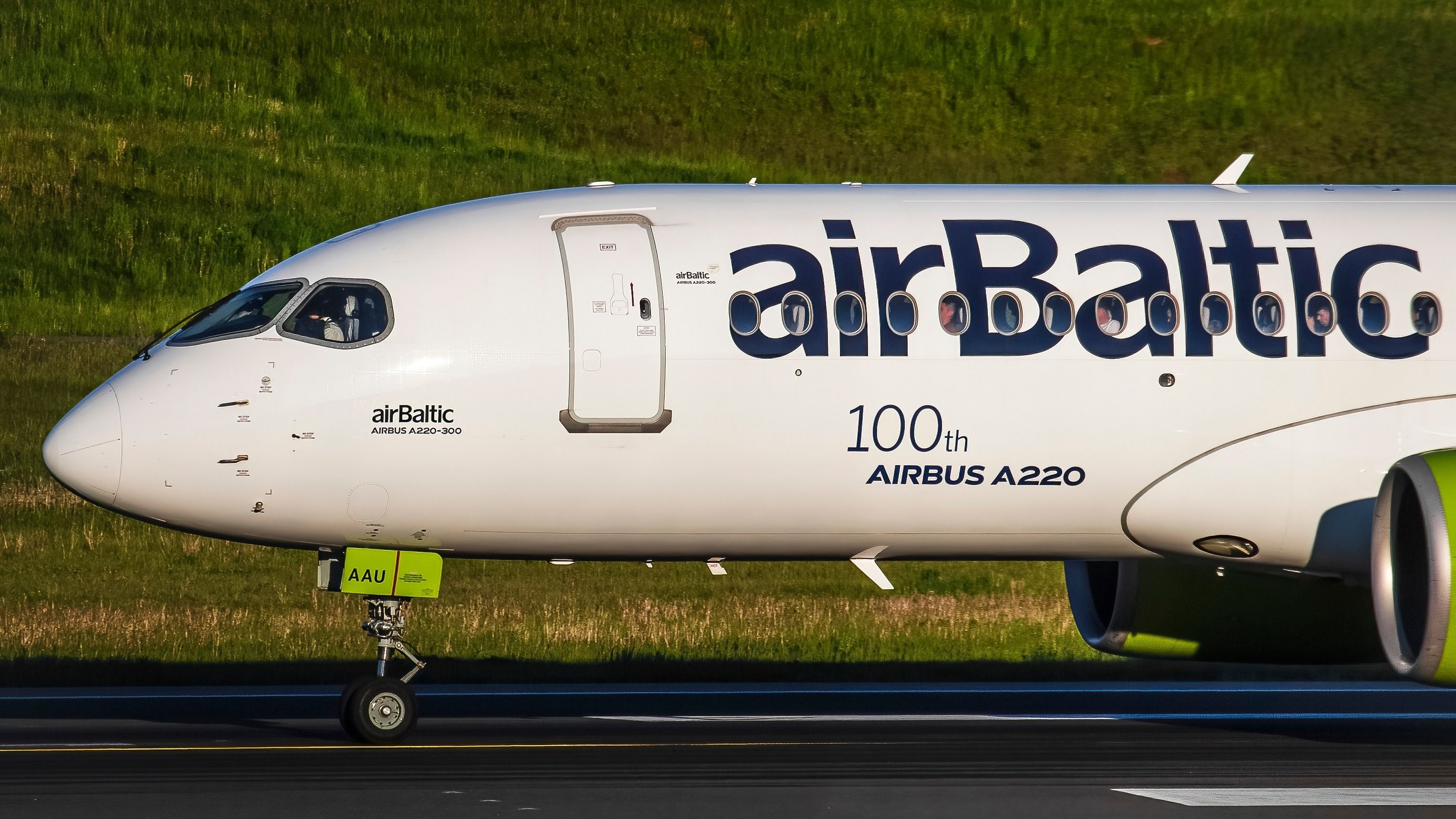
Photo: Adomas Daunoravicius | Shutterstock
While it’s not completely clear as of yet how many aircraft will ultimately be used by the Lufthansa Group this summer, Brussels Airlines has already said it expects four, while Austrian Airlines is seemingly expecting three based on its recent schedule input that detailed the routes on which the A220s will operate.
SWISS International Airlines on the other hand already operates airBaltic’s A220s and has done so for a couple of years now. Initially, the airBaltic jets were brought in as SWISS faced its own engine issues with its A220s. SWISS decided to keep airBaltic’s planes in service ever since. Unions previously complained that the reason for which SWISS maintained the wet-lease agreement was to benefit from the cheaper operational costs that Latvian average salaries provide – considerably lower than those in Switzerland.
If last summer has anything to say about summer 2025, Lufthansa is also expected to take on several A220s for flights from its Munich hub.
