


We collected 118 stories on ArtsJournal this week. Here’s what I learned.
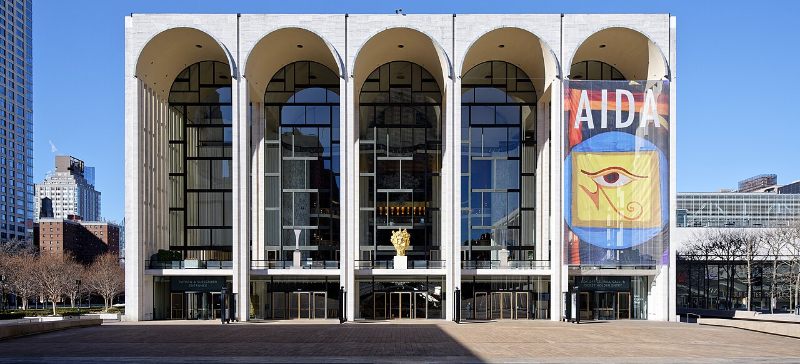
The detail that stuck out in the Metropolitan Opera’s announcement last fall that it had made a $200 million deal with the Saudi government to take the company to perform in the Kingdom for three weeks every winter was not the eye-popping rental fee. Nor even the fact it was taking up residence in the Middle East. Numerous Western cultural institutions—from the Louvre to the Guggenheim to NYU—have chased the money and set up shop there in recent decades.
No, the thing that jumped out was that it wasn’t a signed deal. Instead, it was a “memorandum of understanding” with details to be worked out. That the Met went ahead and announced this with no final deal in place and with fanfare is an indication how desperate the Met’s financial situation is. That same Times story reported that the company had drawn down its endowment by $120 million (a third of the total) since the pandemic, just to pay its operating bills, not for any new initiative.
So this week’s announcement that the deal had fallen apart was not entirely a surprise. It follows reports that the Saudis are likely bailing on their enormous investment in LIV golf, the flashy high stakes international rival to the PGA Tour.
The Met now has a $30 million hole to fill by July 31. Its endowment, drawn down since 2022, has fallen from $340 million to $216 million. The institution is preparing to sell naming rights to the opera house, sell its two Chagall murals to a private buyer who agrees to leave them on the wall, and wait roughly a year for a $100 million bequest that hasn’t yet cleared probate. None of this is fundraising. This is liquidation of irreplaceable assets to keep the lights on.
This week in Opera America Magazine, I reported on an alarming new report on the health of the field. Opera companies are spending nearly twice what they spent in 1999 to produce roughly a third fewer productions, while earned revenue has dropped from 41% of budgets to somewhere between 12 and 20%. Opera has eroded into an almost entirely philanthropic enterprise from what was once a marginally commercial one. The Saudi deal was only the highest-profile attempt yet to import dollars to prop up a cultural business model which no longer works. And not just in America.
Examples abound. From just the past week: Nicholas Hytner’s Bridge Theatre is exploring a sale. Wellfleet Harbor Actors Theater on Cape Cod is suspending operations in June. The Berlin Modern’s opening has slipped another eight months to 2030 over moisture damage and microbial contamination on a building that has now been delayed roughly a decade. A pioneering Greek arts institution announced it is calling it quits with the gracious line “we’ve done what we set out to do.” Hampshire College, the country’s most ambitious experimental liberal-arts college, is winding down — described in New York Review of Books not as another liberal-arts domino but as “the symbolic end of a whole tradition of progressive education in the US.” San Diego is proposing to cut its arts budget. Layoffs at Artnet and Artsy, as the two merge. This isn’t bad luck distributed randomly across the field.
Then there’s Arkansas Public Television, which announced a $3 million challenge grant — explicitly conditional on the station remaining affiliated with PBS. A donor putting a price on institutional affiliation. Contingent patronage. The donor as gatekeeper of mission. This is the other end of the same story: when revenue collapses and dollars get scarce, the people writing the checks get to redefine what the institution is for. The Saudis held the cards with the Met; the Arkansas donor is telling Arkansas PBS what kind of station it has to remain to be worth funding. Riyadh is just the largest version of an arrangement that is moving up and down the field.
America was a brand the Saudis were interested in investing in. Not because they love opera. Or golf, or wanted to be like America. But because it served their financial interests. Trump’s chaos in the Middle East has made America’s brand toxic. And just like that, the Saudis dumped the deals. In the UK, activists have protested the culture sponsorships of Big Oil and Big Pharma. Sponsorships and philanthropic largess thinned, prompting pleas from some arts organizations for protesters to be gentler.
So the real lesson isn’t that the Met chose a bad partner. Or that the Met has become artistically moribund or has been mismanaged. We can argue about any of these and if it were just the Met we could The lesson is that the structures supporting cultural production are really broken—so much so that America’s largest performing arts institution isn’t immune (and No. 2, the Kennedy Center, isn’t in very good shape these days, either). Sure, plenty of cultural institutions are doing okay, and some are even thriving. But the background economics—the civic infrastructure—is in huge distress.
Philanthropy is a perilous game. Funders have short attention spans, shifting values, and goals that often diverge from the projects and organizations they choose to support. In America corporate support largely dried up a couple decades ago. In the last decade, big national foundations (with a few notable exceptions) exited.
Will the donor pipeline come back? It probably doesn’t, not at the volumes the existing infrastructure was built to consume. The question is whether institutions can rebuild a direct relationship with their communities, reassembling the middleware that was once the essential civic glue that helped define communities. This is not just an arts problem.
Also Worth Your Attention
The geopolitics of arts patronage is being rewritten in real time. The EU cut €2 million from the Venice Biennale over Russia’s inclusion; the Biennale’s own jury announced it won’t consider nations whose leaders face ICC crimes-against-humanity charges, effectively removing Russia and Israel from top-prize contention. Berlin’s culture chief resigned over the irregular distribution of €2.6 million in antisemitism funds. These are not three different stories. They are evidence that the political conditions on cultural funding — what governments fund, what international bodies recognize, what donors will tolerate — are getting renegotiated in public, on shorter timelines, with sharper consequences than American nonprofits are used to. Boards and funders here would do well to assume the same scrutiny is coming.
Green shoots, they are a-changing. The National Gallery of Art received a $116 million gift to fund loaning works to museums nationwide. Artists Count launched a $1.3 million binational fund for individual artists in San Diego and Tijuana. These don’t look like the gifts that built the existing infrastructure — capital campaigns, named buildings, endowment grants. They are designed to put resources into circulation rather than into single institutional ambitions. If the old infrastructure is contracting, the next wave of philanthropy may end up looking less like cathedral-building and more like network-weaving. That might not be a bad direction.
Editor’s Note: These weekly essays are meant to connect stories from the week to larger trends and ideas across the arts world. To see all the stories on which these essays are drawn from, subscribe to ArtsJournal’s free daily and weekly newsletters.
Related
Discover more from diacritical
Subscribe to get the latest posts sent to your email.

