

At the Shanghai Grand Opera House, the Gravity-Defying Staircase Was Designed to Look Like a Hand Fan

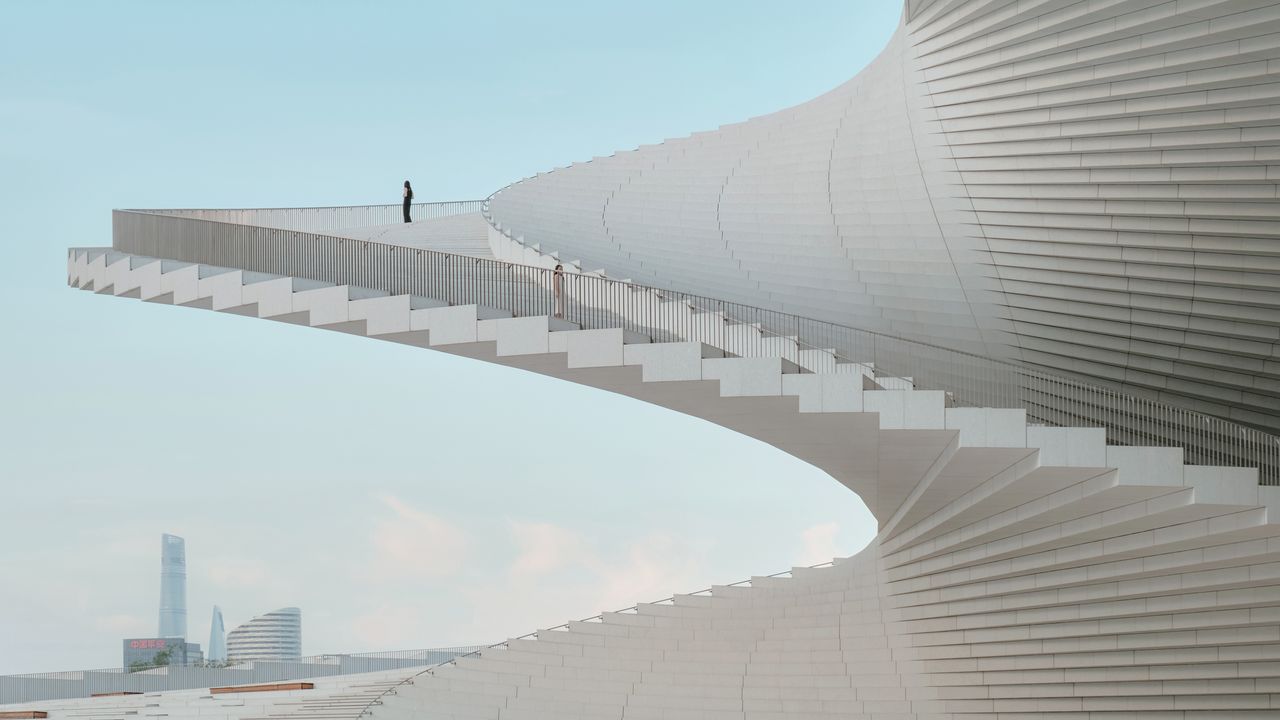
When conceiving the project, Snøhetta sought inspiration from the building’s site. Located in the Expo Back Beach area, the adjacent Huangpu River with its flowing stream, passing ships, and winding bends prompted the building’s most important design concept: movement. “While the Shanghai Grand Opera House certainly has distinctive visual characteristics, its form stems from considerations of circulation, participation, and public accessibility. The building’s geometry is closely linked to how people enter, ascend, explore, and experience the space,” Kjetil says.
Take the striking steps. While they’re the most visually captivating aspect of the design, they’re also rooted in function, allowing patrons and passersby alike to ascend them and experience the structure in new ways. Once you reach the roof, the views of the Puxi skyline and the river further connect visitors to the environment.
This idea continues throughout the rest of the complex, but as Kjetil explains, “the experience unfolds gradually.” Inside, large glass-curtain walls bring natural light into the sweeping lobby; as patrons move closer to the theaters, the design becomes more intimate, while the colors and textures become increasingly rich. “People move between open public landscapes and more intimate indoor environments; natural light changes with the alternation of day and night and the changing seasons,” he adds.
