


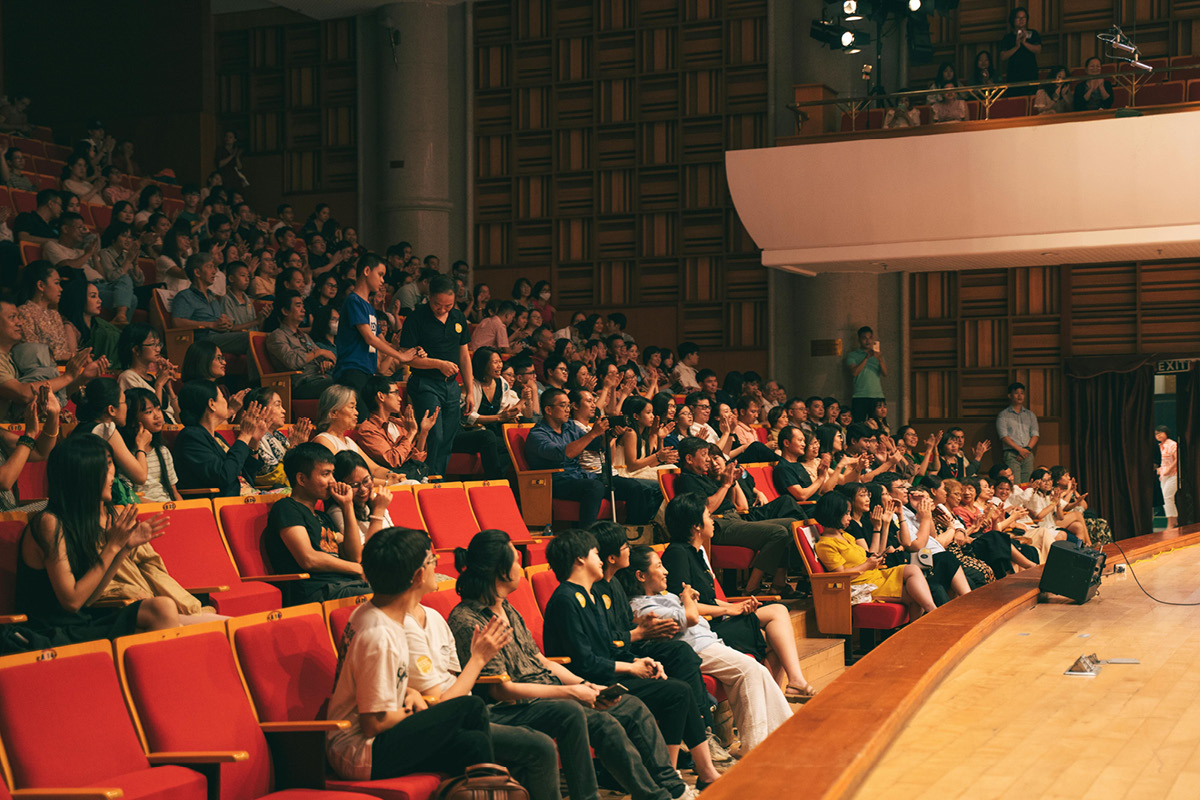
More Australians are attending live arts performances than ever recorded before, but more than half of Australians have had to sit out of an event due to costs, Creative Australia’s latest National Arts Participation Survey, Creative Transformations, has found.
Photo © Hoàng Tiến Việt /Pexels
The survey, conducted since 2009 and last published in 2022, has found that almost all Australians (98%) engage with the arts in some capacity – whether through music, reading, festivals, creating art, digital engagement or live attendance – and more Australians are recognising the positive impact of the arts on the economy and ourselves. At the same time, 60% of Australians cited cost as the biggest barrier to attendance, with fewer Australians giving their time and money to the arts than in 2019 (down from 26% to 23%).
Attendance and behaviour
The results reveal a record 74% of Australians attended at least one live arts event over the last year, with attendance up for all art forms. Attendance for music and dance has now bounced back to pre-pandemic levels, but hasn’t yet for literature, theatre, visual arts and craft.
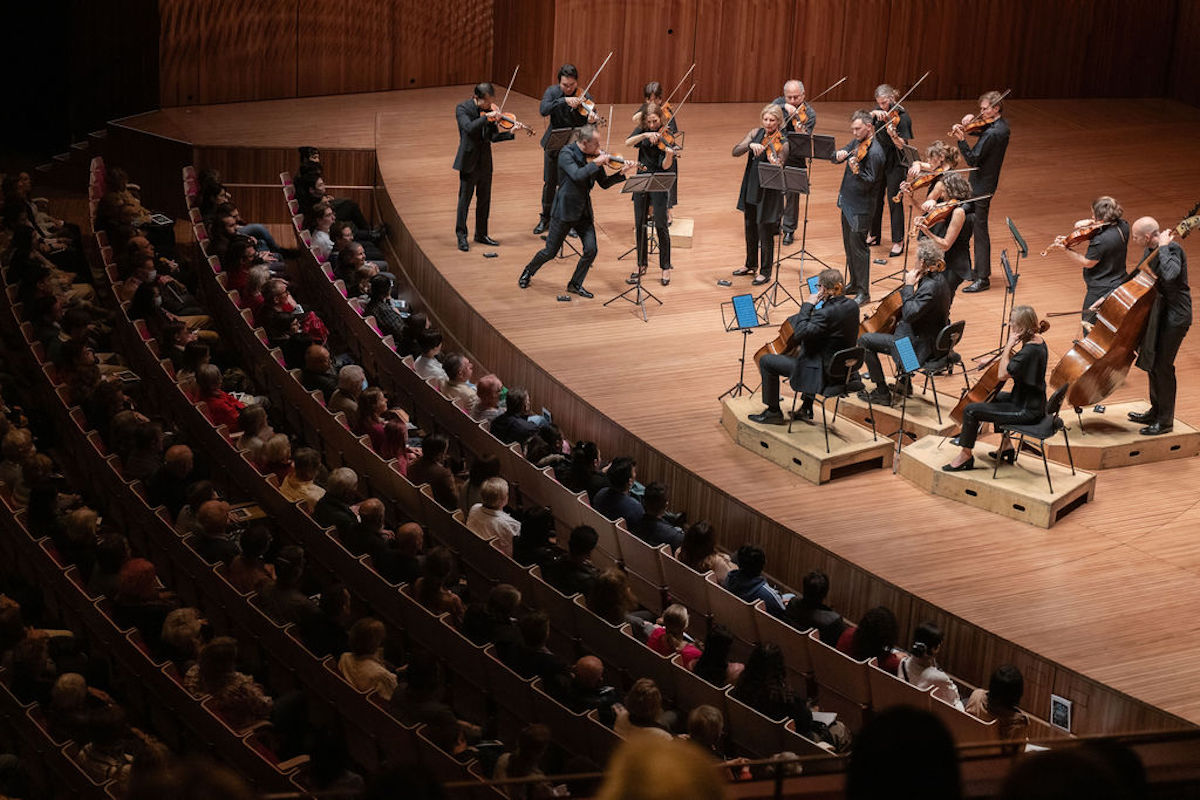
The Australian Chamber orchestra: Bohemian Serenades. Photo © Nic Walker
Classical music attendance is up from 7% in 2022 to 10%, art music attendance is up from 5% to 7%, and opera remains at 3%; attributed to the rising popularity of video game soundtracks and classical music in television shows such as Bridgerton.
Musical theatre and cabaret attendance has also risen to 26%, while contemporary music has seen a drop from 29% in 2022 to 27%.
Concert halls and theatres are still the most popular venues; arenas and stadiums have seen a rise in attendance, while public outdoor spaces and pubs, clubs and bars have seen a dip (these findings are correlated by Music Australia’s recent The Bass Line report, which also notes that these are the most popular spaces for emerging and local artists).
More Australians are also seeing live theatre (42%) and dance (31%), though we’re seeing theatre less often now than before 2019.
More Australians (60% in 2025, from 55% in 2022) are now citing cost as a barrier for attendance, with more than half of respondents noting it has prohibited their attendance at events. Other barriers include distance to events (up to 42%), transport difficulties and a lack of awareness of events (both 29%).
More Australians are also listening to recorded and streamed music, though on fewer formats. Streaming services are the primary source of music discovery, and while 98% of music-engaged Australians note that they regularly listen to Australian music, Australians are predominantly listening to international music.
Nine million Australians create, produce or collaborate in the making of art, with visual arts (24%) as the most common form, followed by music (17%).
Culture and community value
More Australians (40% in 2025, 32% in 2022) are engaging with and sharing their culture and community through the arts, creating art to engage with their culture and attending cultural or community festivals.
Community arts have also seen a bump, with a 2% increase in those singing in a community choir.
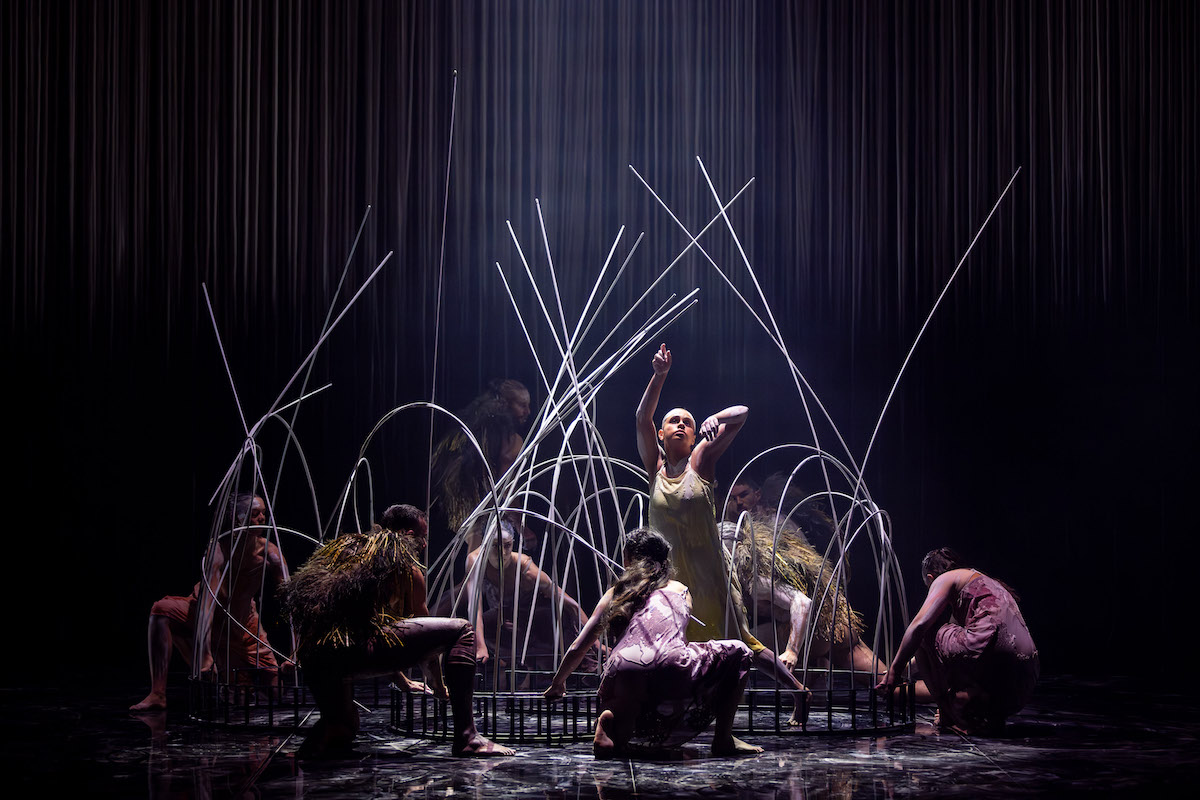
Amberlilly Gordon and the cast of Yuldea, Bangarra Dance Theatre, 2023. Photo © Daniel Boud
First Nations arts attendance has also seen a 5% increase. While 71% of Australians mark First Nations arts as an important part of Australian culture, this number has declined slightly since 2022, as has interest in First Nations Arts (from 40% in 2022 to 37%).
Just under nine in ten Australians (88%) engage with the arts online through livestreaming, watching, listening, selling, sharing or participating in an online creative community.
Arts education
The Survey has revealed that Australians’ top priority for public arts investment is now access for children and young people (65%), surpassing free and low-cost events. Most parents report that their child is learning an art form in or outside of school (86%).
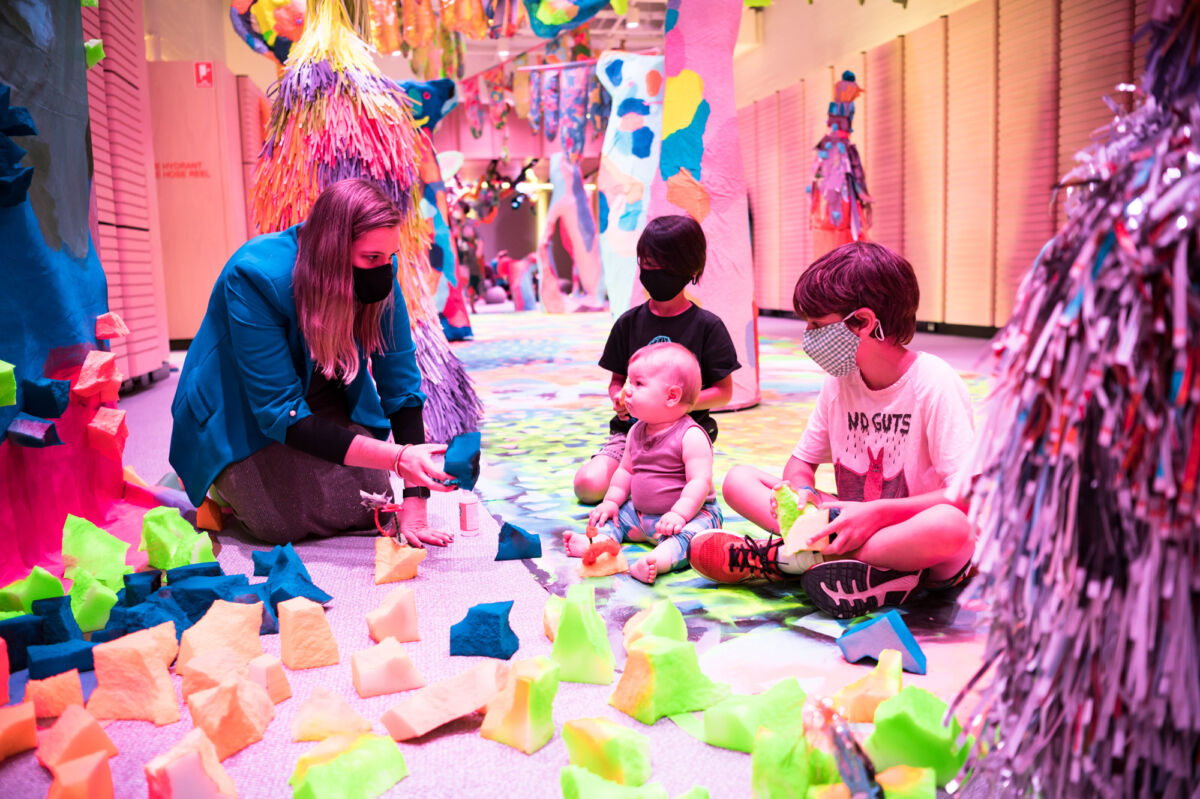
Artist Rosie Deacon with some of her youngest fans at the opening of the Sydney Opera House Centre for Creativity. Image © Cassandra Hannagan.
Three-quarters of Australians were taught an art form as a child, and those who were are significantly more likely to recognise the positive impact of the arts.
They are also more likely to attend arts events than those not taught an art form (73%, as opposed to 51%), more likely to creatively participate in the arts (50%, as opposed to 22%), and more likely to be interested in First Nations arts (The Bass Line report also found that Australians who have been taught an instrument are more likely to engage with arts as an adult).
Women are more likely to have been taught an art form, as are those living in remote areas or those earning at least $100,000 per year.
AI
While 83% of Australians agree that AI can offer creative benefits, 93% have at least one concern about its creative implementation. The top three concerns are originality and authenticity of a work, being unable to identify AI-generated work and the threat to income for artists. Most Australians (82%) think disclosure of AI usage in a creative work is important.
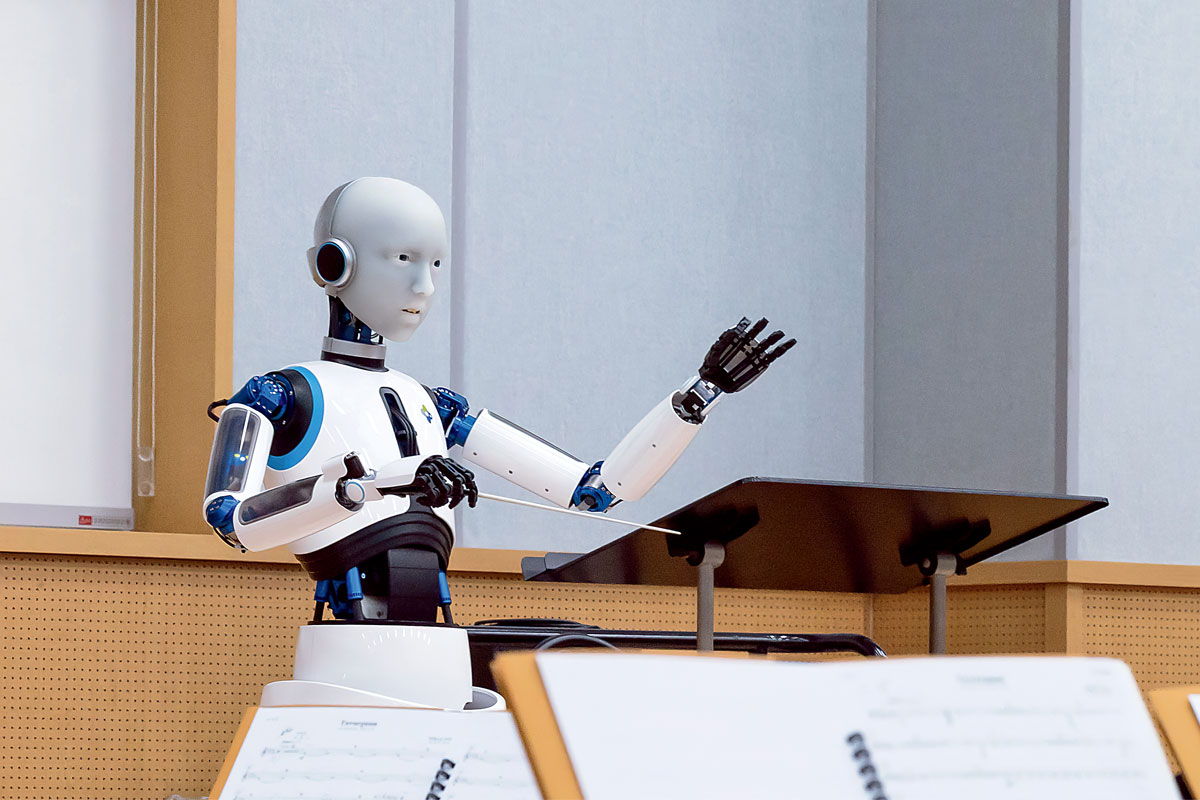
The South Korean-made robot called EveR 6 conducting musicians from the National Orchestra of Korea, prior to a performance at Seoul’s National Theater of Korea. Photo © Kim Sunjoo for Korea.net
More than half of Australians agree that artists should not use AI tools to create or enhance work.
Two in five Australians say they have used AI tools to create art or generate ideas (40%), and those who create art are more likely to use AI tools than the overall population. A quarter of Australians are interested in the use of AI tools to create art and one quarter are neutral, while half of Australians have said that they are not interested.
Read the full results from the National Arts Participation Survey here.

