

BCCL Organizes Special Interactive Session on New Labour Codes to Strengthen Legal Compliance – Indian PSU

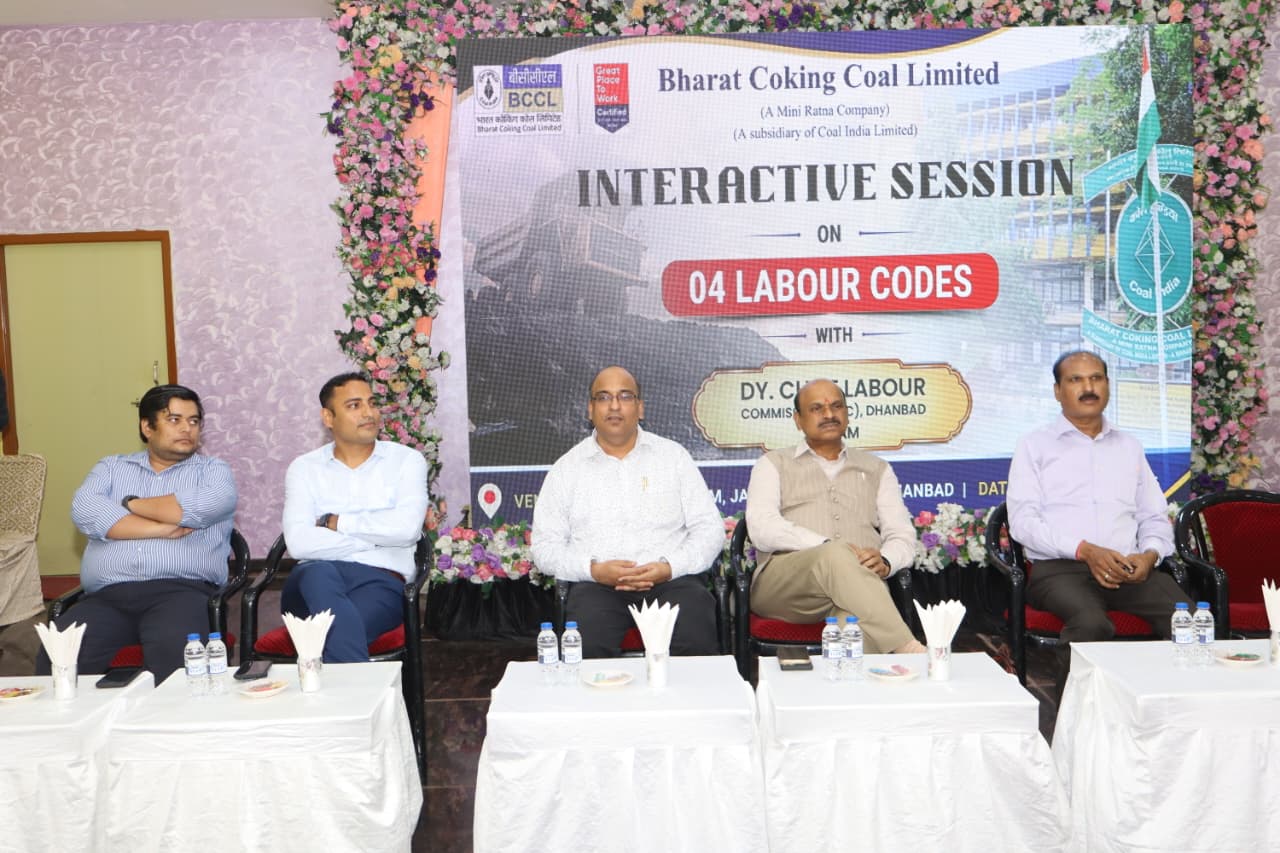
Bharat Coking Coal Limited (BCCL) organized a special interactive session on “The Four New Labour Codes” at Kalyan Mandap, Jagjivan Nagar, to enhance awareness among company officials about the Government of India’s landmark labour reforms and their effective implementation across the organization.
The programme brought together senior officials from the Central Labour Department, who provided detailed insights into the provisions, compliance requirements and practical implications of the four new labour codes. The session was attended by officials from BCCL headquarters as well as representatives from various operational areas.
The technical session was led by Sumit Kumar, Deputy Chief Labour Commissioner (Central), Dhanbad, along with Abhinav Tiwari, Regional Labour Commissioner (Central), Dhanbad; Rahul Kumar, Assistant Labour Commissioner (Central), Dhanbad; and Sarvesh Sharma, Labour Enforcement Officer (Central), Dhanbad. Through detailed presentations, they explained the key provisions of the Code on Wages, 2019; Code on Industrial Relations, 2020; Code on Occupational Safety, Health and Working Conditions (OSH) Code, 2020; and the Code on Social Security, 2020.
The experts highlighted employer and employee obligations, compliance mechanisms, licensing systems, wage provisions, recruitment procedures, statutory provisions relating to women workers, occupational safety standards and other legal requirements applicable to industrial establishments. They emphasized that the new labour codes are aimed at simplifying labour laws, strengthening worker welfare, enhancing social security and promoting transparent industrial relations.
The programme was presided over by Murali Krishna Ramaiah, Director (Human Resources), BCCL, who, in his welcome address, underlined the importance of keeping pace with evolving labour legislation. He said that a thorough understanding of the new labour codes is essential for ensuring legal compliance, maintaining harmonious industrial relations and improving organizational efficiency.
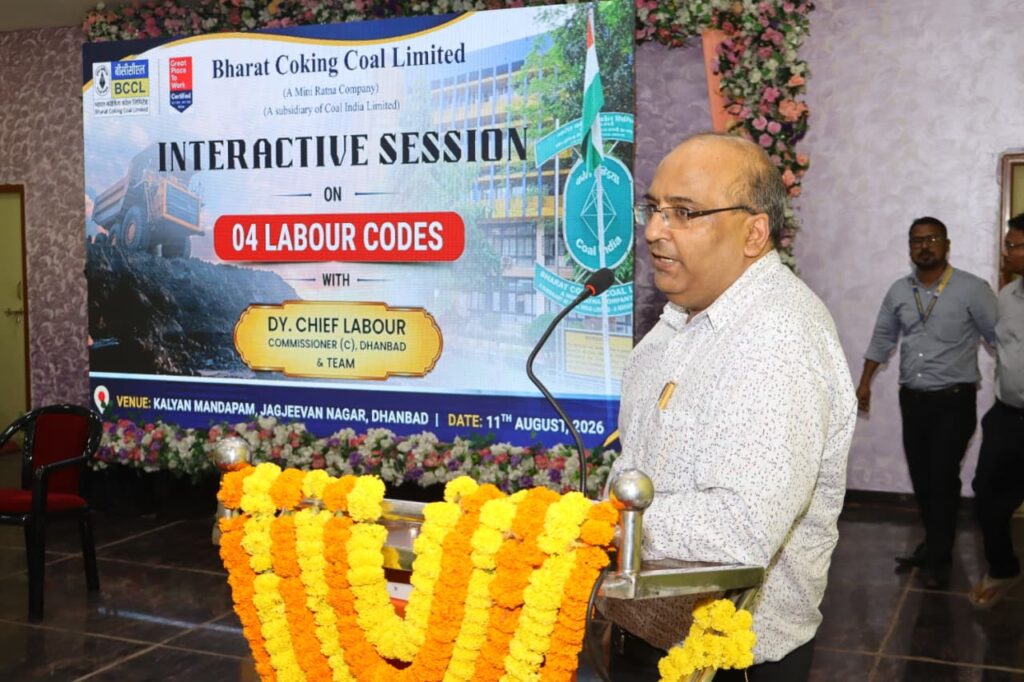
He urged officials to familiarize themselves with the provisions of the new codes and actively implement them in their respective areas of responsibility, noting that the reforms are designed to safeguard workers’ interests while creating a transparent and balanced framework for employers.
Senior management present during the programme included Anil Kumar Sinha, General Manager (Lodna); Nirjhar Chakraborty, General Manager (Sijua); Nikhil B. Trivedi, General Manager; Jayanta Das, General Manager (PB); K. K. Singh, General Manager (Barora); Kumar Ranjeev, General Manager (Block-II); and Tuneshwar Paswan, General Manager (Eastern Jharia), along with other Regional General Managers.
Also present were Kumar Manoj, General Manager (Human Resources); Arpan Ghosh, General Manager (Manpower Planning); Surendra Bhushan, Head of Department (Industrial Relations/CSR); Manish Mishra, Head of Department (Administration); Shobha Jaitun Kujur, Head of Department (Officer Establishment); besides General Managers from headquarters, Heads of Departments, Project Officers, Regional Human Resources Managers and other senior officials.
A lively interactive question-and-answer session formed an integral part of the programme, during which officials sought clarifications on various aspects of the new labour codes. The Central Labour Department officials addressed the queries in detail, helping participants gain a practical understanding of compliance requirements and workplace implementation.
The programme commenced with a formal welcome, the National Anthem and the Coal India song, and concluded with the National Anthem. The proceedings were moderated and the vote of thanks was delivered by Sheikh Mohammad Mashooq, Manager (Human Resources).
The interactive session marked an important step by BCCL towards strengthening legal compliance, promoting better industrial relations, ensuring employee welfare and enhancing organizational effectiveness through a comprehensive understanding of India’s new labour law framework.
