


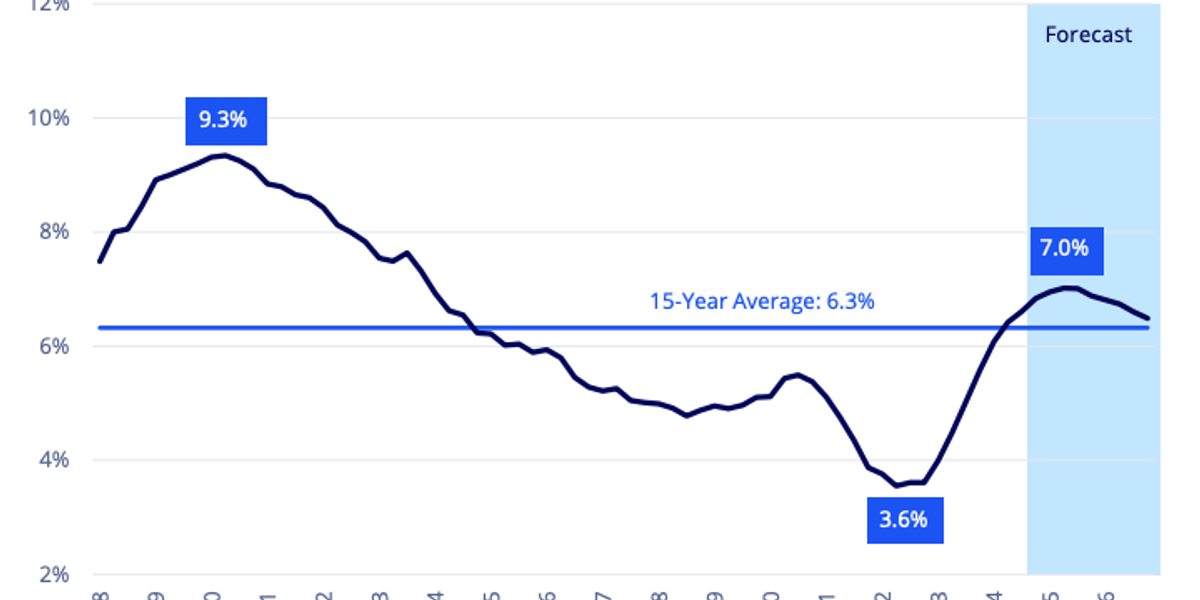
It’s getting a little easier to find warehouse space in the U.S., as the frantic construction pace of recent years declined to pre-pandemic levels in the fourth quarter of 2024, in line with rising vacancies, according to a report from real estate firm Colliers.
Those trends played out as the gap between new building supply and tenants’ demand narrowed during 2024, the firm said in its “U.S. Industrial Market Outlook Report / Q4 2024.” By the numbers, developers delivered 400 million square feet for the year, 34% below the record 607 million square feet completed in 2023. And net absorption, a key measure of demand, declined by 27%, to 168 million square feet.
Consequently, the U.S. industrial vacancy rate rose by 126 basis points, to 6.8%, as construction activity normalized at year-end to pre-pandemic levels of below 300 million square feet. With supply and demand nearing equilibrium in 2025, the vacancy rate is expected to peak at around 7% before starting to fall again.
Thanks to those market conditions, renters of warehouse space should begin to see some relief from the steep rent hikes they’re seen in recent years. According to Colliers, rent growth decelerated in 2024 after nine consecutive quarters of year-over-year increases surpassing 10%. Average warehouse and distribution rents rose by 5% to $10.12/SF triple net, and rents in some markets actually declined following a period of unprecedented growth when increases often exceeded 25% year-over-year. As the market adjusts, rents are projected to stabilize in 2025, rising between 2% and 5%, in line with historical averages.
In 2024, there were 125 new occupancies of 500,000 square feet or more, led by third-party logistics (3PL) providers, followed by manufacturing companies. Demand peaked in the fourth quarter at 53 million square feet, while the first quarter had the lowest activity at 28 million square feet — the lowest quarterly tally since 2012.
In its economic outlook for the future, Colliers said the U.S. economy remains strong by most measures; with low unemployment, consumer spending surpassing expectations, positive GDP growth, and signs of improvement in manufacturing. However businesses still face challenges including persistent inflation, the lowest hiring rate since 2010, and uncertainties surrounding tariffs, migration, and policies introduced by the new Trump Administration.
