

Dame Penelope Keith, actress who delighted the nation in The Good Life and To the Manor Born

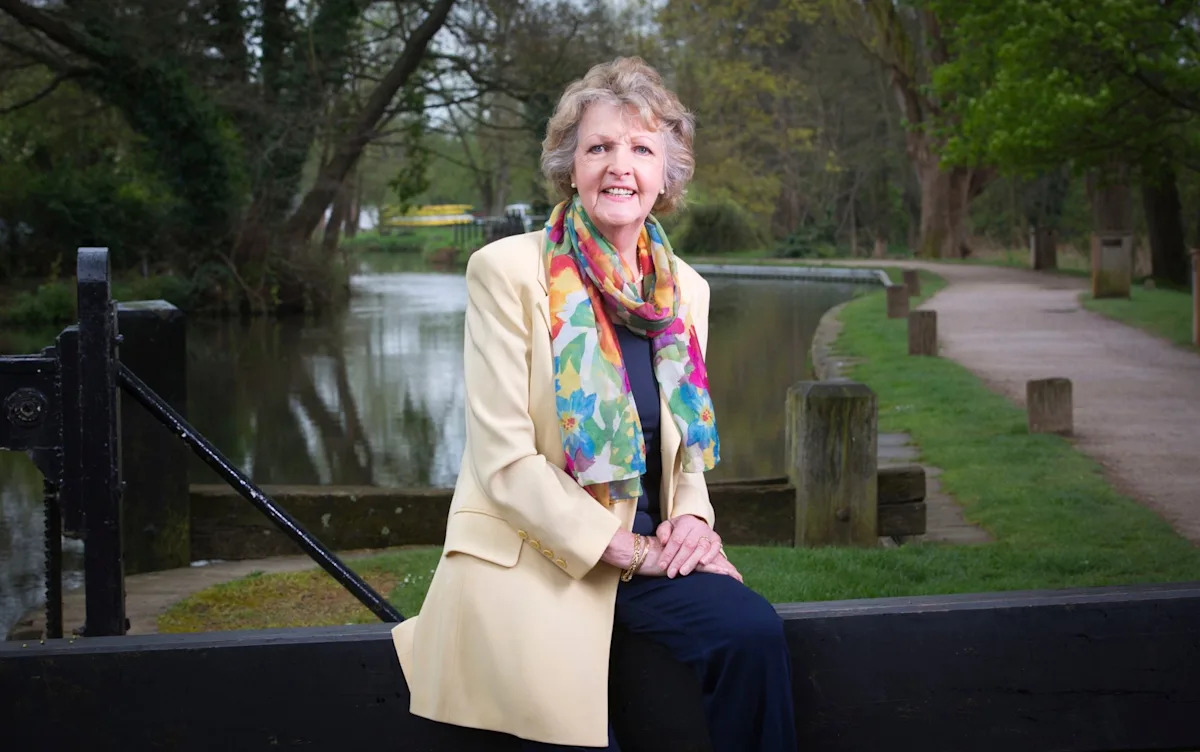
Dame Penelope Keith, who has died aged 86, rose to fame in the late 1970s and early 1980s, becoming one of Britain’s most popular comedy actresses through her work in the BBC sitcoms The Good Life and To the Manor Born: she was both convincing and funny when portraying imperious and autocratic “grand ladies”.
The role that made her a star was the domineering snob Margo Leadbetter in The Good Life (1975-78). Margo and her husband Jerry (Paul Eddington) were ostensibly the supporting characters to Tom and Barbara Good (Richard Briers and Felicity Kendal), their Surbiton neighbours, but Margo’s icily articulated disdain for the Goods’ pursuit of self-sufficiency made her the stand-out figure among the gifted cast.
In 1977 Penelope Keith was awarded the Bafta for Best Light Entertainment Performance and, as proof of Margo’s status as a national treasure, the actress made a celebrated guest appearance on The Morecambe and Wise Christmas Show, hitching up her dress and clambering down scaffolding when some steps leading to the stage ended abruptly six feet from the ground.
A publicity shot for The Good Life, with Richard Briers, Felicity Kendal and Paul Eddington – BBC Studios
After The Good Life ended, Eddington urged her to “go over to the other side of the world and do something completely unsuitable”. Penelope Keith decided to remain in Britain, however, and to continue in the same type of role.
In To the Manor Born (1979-81) she was promoted to leading lady as Audrey fforbes-Hamilton, an upper-class widow forced to move from her ancestral home and determined to make life unpleasant for its new owner, the nouveau riche Richard DeVere (Peter Bowles).
She played the part with the same ferocity that she had brought to Margo Leadbetter, albeit with an occasionally glimpsed vulnerability. The viewing public fell for Audrey’s prickly wit and for many years To the Manor Born held the record for most-watched non-live programme, pulling in 24 million viewers at the height of its popularity.
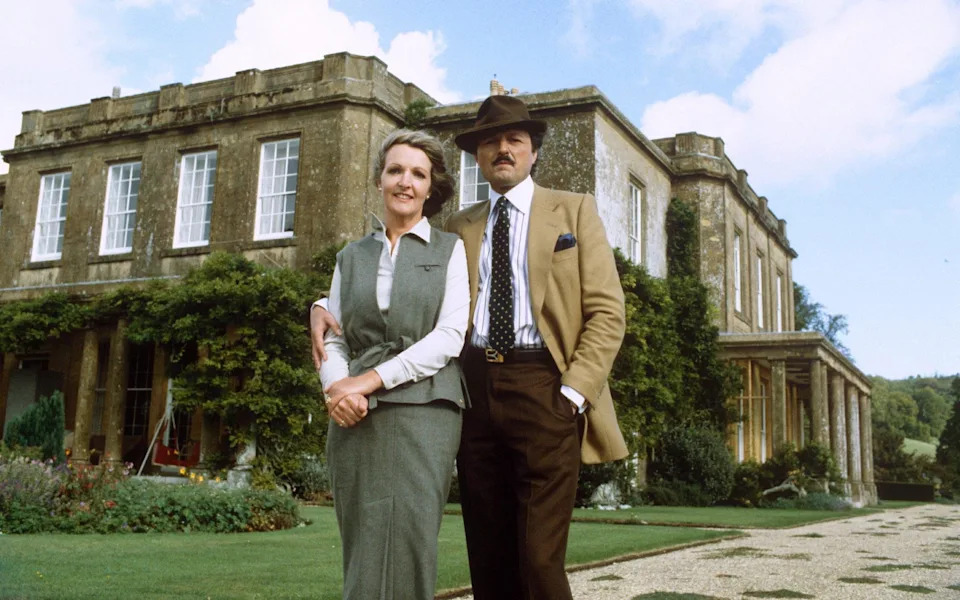
With Peter Bowles in To the Manor Born – Rex Features
Penelope Keith was the first to reject suggestions that she was playing herself when depicting the chilly hauteur of her best-known characters, insisting that in real life she enjoyed “housewifely things, like gardening and putting things in the deep-freeze”. When friends asked her what she was doing next, she would say: “the runner beans”.
Among stage crews she developed a reputation for being robustly assertive, though her own recollection of theatre work was of the “real sense of camaraderie”. According to one mischievous account, her outbursts of temper during the 1982 run of Hobson’s Choice (Theatre Royal, Haymarket) prompted the crew, and occasionally her mild-mannered co-star, Anthony Quayle, to cower behind the scenery until she had returned to her dressing room.
Nevertheless, Penelope Keith won a high reputation in the theatre, receiving an Olivier award (as they are now known) in 1976 for her role in Michael Frayn’s comedy Donkeys’ Years.
An only child, she was born Penelope Anne Constance Hatfield on April 2 1940 at Sutton, Surrey. Her parents divorced immediately thereafter, obliging her mother, Connie, to take work as a hostess, arranging dances and children’s parties at a hotel in Clacton-on-Sea. “Sounds awful, doesn’t it?” Penelope Keith recalled. “Mummy made absolutely certain I spent all my summer hols at Clacton, it was jolly good fun.” On her mother’s remarriage, she took her new stepfather’s surname, Keith.
When she was six, Penelope decided she wanted to be an actress. After leaving Annecy, a Roman Catholic convent boarding school at Seaford, Sussex, she studied at the Webber Douglas drama school, having been rejected by the Central School of Speech and Drama for being too tall (as an adult she was 5ft 11in).
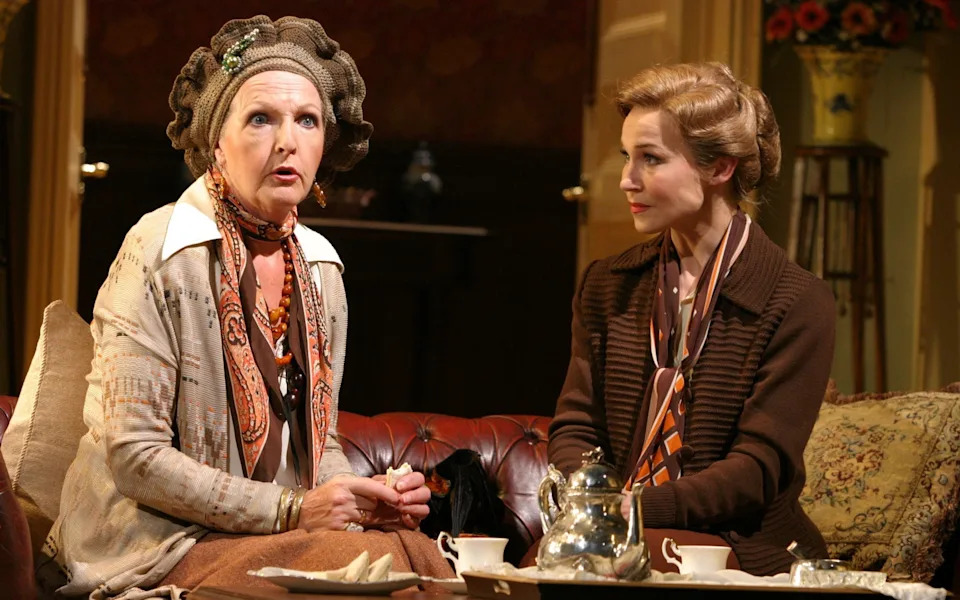
As Madame Arcati in Blithe Spirit with Joanna Riding at the Theatre Royal Bath in 2004
She took elocution lessons and made her professional debut in provincial repertory playing Alice Pepper in The Tunnel of Love (Civic Theatre, Chesterfield, 1959). In 1963 she joined the Royal Shakespeare Company to play Simcox’s wife in the Wars of the Roses trilogy and remained with the RSC for three years.
After being cast in such unlikely roles as Big Molly in The Ballad of the False Barman (Hampstead Theatre) and Tiny Cruise-Orb in Mr Kilt and the Great I Am (Fortune, both 1971), Penelope Keith gained recognition when she played Sarah, the bossy, uptight but ultimately vulnerable organiser of the family in Alan Ayckbourn’s The Norman Conquests (Globe, 1974). She was regarded, by the playwright himself and many other critics, as having perfected the role.
It was The Norman Conquests that brought Penelope Keith – and her co-star Felicity Kendal – to the attention of Richard Briers, who recommended them both for The Good Life, which had been written as a vehicle for him. In 1977 she reprised her role in The Norman Conquests for Thames Television, this time with Briers as her husband Reg, and won the Bafta for Best Actress.
When Penelope Keith herself married in 1978, the fact that her husband, Rodney Timson, was a twice-divorced detective constable some years younger than her excited considerable comment in the tabloid press. Timson did not endear himself to journalists; he took photographs of reporters in case he did not like what they wrote, and his protective manner towards his new wife provoked claims that he had become something of a Svengali.
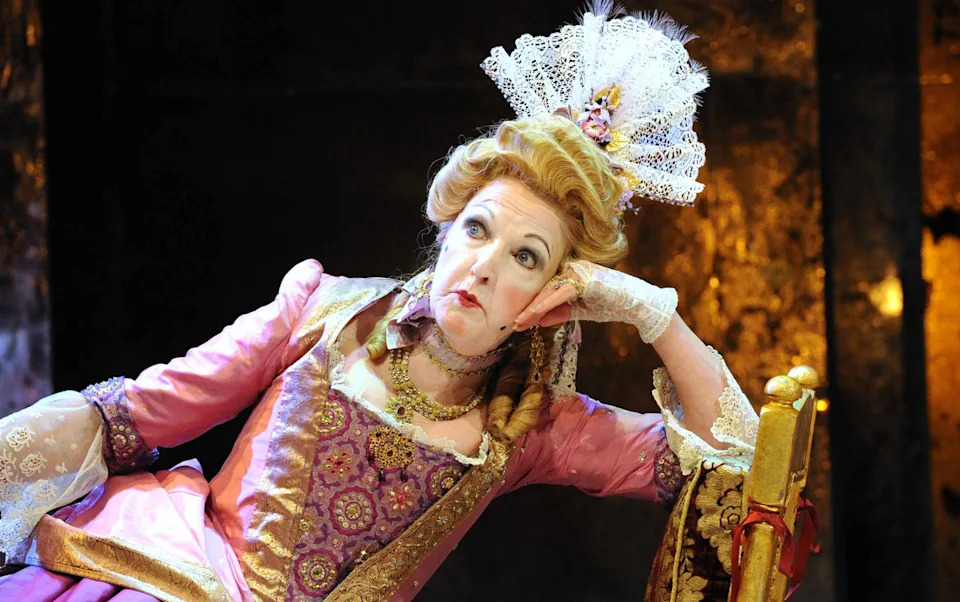
As Lady Wishfort in The Way of the World at the Chichester Festival Theatre in 2012: ‘Keith is all fluster, flutter and girlish excitement, but as well as being deliciously absurd, she also finds a touching poignancy in the role,’ wrote the Telegraph’s Charles Spencer – ALASTAIR MUIR
The Timsons won a libel case against The Sun after the paper had claimed that Timson refused to allow his wife to sign autographs and that he “tried to convert her fame into cold, hard cash”. Penelope Keith pointed out that she married Timson after her success in The Good Life, noting that she was suffering from depression. “Not many men found me attractive,” she said. “If I hadn’t married Roddy when I did, I’d be in the la-la farm by now.”
When Rodney Timson left the police in 1984 he became Penelope Keith’s business partner, and the couple established a theatrical production company, Pencon. “I like to have some measure of control,” she said. They produced The Dragon’s Tail (1985), in which Penelope Keith starred as an alcoholic harridan, but the play proved unpopular with reviewers, one claiming that “two hours felt like 12”. The production company went on to stage Terence Rattigan’s The Deep Blue Sea, the first revival since it was originally staged in 1952, and Noël Coward’s Hay Fever, both starring Penelope Keith.
On television, after two series of Executive Stress for ITV (1986-88), in which she played a suburban housewife who returns to work, Penelope Keith went on to be the star in another ITV sitcom, No Job for a Lady (1990), as an Opposition backbencher. She was “irritated” when people started asking her how she voted, but once told an interviewer that, if anything, she was Green. A fanatical gardener, watering her plants at midnight, taking cuttings in the dark and working outside in the depths of winter, she urged more people to get back to the soil. “Gardening is such a marvellous hobby.”
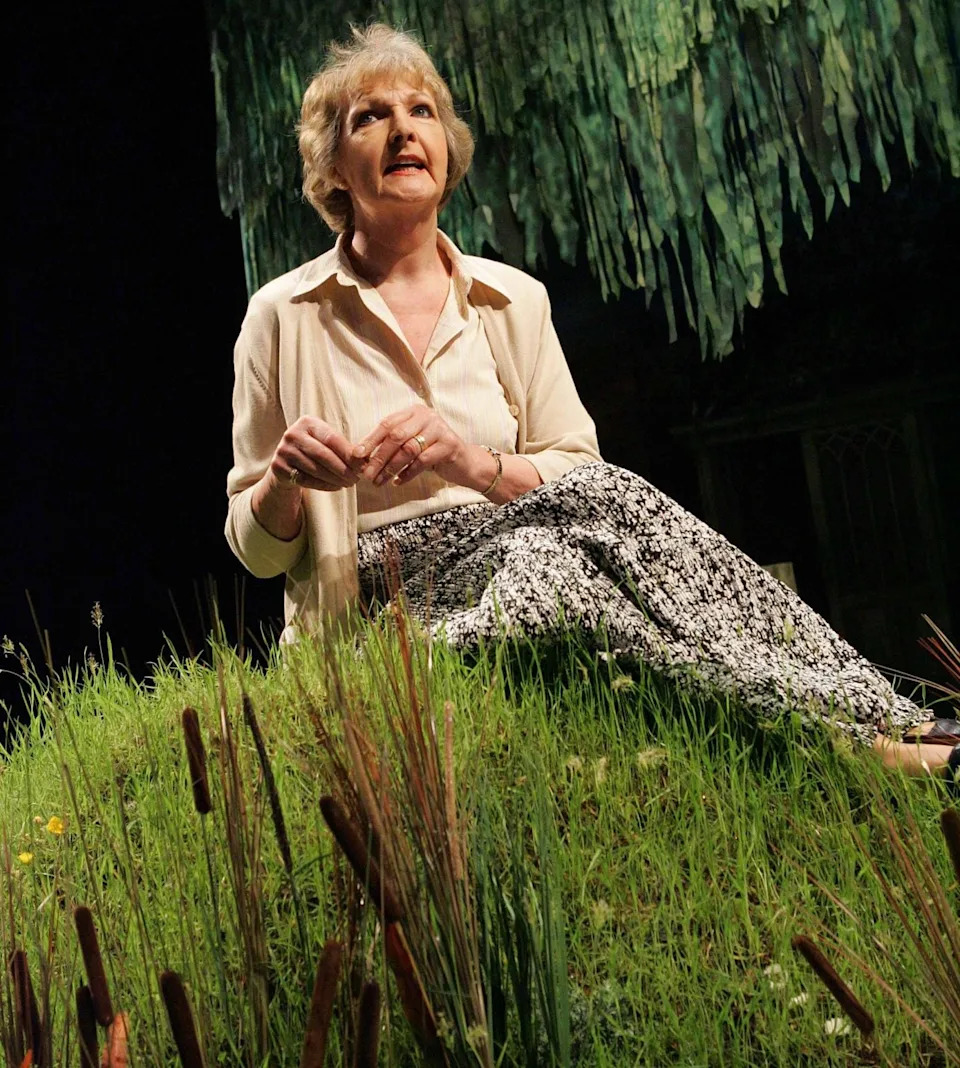
In Entertaining Angels at the Chichester Festival Theatre in 2006 – ALASTAIR MUIR
Latterly she had worked mainly in the theatre, winning plaudits for Richard Everett’s Entertaining Angels (Chichester, 2006) and for her Lady Bracknell in Wilde’s The Importance of Being Earnest (Vaudeville, 2007). The latter role won her a rave review (“what a delight… inspired… startlingly fresh and unexpectedly endearing”) from Charles Spencer in the Telegraph, who concluded that Penelope Keith had confirmed herself as “an actress whose art becomes more subtle, and captivating, with age”.
In 2012 she played Lady Wishfort in The Way of the World at the Chichester Festival Theatre. Charles Spencer again enthused: “[Penelope] Keith is all fluster, flutter and girlish excitement, but as well as being deliciously absurd, she also finds a touching poignancy in the role, especially when she forlornly gazes at herself in a mirror and declares: ‘I look like an old peeled wall’.” At Chichester in 2018 her Mrs St Maugham in The Chalk Garden was “secateur-sharp”, according to the Telegraph’s Dominic Cavendish, who rejoiced that “age [had] not withered her talent to wither away, splendidly.”
Her later television work included a one-off revival of To the Manor Born on Christmas Day 2007, which pulled in 10 million viewers, and a typically haughty turn as Lady Catherine de Bourgh in Death Comes to Pemberley (2013), PD James’s murder-mystery sequel to Pride and Prejudice. She was more often seen, however, as a presenter, fronting programmes such as Penelope Keith’s Village of the Year (2018) or tributes to Morecambe and Wise.
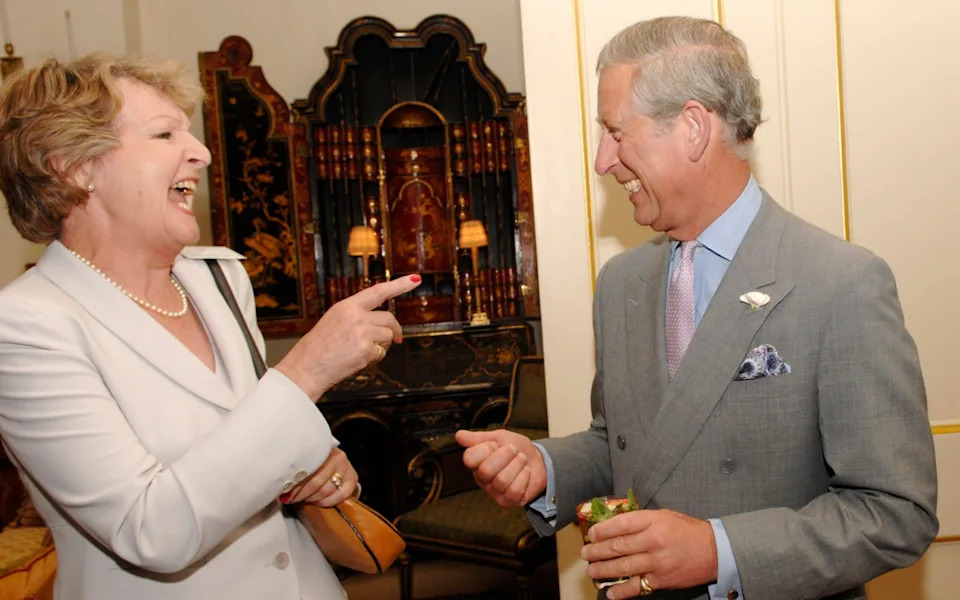
With Prince Charles in 2007 at a reception for the Actors Benevolent Fund – ANWAR HUSSEIN COLLECTION/GETTY IMAGES
Earlier this year she hosted Channel 4’s Saving Country Houses with Penelope Keith. “Why no one thought of getting Dame Penelope Keith… to front one of these Residential Repair Shops until now I have no idea, but she is perfect for the job,” observed the Telegraph’s Benji Wilson, “a jewel in the country’s rich TV heritage who was well overdue a reno for the modern world.”
For BBC radio she was the voice of MC Beaton’s amateur detective Agatha Raisin, and played a retired actress in Noël Coward’s Waiting in the Wings on Christmas Day 2024.
She succeeded Lord Olivier as president of the Actors’ Benevolent Fund in 1989, although in 2022 she was reported to have been “ousted” in a “coup” staged by a rival faction among the trustees. Two years later she received an apology from the Charity Commission over its handling of the affair.
In 2002 she became only the third woman to serve as High Sheriff of Surrey, and was a Deputy Lieutenant of the county.
Penelope Keith was appointed OBE in 1989, advanced to CBE in 2007 and DBE in 2014.
Her husband survives her with their two adopted sons.
Dame Penelope Keith, born April 2 1940, death announced June 29 2026
