


A recent Delta flight within the United States had to return to its airport of origin because of a pressurization issue with the aircraft. Airplanes are pressurized so passengers can breathe comfortably at higher altitudes where it’s difficult to breathe normally.
Delta 757 returns to Atlanta
A  Delta Air Lines
flight from Hartsfield–Jackson Atlanta International Airport (ATL) to Boston Logan International Airport (BOS) was cut short due to a pressurization issue with the aircraft. The carrier had deployed a Boeing 757-200 on the flight.
According to a report by Air Live, the plane reached 34,000 feet when the pilots informed air traffic control about an issue with cabin pressurization. The crew then started descending to FL100.

A loss of cabin pressure at such a high altitude can be extremely dangerous due to breathing difficulties for passengers and crew. The pilots dropped the masks for everyone onboard and only asked them to be removed once the plane reached 6,000 feet.
The report says that there were 142 passengers inside the aircraft, which had about two hours of fuel left. Thankfully, it was a safe landing with no reports of injuries. Simple Flying contacted Delta Air Lines for a statement and received the following response:
“We apologize to our customers for the delay and inconvenience on flight 987 on Dec. 18 from Atlanta (ATL) to Boston (BOS). While enroute, the crew reported a depressurization issue, and the flight returned back to ATL. The flight landed safely and deplaned normally.”
About the flight and airplane
The incident took place on December 18 on Delta flight DL987. It has a scheduled departure time out of Atlanta at 07:05 and an arrival in Boston after 09:30. The flight usually takes around two hours to complete.
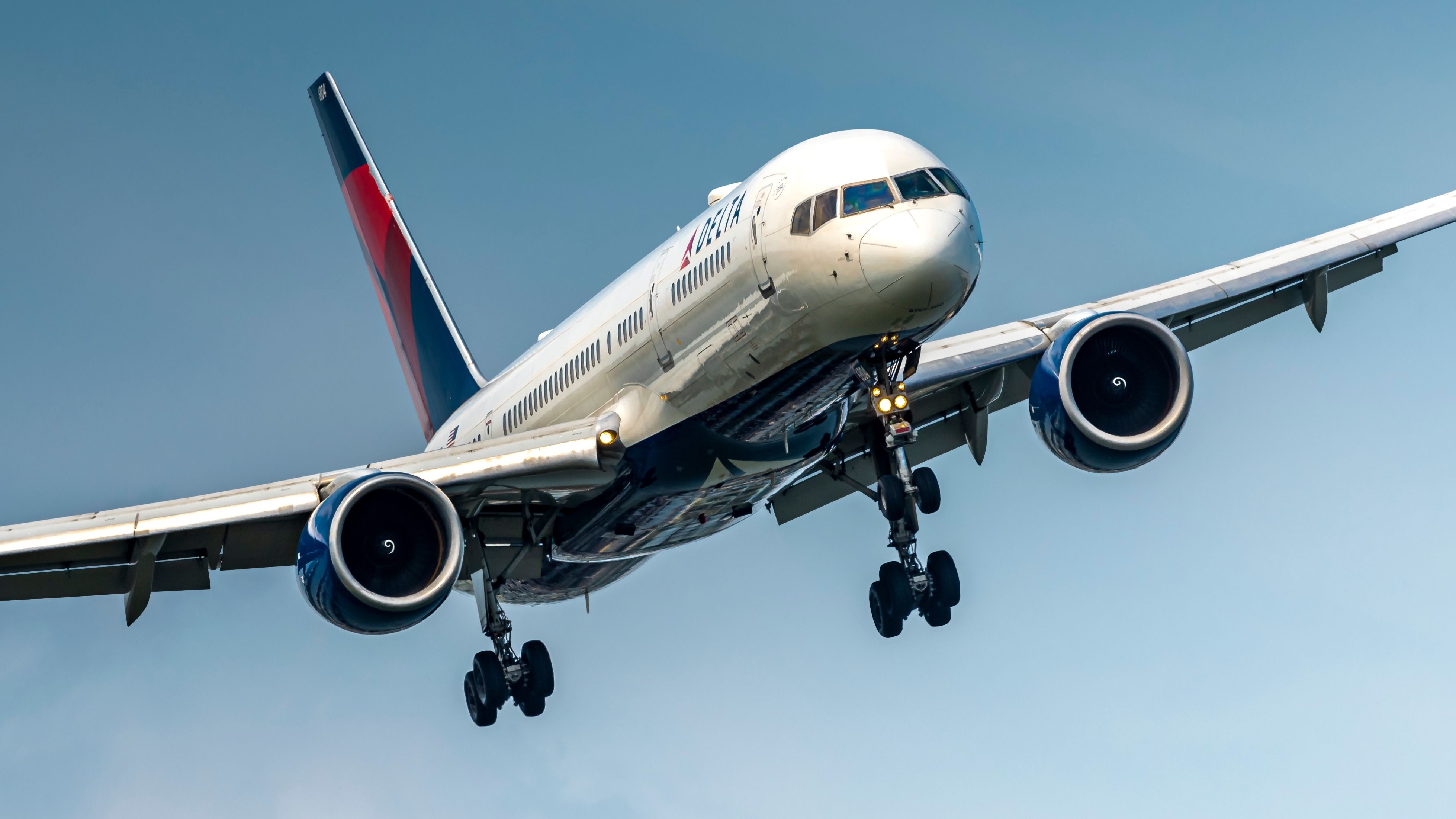
Photo: Andrew Mauro | Shutterstock
Delta deploys its Boeing 757 aircraft on this route. The plane that faced the pressurization issue is registered N723TW. According to ch-aviation, it is almost 25 years old and has its minimum retirement date as December 2027.
As of July 2024, it had accumulated more than 86,000 flight hours across 21,595 flight cycles. The plane can accommodate 168 passengers in three cabins: 16 in business, 44 in premium economy, and 108 in economy.
Related
What Happens If Unpressurized Aircraft Fly Excessively High?
There are severe consequences for occupants of unpressurized aircraft flying excessively high without supplementary oxygen available.
Similar incidents
Several incidents regarding aircraft cabin pressurization have taken place this year. In September, a Delta Boeing 737-900ER flight from Salt Lake City to Portland
had to turn around not too long after takeoff when pilots discovered a pressurization issue
.
While the plane made a safe landing, it was reported that many passengers suffered from bleeding nose and ears along with headaches due to the pressurization problem. One of the passengers was quoted as saying,
“I looked over at my husband, and he had both of his hands over his ears, you know, kind of leaning forward. I looked about a row behind me, over on the other side of the aisle, and there was a gentleman that clearly had a very bad bloody nose, and people were trying to help him.”
When the plane arrived at the airport, paramedics were waiting for the injured. At least 10 people were identified who needed medical assistance, and those who suffered from bleeding were also advised to visit the hospital for further evaluation.
Last month, a Southwest Boeing 737-800 flying from Denver to San Francisco had to return to Denver shortly after takeoff due to a cabin pressurization issue. The aircraft’s cabin failed to pressurize fully, forcing a diversion to Denver. The airline arranged another aircraft to ferry passengers to their destination.
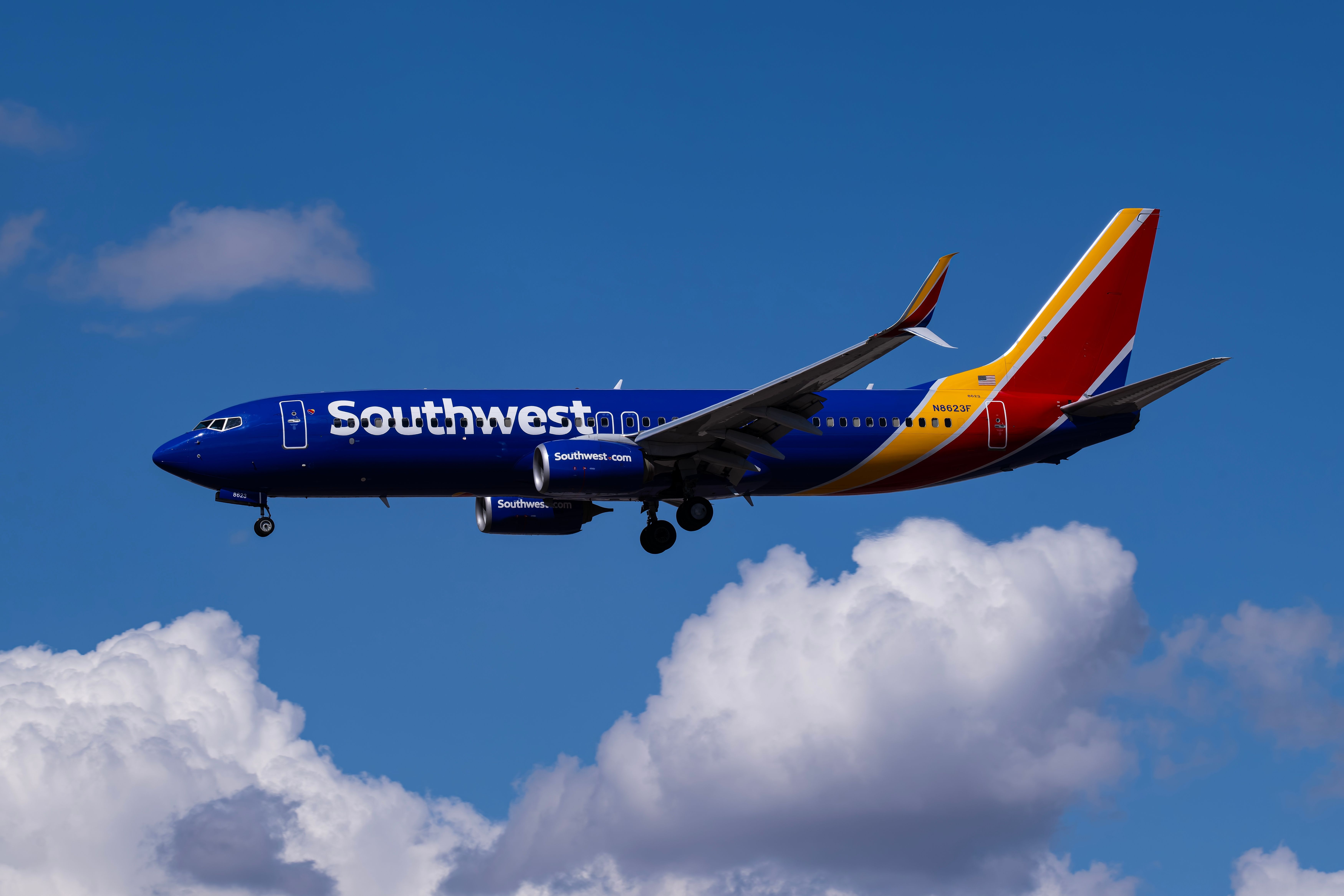
Photo: Robin Guess | Shutterstock
In June, Korean Air flight KE189, which was flying from Seoul to Taichung, encountered a pressurization system fault and had to descend rapidly before safely landing in Seoul. There were 125 passengers onboard, and a couple of passengers suffered nosebleeds. Around 15 people reported ear pain and hyperventilation.
An aircraft maintains pressurization by pumping air from the air conditioning system into the cabin in a controlled manner. To control the pressurization, a valve called an outflow valve is used. This valve is opened to the atmosphere when the pressure build-up is to be reduced, and it is closed when a pressure build-up is required. This has been discussed in detail in the article below.
Related
What Happens When An Aircraft Loses Cabin Pressurization?
How do pilots and passengers respond in the event of a depressurization?
