


By Jens Ibsen
In a previous op-ed, I wrote about how classical music faces a peculiar predicament: this music is happening all around us, but it is hidden “underground.” I want to elaborate on this phenomenon because the lack of readily available language to articulate it is both a symptom of this issue, and one of the factors perpetuating it.
More worryingly, some readers were convinced of the opposite: that because of the music’s enormous cultural legacy and its major organizations, it could never be sidelined. But in the U.S., classical music depends on the charity of the wealthy and a vanishing pool of government funding. It is losing its hold on the hearts and minds of the general populace.
We need far, far more people to know about and participate in this art form for it to be foregrounded in American culture. If we cannot even agree that classical music is indeed obscure to most people, how can we understand the current state of affairs so that we might do something about it?
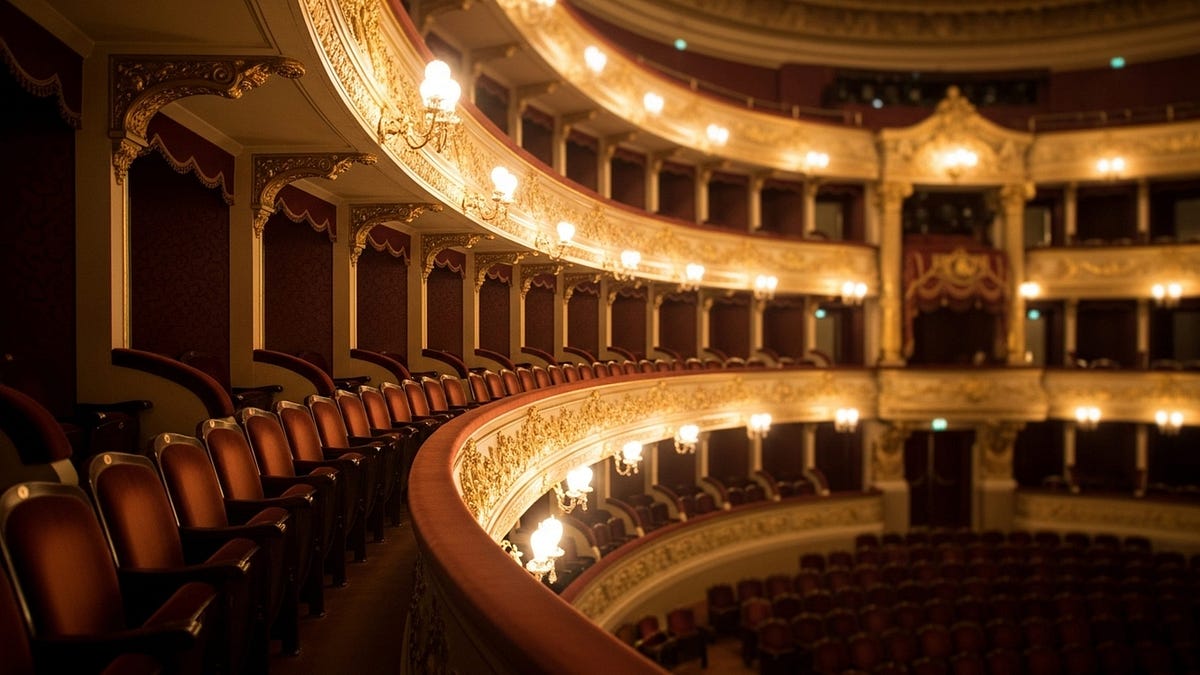
Consider the average person driving by San Francisco’s War Memorial Opera House. Sure, the place is big and noticeable, and on a Friday or Saturday night, you’ll see operagoers in suits and gowns descending the steps, hailing rideshares after a show. This might register to the person driving past, or it might not, but there are three things that are almost certainly not on their radar:
-
That this music is a living art form that enjoys a wide international audience.
-
That there are many contemporary operas, not just new productions of classic ones, with new ones being written all the time.
-
That this person could choose to see an opera themselves and might even like it.
This last point is by far the most important and is what I want to spend the bulk of this essay exploring. I want to posit that the reason live classical music remains obscure is because people are both deselected, and self-deselecting, from the art form.
How does this deselection work? It is all of the small, systemic actions that cumulatively determine who ends up in a seat at the opera, the symphony, or even a DIY avant-garde music show. Here are two important factors:
Funding
Who funds a given company or project, and what their goals are, determines who comes to a show. Some organizations are interested in programming only the warhorse pieces because that’s all donors will pay for. Grants from other nonprofits or the government aim to bring about new work, but applicants and awardees are both determined strongly on racial, gendered, and socioeconomic lines; if you are used to having stuff, you feel entitled to ask for more, and are better at it.
Target Audience
Next is who an organization sees as its core audience. Most bigger institutions in classical music assume that their audiences will be the standard older, primarily white, moneyed base that is the norm. Even attempts to garner more diverse audiences are predicated on the idea that these newcomers to the venue are unusual, a special case.
Anecdotally, my friends living in New York City tell me that the shows at the Met Opera featuring Black composers and performers have sold incredibly well. But the Met sees these concerts as concessions to an audience the institution ultimately has no intention of integrating into their core fanbase.
Here’s another example from a show I have personally seen: Steve Hackman’s Tchaikovsky X Drake is a wild, phantasmagorical mashup of Tchaikovsky’s Fifth Symphony with the greatest hits of the incredibly popular rapper, Drake. Though a dubious pairing, the piece is genuinely engaging and fun: cheesy as all get out, but then Drake is a man who has recorded bars like “Yeah, You say you a lesbian / girl me too,” so the cheesiness feels true to Drake’s essence. My key takeaways from watching it were that while it was wonderful to see SF Symphony filled with other Black concertgoers who’d likely never seen a show there before, the hall was still fairly empty, and I suspect these newcomers were not going to return for Pictures at an Exhibition.
Hackman is a white man who has turned mashing up canonical composers with Black pop stars into a concert series that seems to be making him a pretty penny. If a Black composer had tried to pitch something like this to an A-level symphony, would they have even gotten through the door? Hackman has genuine talent, but he can also sell the novelty of being a white man daring to do it.
Obviously, this is far from exhaustive. These two elements very much tie into both each other, and the next topic: how do potential listeners end up self-deselecting from this music?
Exposure
People are simply hearing classical music less and less these days. My first exposure to symphonic music was through film and game soundtracks, not canonical composers, and this is increasingly the norm. The industry is rightfully adapting to this: live performances of film and game music are becoming more standard in symphonic programming, which is great.
But this means that a small set of successful commercial music composers receive far more exposure than the large, diverse scene of living art music composers, many of whom are also writing stuff the average person would probably like. When the average person thinks of opera, they are likely half-remembering a Bugs Bunny cartoon, not, say, a piece about Billie Jean King and the “Battle of the Sexes” or a mythic Chinese superhero, or a passion play about the death of Garcia Lorca with flamenco music in the score. But they could have that and so much more if their priors were adjusted through better exposure.
Class Connotations
The prevailing culture wars are designed to obfuscate the stark reality that American citizens are divided between the super-rich and the working class. But here’s the point: the main reason people don’t go to the opera or the symphony is because they are not in the club of people who go to the opera or symphony. They cannot picture themselves there, they cannot semantically situate themselves as someone who could enjoy the music and they know through a lifetime of cultural inculcation that it is not for them.
And in most of these spaces, working class concerns are mostly absent and representation onstage, in the orchestra, backstage, and in the audience still skews heavily white and older. These are spaces where, if you’re the “wrong” race, gender, or income bracket, you may feel entitled to visit but you will never feel at home. It’s a club you can’t join. And I mean “club” very literally. Even genuinely countercultural “music, like a DIY house show performing experimental music, is something only other conservatory-trained musicians will ever hear about. And, having been in the crowd for some of these shows, the audiences and musicians are nearly uniformly white. There are all sorts of “underground” “classical” music happening, but who gets to see it is still determined by income, education, race, and so much more.
If we ever want classical music to break out of obscurity, we have to lower the barrier of entry into the club. I lay out some ideas for that in my previous essay, and I hope this prompts you, especially the administrators out there, to think of more. Otherwise, this art form will be consigned to become a private island for a shrinking elite.
