

FAA & EASA Issue Notices Warning Against Flights Through Iranian Airspace As Middle East Conflict Intensifies


The Federal Aviation Administration ( FAA
) and the European Union Aviation Safety Agency ( EASA
) have continued to prohibit airlines from operating flights over Iran’s airspace as the conflict in the Middle East continues to escalate.
FAA extending its ban over the usage of Iran’s airspace
On October 3, the FAA issued a final rule that has extended the prohibition of the usage of Iranian airspace.
The ban applied to all US
airlines, US commercial operators, pilots with FAA certificates (except when operating US-registered aircraft for foreign airlines), and operators of US-registered aircraft.

Photo: The Bold Bureau | Shutterstock
The FAA exempted foreign airlines from the latter rule. Nevertheless, the ban was extended for another three years and will remain valid from October 31 to October 31, 2027.
“The FAA finds this action necessary to address significant unacceptable safety-of-flight risks to US civil aviation operations that continue in the Tehran FIR [Flight Information Region – ed. note] (OIIX) during periods of heightened regional tensions and increased military activities.”
According to the regulator, the regional tensions had led to the downing of Ukrainian International Airlines flight PS752, operated by a Boeing 737-800
, in January 2020.
The flight was a regularly scheduled itinerary from Tehran Imam Khomeini International Airport (IKA) to Kyiv Boryspil International Airport (KBP).
EASA responding to recent escalations
Meanwhile, EASA issued a statement on October 2, saying that following Iran’s
attack on Israel the day before and the latter country’s intentions to retaliate, the European Commission (EC) and the European regulator have decided to issue a Conflict Zone Information Bulletin (CZIB).
The bulletin recommended operators not to perform flights in Iran’s airspace at all flight levels, and the recommendation remains valid until at least October 31.
“EASA will continue to monitor the situation closely to assess whether there is an increase or decrease of risks for EU aircraft operators as a result of the evolution of the threat.”
The CZIB applies to all EASA-regulated airlines and third-country operators (TCO) conducting flights to, from, and within the European Union (EU).
EASA has also issued a CZIB over the airspace of Israel, citing the conflict between Israel
and Hezbollah, an Iran-backed group, in Lebanon.
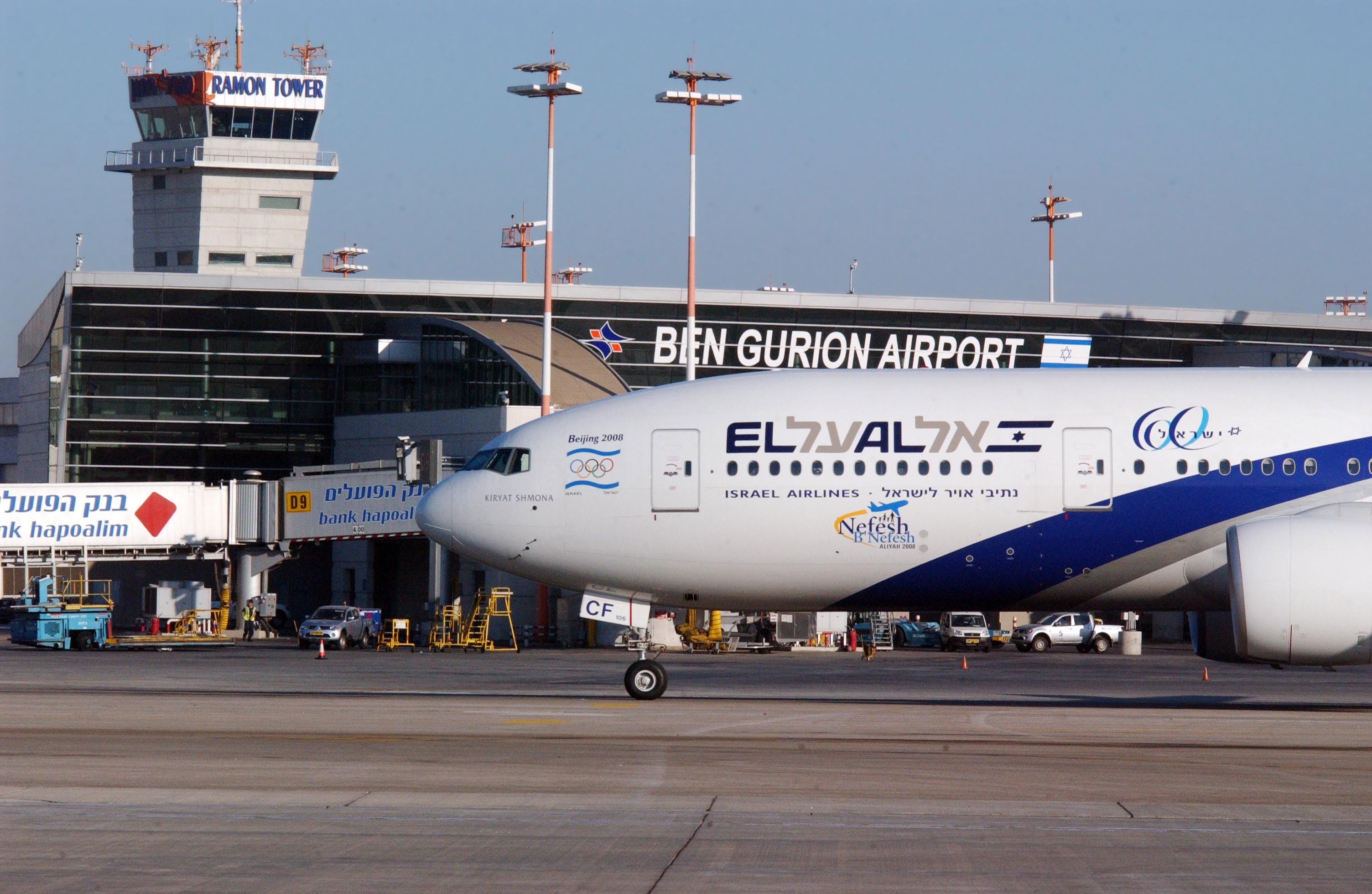
Photo: ChameleonsEye | Shutterstock
The European regulator said that while the Civil Aviation Authority of Israel (CAAI) has been managing the risks to civil aviation through de-confliction, the current intensity of the conflict still poses a high risk to civil aircraft.
As a result, EASA also recommended that European airlines not utilize the airspace over Israel. The recommendation is valid until October 31.
Latest escalations
On October 1, Iran launched around 180 ballistic missiles toward Israel, retaliating for the country’s killing of Ismail Haniyeh, the leader of Hamas, in Tehran, Iran, in July, and Hassan Nasrallah, the leader of Hezbollah, in September.
After the missile attack, Benjamin Netanyahu, the Prime Minister of Israel, issued a statement that Iran’s missile barrage had failed as it was thwarted “thanks to Israel’s air defense array, which is the most advanced in the world.”
“This evening, Iran made a big mistake – and it will pay for it. The regime in Tehran does not understand our determination to defend ourselves and to exact a price from our enemies.”

Photo: airHaifa
Despite the conflict and the recent escalations, Israel-based startup airHaifa has used the opportunity to begin its operations, launching its first commercial flight from Tel Aviv Ben Gurion International Airport (TLV) to Eilat Ramon Airport (ETM) on September 30.
