


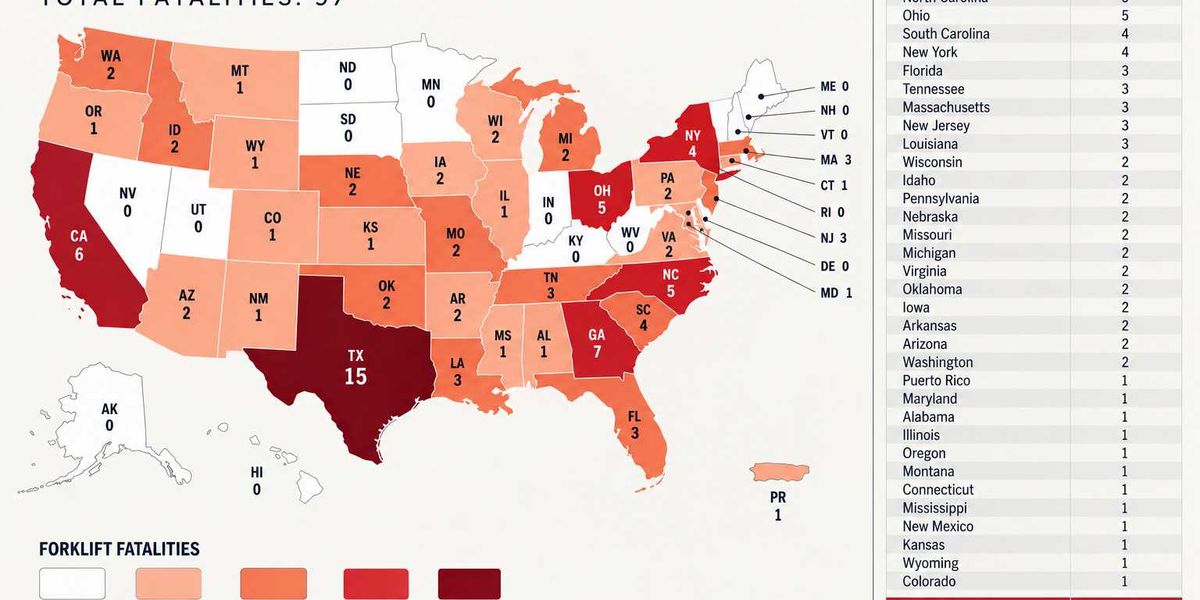
Forklift accidents claimed 97 lives across the U.S. in 2024, according to an analysis of the most recent Occupational Safety and Health Administration (OSHA) data done by material handling equipment provider Intella Parts.
Most of the fatalities occurred through three types of incidents: struck-by incidents or collisions (23 fatalities); caught, crushed or pinned (22); and falling loads or materials (20). Forklift overturns and falls from elevation each accounted for 14 fatalities. Electrical contact or electrocution caused three deaths, while one involved another accident mechanism.
The findings reinforce that forklift safety extends beyond traffic management. Overturns, elevated work, unstable loads, crushing hazards, and electrical contact all contributed to fatal incidents during the year.
“These incidents show that forklift hazards extend far beyond the operator’s seat,” said Marcel VandenTop, President of Intella Parts. “Many of the fatalities involved pedestrians, maintenance personnel, workers handling materials and employees working around forklifts. Preventing these tragedies requires a comprehensive approach to workplace safety.”
The analysis also found that 21 fatalities occurred during maintenance, repairs, inspections, loading preparation, or other service-related activities. Those incidents highlight the importance of properly securing equipment, controlling stored energy, blocking elevated components and preventing unexpected movement before maintenance work begins, Intella Parts said.
To prevent future incidents, Intella Parts recommends separating pedestrians from forklift traffic, establishing exclusion zones around moving equipment and elevated loads, verifying load stability, enforcing seat belt requirements, and inspecting travel routes for slopes, edges, and obstructions. Employers should also consider safety devices, including warning lights and audible alarms, as part of a comprehensive safety program. These devices should complement task-specific training, safe operating procedures, and efforts to investigate near misses before serious incidents occur.
“Operator training remains essential, but it’s only one piece of the puzzle,” VandenTop said. “Employers must also protect mechanics, contractors, pedestrians and anyone else who works around forklifts, even if they never operate the equipment themselves.”
