

‘It’s still a no-go area’: German author Matthias Jügler on the trauma surrounding the GDR’s ‘stolen children’ | Fiction in translation

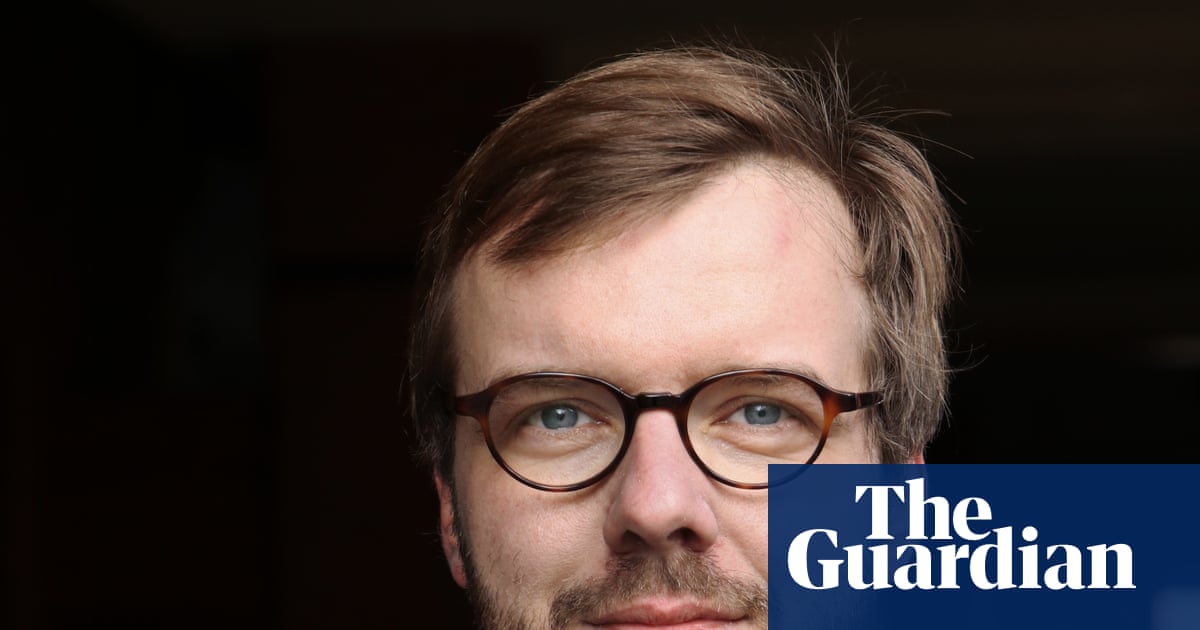
A few weeks after the German publication of his debut novel in 2024, author Matthias Jügler received a call from an employee at the German government agency tasked with investigating the human rights abuses of the socialist east.
The call wasn’t overtly threatening; Jügler was asked to explain what historical source material he had consulted for Mayfly Season and which period he was planning to tackle in his next book. But it came after another government official had accused him of traumatising some of his readership, and after the organiser of a reading had asked him to bring along documents proving the plausibility of his book’s plot.
“I thought, holy crap, what is going on here?” the 41-year-old tells me, ahead of the book’s UK publication. “I was completely taken aback. Why am I being put in a position where I have to justify what I write in a work of fiction?”
Given the pushback, you might expect Jügler to have written an explosive exposé, or a fast-paced thriller about government cover-ups. In fact, Mayfly Season is mostly a book about fishing. There are big emotions in this novella-length work, and a traumatic event buried in the past, but for the most part the reader sits with narrator Hans on the banks of Thuringia’s Unstrut river, listening to the gurgling waters, watching poplar trees swaying in the wind and dreaming about the pike, carp and barbels basking beneath the surface.
More specifically, Mayfly Season is nature writing about fly-fishing, which Jügler explains requires a delicate balance of skill and exposing yourself to the elements. “You need that magic flick of the wrist to cast the fly in such a way to trick the fish, and you have to have a hunch where the fish are,” he says. “But it’s only a hunch. You know something is there but you can’t see it. You know it exists and that you will find it.”
It’s this mindset that makes fly-fishing more than a displacement activity for Jügler’s narrator. We learn that in his 20s, when Hans was married to his first wife, Katrin, their newborn Daniel died shortly after birth – or so doctors told them. Katrin was unconvinced by their explanations, but Hans refused to acknowledge her doubts. Their relationship did not recover from the loss, and they separated before Katrin died of cancer. Now aged 65, with the Berlin Wall long gone, he starts to feel regretful that he didn’t take her questions seriously, and casts out his rod for proof that their son may not have died after all. Then, one day, there’s an unexpected phone call: Daniel is still alive.
Jügler, who was born in the German Democratic Republic (GDR) in 1984, originally set out to write a different novel. In the one-party state, parents were obliged by law to educate their children to become “active builders of socialism”. In cases where they did not, the state was entitled to intervene, and in some cases is known to have removed children from parents it considered politically unreliable, for example because they had tried to flee to the west. Jügler’s wife had pointed him to a Facebook group for mothers affected by so-called “forced adoption”, and he arranged to speak to one of them over the phone.
During the call, he realised he was looking at a different story altogether. The woman, whom he calls Karin S, told him that she had given birth to a baby girl in 1986. The doctors had whisked the infant off to an antenatal unit immediately after the birth and told her two days later that the child had died. Yet Karin remembered her daughter’s healthy screams in the operating theatre.
“She said a sentence that I will never forget,” Jügler recalls. “‘From that day on I had a feeling that my child had been declared dead but was still alive.’” A search through her GDR-era hospital records yielded no mention of her baby’s ill health, and no death certificate. When she was finally granted permission to exhume the grave of her supposed dead daughter, the medical examiner told her the skull was too large to be that of a newborn. The resulting DNA test did produce a match, though the lack of an official stamp on the certificate made her suspect a cover-up. “I had never heard a story like that before,” Jügler said. “I immediately had that scene of the phone call that comes at the start of Mayfly Season.”
He twice tried to write the novel from the mother’s perspective, but each time his agent gave his manuscript a thumbs down. “I got so frustrated, I shaved all my hair off,” he recalls. “Then, almost by chance, I asked myself how I would deal with a situation like this. I knew I wouldn’t turn to drink or drugs. I would go fishing.” He finished the book in a couple of months. Published in Germany in March 2024, it has won literary prizes and been heaped with critical praise.
The book’s success in Germany has resembled that of another novella-length bestseller that compresses traumatic political processes into a single protagonist’s inner turmoil. Claire Keegan’s Small Things Like These told the story of Ireland’s Magdalene laundries, where thousands of “fallen women” were forced to carry out unpaid labour, without ever explicitly naming the historical scandal.
Mayfly Season, likewise, does not speculate why the state would have stolen Daniel from his parents – Hans and Katrin are not portrayed as harbouring strong political beliefs. And yet, even more so than Keegan’s book, Jügler’s has also reopened old wounds. In response to an article about Karin S’s story in Frankfurter Allgemeine Zeitung newspaper, the state of Saxony-Anhalt’s commissioner for the victims of the East German dictatorship wrote a letter stating that by tying facts to fiction, Jügler could “reopen wounds that have taken long to heal” and cause a “retraumatisation, by awakening hopes that a child has survived after all”. When the director of Leipzig’s House of Literature asked him ahead of a reading to present evidence that cases like Hans’s were based on factual evidence, Jügler declined the invitation.
“I realised writing about this whole subject is still an absolute no-go area for some people today, which seems incredible to me,” he says. Part of the reason for the hostile reaction from official bodies, he speculates, could be financial.
Andreas Laake, the head of a victims’ association for “stolen children in the GDR”, estimates the total number of forced adoptions over the state’s 40-year existence to be as high as 8,000, and has recorded 2,000 infant deaths that his organisation suspects could be disguising forced adoptions. In five of these cases, the association has been able to confirm that the deaths were falsely reported. But a state-commissioned report published at the start of this year insists that they were isolated incidents: “A systematic, planned and explicitly politically motivated endeavour on behalf of the state within the adoption procedures could not be proven,” it says. Proof of the opposite would probably oblige the German state to pay compensation to thousands of victims.
The other reason for the pushback is cultural, Jügler says. Since the collapse of the Soviet Union and its East German satellite state, the injustices perpetuated by the GDR regime have been documented at length in countless novels and films, such as Florian Henckel von Donnersmarck’s Oscar-winning drama The Lives of Others. Yet in recent years, eastern German readers have turned to books that look more leniently on everyday life in the GDR, such as Katja Hoyer’s Beyond the Wall.
“When you tackle the dark sides of the GDR in 2026, a lot of people are quick to feel that you are devaluing their lives or those of their parents,” says Jügler. “But as a storyteller it’s not my intention to devalue anyone. I am merely interested in people whose lives didn’t run according to their plans.”
