


I have spent a significant portion of my life studying the Irish satirist Jonathan Swift — and in particular, studying Gulliver’s Travels, which turns 300 this year. While working on my Ph.D. dissertation, I was primarily interested in what Swift had to say about the politics of travel. Now, as a college professor teaching Canadian politics and battling to keep generative artificial intelligence out of my classrooms, I’m thinking a lot about what Swift had to say about technology. In his day, as in ours, a dominant narrative portrayed scientific development as both benevolent and inevitable. Swift’s skepticism about that narrative exposes some of our own most deeply held assumptions about the meaning of progress.
Born in Dublin in 1667, Swift is frequently described as the greatest satirist in the English language. This reputation is tied to the biting wit and unruly imagination found across his prose, poetry and political writings. In “A Modest Proposal” (1729), he notoriously suggests that the Irish poor should eat their own children for subsistence. Swift was born into the Anglo-Irish Protestant elite, and the text satires both the callousness of his class and a then-ascendant approach to morality and politics that held that all aspects of life could be cooked down to a pure numerical value. That this approach ended up predominating in the boardroom and halls of government is one reason why the brisk and shocking “Modest Proposal” still speaks to readers today.
Gulliver’s Travels is a much lengthier work. Over the course of Gulliver’s four voyages to fantastical lands, Swift gives the reader wild and varied depictions of political corruption and human hubris. Gulliver’s third voyage takes him to the flying island of Laputa, which rules tyrannically over several territories situated below. On his visit to one of these territories, Gulliver tours the “Academy of Lagado,” where scientific experimentation and deciphering the patterns of mathematics and music are valued above all else. The scientists he meets are profoundly unconcerned with whether their experiments have any useful outcome.
Centuries before the internet infiltrated almost every aspect of daily life, Swift described how scientific and technological advances could lead to chronic distraction by producing an obsession with what could be rather than what is.
At the time Swift was writing, the experimental scientific method as we know it today — data collection and the development of hypotheses from empirical evidence — was becoming prominent, thanks to the work of Sir Isaac Newton and the Royal Society. Critics and readers have often viewed Gulliver’s third voyage as a moment when Swift chose the wrong subject to satire. The achievements of Newton and the Royal Society are, after all, still celebrated today. But I think Swift knew exactly what he was doing. Far from merely raising a reactionary fist in the air at the new science, Swift identified an attitude that is still around today — and one that has created many of the greatest challenges now facing educators.
Centuries before the internet infiltrated almost every aspect of daily life, Swift described how scientific and technological advances could lead to chronic distraction by producing an obsession with what could be rather than what is. At the heart of Swift’s diagnosis is the idea of speculation, or as Gulliver describes it, “speculative learning.” Gulliver sees a society totally consumed by impractical and abstract scientific interrogation. This plays out in bizarre and frequently doomed projects and experiments: Gulliver incredulously witnesses people attempting to extract sunbeams from cucumbers and turn excrement back into edible food.
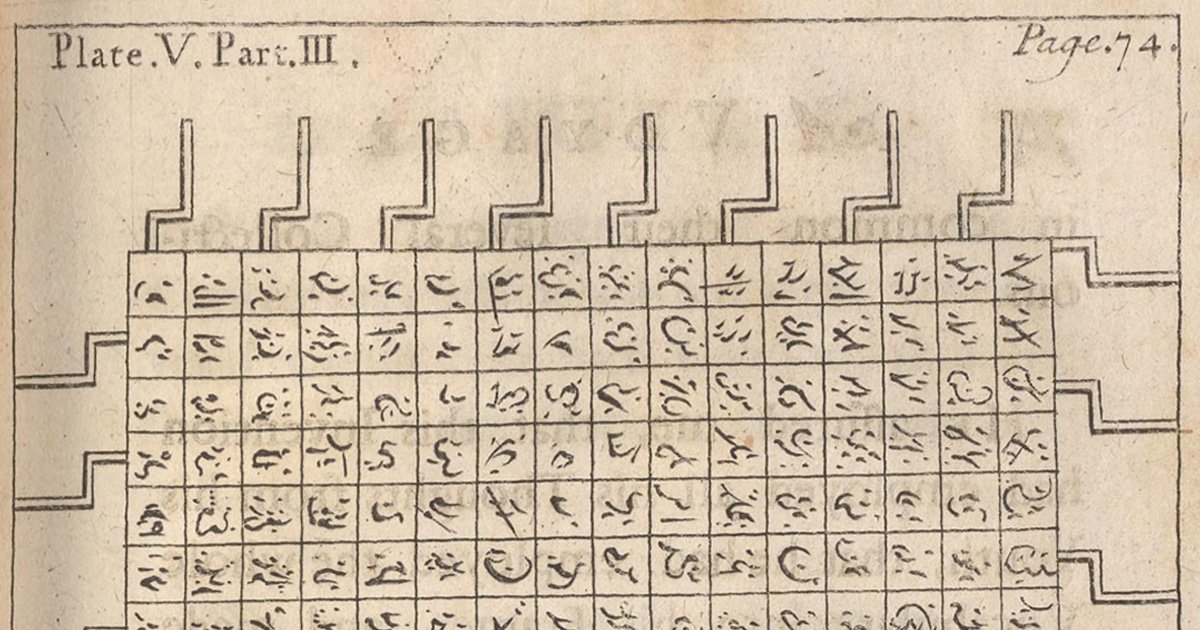
Not all the scientific projects in the territories of Laputa fail to achieve their purpose. Gulliver is shown a large wooden contraption that allows “the most ignorant person … [to] write books in philosophy, poetry, politics, laws, mathematics, and theology, without the least assistance from genius or study.” Swift, who was deeply learned, was envisaging a nightmare world in which reading and writing — the essential foundation of wit and wisdom — are replaced by a flashy simulation of human knowledge. Since the advent of ChatGPT, this scenario has become all too familiar. The device Gulliver encounters is massive, requiring 40 individuals to rotate iron handles attached to multiple words, which are then assembled into sentence fragments and called out to a scribe. Reading Swift’s description, I think both of the autocomplete nature of modern large language models and of the underclass of precarious workers whose labor is necessary for the seemingly lean, seemingly all-digital process of generative AI to work.
Swift’s sharp diagnosis of Laputa’s ills is motivating me to push back against the encroachment of AI into the work of education — and to instill in my students the belief that they, rather than the forces of technology, can determine the future.
There are also many Laputans who are given over to a strange life of the mind, “so taken up with intense speculations, that they neither can speak, nor attend to the discourses of others, without being roused by some external taction upon the organs of speech and hearing.” Servants called flappers are required to shake rattles in their ears to keep them from falling or bumping into things. A quick rattle might also be used to rouse them from the somnambulant abyss of speculative abstraction, if conversation is necessary. Again, sounds rather familiar. Sure, people today wandering the streets head down in the infinite distractions of their phones are hardly absorbed in the life of the mind — but they are still absent from the things and the people around them. And isn’t the addiction to scrolling predicated on speculation of sorts? What will come next? What will I find if I look at just one more post?
Modern technology, and AI in particular, has created another Laputa: a society characterized by rampant speculation, blind faith in technology manipulated by cynical charlatans, and the casual disregard of old-fashioned virtues like truth, beauty, imagination and knowledge acquired the hard way. In many cases, the presence of AI in the classroom is a solution in search of a problem — just like the ludicrous, pointless innovations by the Laputan scientists. Swift’s sharp diagnosis of Laputa’s ills is motivating me to push back against the encroachment of AI into the work of education — and to instill in my students the belief that they, rather than the forces of technology, can determine the future.
✺
In higher education, as in so many areas of life, we are being told that AI-produced progress is inevitable. As the theorist of technology Jathan Sadowski has noted, the tech evangelists characterize anyone who pushes against this so-called progress — that is, anyone like me — as “an enemy of the future.”
In 2022, one of the institutions at which I teach released a document outlining the goals of a multi-year AI initiative. It identifies AI as a pathway to “revolutionize college education.” Why is revolutionizing college education necessary or desirable? The document does not say. Woe betide anyone who dares question this purportedly apolitical and inevitable development and how it might intersect with our goal of imparting a humanist education to our students.
Central to this humanism is a belief in the moral responsibility of self-cultivation. Essential, too, is the productive friction generated by grappling with and then mastering new knowledge. Using LLMs to smooth out the challenges of wrestling with a text, of struggling to find the right words to convey a thought, of piloting one’s own personal and intellectual development, is antithetical to this type of education.
Alongside the AI-curious professors are those who want nothing to do with the technology in their classrooms. They have become bloodhounds on the trail, sniffing furiously at every subheading, em dash and spurious lateral connection.
“Groundbreaking technologies offer great rewards to those who learn to master them,” the document from my college continues, “but equally dire consequences to those swept along in the tide of change without a basic understanding of the landscape.” In fact, it is the AI optimists who lack a basic understanding of the landscape. They fail to see the dire consequences that AI has brought to education.Already in 1704, Swift worried about his contemporaries avoiding the work of learning, in favor of memorizing quotes in languages they didn’t understand or namedropping books they hadn’t read. “We of this age have discovered a shorter and more prudent method to become scholars and wits, without the fatigue of reading or of thinking,” he wrote in A Tale of a Tub (1704). Today, the normalization of AI use in education tells students that they shouldn’t have to experience fatigue or confusion from reading or thinking. A recent report from the Brookings Institution’s Center for Universal Education suggests there are many potential benefits from bringing AI into the classroom, for example in second language acquisition and to help students with disabilities. Even so, the report concludes that the risks outweigh those benefits. It also points toward regular AI use leading to dependence on the technology: Students are training themselves daily to surrender their capacity for focus, reason, creativity and problem-solving before it’s even fully developed.
Professors are responding to the omnipresence of AI in different ways. Some act like the cool parent who supervises their child’s drug use. These professors incorporate allegedly responsible uses of GenAI into assignments, such as telling their students to upload course documents into an LLM and asking it to generate potential test questions. Other instructors are happy to say goodbye to the pedantic drudgery of working line by line with a student through an essay, helping them to hone their own voice. Why bother, when the polished, toneless style of AI is available in seconds? But alongside the AI-curious professors are those who want nothing to do with the technology in their classrooms. They have become bloodhounds on the trail, sniffing furiously at every subheading, em dash and spurious lateral connection. Or they have changed the way they teach and grade, refashioning take-home assignments into in-class written and oral exams.
One day, incensed, I unleashed a rant about how there’s no substance to cryptocurrency and how anyone with any savvy is simply hoping they won’t be left holding the bag when the bill comes due. … A student interjected to inform me that a few classes earlier, while I was breaking down the strategy and tactics of the first referendum on Quebec sovereignty, he had made $8,000 trading $MELANIA Coin.
Not without some misgivings, I’ve gone for this final option, instituting a ban on all phones and laptops in the classroom, and moving away from any assignments completed beyond my line of sight. To avoid having students feed my teaching materials to LLMs (and thus inadvertently train my nemesis), I’ve almost entirely resiled from PowerPoint, relying instead on chalk and talk. It demands more from both the students and me. Some express a pained desire for the return of the PowerPoint slides. (Such slides can be uploaded to the course website and revisited by students at any time, diminishing the cost of zoning out or checking devices during class.) But I plan to hold firm. I’m intensely aware of what a decade-long smartphone addiction has done to my own capacity to focus.
