


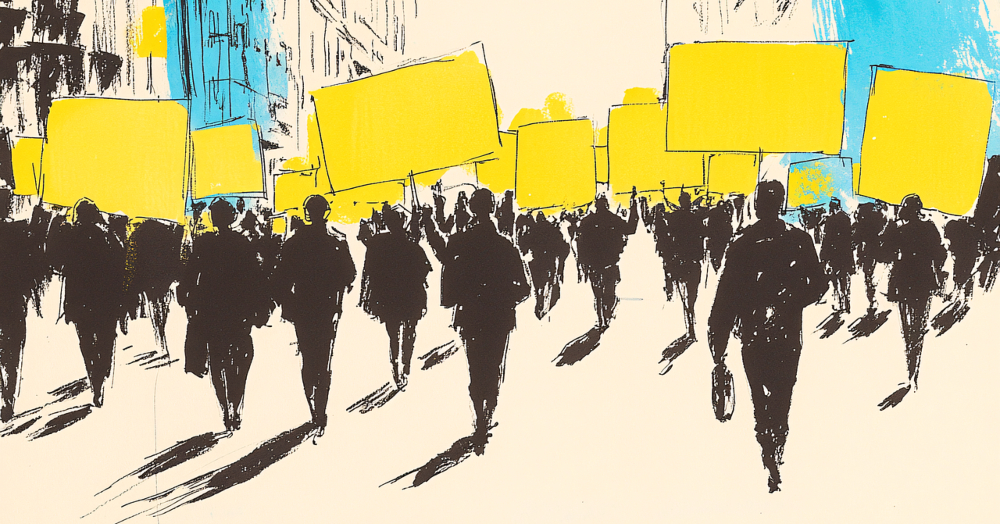
Twenty-five years ago the digital revolution rewrote the ways culture gets found, valued and paid for. The battles were fought in a series of skirmishes over disruptive technologies that remade the ways creative marketplaces were organized.
The story we generally tell about that era in culture is one of theft and disruption: Napster, piracy, institutions resistant to change, whole sectors unbundled and replaced, platforms growing to dominate their users’ attention.
The more profound story is how the owners of these technologies subverted and relocated the value of culture in ways we were slow to understand.
If you make theatre or dance or paint or play in a symphony orchestra, this might seem like a hyperbolic, even alien notion. After all, Beethoven is still Beethoven, “Angels in America” is still a masterpiece, and the Frick is still the Frick.
But besides its intrinsic value, art gains currency by how (or whether) it is found, experienced and evaluated. And without a robust, functioning infrastructure, conditions for making and selling of art contract. For better or worse, we had built a complex and multi-layered system to support the making of culture. Curators and publishers and funders and agents sifted and made choices. Cultural institutions and studios and presenters nurtured and championed. Critics and historians and the box office argued for what matters.
In some tellings, the history of the internet can be told as an assault on institutions, the overturning of “gatekeepers” and the democratization of culture. In reality, the new Tech masters didn’t so much attack the ecosystem (which they also did) as brazenly redefine the currency in which culture would be valued.
To justify enormous valuations Big Tech companies were commanding, even while attracting and losing vast sums of money, they needed a compelling metric to convince investors of their growing worth. Participating in a system of evaluating intrinsic worth of culture and leveraging it to attract audience as the traditional system did was far too cumbersome, so they decided not to even try.
Instead, they relocated value to something much easier to manufacture, the attention that culture attracted rather than the thing itself. The tell here is the rebranding: “content.” Doesn’t matter what the content is, how good or bad, how trivial or profound; what’s valuable is how many “users” (another great word) pay attention to it.
Maybe this seems like a small thing. But it’s actually huge. As imperfect as the traditional system was (is), the focus on intrinsic worth, why it matters and making a case for it was what mattered. Culture accrues value through what people do with it. But that’s expensive to make and measure — to make and shape a thing itself and to convince consumers they should pay for a ticket or a subscription or a recording. Clicking and liking, on the other hand is really cheap, the investment of a second or two. Don’t like it, and you’re on to the next thing. And it’s incredibly easy to scale to astonishing numbers no traditional culture could match.
In the Attention Economy, the goal isn’t quality or enrichment or impact, it’s traffic. Traffic became the measure for justifying outsized valuations of Silicon Valley’s tech companies. And what gets attention? The odd, the outrageous, the inflammatory and anomalous. But a system that isn’t built on measuring and rewarding substance is ultimately empty and ephemeral calories. Or worse, as we’ve seen in our coarsening public discourse, dysfunctional politics and decay of civic life.
If you know how to play and game the traffic algorithms, you can rack up enormous number counts, or “scale,” as the tech community calls it. An SEO industry (search engine optimization) grew up around doing precisely that. SEO incentivizes not good culture or “content” but optimized traffic practices.
Maybe all this wouldn’t have been so bad if it expanded the universe of attention, leading more people to more culture, as artists hoped. But the attention economy, with its massive user scale, quickly subsumed the viability of traditional business models that couldn’t scale. Newspapers lost their advertising base, our social and political institutions withered, and the civic middleware, that layer that connects communities with their culture and turns out to have been essential to its ability to thrive, atrophied.
In its crudest form, the cultural world had always measured value by what culture people bought — movie box office, Billboard charts, New York Times Bestseller lists. These are all forms of traffic measurement, but at least they tracked consumption that had been paid for; people chose to buy the album or purchase the ticket. Though such measures never were a reliable means of identifying the “best” art, they nonetheless indicated something about where the popular taste was. They also helped determine where investment resources land.
When cheap clicks and likes and shares and algorithmic counts by the millions replace yardsticks based on consumers having to proactively buy their culture, the measure of what value is has changed. To the algorithm, a Beethoven symphony and a cat video are interchangeable. That isn’t a value judgment, it’s an architecture, and once it was in place, the argument about what artists get seen and get paid became arguments the platforms refereed.
Over the past several years we’ve had to start coming to terms with our shrinking middleware as we reckon with the systemic, economic, and social consequences of Big Tech’s traffic economy.
So now we’re at the dawn of AI and AI has become a dirty word in much of the creative community. There are many things to say about its challenges and threats (and opportunities). But here I want to focus on just two.
The first is findability. When Big Tech changed the currency of value to traffic, it inserted itself between artists and audiences, determining what and who gets found and how and if they are rewarded. AI art is already flooding creative marketplaces. The music streaming platform Deezer says 90,000 AI tracks are uploaded to its platform every day, now more than what human artists upload. When AI floods a market it distorts that market, making it harder for human artists to be found. And it dilutes what human artists are paid.
Moreover, AI trains on the art it finds, and optimizes for it. What happens when a market overwhelmingly consists of AI-created work? Human art builds on the past, advancing in conversation with what’s gone before. It gets meaning from this context and evolves. LLMs that run out of human-created data and start training on synthetic data experience what’s known as model-collapse, producing increasingly odd results. Will synthetic art trained and optimized on synthetic art, experience similar collapse? Even if not, human-created art that deviates even slightly from AI-trained value protocols could be invisible to the AI agents trained to find things for us.
Second, and perhaps more important, is that just as in the digital revolution, new technology will result in new measurements of value. If the digital revolution shifted value of culture from the culture itself to the traffic-to-the-culture, where will value migrate in the new AI systems? It seems obvious that the traffic measure of the digital age will be subverted. AI can create floods of “content.” But it can also create synthetic audience at scale. So both ends of the creative marketplace are being warped, and the traffic architecture we currently operate under won’t be sustainable in its current form.
Will value align on distinctions between human and machine, as many hope? I’m skeptical in a culture where the consumer’s primary question is “Do I like it?” There’s already plenty of mediocre work passing for art that nonetheless finds audience. I’m not, despite what it might seem like, trying to make a value judgment here. I’m trying to argue that the architecture of the marketplace determines the currency of value and therefore what is viable. If the value is better art, we might get better art. If it’s traffic, we’ll get more traffic. What will be the measure in a marketplace heavily impacted by AI? We don’t yet know.
So how are new rules and norms in such a marketplace being decided? At CRAIONS, a new website I’ve been working on over the past two years, we’ve been tracking developments in AI and creative industries. One of the findings is that the new landscape is being largely shaped through licensing deals between massively consolidated media companies and AI companies or by corporate platform fiat. That sounds like a recipe for recreating a value system that already doesn’t work in most artists’ favor.
The culture world is used to arguing values and ideas. Less so in systemic value and technical architectures that will shape wherever these new values relocate. Did we learn the lessons of value capture in the Digital Revolution?
Related
Discover more from diacritical
Subscribe to get the latest posts sent to your email.

