



What do you do when you have the answer, an answer that’s proven, and it doesn’t gibe with institutional, failing inertia?
Some procrastinators don’t know that they procrastinate. Some do, and use it to wield power within their systems. Little Donny Dingdong, convicted of 34 felonies so far, vacillates between quick action (when he wants money or paranoically wreaks vengeance against his “enemies”) and delay (when he owes money or is avoiding jail time), which just adds to his batshite crazy reputation, never paying his employees or contractors, and overall litigious, criminal business management.
And some procrastinators are nonprofit arts leaders. Department heads and board members are always at a loss to explain why decisions are so late in coming, why the budgets include putting a hammerlock on the department heads responsible for revenues into agreeing to increases based on nothing while production heads are dumpster diving to save money for the next twenty-three person event in order to keep the expenditures down to basically nothing.

I know how this works. Been there. I’ve been on all sides of these negotiations. These are the discussions that kill morale and organizational functionality, all for the sake of a balanced budget for the board to approve. The board, of course, never reads the budget until the day of the board meeting so they can play the agonizing, ulcer-inducing game show, “Pick Your Favorite Line Item,” where the discussion surrounding “Depreciation” takes 45 minutes every single year.
Discussing budgets is not in itself self-destructive. What is self-destructive is the lack of discussion, either in the budgets or in the executive director’s report to the board, of the metrics that show that the company’s charitable goals will be met.
Or even that there are any charitable goals.
And you can’t wholly blame the executive director; they are rarely asked for that information by the board. Instead, the board is completely devoted to the financial bottom line.
Honestly, most board members don’t even know how to broach the subject of charitable impact, especially when they are brought onto the board by those who don’t care or don’t feel that they are on the board of a charitable organization.
Now, in 2026, this is not merely about nonprofit arts organizations abdicating their duties as charities to fulfill the stated needs of their communities. That’s been going on for a while now. The difference is that while the attention to charity has evolved, the nonprofit arts behemoth class has not.

Let’s look at Pennsylvania as an example. On February 17, Peter Crimmins of WHYY (Philadelphia) reported that “the Pennsylvania Council on the Arts has shifted funding guidelines toward economic development.” Read the whole article by clicking on Peter Crimmins name if you can.
Arts funding from the state of Pennsylvania is changing, which could make some artists and arts organizations ineligible for grant funding.
The Pennsylvania Council on the Arts is rebranding its granting operation as a new entity called Pennsylvania Creative Industries. The new granting guidelines are in line with a new strategic plan that leans more heavily into creative entrepreneurship and economic development.
“We identified five key areas that we would be investing in, including asset development, workforce development, community development, visibility and policy,” said Karl Blischke, executive director of Pennsylvania Creative Industries.
Pennsylvania, the fifth largest state in the country, a state of over 13 million people, with an annual budget of $50.1 billion (with a “b”), will be spending less than $10 million in arts grants in 2026. Appropriately, arts leaders are freaking out over the lack of attention and appreciation for the arts from this new state initiative. “In the Philadelphia region, about 60% of small arts organizations that had benefitted from small state grants will no longer be eligible, according to the Greater Philadelphia Cultural Alliance. In York County, that number rises to 80%.”
There’s a big issue involved in Pennsylvania that has caused this ruckus. The arts organizations themselves were asked by the state arts people to put their necks on the line and lobby for a larger piece of the state budget, all going toward this new Pennsylvania Creative Industries entity. Now, having received that increase in funding, the agency will no longer be issuing grants to hundreds of arts organizations across the state.
So that sucks.
“As we lobby for their funding, where’s the transparency in how they’re going to use that funding?” said Greater Philadelphia Cultural Alliance President and CEO Patricia Aden Wilson. “Where’s the accountability to their stated mission of empowering the arts and culture community?”
This could all have been avoided, of course. Had all the nonprofit arts organizations in the state, instead of competing against each other for pennies in grant money, decided instead to solve the most important public welfare issues in the state by using the arts as a tool, donors (including the Pennsylvania Creative Industries agency) would have lined up. And as the communities got less poor, more educated, with less crime, fewer gun murders, and more affordable housing by virtue of the arts teaming up with other social service and social justice organizations to shine a light on solutions, more funding would come.
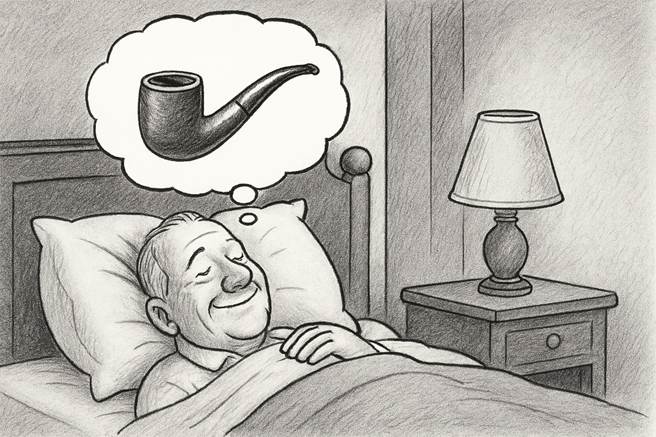
In 2026, it’s not a pipe dream. It’s the answer to the longstanding problem: how to make communities feel as though their local (even the largest ones) nonprofit arts organizations care about the issues at hand instead of their own programming. Until now, the organizations have been self-defeating, filled with ridiculous notions such as “artistic vision” and “excellence” as goals. “Artistic vision” is a useless, self-indulgent idea nowadays and “excellence,” as we’ve said many times is a baseline, not a goal. No one sets out to do work that isn’t excellent. Not only that, excellence is completely subjective: my “excellence” may be your “goat droppings.”
By concentrating on arts programming instead of arts impact, even in the education departments of these larger operations, many (if not most) nonprofit arts organizations in Pennsylvania and elsewhere have been more occupied in self-destructive, self-sieging campaigns intended to separate them from everyone except the wealthiest White folks in their regions. That includes foundation leaders, even if the humans involved aren’t necessarily White.
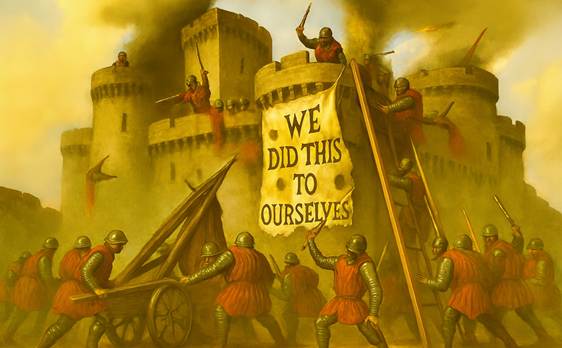
When you battle against yourself, you tend to lose.
Watch this space for a major announcement on May 14.

Related
