


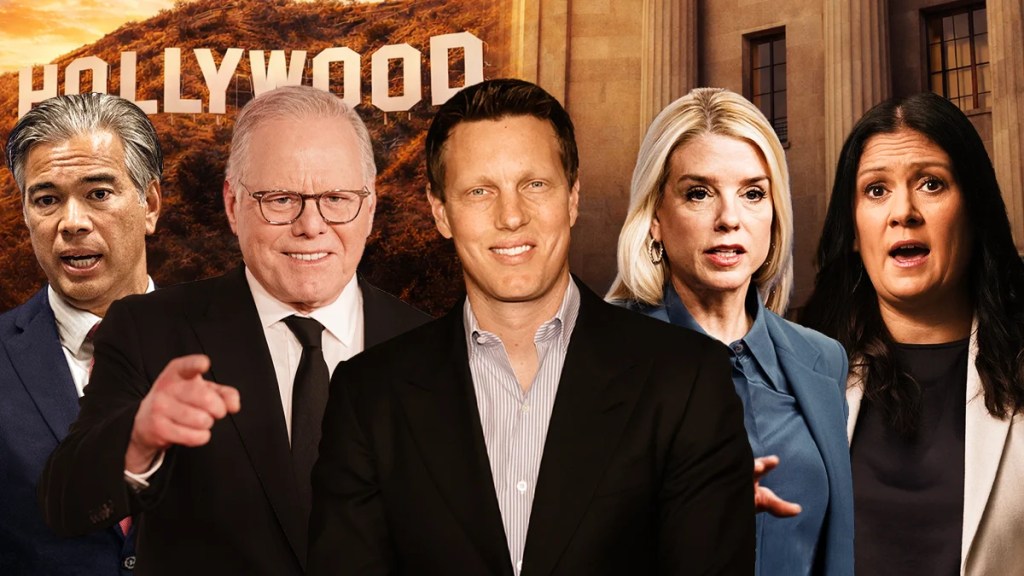
After five and a half months and 10 bids, Paramount CEO David Ellison won the war for Warner Bros. Discovery. His next challenge will be to get his $110 billion acquisition past regulators and the forces that seek to derail the deal, which are considerable.
In addition to getting sign-off from the Department of Justice, Ellison will need to convince overseas regulators including the European Commission and the U.K. Competition and Markets Authority. A regulatory review of Paramount-WBD will investigate how the concentration of two major movie studios, the No. 4 and 5 largest streaming services and a vast portfolio of linear TV networks will impact competition and jobs in Hollywood and overseas.
California Attorney General Rob Bonta also said he’s “in conversation” with his AG colleagues about a combined Paramount-WBD. He warned that the merger is “not a done deal” and that he would be “vigorous” in the state’s review of the transaction. Meanwhile, some members of Congress have called for a national security review by the Committee on Foreign Investment in the United States (CFIUS), citing concerns over the involvement of three Middle Eastern sovereign wealth funds – from Saudi Arabia, Qatar and the United Arab Emirates – in Paramount’s financing structure.
Those hurdles — amplified by a horde of theater owners, labor unions, nonprofits and other affiliated entertainment businesses already voicing their opposition — means Paramount’s road to getting its deal greenlit won’t be as smooth or quick as some may believe.
“There will be multiple layers of state and country regulatory reviews around the world due to sports and entertainment genre concerns, in addition to constituents pushing back against various types of synergies,” Seaport Research analyst David Joyce said, adding that closure delays could be expected.
While acknowledging the potential antitrust concerns raised by a Paramount-WBD combination, experts told TheWrap they expect the deal to ultimately get approval from the DOJ, given Ellison’s strong relationship with the White House. They also believe CFIUS and international regulators would be more likely to impose conditions rather than outright block a merger. And while they didn’t rule out a lawsuit from state attorneys general, they argued support from the DOJ and any concessions Paramount-WBD may offer could weaken a legal challenge.
“Certainly there will be political opposition from various stakeholders in the entertainment ecosystem,” New Street Research analyst and former FCC chief of staff Blair Levin told TheWrap. “But whether those forces can assemble a critical mass remains to be seen.”

