

Portland State University eliminates dance programming, faces uncertain future amid budget cuts • Oregon ArtsWatch

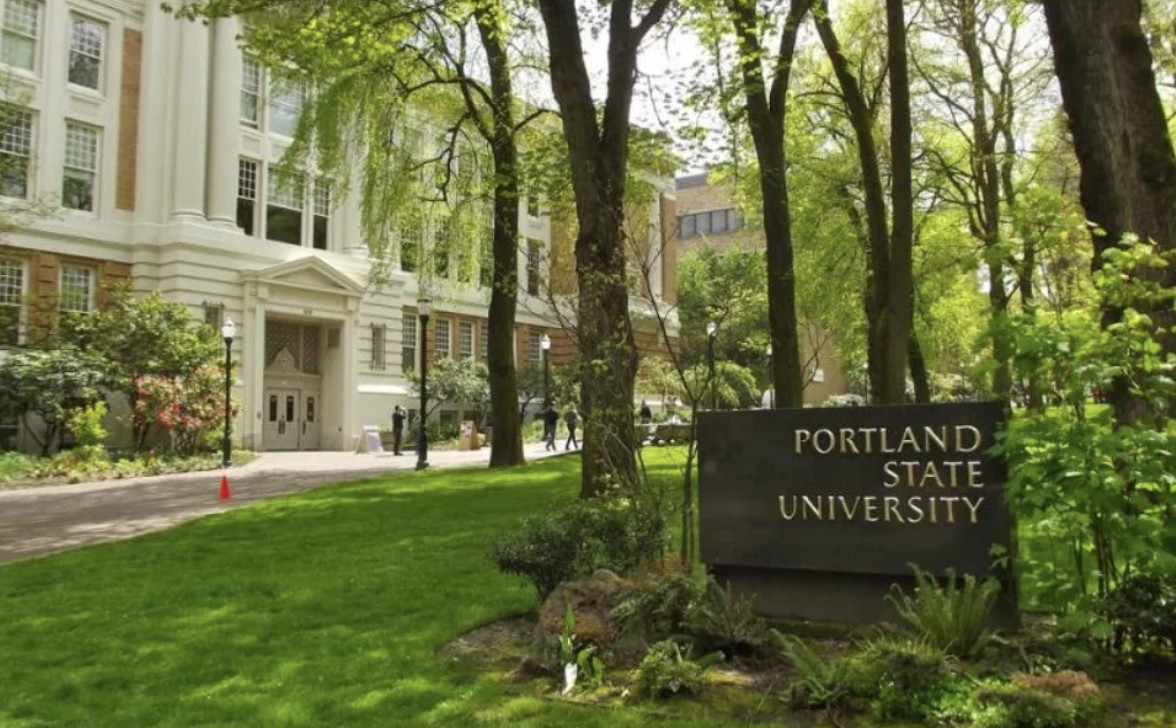
Portland State University is moving forward with sweeping academic cuts during what administrators refer to as a deep and ongoing financial crisis. University President Ann Cudd has announced plans to cut or restructure 19 academic departments to address the projected $35 million budget deficit. This decision will remove courses, reduce faculty positions, and has already effectively erased what remained of a once-influential dance program.
University leaders, including Cudd, say the cuts are necessary to address a structural budget deficit driven by years of declining enrollment, rising upkeep costs, and disappearing state funding. Faculty, students, and union leaders, however, argue that the reductions are disproportionate and will permanently reshape the university’s academic future, turning it into a school with six degree-granting schools rather than eight.
At the start of the controversy was the quiet dismantling of dance at Portland State University, a program that served as a vital link among the school, the arts community, and the vibrant history that framed the base of Portland dance as it existed over the last decade.
The end of a program
In December 2024, PSU administrators announced the elimination of classes not required for completing an undergraduate degree. Dance, an elective class that counted as a Physical Education credit, was on the chopping block. Because dance no longer existed as a degree-granting program, it was deemed unsustainable, despite waitlists for the course, and fully pulled from the curriculum in 2025.
For students like Atlas Donnelly, the impact was immediate and personal, and many have expressed feeling unheard or unappreciated by the administration.
“It was such a slap in the face,” said Donnelly. “We had been told just weeks before that the department head was working toward reinstating the dance minor. Then suddenly the class was canceled.”
The dance course, taught by longtime teacher and Portland dance elder Linda K. Johnson, blended technique, history, composition, and somatic practice. It had become a rare interdisciplinary space and the final outlet for dancers at the university. Actively enrolled PSU students could repeat the class for credit, utilizing it to build continuity and form an art practice that supplemented their overall studies.

Another student, Fiona, described the class elimination as both academic and cultural.
“I was absolutely gutted,” she said. “Students did not hear official word from the school that our class had been rescinded until a week before the start of term. Not only did this inconvenience students in our need to fill required credit hours for scholarship and degree-seeking purposes, but they removed the last of a program with a deep and rich history in the Portland dance scene … one that encouraged students to be in their bodies … and ultimately laid off an invaluable professor.”
A long history of decline
Portland State University’s dance program had once been a cornerstone of Portland’s artistic community, even as it struggled against decades of intermittent support, administrative turnover, and shifting school priorities. However, PSU has not been known as an arts and dance university for quite some time, and the disappearance of dance at PSU did not happen overnight.
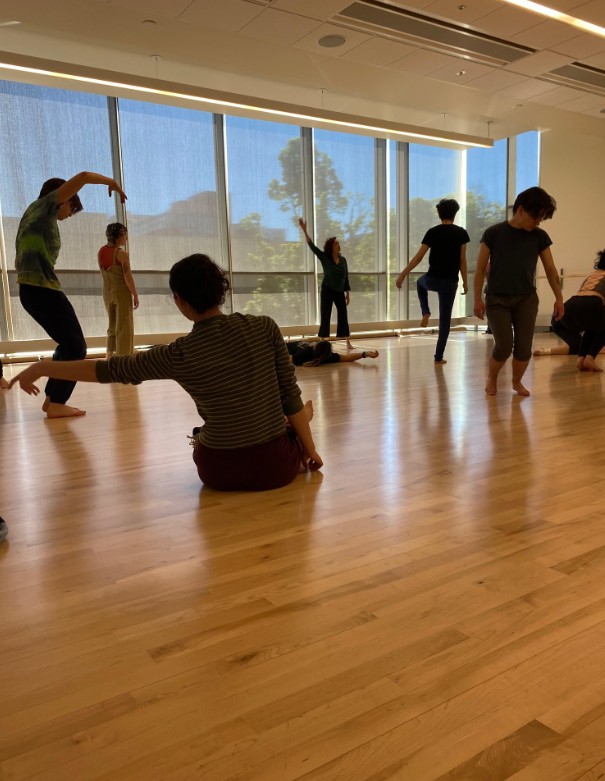
For more than 40 years, generations of faculty and artists built a program that nurtured dancers, choreographers, and the city’s broader performing arts world. Tere Mathern, a Portland choreographer and PSU alumna who studied and later taught there from the late 1970s into the 1980s, shared in the program’s early vibrancy and later brought that energy to the city through Conduit, the contemporary dance nonprofit co-founded in 1995. Meanwhile, Judy Patton, who spent more than three decades at PSU, sustained dance on campus after the major was terminated in 1995 under a dean with a background in music. Patton tried to keep core courses alive, mentoring new faculty and maintaining a strong link to Portland’s emerging dance scene.
Mathern, along with Johnson, Patton, and other faculty, introduced new classes, from modern dance labs to online dance history courses, and created residencies and performances that connected students directly to actively working professional artists in town.
“Dance is extremely collaborative,” Mathern told me. “PSU had the ability to bring together composers, costume designers, actors, musicians, filmmakers … and they did, but it takes continual leadership to make it all happen.”
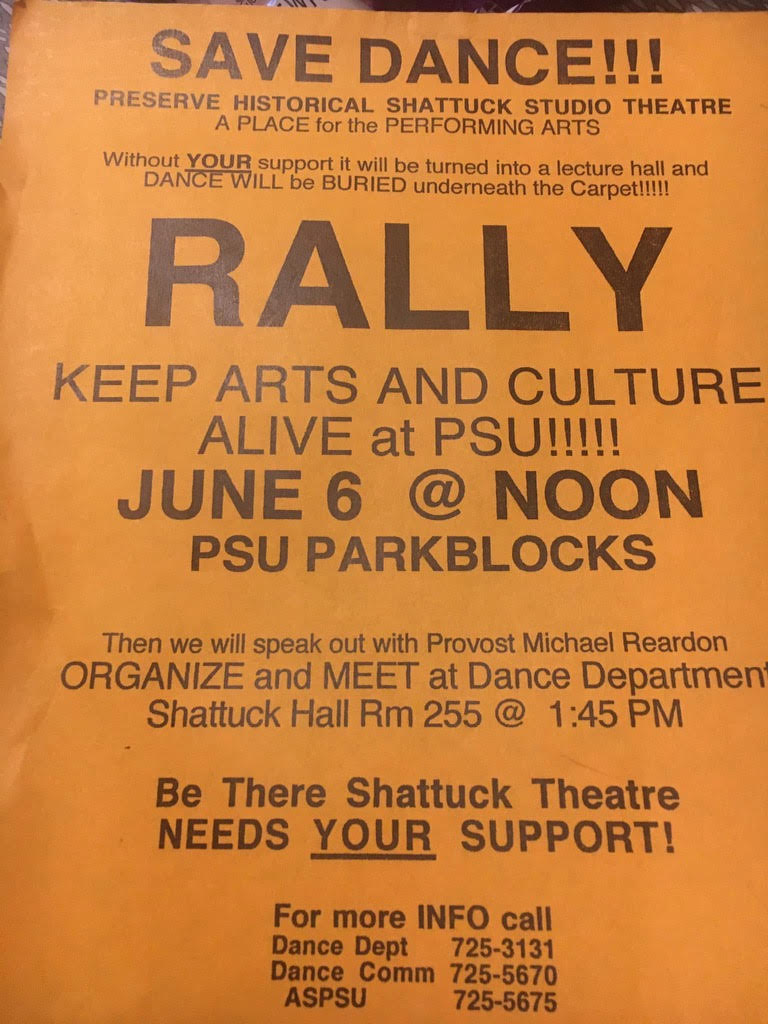
By 2016, a round of layoffs eliminated key positions, and Portland dance faced a general drought. What remained of a fully enrolled dance program was dismantled, Conduit closed, and many dancers, choreographers, and movement artists began leaving Portland.

“It’s been like a yo-yo for 20 years,” said another former adjunct instructor. “The deans seem to view dance as disposable, or at least superfluous, when it comes to return on investment.”
Despite this instability, dance at PSU played a significant role in shaping Portland’s arts ecosystem. Alumni and faculty describe it as a hub where collaborations across disciplines shaped an emerging scene in the 1970s, 1980s, and into the start of the 1990s, one that included hosting international touring companies like La La La Human Steps. The generation of dancers who came out of PSU and into the community also played a major role in the ecology of Portland arts and created a much-needed bridge between academia and the professional arts world.
When programming diminished, it seems, the city’s connecting points for dancers became decentralized, and the consequences included fewer young graduating dancers who intended to remain in the city. With fewer dancers, competition between creators and company leaders emerges. Fewer makers are inclined to forge paths as directors, company leaders, or nonprofit organizers. This means fewer opportunities to perform, fewer jobs available to incoming dancers, and, down the road, a smaller and less vibrant dance scene as a whole.
Budget crisis or mismanagement?
Recent statements delivered by PSU officials maintain that the cuts are unavoidable. Karen O’Donnell Stein, speaking on behalf of PSU in 2025, said the current budget model prioritizes programs that allow students to complete their degrees.
“We value dance,” she said. “But the current budget system is allowing us to really support the programs that have students in them who need to finish their majors and graduate.”
She added that the university hoped dance could return in the future, but that it wasn’t the right time, and stressed that “the dance major was eliminated in the 1990s and the dance minor was put on moratorium around 8 years ago, prior to Dean Bynum’s arrival at PSU.” With this year’s coming cuts, the return of dance appears unlikely.
O’Donnell Stein also emphasized PSU’s strengths in other performing arts areas, particularly music, opera, and jazz, where the institution had aimed to concentrate its resources. But critics say the logic behind the cuts is inconsistent and, in some cases, counterproductive. Dean Bynum declined to comment on these criticisms.
A former leader in PSU’s adjunct faculty union said the university has been “tight-lipped” about which positions are being eliminated, even as reports suggest that more than 100 part-time instructors may have lost work in the past year, with a projected 217 more cuts under way. She also questioned why classes with strong enrollment at the time, often taught by lower-cost adjunct faculty, were being cut alongside low-enrollment courses.
Union leaders further argue that the financial crisis may be overstated. An analysis by economist Howard Bunsis, commissioned by faculty, found that PSU held roughly $211 million in reserves as of fiscal year 2023. Union members and faculty now point to more than $1 billion in Oregon’s Education Stability Fund, calling on Gov. Tina Kotek to release roughly $50 million in emergency funding to stabilize the university against its intended restructuring. University leaders, including President Ann Cudd, counter that the cuts are necessary to address a structural deficit driven by enrollment losses, rising costs, and a mismatch between programs and student demand.
Without intervention, union representatives warn, PSU risks entering a “death spiral” of fewer programs, declining enrollment, and diminished regional name recognition, eventually going the sad route of so many other previously flourishing universities across the country.
The elimination of dance is only one piece of a much larger restructuring effort led by PSU higher-ups. PSU is now evaluating academic offerings under a program review process known as PIVOT (Plan for Institutional Vitality and Organizational Transformation). This system is said to be based on enrollment, graduation rates, cost, and class importance, and as of early 2026, is causing PSU administration to consider eliminating or reducing dozens of programs — potentially as many as 71 — to address budget problems by the 2027-2028 fiscal year. Separate communications from faculty groups indicate that up to 217 faculty and staff positions could be cut, alongside increases in class sizes and faculty workloads.
Critics say these changes will disproportionately impact first-generation, international, and working-class students, who rely on broad academic offerings and support services. They also argue that making the university smaller will make it harder to attract new students, worsening enrollment declines allegedly driving the crisis.
Faculty at Portland State University are mounting an increasingly urgent challenge, as the PSU-AAUP warns that the university is pursuing what it calls the largest downsizing effort in its history. Union leaders say that PIVOT plans amount to a fundamental and irreversible changing of the institution based on “outdated budget forecasts” and a strategy of “managed decline” rather than locating sustainable solutions.
Teachers rally against PIVOT
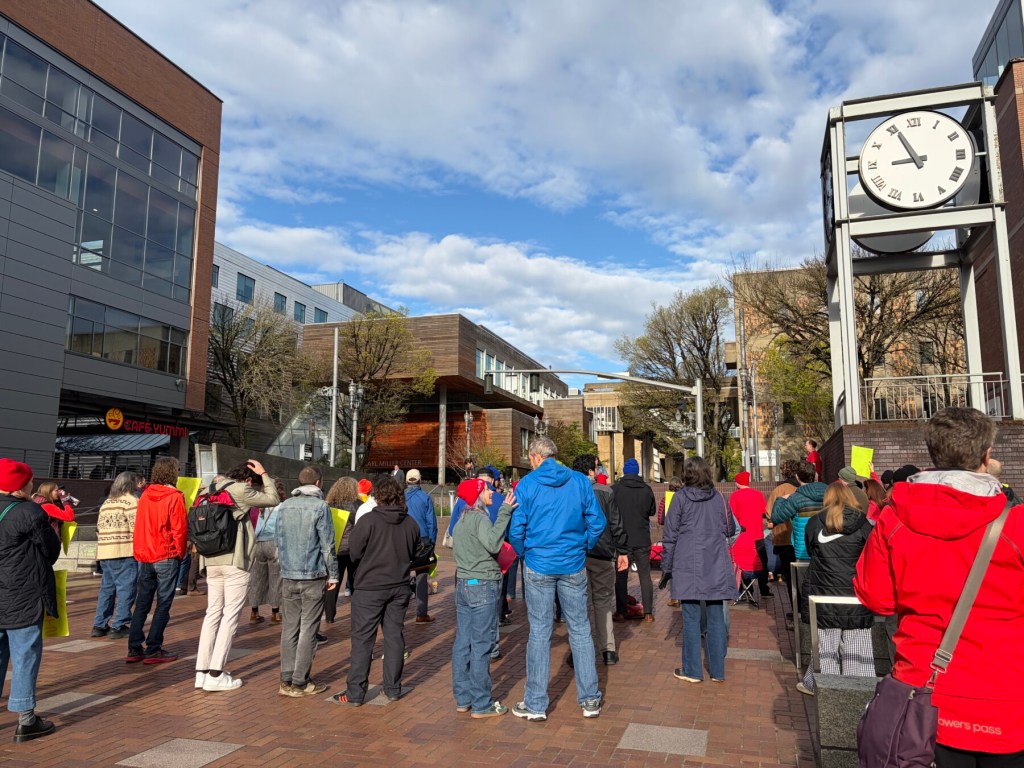
A rally at the Board of Trustees meeting on Friday, April 3, led by PSU-AAUP President Bill Knight, called on the Board and President Cudd to demand a pause to PIVOT.
On the frigid Friday morning, roughly 100 teachers, staff, union members, and PSU students came together at Union Plaza to rally against the school’s upcoming restructuring plan. They were joined by Portland Community College teachers, who recently went on strike and continue to fight for their own Music and Sonic Arts programming, setting the precedent for union solidarity in Portland during the final months of this academic year.
Participants held neon-yellow signs stating “no confidence” in Cudd while union members and current and former instructors took turns speaking to the crowd. Though many were visibly frustrated and upset, spirits were generally high.
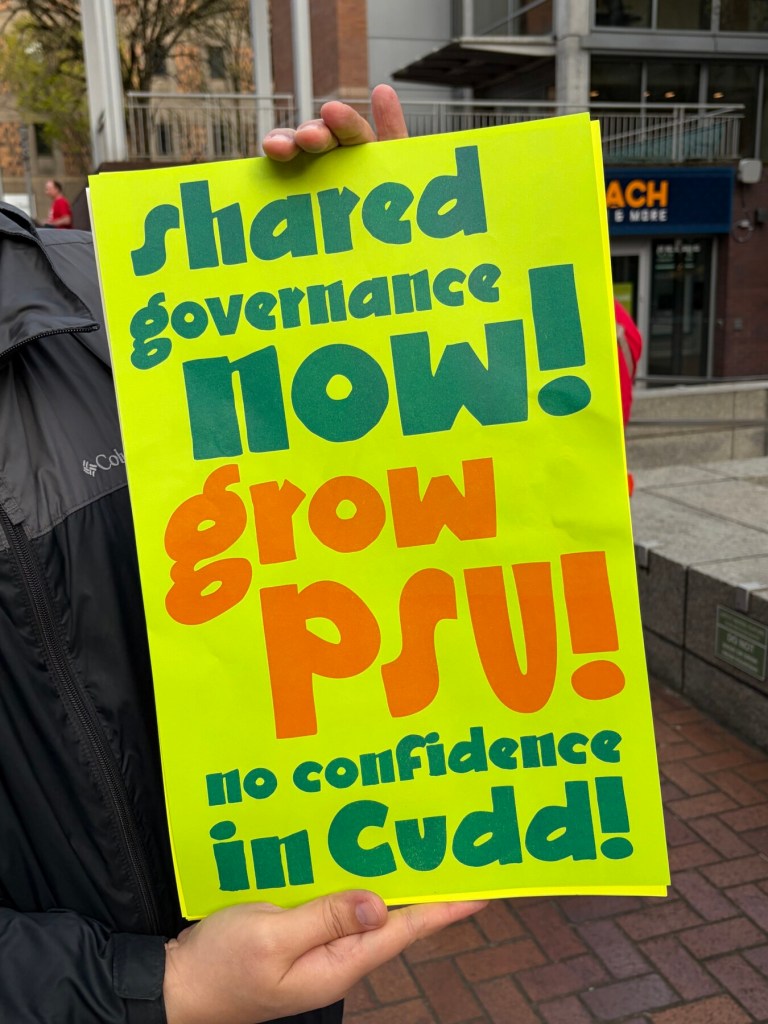
“You cannot cut your way to a strong future in education … layoffs of this scale should be the absolute last resort,” announced one speaker, arguing that this is particularly so when there are potentially more avenues to seek funding. Participants also argued that workers know best what their students need, and urged the public to remember that PSU’s teachers and staff stand with the students. One of the union’s main demands calls on President Cudd and the Board to join them in “preserving” the school and to immediately pause layoffs “before the damage is done.”
In a political climate defined by mounting attacks on higher education, many are calling for higher taxes on the wealthy to help close widening budget gaps, and teachers argue, “You can’t just cut out the things that make PSU special and expect it to become financially viable,” also saying that funding is based on who controls the funds, and that administrative transparency is necessary in times of scarcity.
“Let me be clear,” a speaker announced, “We’re not going anywhere, because when we fight, we win.”
The rally culminated in a march from Union Plaza at PSU’s downtown campus to President Cudd’s office, led by Knight.
The big arts center debate
Amid the current plan for cutbacks, PSU’s involvement in a proposed large-scale downtown performing arts center has intensified criticism of its priorities. Originally part of a “two-venue” strategy approved by Portland City Council, the plan would build a new arts facility on campus before renovation of the historic Keller Auditorium.
The proposed venue, a large Broadway-capable hall that would likely compete with both the historic Keller and the Portland’5 Centers for the Arts — home to White Bird, the state’s leading presenter of dance — has raised questions about institutional priorities. A recent feasibility study has also cast doubt on whether Portland can support two venues of this size, putting the future of both projects into question.
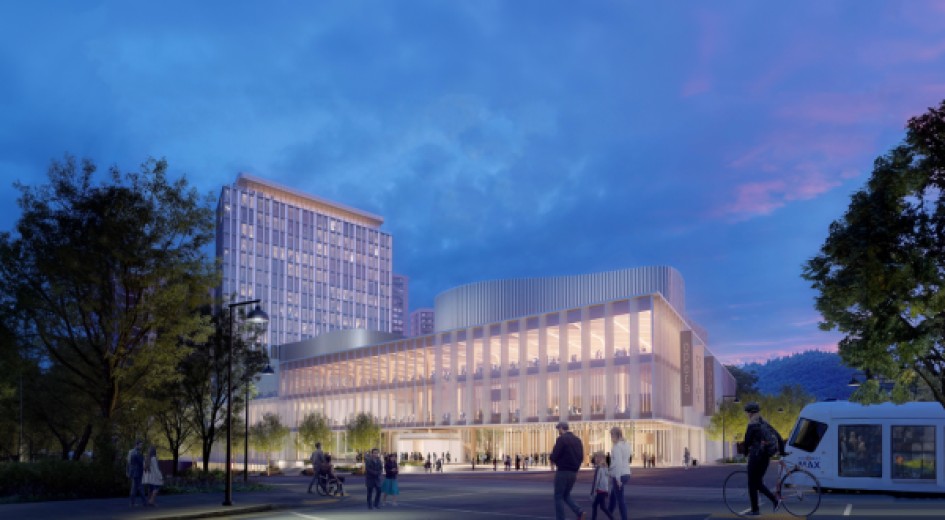
For skeptics, something doesn’t add up. As PSU cuts arts and academic programming due to extreme budget cuts and restrictions, hoping to focus on business and science in a time of tumultuous graduate employment rates, it is simultaneously positioning itself as a major venue developer with real estate interest.
Although most public universities, including PSU, have separate operating budgets that pay for faculty, departments, and classes, and capital budgets that finance buildings and infrastructure, many find this move alarming and confusing. They argue that pursuing a high-cost real estate endeavor in the name of performance reflects a misalignment of direction, particularly while shrinking academic offerings toward a more science- and business-minded institution, resulting in the removal of major disciplines and the firing of teachers. This raises broader questions about whether the university should focus on rebuilding its academic core before expanding its physical and cultural footprint.
The elimination of the last two dance classes at Portland State University, including that taught by longtime instructor Johnson, has sharpened criticism of the university’s direction as it dismantles in-house arts education. PSU is positioning itself as a cultural hub even as it no longer offers a meaningful academic pathway in dance, one of the “fundamental major arts” according to philosopher Susanne Langer, a sentiment echoed by influential philosophical and artistic minds like John Dewey, Maxine Sheets-Johnstone, Martha Graham, and others.
In the context of a widely cited budget deficit driving some of the most severe cuts in PSU history, the contrast has struck many as stark, prompting faculty and students to ask what role the university intends to play in the arts community if it cannot sustain the disciplines it seeks to present.
“If they don’t have enough funding to keep their academics afloat,” one community member said, “what sense does it make to put their eggs into the real estate basket? It doesn’t make sense. They’re a school, not a developer.”
An uncertain future, an evolving issue
For those who spent decades building PSU’s dance program, the loss feels less like a single decision and more like the culmination of long-term neglect. Faculty and alumni describe a disheartening pattern in which dance has been repeatedly deprioritized, folded into other departments, or left out of arts planning conversations. Over time, what was once a vibrant, collaborative hub was reduced to a handful of courses whose foundation was chipped away until there was little left to protect. The final elimination of these two dance classes was not a sudden rupture but an expected endpoint that came from years of neglect. In that context, dance can perhaps be seen as the canary in the coal mine of the larger scale of what PSU now faces.

“The elimination of dance offerings means that there is no generational knowledge about the significant history of the PSU dance program being passed down within the school now,” said Johnson. “And when that happens, it’s the easiest way for context and content to get lost and for things to die.”
As PSU moves forward, the question is not only whether the arts can persist or how the university will close its budget gap, but what it is open to losing in the overall process. Nearing the end of the academic year, the stakes extend even beyond individual programs and jobs lost, to the institution’s identity and the legacy it is willing to leave behind.
