


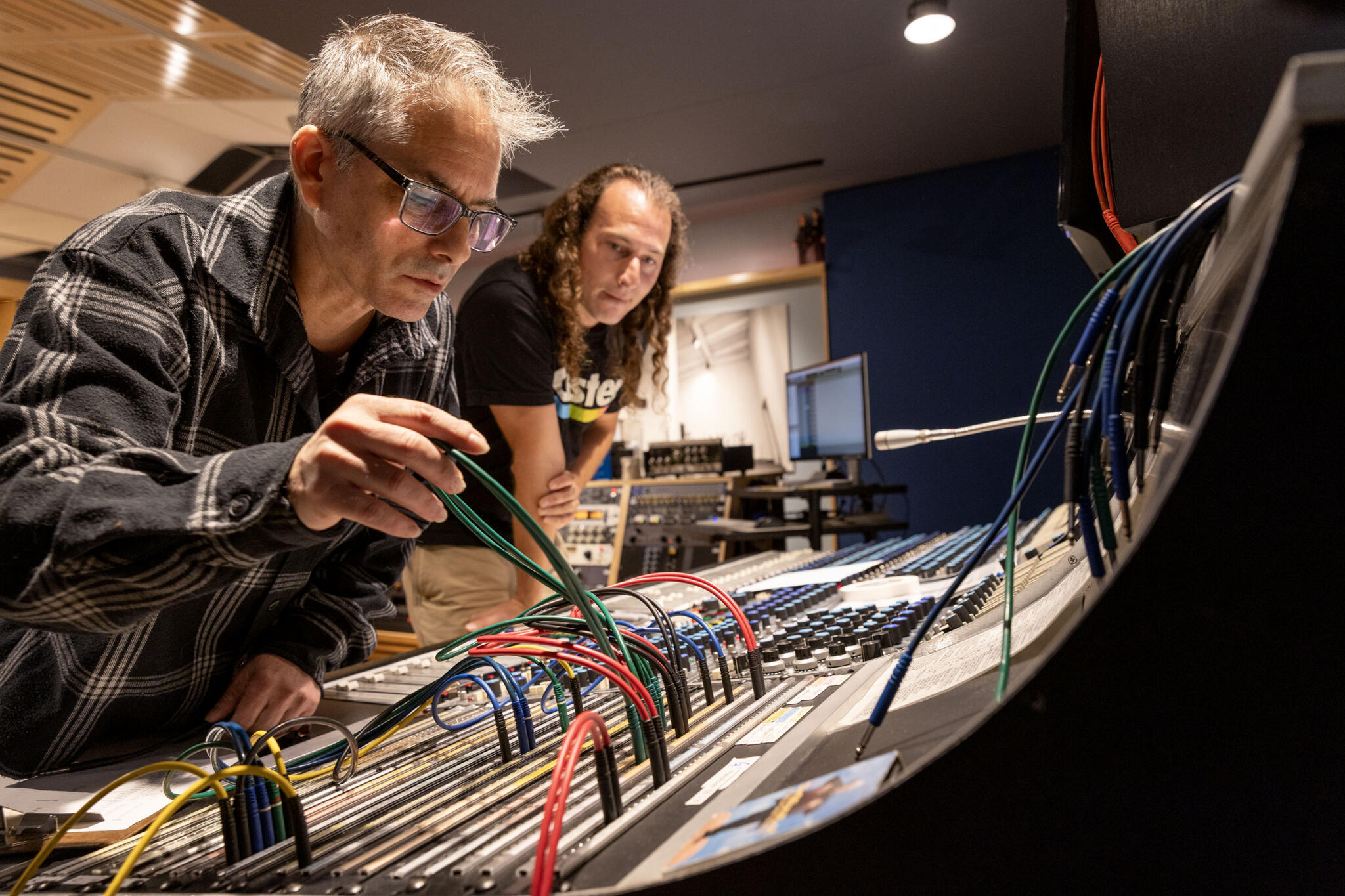
Digital technology has taken over the way art is made, from photography to film to music. But a 40-year-old recording studio in Cambridge recently pushed its computers to the side for one week so today’s musicians could experience the wonders of old-school reel-to-reel equipment.
On a Monday morning in September, Q Division’s main audio tech Michael Healey prepared for the first band’s arrival. The 32-year-old gently threaded a strip of two-inch-wide analog tape from one big, metal reel to another.
“So this machine that we have here is the only machine currently in service for two-inch, 24-track — it’s a Studer 827 from, I believe, the late ‘90s,” Healey said as he guided the media across magnetic heads. “It works a lot like a Walkman that you maybe used to have — so fast-forward mode if you want to get to a certain section of the song.”
For the audiophiles at Q Division, analog’s appeal goes beyond the gear.
“There’s a certain magic to recording to tape and hitting the playback,” said Rafi Sofer, the studio’s head engineer. “There’s a certain hard-to-articulate character that this media has to it that is both physical and — I don’t want to get hokey — but a little spiritual.”
Sofer, who’s 53, learned to edit tape when he started working at Q Division in 2000. Back then, artists including the Pixies, Morphine and Aimee Mann recorded on analog here. He traced the medium’s heyday to 1960s and ‘70s classic rock pioneers like the Beatles, Queen, Pink Floyd and the Beach Boys who painstakingly produced masterpieces on relatively rudimentary reel-to-reel equipment.
Sofer marvels at the time, patience and craft that went into making those physical recordings that engineers edited with razor blades and splicing tape. It can boggle the modern mind, he said, “because we’re so used to editing stuff in digital workstations, and we can fix things instantly without making people have to perform them again.”
He explained how getting it right while recording live-to-tape requires more time, preparation and intention.
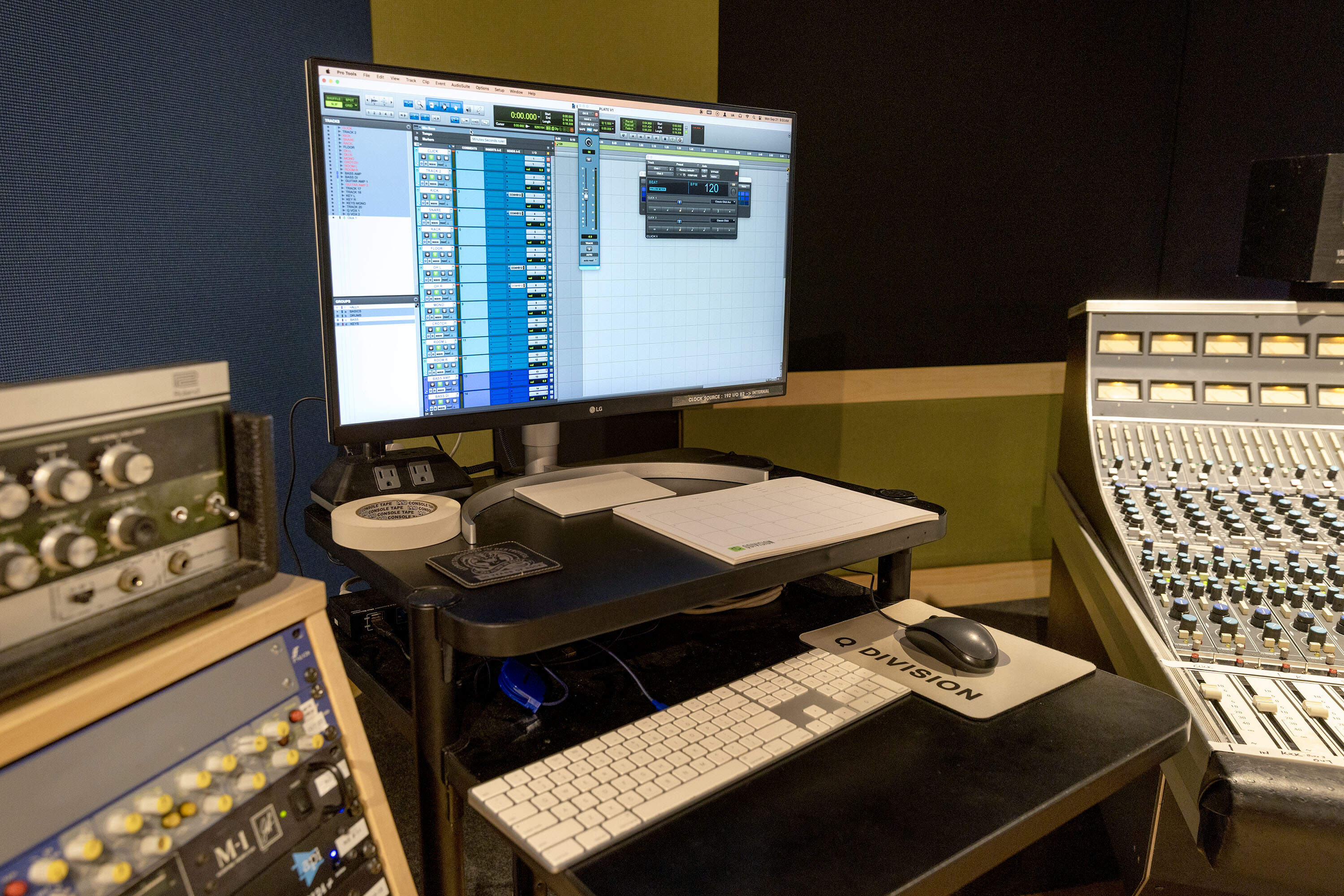
“Everyone has to play much better because editing is far more complicated — the tape machine has to behave, us engineers have to be great,” Sofer said. “We need to perform it really well now, which heightens the stakes.”
Digital editing is far less risky. In addition to being speedy, it’s also non-destructive — meaning you can always hit “undo” and make endless copies. Not so with analog.
“Tape tears, tape breaks, and we erase things by accident,” Sofer said. “That does happen — gone forever.”
Sofer is grateful for digital’s safety nets, agility and affordability that have made producing music accessible to a wide range of independent artists. Q Division has been executing most of its production on computers since the early 2000s. But Sofer said reel-to-reel has a few special superpowers of its own.
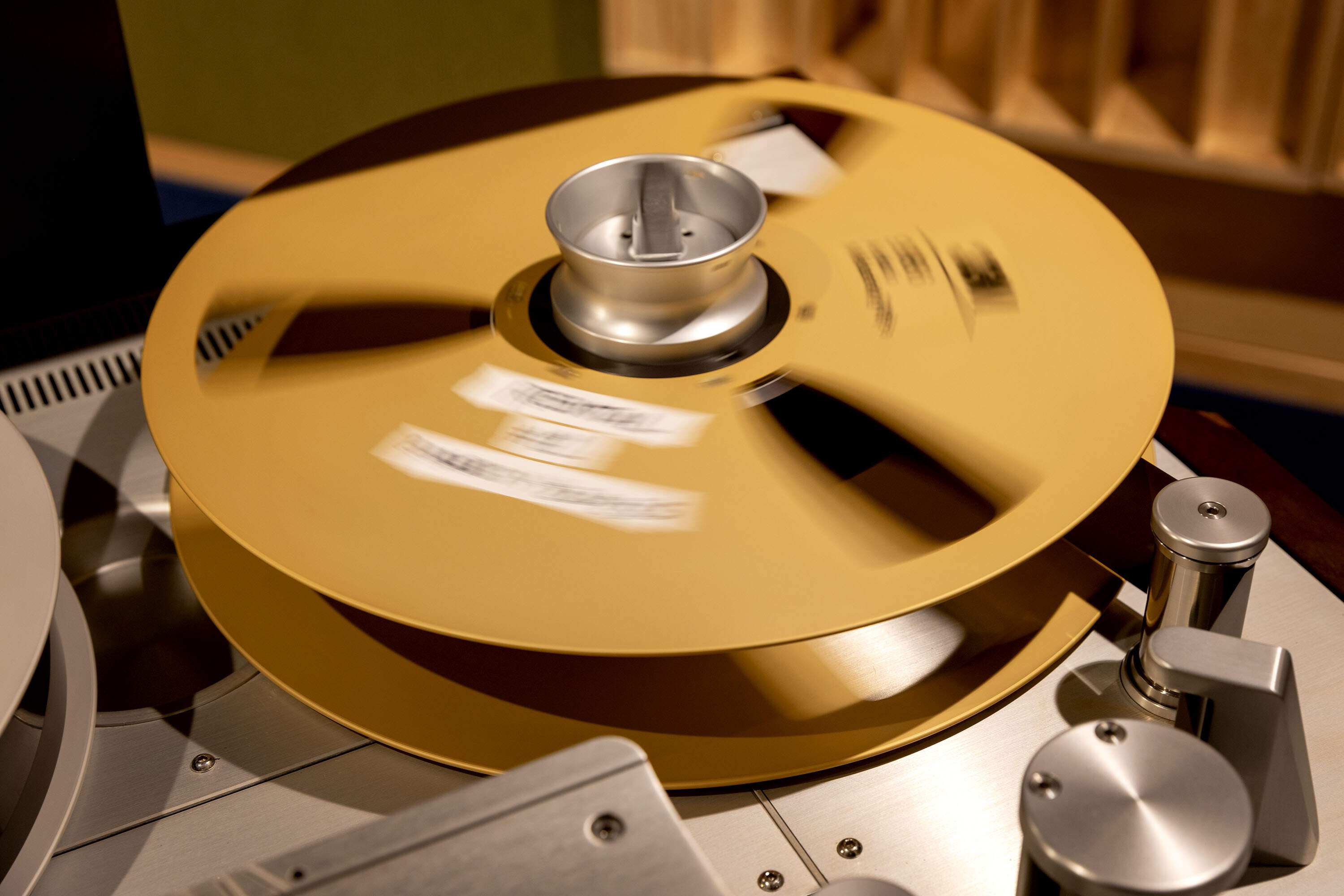
To illustrate, Healy pressed play on a drum and bass track they recorded to calibrate the 24-track machine. Then he quickly slowed the music down to a lumbering crawl. Sofer said reel-to-reel excels at speed variation and playing in reverse. “All this stuff delights us,” he said, as he listened to the otherworldly, backward sounds.
The team at Q Division wanted to share their delight with curious neophytes, which is why they rebooted the studio’s “Analog Tape Week” that’s been on hiatus since the pandemic. “We thought this is a fun way to introduce young people by taking some of the costs out of it – we’re throwing in the rental tape for free,” Sofer said.
According to Healey, only a handful of companies still make analog tape and a new reel of two-inch costs about $400. Sofer said some musicians still come to Q Division to record on reel-to-reel but, “most studios don’t even have a tape machine in them.”
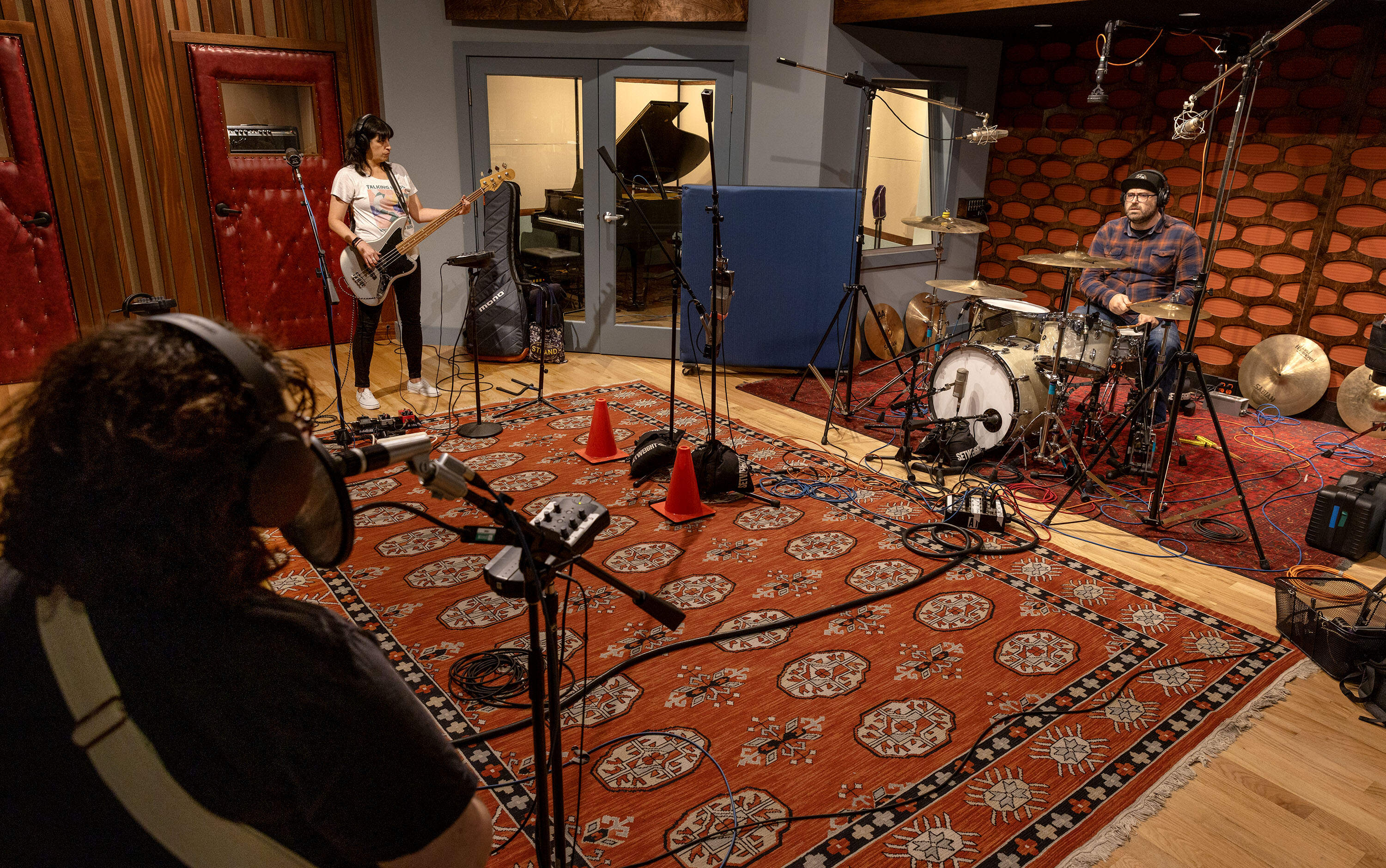
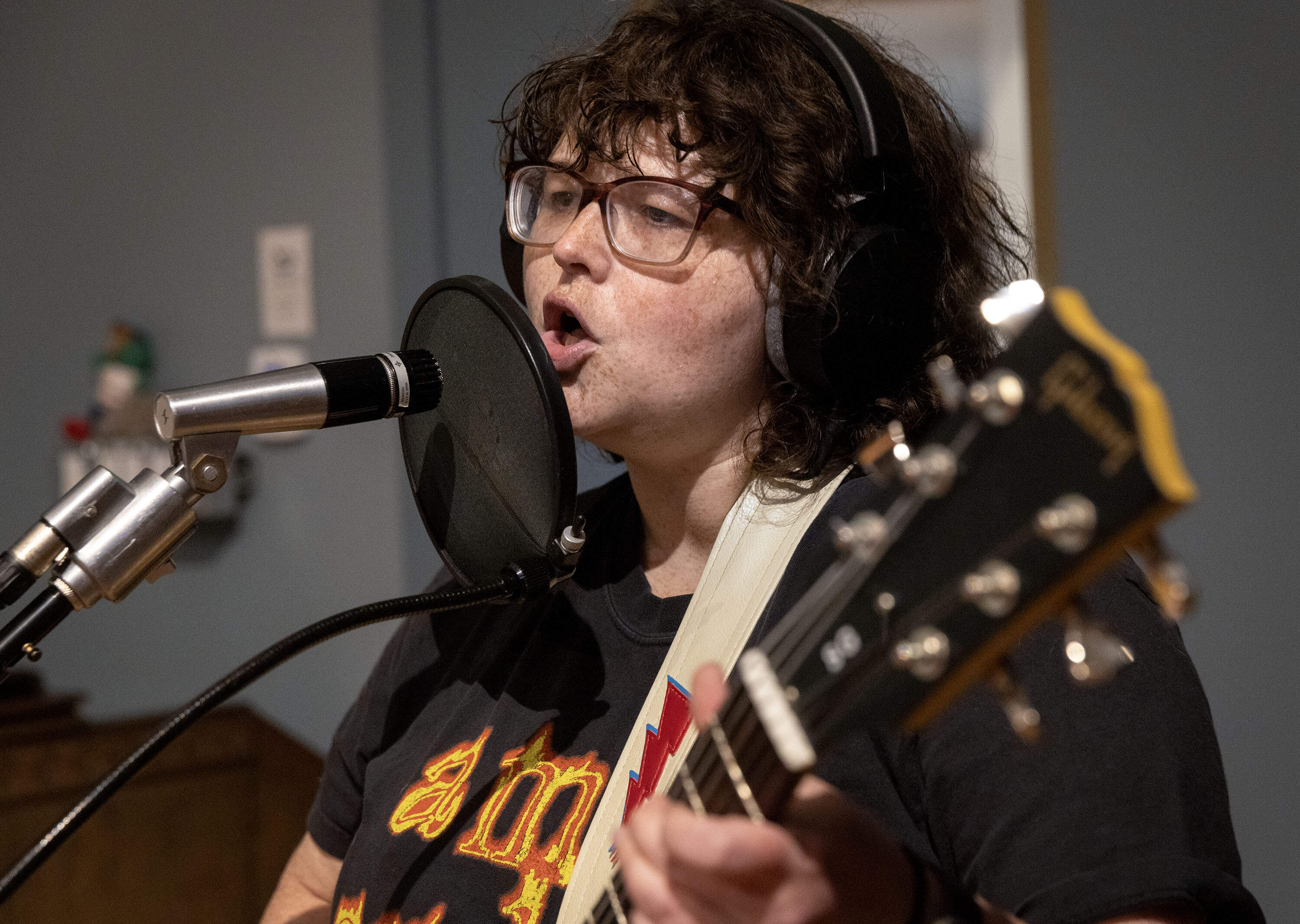
The local alt-rock band Astral Bitch grabbed the rare opportunity to lay down an analog track.
“We have not recorded on tape before; we’ve been very in the digital recording world,” said 38-year-old singer and guitarist Sam Coren. “So we’re really excited to kick it old school today with all the fun and magic that goes into a reel-to-reel tape recording.”
Drummer Michael Nasawaty, 47, was able to experience recording on analog equipment more than a decade ago and said he loved the warm, analog sound it brought to his instrument. “It’s also like stepping into the past with the warmth of old recordings by Pink Floyd and the Beatles, two of the most iconic studio bands that created the path for every other band after them.”
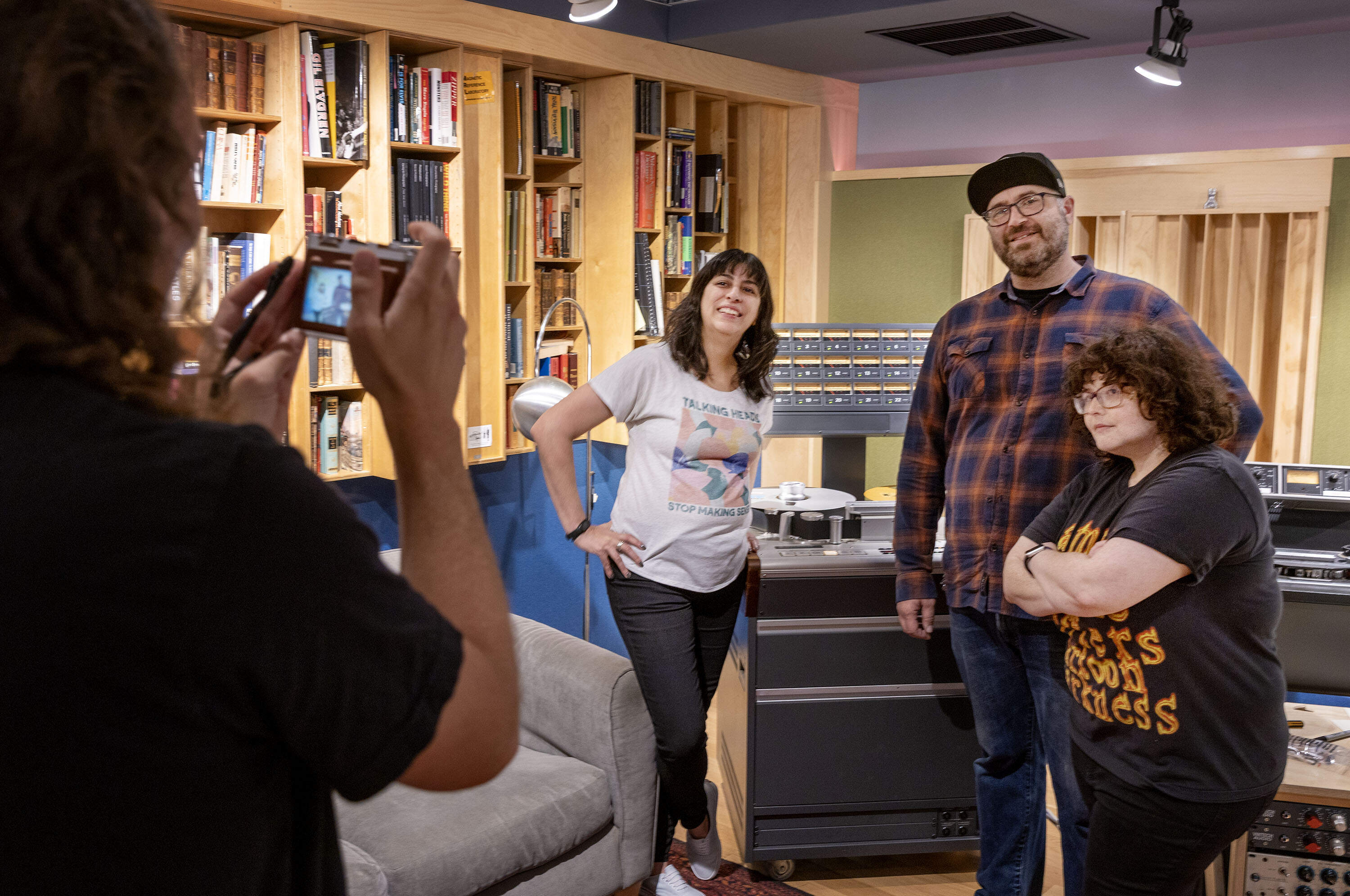
Astral Bitch performed “Time Will Tell,” a song they diligently rehearsed leading up to recording day. When they finished, they came into the control room to listen back to their first analog track. Coren and bassist JC Climent, 46, stared at the vintage tape machine.
“Having it actually move the reels and spin is very hypnotic,” Coren said.
The DIY artists wished they could afford to record a full album on tape. But now they’ve got one song made on reel-to-reel to memorialize their trip back in time.
The engineers at Q Division hope to host another Analog Tape Week in January.
