


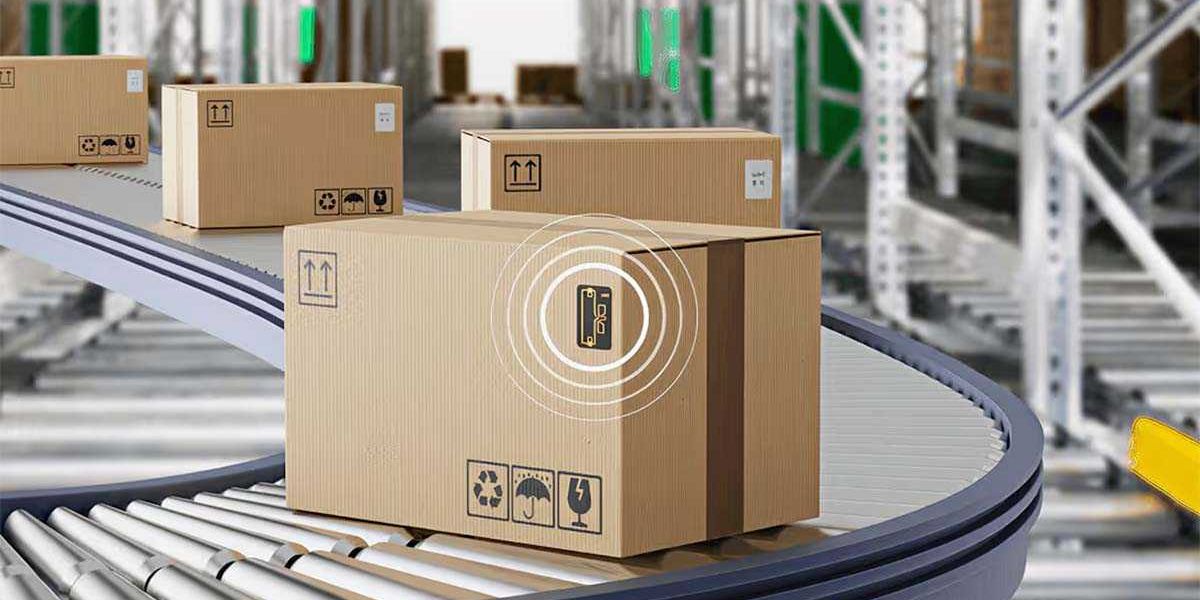
Recent research predicts a shift in the asset-tracking technology market, which has been a game-changer in logistics for its ability to provide visibility into transportation and freight movement. Vehicle-tracking devices have been the primary drivers of market growth, but analysts at global research firm Counterpoint Research are predicting a different scenario by 2032, when they say the majority of those gains will come from devices aimed at other applications—particularly those that provide a lens into a shipment’s entire supply chain journey, from origin through distribution to the retailer and everywhere in between.
The trend reflects growing demand to track and monitor just about everything that moves into, around, and out of a warehouse or distribution center—right down to the containers and packaging used to ship small orders in addition to bulk items. Reusable packaging, in particular, is predicted to be one of the newest drivers of this market shift.
“For years, the asset-tracking market has been largely driven by vehicle telematics, with fleet management and logistics accounting for the majority of deployments,” the Counterpoint researchers wrote in a July report. “However, the market is entering a new phase as enterprises shift their focus from tracking vehicles to tracking individual assets, industrial equipment, and inventory, along with newer categories such as reusable packaging and livestock. This transition is being driven by the need for real-time visibility that now extends beyond the vehicle to the assets it carries.”
Demand for reusable plastic pallets, totes, and containers has been rising alongside companies’ waste reduction and environmental sustainability efforts: Recent estimates predict the reusable packaging market will grow at about 6% annually over the next decade, for example. And experts say it follows that demand to track and monitor those assets is rising as well. The converging trends are causing packaging manufacturers, technology providers, and customers to collaborate more closely on the best solutions for keeping tabs on all those reusables—which often require the application of rugged tags, labels, and devices that can withstand harsh environments and the rigors of regular cleaning.
Experts say success will open up a whole new world of visibility into supply chains that goes far beyond tracking to include condition monitoring, predictive analytics, and risk mitigation.
A JOINT EFFORT
Reusable packaging manufacturer Orbis is making headway on the issue by working with customers to match asset-tracking technology to both the container and the application, according to Scott Krebs, the company’s senior director of marketing. He says Orbis’ reusables are designed to accept many kinds of trackers—including RFID (radio-frequency identification) tags, GPS monitors, and Bluetooth devices—and that one key to successful deployment is the placement of those devices on the container.
“We work closely with customers to determine the right technology, tags, and labels needed to meet their tracking goals,” Krebs explains. “One of the most important factors in a successful implementation is the placement of tags or labels on the packaging. Consistent placement helps ensure reliable scanning and accurate data capture throughout the supply chain.”
He says Orbis tests different tags, devices, and label locations to determine the best solution for each application. Once it has settled on a solution, the company ships the containers and pallets out to the customer’s location ready to be integrated into the facility’s tracking system.
Proper adherence to the container surface is another key consideration, says Amir Khoshniyati, vice president of supply chain technology firm Wiliot, which makes battery-free Bluetooth sensors that track and monitor containers and packages—as well as individual items and equipment—continuously, in real time. Called IoT Pixels, these sensors are postage stamp-sized computing devices that power themselves by harvesting radio waves from off-the-shelf gateway devices placed in facilities, trucks, or anywhere else a customer needs monitoring. Think of them as stickers that adhere to the surface of packages, containers, or equipment, Khoshniyati says.
Wiliot has developed two primary routes to ensure proper adherence. For consumables, such as cardboard boxes, the tags function like a standard label that sticks to the surface, functioning only as long as the package is moving through the supply chain. When the package is disposed of, the tag simply stops emitting signals.
Reusables are different because they often have to withstand harsher conditions and longer periods of wear and tear. In those cases, standard Wiliot tags are converted to a laminate material that acts as a plastic enclosure to protect the sensors during their journey.
“That lamination creates a buffer on the tag that can withstand impact and wash cycles” as well as exposure to extreme temperatures, Khoshniyati explains. “We have applications that have been in the [marketplace] for three years and are still transmitting data. [They] will stay in place as long as the asset is in use.”
He says both methods were developed in close collaboration with makers of packaging supplies—relationships he says are vital to ensuring the tracking and monitoring process works as promised.
“[Packaging manufacturers] have helped us work through challenges and get the technology working to the level where it is today,” Khoshniyati says, noting that Wiliot has more than a billion units working in supply chains to date.
The tech firm and its partners are now working on ways to embed the IoT Pixels into corrugate packaging, Khoshniyati reports.
“So from the moment [the package] is provided, it’s enabled with Wiliot,” he says. “That’s the future.”
MORE THAN A TRACKER
Once properly placed and adhered, asset-trackers can transform supply chains by conveying a broad range of information that goes far beyond just location. As Krebs explains, customers that are adding this kind of technology to their pallets and containers are not just seeking greater visibility into inventory and asset movements; they are also looking to improve asset utilization and “make more informed decisions with data.”
Khoshniyati agrees and points to the transportation of perishable foods as an example of how the data can help companies make better decisions.
“Perishable foods [can be] exposed to some level of volatility throughout the journey—and we can flag that,” he says, pointing to Wiliot’s continuous condition-monitoring capabilities, and explaining that a shipment whose temperature rises 10 or 15 degrees during transit may become spoiled and, thus, unsellable. If alerted to the situation instantly, the shipper can avoid the negative consequences to the consumer and the financial and reputational damage of a recall.
Containers outfitted with trackers can help even further by anticipating adverse conditions and accounting for them.
“Consider a shipment that has a journey into the desert, or when we can see that a heat wave is coming,” Khoshniyati says, explaining that the sensors on the containers generate signals that are collected and then analyzed in Wiliot’s Physical AI platform. Knowing the risks ahead of time, Wiliot can put triggers in place to ensure the trailer functions at optimal performance—or sound an alarm if it doesn’t.
Simply put, the technology eliminates the guesswork regarding what transpires during shipping and lets stakeholders know exactly what the items are going through and what state they are in.
Krebs concurs, adding that the right monitoring technology allows companies to respond faster to supply chain disruptions by identifying shortages, delays, and potential risks at the first sign of trouble. That, in turn, allows companies to respond proactively to mitigate problems, increasing supply chain resiliency and agility.
“Proactive decision-making is the end goal—to get the most value and ROI from increased supply chain visibility,” Krebs says.
