


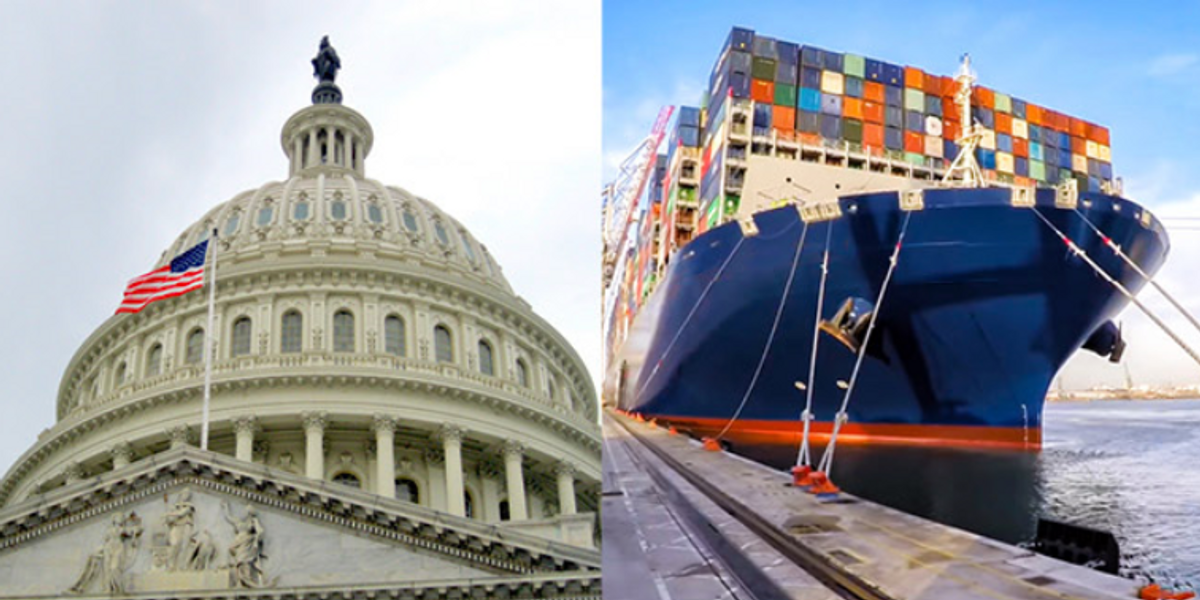
Industry groups across the spectrum of supply chain operations today are pushing back against the Trump Administration plan to apply steep tariffs on imports from Canada, Mexico, and China, saying the additional fees are taxes that will undermine their profit margins, slow their economic investments, and raise prices for consumers.
Even as a last-minute deal today appeared to delay the tariff on Mexico, that deal is set to last only one month, and tariffs on the other two countries are still set to go into effect at midnight tonight.
Once new U.S. tariffs go into effect, those other countries are widely expected to respond with retaliatory tariffs of their own on U.S. exports, that would reduce demand for U.S. and manufacturing goods. In the context of that unpredictable business landscape, many U.S. business groups have been pressuring the White House to pull back from the new policy.
Here is a sampling of the reaction to the tariff plan by the U.S. business community:
American Association of Port Authorities (AAPA)
“Tariffs are taxes,” AAPA President and CEO Cary Davis said in a release. “Though the port industry supports President Trump’s efforts to combat the flow of illicit drugs, tariffs will slow down our supply chains, tax American businesses, and increase costs for hard-working citizens. Instead, we call on the Administration and Congress to thoughtfully pursue alternatives to achieving these policy goals and exempt items critical to national security from tariffs, including port equipment.”
Retail Industry Leaders Association (RILA)
“We understand the president is working toward an agreement. The leaders of all four nations should come together and work to reach a deal before Feb. 4 because enacting broad-based tariffs will be disruptive to the U.S. economy,” Michael Hanson, RILA’s Senior Executive Vice President of Public Affairs, said in a release. “The American people are counting on President Trump to grow the U.S. economy and lower inflation, and broad-based tariffs will put that at risk.”
National Association of Manufacturers (NAM)
“Manufacturers understand the need to deal with any sort of crisis that involves illicit drugs crossing our border, and we hope the three countries can come together quickly to confront this challenge,” NAM President and CEO Jay Timmons said in a release. “However, with essential tax reforms left on the cutting room floor by the last Congress and the Biden administration, manufacturers are already facing mounting cost pressures. A 25% tariff on Canada and Mexico threatens to upend the very supply chains that have made U.S. manufacturing more competitive globally. The ripple effects will be severe, particularly for small and medium-sized manufacturers that lack the flexibility and capital to rapidly find alternative suppliers or absorb skyrocketing energy costs. These businesses—employing millions of American workers—will face significant disruptions. Ultimately, manufacturers will bear the brunt of these tariffs, undermining our ability to sell our products at a competitive price and putting American jobs at risk.”
American Apparel & Footwear Association (AAFA)
“Widespread tariff actions on Mexico, Canada, and China announced this evening will inject massive costs into our inflation-weary economy while exposing us to a damaging tit-for-tat tariff war that will harm key export markets that U.S. farmers and manufacturers need,” Steve Lamar, AAFA’s president and CEO, said in a release. “We should be forging deeper collaboration with our free trade agreement partners, not taking actions that call into question the very foundation of that partnership.”
Healthcare Distribution Alliance (HDA)
“We are concerned that placing tariffs on generic drug products produced outside the U.S. will put additional pressure on an industry that is already experiencing financial distress. Distributors and generic manufacturers and cannot absorb the rising costs of broad tariffs. It is worth noting that distributors operate on low profit margins — 0.3 percent. As a result, the U.S. will likely see new and worsened shortages of important medications and the costs will be passed down to payers and patients, including those in the Medicare and Medicaid programs,” the group said in a statement.
National Retail Federation (NRF)
“We support the Trump administration’s goal of strengthening trade relationships and creating fair and favorable terms for America,” NRF Executive Vice President of Government Relations David French said in a release. “But imposing steep tariffs on three of our closest trading partners is a serious step. We strongly encourage all parties to continue negotiating to find solutions that will strengthen trade relationships and avoid shifting the costs of shared policy failures onto the backs of American families, workers and small businesses.”
