


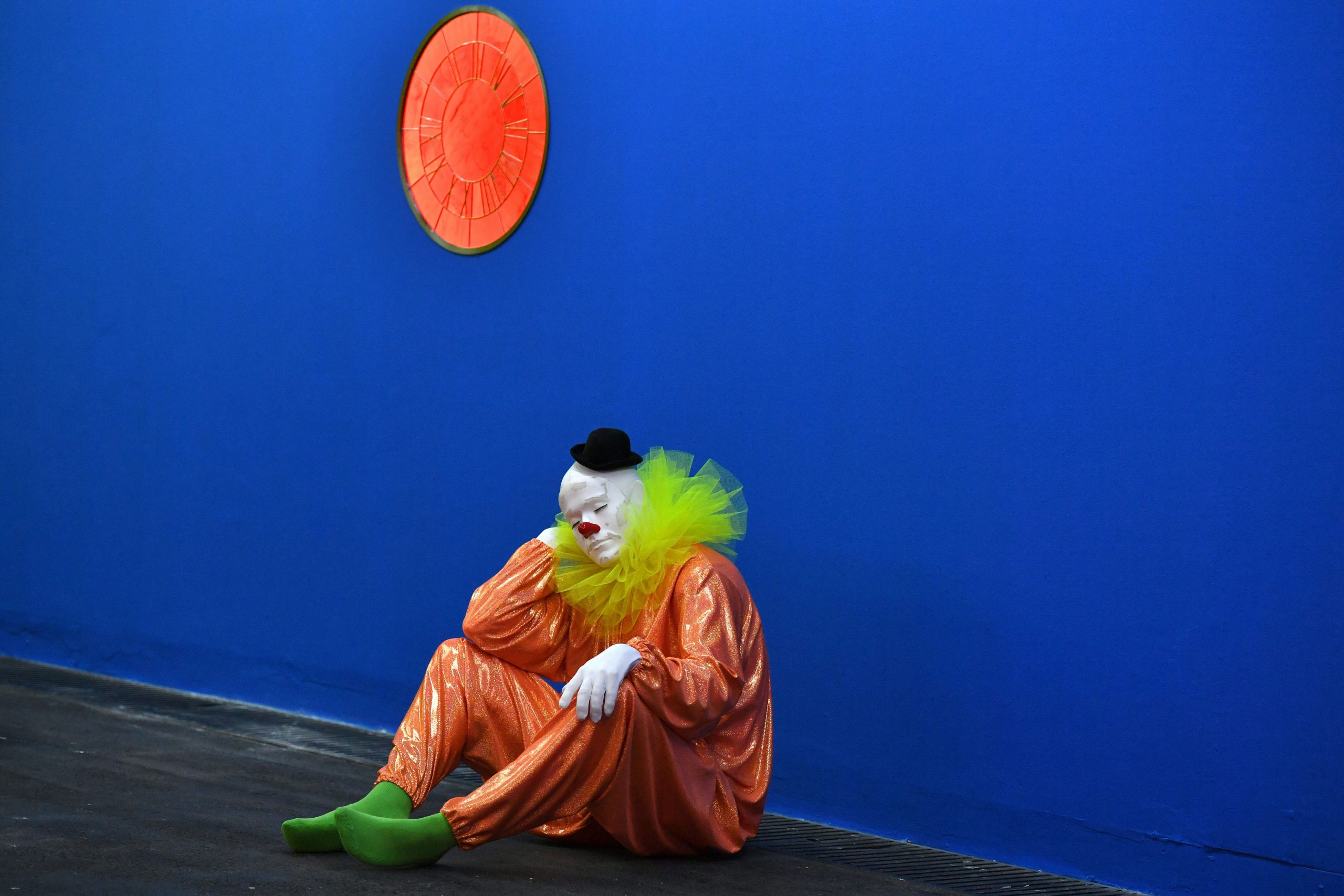
On June 3, Pace Gallery’s CEO, Marc Glimcher, released a statement saying that “the current gallery model isn’t only broken, it’s unfixable.” He had just told the New York Times that Pace was letting go of 50 of its roughly 130 artists and firing 20 percent of its staff. Art Basel opened just a week later. In the minds of many exhibitors, the announcement was ill-timed. Dealers are mindful of keeping the art-collecting mood positive and bullish, especially just before a fair. But was he just pointing to the elephant in the room? We all know that the market has slowed down, but if auction totals are an indicator, we’re well past the bottom of the trough. The big galleries are mostly done expanding, at least for now, but they’re not closing spaces, either. Many wonder whether the downsizing of Pace is a harbinger of things to come. Is Marc the canary in the coal mine? The respected Arne Glimcher, who founded Pace, told the Times: “I think this whole mega gallery thing is ridiculous and also unsupportable.” Are we witnessing the art world’s Napoleonic march to Moscow, an over-expansion propelled by hubris that is now inevitably falling to its knees?
Installation view of Pace at Art Basel in Basel, 2026.
That’s not what I witnessed last month at Art Basel, where the big galleries were doing just fine. Pace had a good booth there—two of them, in fact, because Marc’s new venture with veterans David Schrader and Emmanuel Di Donna was immediately anointed with its own stand. The Pace team was all smiles, and no one was discussing cleansing purges. OK, they had too many artists on their roster, so they cleaned house. Better late than never, I suppose. Why is this newsworthy, and from whence comes this tired notion that gallery representation is a permanent situation, a “till death do us part” commitment?
It is not news to me that galleries take on artists and later let some go. It happens all the time. They usually avoid publicly severing ties because it looks bad. It reveals the cynical reality that their business supports an artist only when sales are strong, and they may walk away when the market cools. For young or fashionable artists, this is how the cookie crumbles. Are galleries obliged to stand by their artists through thick and thin? They often cannot: They have bills to pay and overheads to support.
Pace didn’t do anything that the others don’t do. What raised eyebrows was the way they did it. The sudden and drastic scale of the decision was the shocker (as was the public announcement). But the writing had been on the wall for a couple years now, and anyone who didn’t adjust to the new realities was delusional. I’m referring to collectors, as well as dealers.
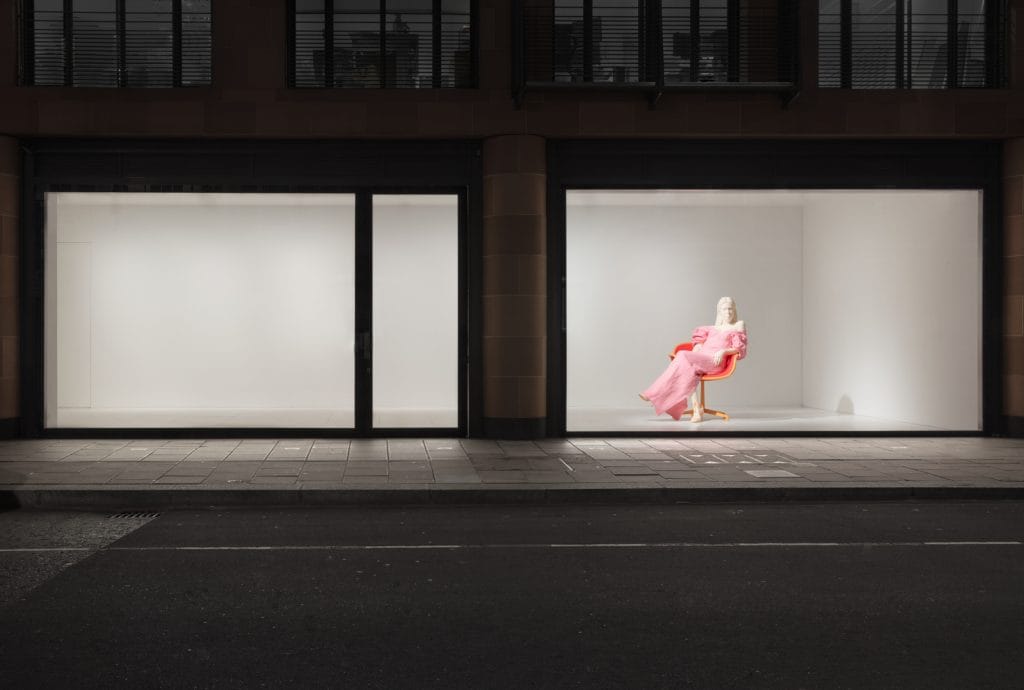
Urs Fischer, Dasha (2018) at Gagosian in London. © Urs Fischer Photo: Lucy Dawkins. Courtesy of the artist and Gagosian.
When someone tilts at windmills and overplays their hand, I find them winsome and endearing. Taking on projects that don’t make economic sense is a great part of every gallery and often the best part. Did the amazing Michael Heizer installation at Gagosian in Chelsea early this year make economic sense? Who cares. I loved it and went several times.
Remember when Jeff Koons defected from Gagosian and was seduced by Pace? Koons was never a good artist for Pace. Gagosian is the only place that could ever make Jeff’s career work, and it made no sense for anyone else to try. On the other hand, I’d rather buy my Agnes Martin painting at Pace all day long, rather than anywhere else. Art dealers love the challenge of taking someone else’s artist and beating another gallery at their own game. I’ve witnessed many artists and artist’s estates hopscotch from gallery to gallery and then make U-turns. I think they often harm themselves in the process. There’s value in staying put with a gallery that knows your work and has cultivated collector and institutional support. The grass isn’t always greener when you bounce.
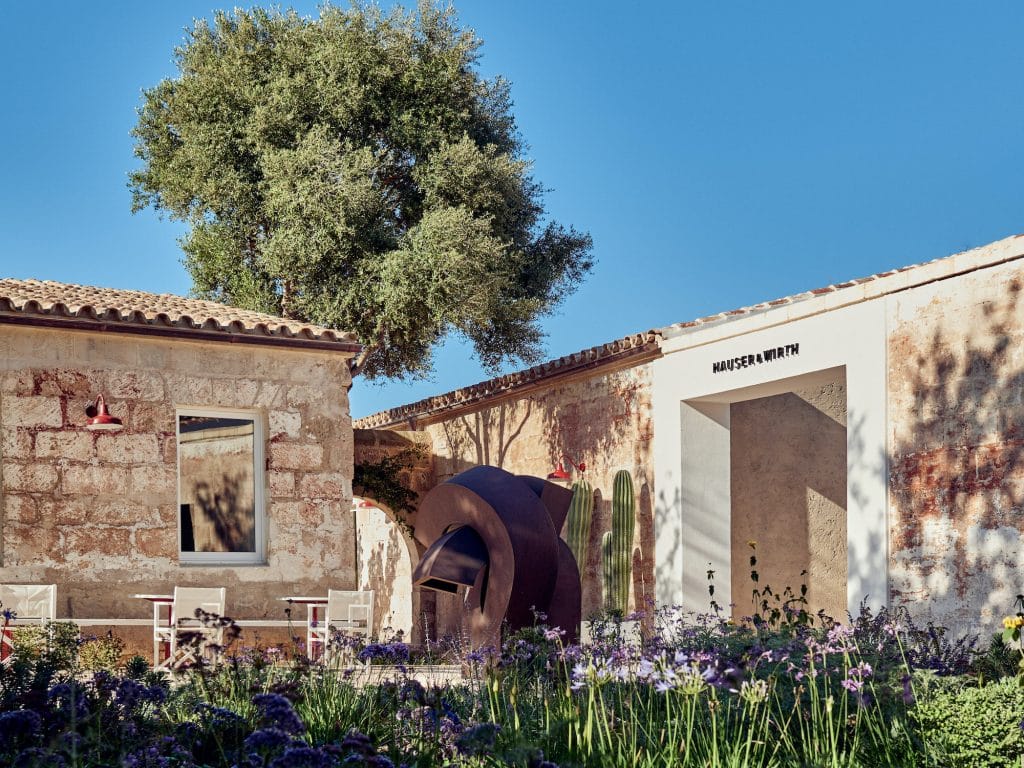
Elogio del v acío VI (2000) by Eduardo Chillida at Hauser & Wirth Menorca. Courtesy of the Estate of Eduardo Chillida and Hauser & Wirth. ©Zabalaga Leku. San Sebastián, VEGAP, 2021. Photo: Daniel Schäfer.
The mega galleries are here to stay, and so is Pace. Gagosian will last as long as Larry does. He could have sold the business to LVMH if he chose to, back when the rumors were flying, but I doubt he’d give up control, so there’s really nothing to sell.
What of Hauser & Wirth? Have you seen their properties in Somerset and Menorca? They’ve taken the art world where no man has gone before: a naval hospital in Menorca converted into galleries and an entire estate in England dedicated to art and food. Hauser also has excellent restaurants in London, New York, and Los Angeles. They created a different business model, more like a global brand than just an art gallery. They, too, are guilty of pushing artists to over-produce, but to their credit, they have successfully tied art and luxury together in a whole new way.
What of Zwirner? A respected European advisor described them to me as a “battleship.” They have beautiful spaces, and amazing artists and estates assembled carefully over decades. Most artists today would be thrilled to get the “call” from David, so I don’t see mega risk there. Their business model doesn’t need fixing; they know what they’re doing, and they stick to the plan.
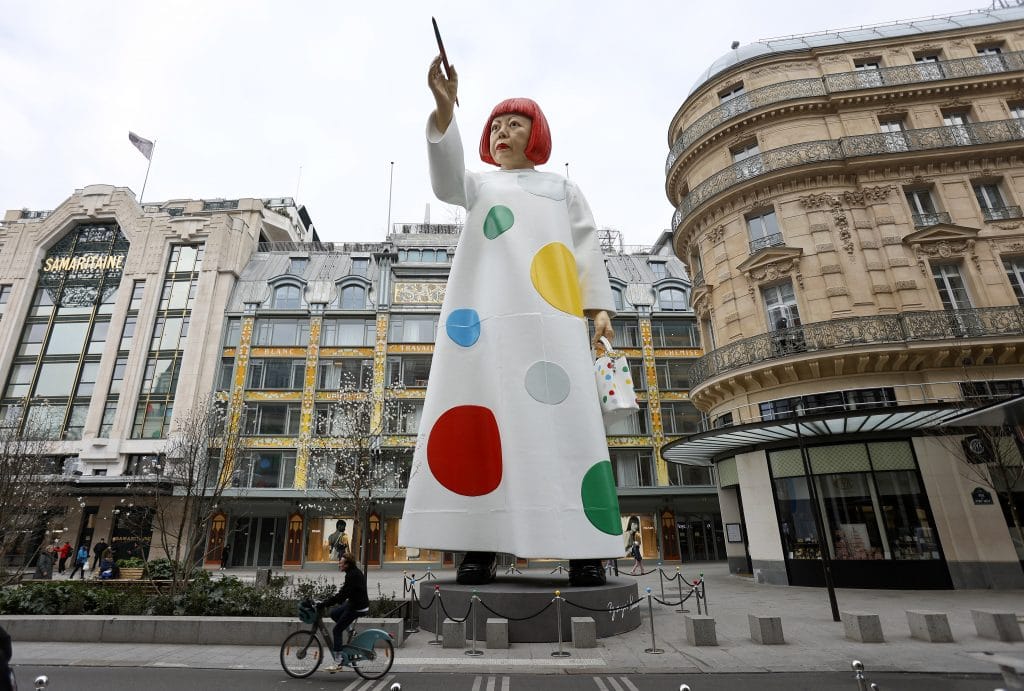
A huge sculpture in the likeness of Yayoi Kusama is erected near the headquarters of the Maison Louis Vuitton in Paris, France. Photo: Chesnot/Getty Images.
Every gallery in the art world is a different story, as is every artist, so it is hard to make valid conclusions by generalizing. What is missing in all these calculations is the concept of brand and brand equity. Big galleries have created brands that have value well beyond their income. The galleries I have mentioned have tremendous brand equity if we think of them as luxury businesses. If we valued galleries the way we do luxury brands, we would have a very different viewpoint on sustainability. LVMH trades at three times revenues, forget the bottom line. Hermès is overpriced and bullishly trading at ten times revenues. Shouldn’t mega galleries be worth more than just net cash plus inventory?
The mega-gallery model is far from broken. In fact, the truth is exactly the opposite. I’d venture any of the mega galleries could be worth from $1 billion up to even $4 billion at three times revenues, and there will always be financial parties interested in the space.
The arbitrary value of art is totally relative to its context. The value of money today has gone down, not just because of inflation but because the 0.001 percent just made so much of it. How can a Pollock sell for over a hundred million in a market that’s “soft”? The same reason some dinosaur skeleton just sold for $50.1 million and works by Basquiat have shot the moon. Some people can pay anything for what they desire, and they do. Don’t forget that we live in a world where SpaceX is worth $1.8 trillion, and it doesn’t even make money. It just spends it.
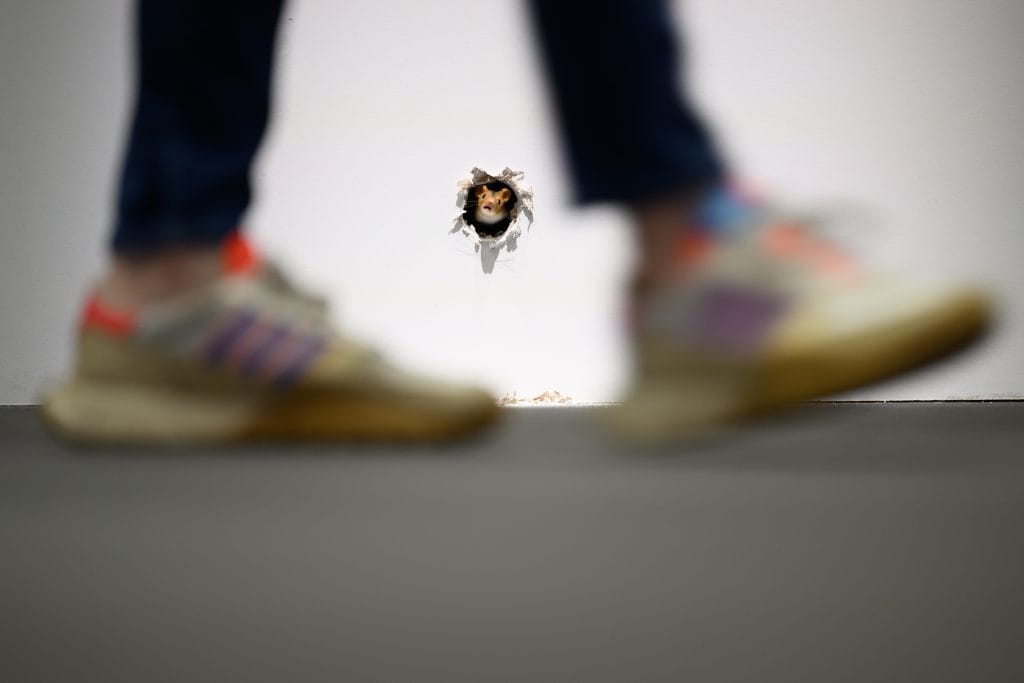
A visitor walks by Ryan Gander’s I’ve felt everything I’m going to feel – The Unspeakable World, at Art Basel, 2026 in Basel, Switzerland. Photo: Harold Cunningham/Getty Images.
The model for small and mid-size galleries is the one that’s broken. Upstairs, on the second floor of Art Basel, you could witness smaller gallery owners grinding their teeth, struggling with overheads, crates, shipping, booth fees, airfare, and hotels. They’re stressing about making ends meet; I’ll bet plenty of them didn’t. They aren’t just there for the money. (What money?) Art dealers are addicts, and they won’t slow down until they hit the wall. This explains why we’ve seen surprise bankruptcies and shotgun closures. Unless you have a killer program, art dealing is not a business; it’s a profession. When you are dealing, there is no guarantee of recurring revenue, so you are only as good as your last sale. You’ve got to shake and bake every day. The mega galleries are totally different businesses. They feature mega rosters with superstar artists, and they are managing global brands. The art world wouldn’t be what it is today without them.
After newspapers erroneously reported his passing in 1897, Mark Twain said, “The report of my death was an exaggeration.” Ditto for the mega galleries.
