


Running a successful manufacturing company basically comes down to the ability to obtain raw materials at a reasonable cost, produce a quality product that customers want, and then sell that product at a decent profit.
Yet considering today’s lengthy supply chains, shifting tariff policies, and rapidly changing geopolitical dynamics, that first element—the sourcing of those raw materials—might be the most difficult part of the success equation. Could there be a way to use the raw materials already available in our own backyard?
That’s where Mothership Materials comes in. The company is a bio-based manufacturing company that harvests its raw materials from existing plant-based products, often those found in the waste stream. In essence, it is another form of recycling: By breaking these products down to the molecular level, the company is able to create new materials economically while also helping its customers meet their sustainability goals.
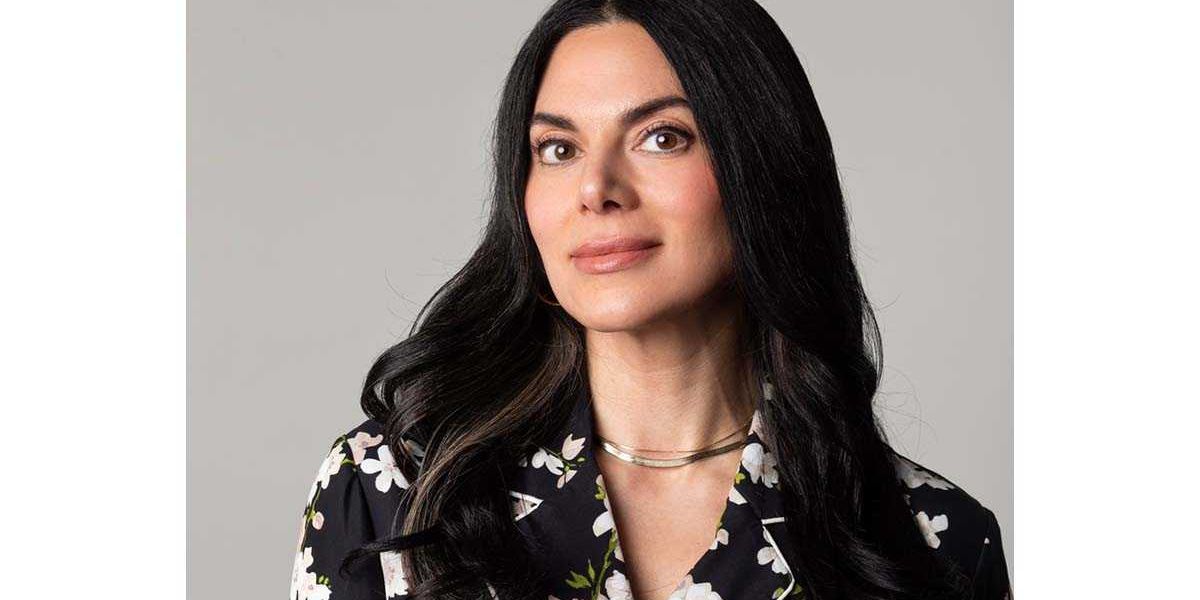
The CEO of this innovative new company is Jo Marini, a serial entrepreneur (she has founded four companies to date) who is also an MBA program professor and military veteran. Under Marini’s leadership, Mothership is pioneering on-site, on-demand manufacturing that transforms industrial agricultural waste into cost-competitive “input” materials for packaging, textiles, fuels, adhesives, and more.
Marini will be a keynote speaker at the Council of Supply Chain Management Professionals’ (CSCMP) EDGE conference to be held in Nashville, Tennessee, in October. She recently spoke with DC Velocity Editor at Large Susan Lacefield about her company and its role in transforming supply chains.
Q: Can you tell us about Mothership Materials and the kinds of problems you were trying to solve when you started it?
A: We are a bio-manufacturing company that uses a decentralized process to turn agricultural or food-processing waste into industrial feedstocks. Our modular technology can work with any sort of waste anywhere in the world—everything from wood to seaweed to spent grain to bananas to cacao. Our technology works like a molecular “sorter” to capture the molecules inside of those waste products. We can then use [those molecules] as cost-competitive, localized inputs for products like fabrics, foods, fuels, coatings, and finishes. Since we work directly at the waste site, we can overcome supply chain hurdles while also creating new regional jobs.
Q: Can you explain bio-manufacturing for us nontechnical folks?
A: We typically think of bio-manufacturing as any process that uses a plant-based input rather than a petroleum-based input. As you know, there’s a lot of talk about transitioning away from a fossil-fuel economy. We can really reduce our dependence on fossil fuels by bringing in these plant-based inputs. It also allows us to manufacture products a lot faster and—since we are able to decentralize it—do it a lot less expensively.
Q: It seems a lot of your work centers on reinventing manufacturing and supply chains. Why do you feel they need to be rethought?
A: I think there are opportunities for innovation in every space, including supply chains. When we think about the way things move around the world and the ways that we get inputs for manufacturing, we’ve kind of been doing it the same way for 200 years or longer, right? You have to make something somewhere, and then, through a series of handoffs, you have to get it somewhere else. And then that input has to be transformed into something else.
But we don’t actually have a lot of visibility into how the input got there, how many handoffs were involved, and the costs associated with those handoffs. [At Mothership,] we’ve taken a close look at what makes it really, really difficult to make stuff, and the answers we found are trade tariffs, border shocks, and fuel costs. All of these have become more unpredictable in the past decade.
Meanwhile, there are conservatively 2 billion tons of agricultural waste being generated around the globe every single year. And so, we asked ourselves if there was a way to use this abundant renewable source to produce what we needed and shorten that supply chain. We found that in some cases, we can shorten that supply chain by up to 80% if we can get those input materials right into the production part of manufacturing. By doing so, we can lower cost, save time, and make it economically beneficial across the board.
This kind of manufacturing also opens up opportunities for new jobs and new economic incentives where they didn’t exist before. It is a part of supply chain that presents a really exciting opportunity for innovation—by taking waste products that might not be serving us and using technology, we can develop these new business models to create something that allows everyone to move faster, farther, better, and cheaper.
Q: As you work with companies to rethink their supply chain and manufacturing, what do you find gets in the way of actually making that transition?
A: There are a lot of very well-established processes and supply chains that exist. Maybe they’re not working perfectly, but a lot of time and resources have been invested in making them work [so there’s resistance to change].
Whereas for [Mothership Materials], we operate all the way upstream in the supply chain. You find us on the farm. So we don’t experience a whole lot of friction [or resistance to change] because we are there to help with waste sources that are usually a cost and logistics burden for the farmers. This waste is either getting hauled away and used for animal feed, or it’s being put in piles because there’s no great, economical way to dispose of it. So we can drop in at no cost to these farmers and food producers and help with their waste removal and waste conversion. We are actually paying them more than they would have gotten with the current options.
For these reasons, the first two supply chains we began working with had low barriers of entry for us. One provides cellulose for different types of textiles, and the other a sugar that can be used as microbe food for fermentation processes. Of course, as we get into other materials, we will have some new logistics to figure out.
Q: If you’ll excuse the pun, it seems that for the first steps, you’ve gone after the really low-hanging fruit, working with farmers as opposed to moving down the chain a bit. What advice do you have for supply chain leaders interested in finding similar opportunities for innovation in their own supply chains?
A: I think that there’s so much potential here, because in the four years or so that we’ve been running this business, we’ve had conversations with leaders at every step along the supply chain, and what we’re finding is that everyone is asking the same questions. Everyone has a vested interest in making things more efficiently and coming up with innovative solutions. When I have these conversations, I learn something new every single time. Yet I think that the reality is that [to uncover new opportunities for innovation], you have to look further back [in the supply chain].
I have found in my conversations with supply chain leaders that oftentimes, the opportunities that are presented to them are ones that have already been commercialized—they are the well-packaged, glossy sorts of solutions. To really innovate, what they need to do is look outside their own sphere of influence. They need to start by asking themselves, “Do I know someone who knows someone who might be able to help me rethink this [problem]?” I think opening up that aperture and looking upstream in their supply chain is a really nice place to start because there’s just so much happening in material innovation.
Q: Can you provide an example of someone you’ve worked with who has found bio-based alternatives to the raw materials they had been using?
A: Absolutely. Without name dropping, there are two that come to mind. One is a really large packaging company that’s been looking at replacing the source of the pulp that’s going into their packaging. The second is a textile company and one of the world’s largest producers of a semisynthetic fiber used to make clothing textiles and other products. In both of these cases, we have worked with smaller and maybe lesser-known upstream suppliers of those raw materials, and we have been able to begin integrating [our technology] into those supply chains.
Q: Do you have any advice for companies as to how they can better work with their partners to create innovations?
A: What’s been really fascinating and fun for us is the collaboration and partnerships that have happened across all sorts of steps along the supply chain. We now have partnerships that exist between the farmer, [Mothership Materials,] the producer of the input material that is going into a fabric or a food or a fuel, and then the actual end producer of that product that’s going to commercialize it.
We’re looking at being able to do demos in early 2027, where all of the supply chain stakeholders are in the same room together and we can show them how each of them has their fingerprint on this new product that’s going to market. I think that is such an interesting way to think about approaching it for supply chain leaders, because not only do you have this brand-new product but you also are able to tell a story to the consumer about how it got into their hands and about all the people who were involved.
