


By Michael Zwiebach, senior editor
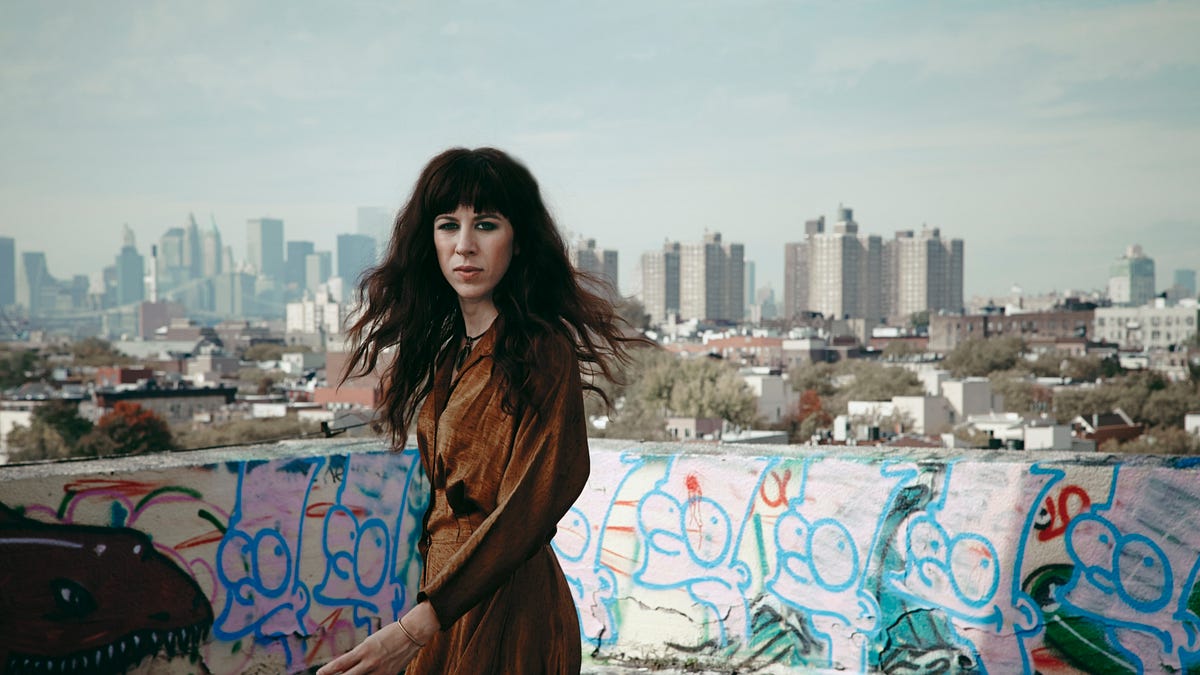
Missy Mazzoli’s Lincoln in the Bardo will premiere at the Metropolitan Opera this week. The composer’s The Galloping Cure will arrive at the San Francisco Opera in fall 2027. Not to mention a recording of her hit opera, Breaking the Waves, came out this year to rave reviews.
Indeed, Mazzoli is making waves.
Back in the 1970s and 1980s, new opera, especially new American opera, was rare, uncelebrated, and mostly unperformed — the Met’s contribution to contemporary opera at the time was zilch. For those who grew up then, watching Mazzoli have such success today is extraordinary.
The San Francisco Opera, on the other hand, was far more adventurous — it performed Benjamin Britten’s Death in Venice a year after the 1974 premiere, Dominick Argento’s Postcards from Morocco two years after its premiere, and Scottish composer Thea Musgrave’s Mary, Queen of Scots for its Spring Opera Theater in 1979. UC Berkeley professor Andrew Imbrie saw the premiere of his Angle of Repose in 1976 (not a success) and SF Conservatory professor Conrad Susa had a minor triumph with Transformations in 1981. The company even mounted Philip Glass’s Satyagraha in 1989.
That still doesn’t compare with the company’s recent track record, which includes at least one contemporary opera every season.
As another data point, consider the Pulitzer Prize for Music. No new operas were awarded prizes or finalist recognition by Pulitzer committees between 1962 (Robert Ward’s The Crucible) and 2000 (for the concert version of Lewis Spratlan’s Life is a Dream). Since 2010, however, it’s been a different story:
-
2011: Zhou Long’s Madame White Snake
-
2012: Kevin Puts’s Silent Night (Tod Machover’s Death and the Powers, finalist)
-
2014: Christopher Cerrone’s Invisible Cities (finalist)
-
2017: Du Yun’s Angel’s Bone (Kate Soper’s Ipsa Dixit, finalist)
-
2019: Ellen Reid’s p r i s m
-
2020: Anthony Davis’s The Central Park Five
-
2021: Ted Hearne’s Place (finalist)
-
2023: Omar, by Rhiannon Giddens and Michael Abels
-
2025: George Lewis’s The Comet (finalist).
Even more astonishing is the fact that many new operas have been popular successes, like Mason Bates’s The Amazing Adventures of Kavalier & Clay (2025) at the Met and Huang Ruo’s The Monkey King (2025) at SF Opera. Composers like Jake Heggie, whose Dead Man Walking (2000) is one of the most frequently performed contemporary operas, have been able to specialize in music for theater, while both Glass and John Adams have multiple works in repertory around the world.
Smaller companies in America are embracing new opera happily: Heartbeat Opera (New York), Opera Philadelphia, Santa Fe Opera, and, locally, Opera Parallèle and West Edge Opera, to name only a few. Beth Morrison Projects has built a brand supplying new chamber operas to the world with astonishing success: Angel’s Bone, Breaking the Waves, p r i s m, Place, and David Little’s Dog Days and Soldier Songs all originated there.
So what explains the new golden age of American opera? Here are a few factors to consider:
Culture at large (zeitgeist): It’s hard to know when contemporary opera became more popular, but there’s no doubt that it began with “CNN operas” like John Adams’s Nixon in China (1987) — works that boasted contemporary themes and novel productions. Nixon, for example, was directed by then-controversial Peter Sellars, whose operatic career was just beginning.
Collaborators like Sellars as well as fearless singers were instrumental in selling these new works. Houston Grand Opera CEO David Gockley sought composers with populist appeal, preeminently Carlisle Floyd, who was practically HGO’s house composer during the 1980s and 1990s. Early opera incubation projects also encouraged would-be opera librettists, providing training and readings of works-in-progress.
Looking back, we can see that the success of a few of these operas encouraged companies to take the leap into producing new operas, which went from a trickle to a flood.
Musical appeal: Obviously, contemporary opera composers are more in tune with popular music styles and trends than their forebears. And they’re willing to write appealing melodies and vocal lines that are adapted to specific singers. That’s a skill you develop by doing more than one theater work, which became more possible in the new century.
Strange to say, for the highly experimental 1960s and ‘70s, the institutions of that period were addicted to “masterwork” culture — the idea that great music was stylistically homogenous and rigorously developed from initial ideas in a symphonic manner.
Needless to say, opera has never been a good example of that. The most performed repertory classics are a hodgepodge of styles and genres. Contemporary composers operate on that principle, mixing a variety of musical ideas and not necessarily tying them up with a neat intellectual bow.
Rise of the professional librettist: The classic eras of opera always had specialists who knew the craft of libretto-writing, making it possible for composers to write quickly and efficiently. That crucial support role has reemerged with professional writers of many stripes making substantial contributions. How did Jake Heggie manage to compose The Judgement of Paris (2026) in just eight months? Part of the answer was that he worked with his frequent collaborator Gene Scheer.
Some of these new librettists are well-known playwrights and poets, such as David Henry Hwang. Other names might be less familiar but have impressive credits. Canadian librettist Royce Vavrek is prolific: he’s written the texts of all of Mazzoli’s operas, Dog Days and JFK both with composer David Little, Angel’s Bone, and many others.
Librettist Mark Campbell has written Silent Night, The (R )evolution of Steve Jobs (music by Mason Bates), The Shining (Paul Moravec), and As One (Laura Kaminsky) among many others. He established the Campbell Opera Librettist Prize, the only award of its kind. He also lends a hand in development workshops, helping the next generation of librettists. There are several other big-name librettists out there now.
Communication and Collaboration: The last factor I’ll cite is our electronic devices along with a more collaborative attitude on the part of composers. Good theater has always been made by many hands, but now projects can be initiated and brought to fruition over cell phones, iPads, and Zoom meetings. You don’t wait for a librettist to send you a scene by snail mail. More frequent and easy exchanges of ideas are possible without everyone being in the same room.
Also, millennial and Gen Z composers initiate a range of projects, some in-concert with other composers, some with visual artists of all kinds. I know some critics hate video. I love it. The willingness of the millennial musician to be one hand among many has rearranged the artistic universe and made possible a lot of fascinating projects that would never have been considered by the “great” composers.
What’s happened in the U.S. has also happened around the world. It’s a bonanza for opera fans like me, who can’t wait to find out what’s next.
