


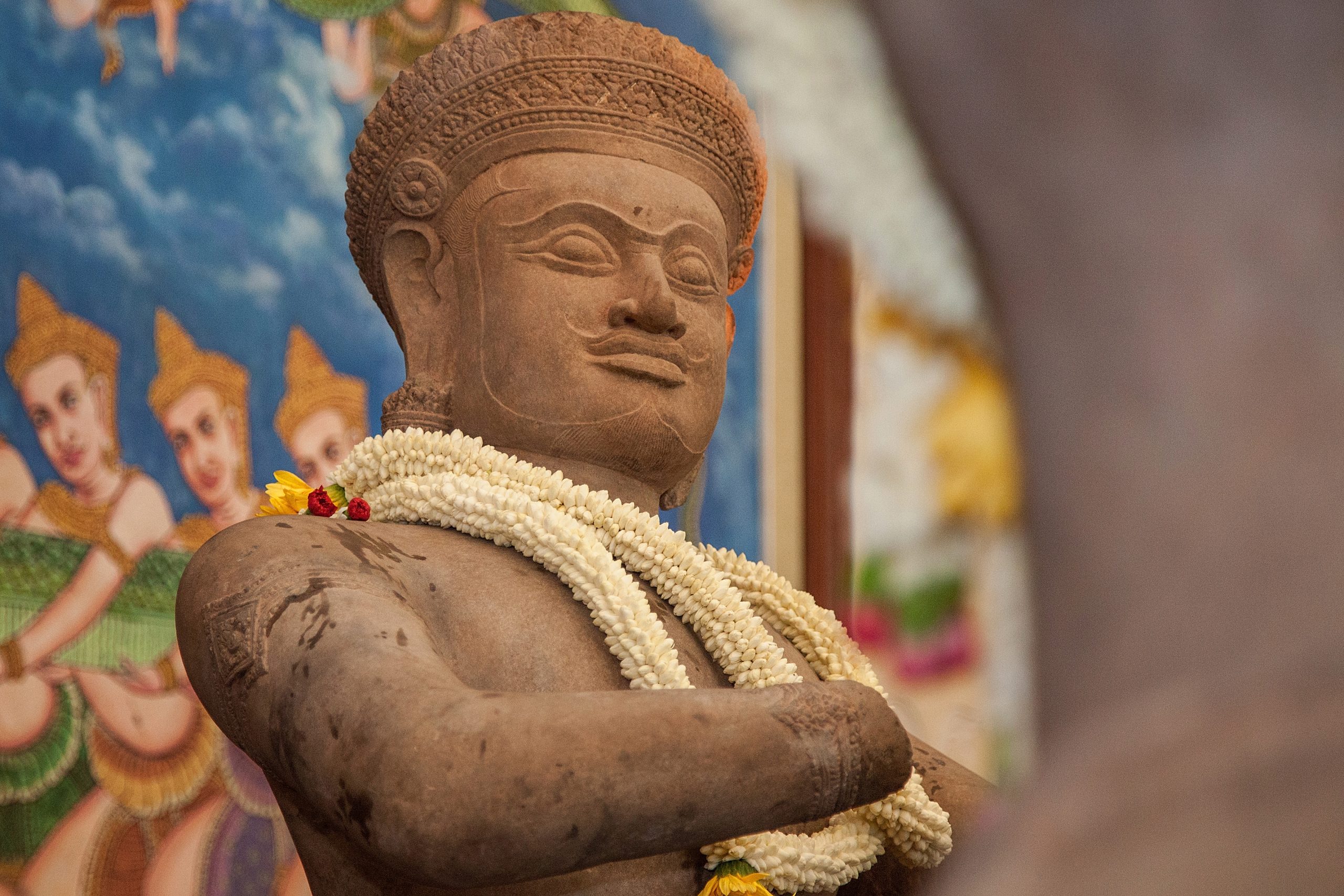
One evening in 1997, a band of men began digging toward the base of a towering square chamber at Koh Ker, a 10th-century temple in northwest Cambodia. It was dangerous work. When multiple groups coveted a site like this one, they sometimes resolved their dispute by Kalashnikov. And every one of the men knew that the combatants in their country’s ongoing, 30-year civil war—the Khmer Rouge and proxy forces backed by the United States and the Soviet Union—had littered the countryside with land mines. So the crew moved gingerly as they dug, coming closer with each spadeful of earth to the treasures they were pursuing.
Two were divine female figures in stone; the third was a powerfully built male, likely a representation of Shiva, the Hindu god of destruction. It took hours to excavate the statues, and then days to move them to Cambodia’s border with Thailand. There, brokers were standing by to transport them to Bangkok, mainland Southeast Asia’s portal to the world.
The male figure would ultimately be purchased by an American billionaire. One of the females would be sold by a London dealer and then disappear into a private collection. The third took a more rarefied path: By 1998, it was in the possession of a dealer in Manhattan. Not long after that, it was acquired by the Metropolitan Museum of Art.
The Prasat Chen temple in the Koh Ker temple area in Preah Vihear province, some 360 kilometers north of Phnom Penh, Cambodia. Photo: Tang Chhin Sothy / AFP / Getty Images.
Two of these three statues are now back in Cambodia, the result of a series of sprawling investigations of a British dealer, the late Douglas Latchford. For decades, Latchford allegedly trafficked stolen Cambodian sculptures—many of them taken by men affiliated with the Khmer Rouge—to Western buyers willing to pay seven-figure prices. Thanks to extraordinary investigative work by the Cambodian government, independent activists, and American law enforcement, his network has been largely dismantled.
But their efforts exposed an uncomfortable truth: that despite widespread claims from museums, auction houses, and dealers that they now take provenance seriously, many antiquities are still being stolen and trafficked around the world, feeding an illicit market that remains robust.
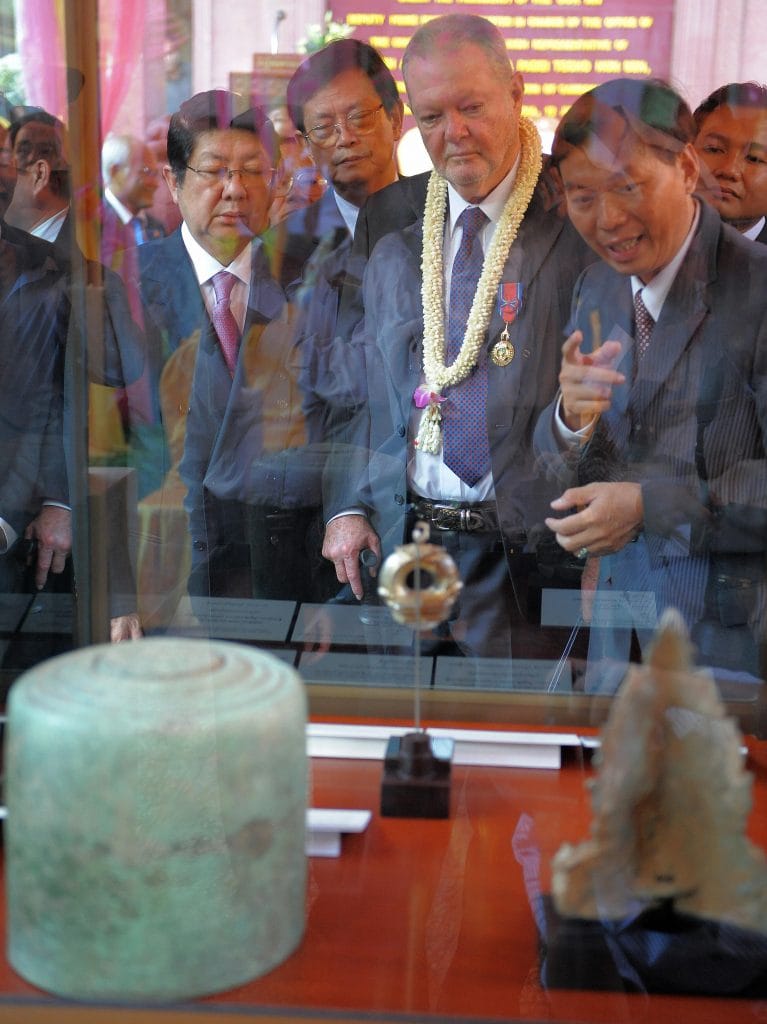
Douglas Latchford (center) with Cambodian deputy Prime Minister Sok An (left) at the National Museum of Cambodia in Phnom Penh, 2009. Photo: Tang Chhin Sothy / AFP via Getty Images.
Cambodia is far from the only example. Thousands of works looted from Iraq and Syria during 21st-century conflicts remain missing. The horrific civil war in Sudan has resulted in widespread losses of artifacts, including the reported theft of 60 percent of the collection of the country’s National Museum. In Ukraine, there’s extensive evidence that Russian forces have engaged in the systematic looting of artworks, which have since disappeared to the other side of the countries’ shared border.
These crimes don’t just rob countries of their heritage and cultural assets. They can result in the destruction of priceless objects as thieves attempt to remove them with construction equipment or even explosives. They also get people killed, whether in turf battles between looting crews or attacks on guards trying to protect collections.
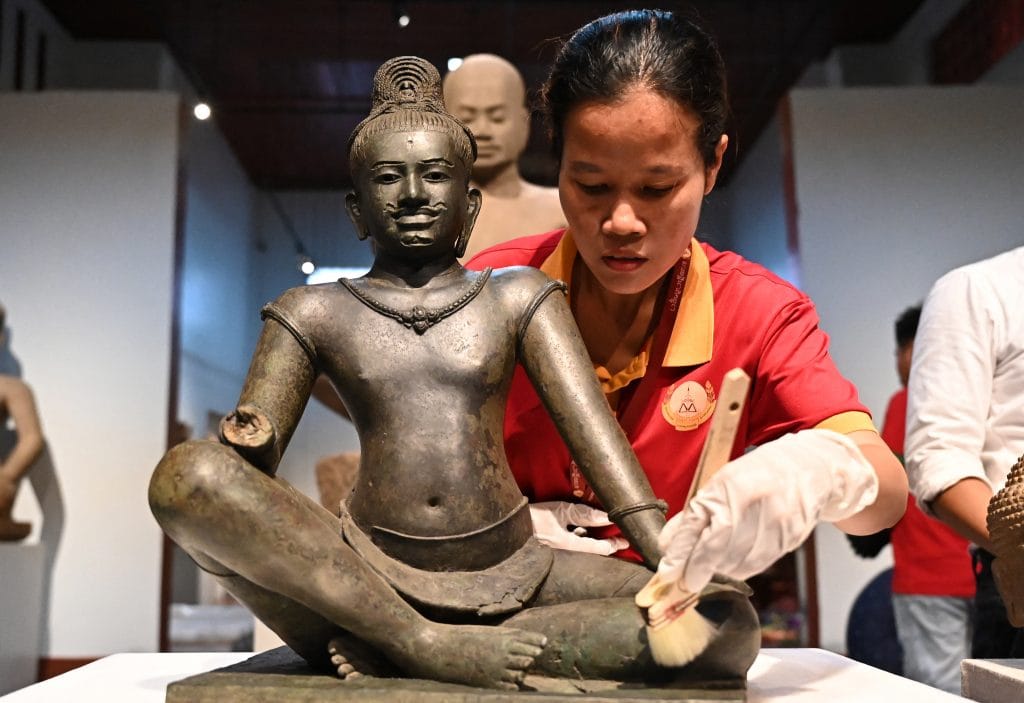
Bodhisattva Avalokiteshvara sculpture from the 10th to 11th-century Angkor period, repatriated to the National Museum in Phnom Penh by the Metropolitan Museum of Art, 2024. Photo: Tang Chhin Sothy / AFP via Getty Images.
To be clear, there have been serious if overdue efforts to address this outrageous trade. The U.S. Departments of Justice and Homeland Security have conducted complex investigations of looted art from some regions—notably Cambodia, to which hundreds of pieces have been repatriated. The Manhattan District Attorney’s Office now includes a specialized Antiquities Trafficking Unit, which has relentlessly pursued stolen works held by collectors and museums, above all the Met. With the legal and reputational risks of holding such pieces now obvious, New York’s largest museum has made a number of high-profile returns and taken steps to clean up its collection, including the establishment of a team dedicated to provenance research.
While all of these developments are welcome, more must be done, especially when it comes to works taken from modern-day war zones. The Latchford case provided an X-ray into the true structure of the looting and trafficking supply chain, and the sophisticated means that its players use to move illicit objects. They include the looters themselves, of course, but also restorers, appraisers, brokers, and forgers, combining their efforts to steal artworks and then launder their origins with fake paperwork.
That so many works continue to be stolen tells us two things. First, that these networks remain vibrant, and second, that enough buyers exist to make their operations profitable. Shutting them down requires complicated police work as well as international cooperation, including from countries currently roiled by conflict. But there’s only one way to really stop looting.
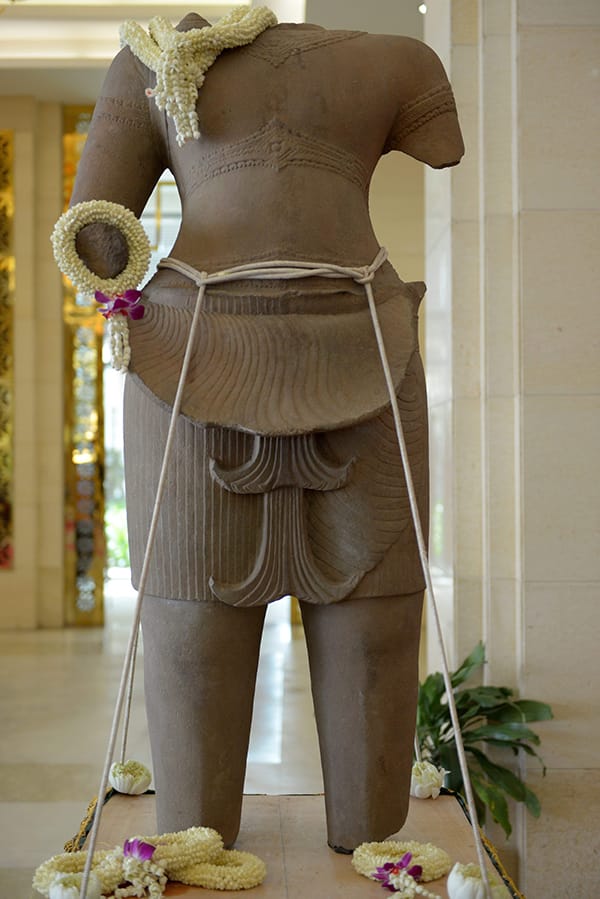
A 10th-century sandstone sculpture of the Hindu god Rama after it was returned to Cambodia by the Denver Art Museum in the U.S., 2016. Photo: Tang Chhin Sothy / AFP / Getty Images.
The purchasers of stolen art are unlike the buyers of say, fentanyl. Rather than being compelled by addiction, most are economic actors making a rational risk calculation, betting that the potential legal and reputational costs are outweighed by the benefits—the thrill of possessing forbidden treasures, often hoarded in opulent homes. The role of law enforcement—and of the activists who’ve devoted themselves to this issue—should be to raise those costs as much as possible, including by insisting on criminal liability for egregious offenders. After all, as with any illicit commodity, only when the demand for stolen art is eliminated will the market truly disappear.
Matthew Campbell is an award-winning reporter for Bloomberg Businessweek and the author of the new book The Man Who Stole the Gods: A True Story of War, Obsession, and a Global Art Conspiracy. He has reported from more than 25 countries on crime, corruption, terrorism, economics, and the environment.
