


A team of researchers excavates the story of Earl Stendahl, a mid-century gallerist who shamelessly stole ancient Mesoamerican objects and marketed them to the institutional art world.
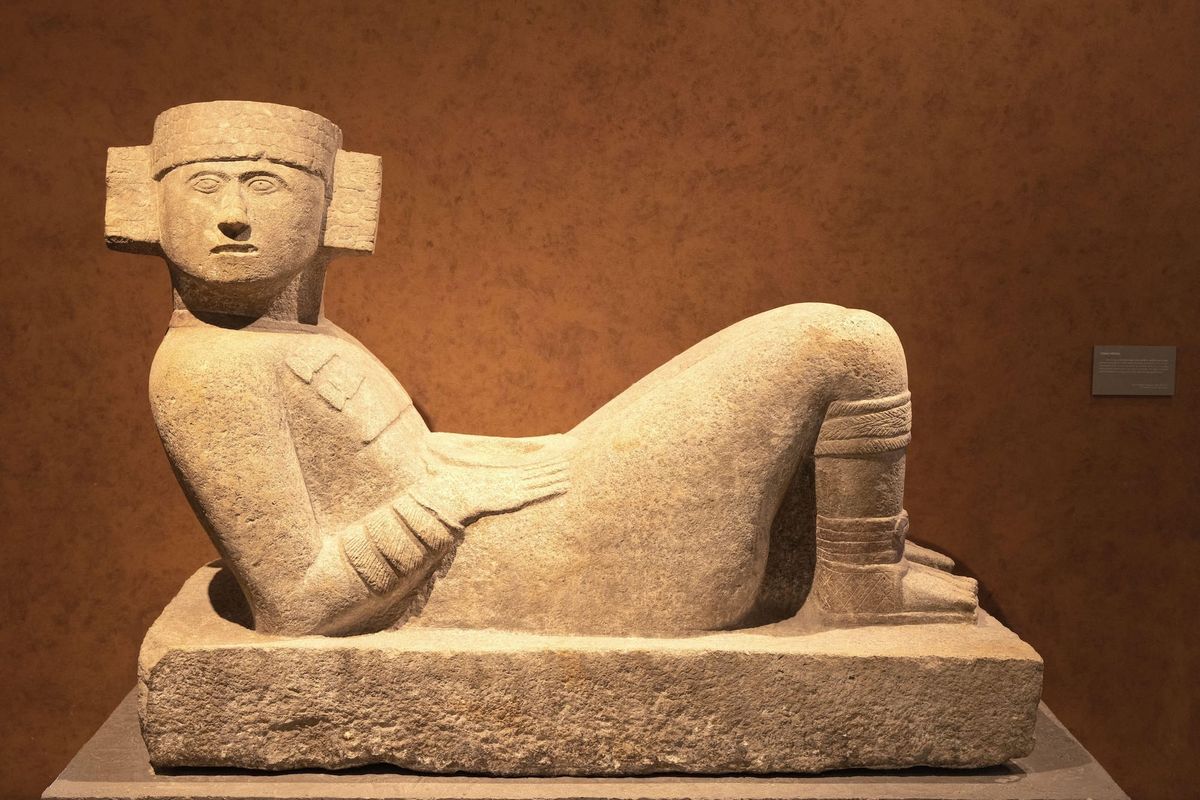
In a 1940 photograph by Man Ray, Academy Award-winning actor Teresa Wright poses misty-eyed alongside an ancient Chacmool sculpture. The reclining figure, with its head contorted toward viewers, offered a refreshed vision of modernity to both Hollywood stars and a growing clientele of collectors and museums interested in pre-colonial art from ancient Mesoamerica. In 1947, for instance, the Minneapolis Institute of Art purchased a “King Chak Mool” for $10,000. That sculpture toured Europe as part of an exhibition from 1958 to 1960 and quickly became a cornerstone of the museum’s collection. Just a decade later, one specialist made a dreaded discovery: The sculpture was a forgery.
This story, and that of the gallerist at its center, is chronicled in Artifacts to Art: Collecting Ancient America in Midcentury L.A. (2026) by Andrew D. Turner, Mary E. Miller, and Khristaan D. Villela. The book elaborates on the various conditions that shifted the classification of “pre-Hispanic” artifacts from anthropological items of study to art objects that could be collected by museums and patrons alike. It also helped answer a question I’ve always had about Los Angeles museums as a curator myself: Why is so much cultural heritage of ancient Central and South America preserved in our city’s collections?
As Artifacts to Art discusses, the Stendahl Art Galleries were a key driver in the illegal looting, smuggling, and sale of these objects to its Los Angeles clientele. The Galleries’ archive is now housed at the Getty Research Institute (which published this book), allowing for a deep investigation into the shady dealings of an art dealer who had little regard for the cultural histories he exploited. Turner, Miller, and Villela present five years of groundbreaking research into that archive here. Over its non-chronological chapters, the book describes the various forces that collided to create a market for these objects, including revered international museums, Hollywood actors, and looters across Mexico.
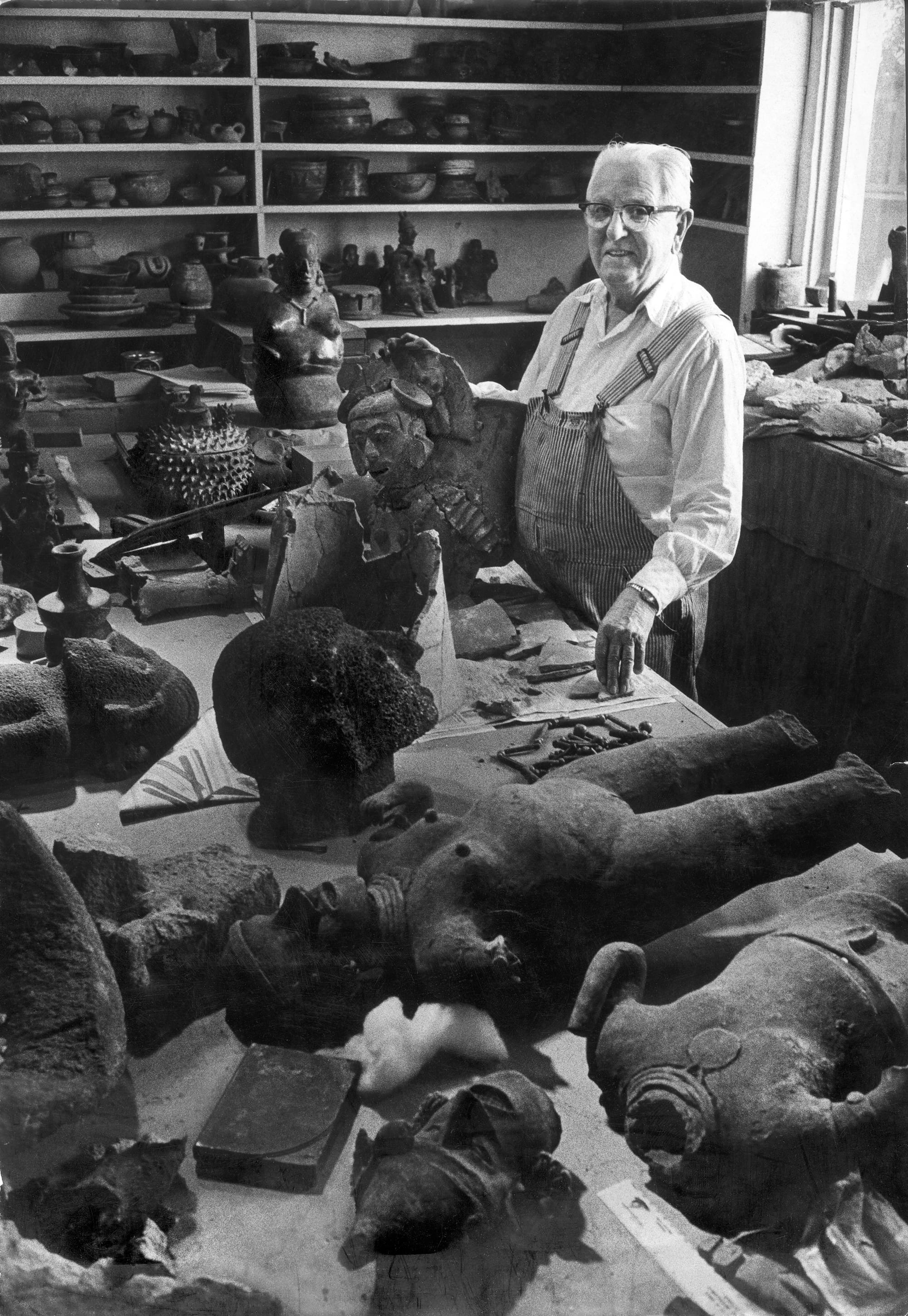
Earl Stendahl began his career as an art dealer by selling paintings on the walls of his restaurant in downtown Los Angeles after relocating from Wisconsin in 1911. By 1921, he was involved in the city’s early development projects and opened the Stendahl Art Galleries at the historic Ambassador Hotel on Wilshire Boulevard, where celebrities and political elite window-shopped the art on offer. In just a few years, Stendahl fostered relationships with dealers, collectors, and artists, which opened pathways for him to exhibit works by Diego Rivera and David Alfaro Siqueiros and led him to stage the only Los Angeles presentation of Pablo Picasso’s “Guernica” (1937) for eleven days in 1939. This display was controversial in the lead-up to World War II, and it also signaled Stendahl’s propensity for risk-taking, especially if it lined his pockets.
As the authors explain, one of the key relationships Stendahl established at the Ambassador Hotel was with the collectors Walter and Louise Arensberg. The couple migrated from New York to Los Angeles and were among the biggest collectors of objects from ancient America, despite never setting foot in Mexico. They were quick to juxtapose Indigenous objects with European avant-garde art in their home; some of these displays were captured in a 1945 Vogue article. This comparison suggested that modernity’s roots were aesthetically connected to an ancient past, while also emphasizing the time between the objects and decentering Europe as the movement’s birthplace. As the Vogue article suggests, it also emphasized the role that Western collectors played in reclassifying “ancient artifacts” as “art.”
Wealthy patrons were just one part of Stendahl’s equation. In 1935, he received a visit from Guillermo Echániz, a Mexican collector, antiquarian, and librarian. The two immediately colluded to steal antiquities from Mexico’s ancient cultural sites, including Jaina, a Maya burial island. Echániz worked with huaqueros, or looters, to extract these objects and smuggle them into the United States. Often, they were altered by Stendahl or fabricated by local artisans in Mexico, a history of which is well documented in Artifacts to Art. The authors articulate the violence of such acts, writing that “it is painful to imagine the looter or dealer defacing, quite literally, the ancient object.” By 1941, Stendahl had amassed an inventory of artifacts, as he notes in a letter to an archaeologist: “You will marvel at the great number of good things I have been able to gather in the past six years.”
