


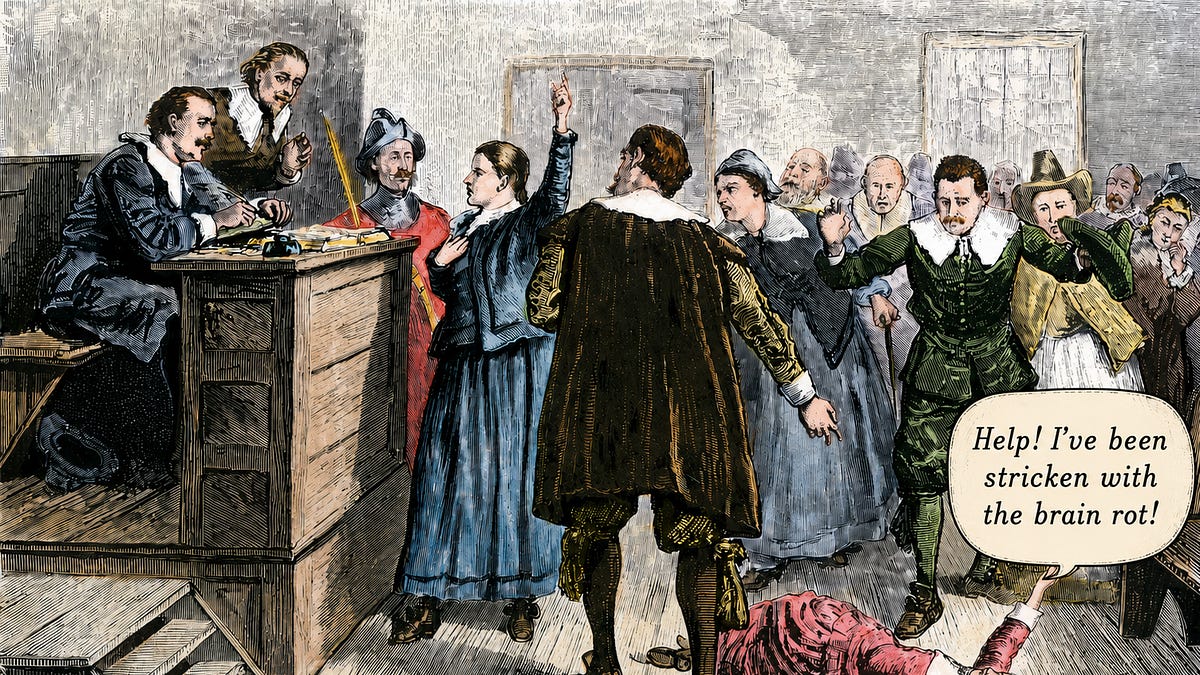
I had started my last post by promising to go into further detail on a paper I co-authored that explored a pedagogical framework for teaching English in the post digital age. I plan on continuing that, but before I did, I wanted to pause and zoom in on a distinction from my last post that I think deserves more elaboration, especially in light of some recently published Atlantic clickbait.
Literacy is having a moment. As someone who has spent a lot of time reading, writing, thinking, researching, and teaching about it, I’ve always wished more people paid attention. Now that they are, I’m realizing being in the spotlight isn’t all it’s cracked up to be. Literacy isn’t just “having a moment” the way close reading is—it’s become the moral panic du jour. Everyone is weighing in, and many of the takes bubbling up in The Discourse™️ are, well, quite bad. So I’ve taken it upon myself to untangle some of the unexamined assumptions and outright misconceptions about the literacy/reading crises (so-called) everyone is up in arms about.
I don’t want to pick on Rose Horowitch but her recent cover story for The Atlantic, “The End of Reading Is Here,” is the Platonic form of pearl clutching clickbait about the decline of reading. If her viral 2024 piece fretted that elite undergraduates couldn’t finish a novel, this one goes civilizational: reading, she argues, is collapsing across every age, gender, and education level—even among the retirees, women, and graduates who used to read most—dragging us back toward the dark ages that came before the written word. She opens, rather ominously, on the ruined Library of Alexandria, and asks whether civilization can outlast a postliterate age. Strip away the overwrought first year grad-student grandiosity though, and you’re left with a fairly standard recipe for articles like this, albeit with her typical Horowitch twist.
“Something something NAEP scores! Something something screens! Something something leisure reading! Something something great books! Something something the humanities! Something something kids these days! Something something I’m not like those other Gen Z’s! I love Proust!”
I don’t want to totally wave away the issues these pieces are gesturing towards, but I’d argue the fear that we’re sliding into a post-literate society rests on a category error that feels endemic at this point. It collapses three distinct but intertwined phenomena into a single apocalyptic narrative that basically argues we’re on the precipice of civilizational collapse because people read Romantasy and Sally Rooney instead of Rilke. Never mind the fact that, as Jeffrey Lawrence discusses in his recent article, these narratives of decline universalize (alleged) trends in the Anglosphere by making sweeping epochal statements about technological change instead of grappling with more regionalized cultural, political, material, educational etc. issues that are actually influencing them.
To unpack these shifts—regionalized though they may be—I’ve boiled my swirl of thoughts into three theses on the so-called literacy crisis informed by my research on literacy, English education, and literary studies. Together, they aim to reframe the debate away from generalized decline and toward the more specific institutional, curricular, and disciplinary conditions that shape how literacy is practiced, valued, and measured.
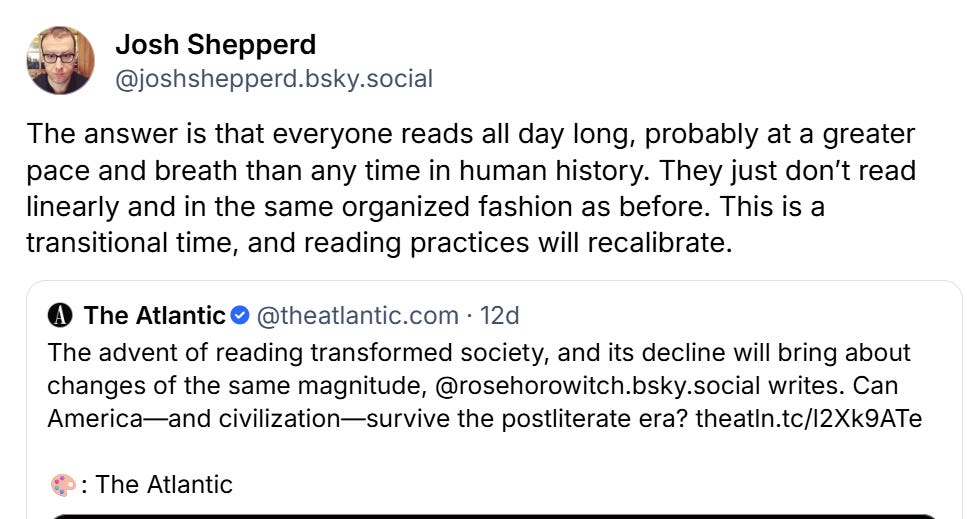
Most people understand literacy to be the capacity to read and write the written word. That is a not-wrong-but-very-limited definition underpinned by cognitivist conceptions of literacy. In other words, it treats literacy as a limited set of cognitive skills that individual readers deploy to decode or produce written communication. For a long time this was the dominant definition within most scholarly circles, too. Starting in the mid-1980s, however, a series of studies from cognitive psychology, sociolinguistics, and anthropology emerged that problematized the assumptions that model was built upon.
Despite the different nature of these fields, they converged on some shared conclusions—the most foundational being that literacy is entangled in the discursive, cultural, and linguistic contexts in which it occurs. Literacy isn’t just something that happens in the head; it happens in the world. It is cognitive and social. We aren’t brains in vats decoding text. We are embodied beings embedded in communities that are themselves embedded in particular geographical places and digital spaces—and those contexts shape what meanings we make, how we make them, and whether or not they’re legible to others. In other words, literacy is not stagnant or singular. It is contextual, multivariate, and shaped by tools and technology we use to communicate.
This more expansive view of literacy includes a range of distinct, though sometimes overlapping or nested, practices. Basic decoding, navigating a social media platform, performing a close reading, producing a video essay, and writing academic research all draw on different combinations of knowledge, conventions, and purposes. Because these practices are so contextual and entangled, no single high-stakes test or definition can fully capture or measure how people actually read, write, interpret, and participate in contemporary social and academic life. So, due to the difficulty that comes with quantifying all the richness of literacy broadly conceived, we boil it down to a single score based on a narrow and decontextualized conception of reading comprehension.
Consider the nested and divergent forms of literacy required for a 19-year-old trying to participate in the democratic process as an informed citizen today. When a major policy debate or breaking news event unfolds online, they cross-reference short-form video analysis, parse hyperlinked primary sources, evaluate the credibility and rhetorical posture of algorithmic feeds, and weigh the consensus within a comment section. Modern civic life relies on this real-time, multimodal synthesis—a sophisticated form of critical literacy that demands rapid evaluation of audience, subtext, bias, and platform architecture. Traditional standardized assessments evaluate responses to isolated prose passages, leaving this crucial dimension of democratic participation completely invisible.
What we are experiencing, then, is a shift in the reading, writing, and meaning making practices that are required, cultivated, valued, and used to navigate our increasingly fractured informational ecosystem. As argued by David Wallace-Wells’s response to Horowitch’s article, the data on students reading habits doesn’t support the decline narrative as cleanly as its often made out to be. They just might be reading different texts in ways that don’t overlap with decontextualized reading comprehension tests or 11th-grade AP Language homework assignments. The goal of this reframing is not meant to glibly dismiss concerns about literacy rates. Nor is it to celebrate these shifts into more distributed and digital forms of literacy—especially considering the role that a handful of tech oligarchs play in engineering the privatized platforms that now dictate how we communicate, replacing shared public infrastructure with black-box algorithms engineered to extract profit and data from us.
My hope for this thesis is to remind folks that literacy has always evolved with technology. The difference today is that our informational ecosystem has outgrown our definitions and models of assessment. If we cling to a purely cognitivist view of literacy, we risk misdiagnosing the problem: blaming individual students decoding and reading fluency for much more complex and pernicious shortcomings in our educational imagination, curricular design, educational policy, political will and collective ability to design new social futures.
This reframing raises new questions: What kinds of literacy are we actually measuring when we talk about reading scores? What literacies count as valuable, and who gets to decide? What do narrow assessments miss about how students read, write, and make meaning in real contexts and how can we develop a more robust understanding of what their scoring actually means? And how do institutions shape the very definitions we use to describe literacy in the first place?
Has anything ever erased fine grained distinctions quite like the algorithmic social media feed—except, perhaps, a moral panic about the children? Part of the problem with these arguments (particularly Horowitch’s) is it treats 2nd graders’ struggles with decoding fluency, high schoolers inability to complete reading homework, undergrads misreading Dickens, and the leisure habits of retirees as a single phenomena—The Death of Reading. The issue is, these are all actually quite distinct problems and failing to account for the differences has and will continue to lead to a lot of pernicious policies, pedagogies, and prognosticating. I’ll do my best to untangle them here.
Basic literacy is the set of foundational reading and writing skills—especially decoding, word recognition, fluency, and literal comprehension—that support reading across contexts. A student calls on these skills while reading a cereal box or Faulkner, which is why the early grades can teach them as general-purpose equipment and why, once secured, they recede below the threshold of a reader’s notice. This is the narrowest slice of literacy, and it is also the portion most often cited and misread in public debate about K-12 literacy rates. While it is true that phonics-based approaches are an important part of cultivating students basic literacy and there were a number of popular literacy programs that neglected to include them, the whiplash has gotten completely out of hand. Some of the policies and programs being foisted on teachers are even being denounced by scholars, like Mark Seidenberg, whose research helped inspire the science of reading movement.
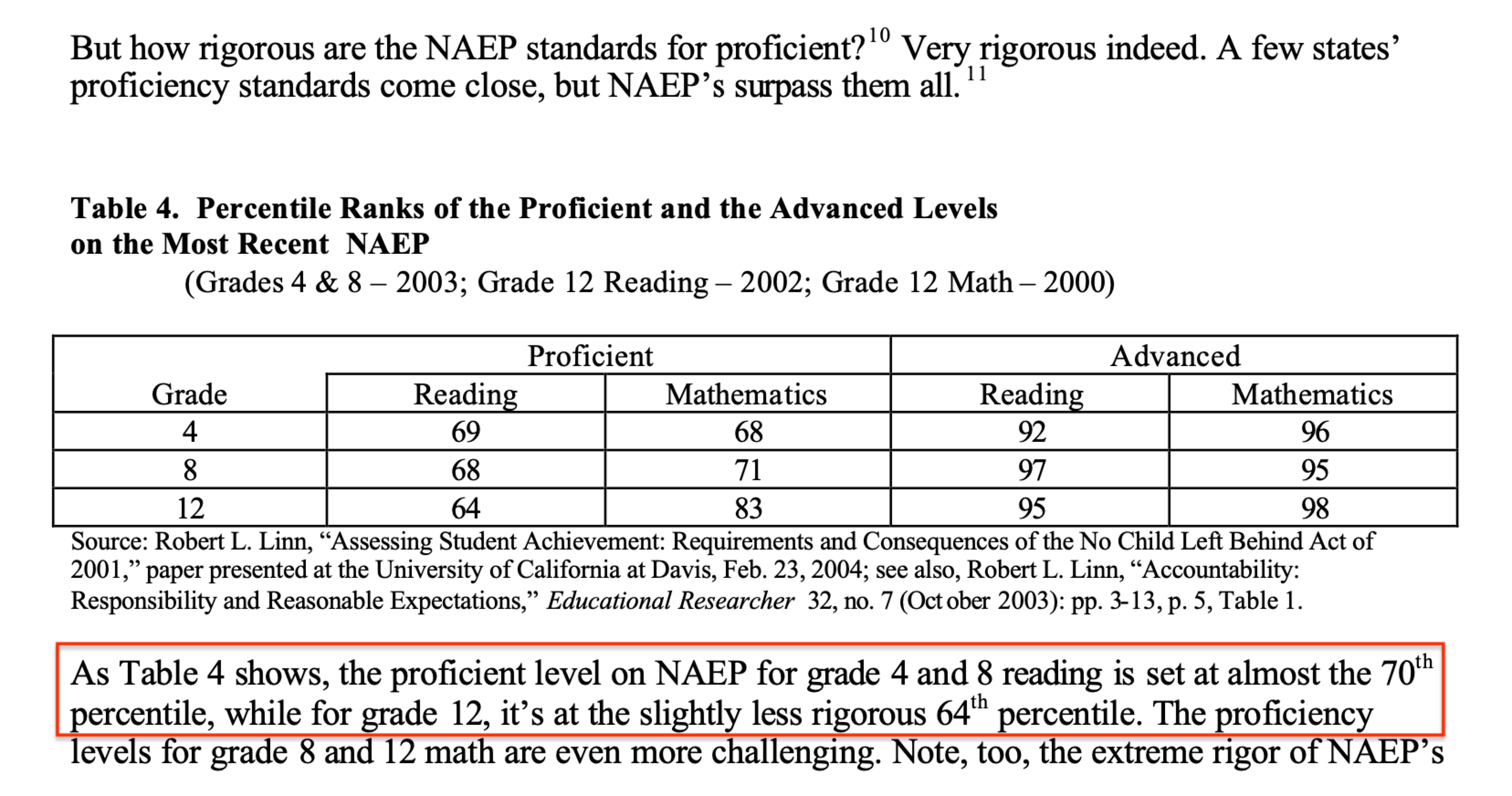
When NAEP scores fall, it is tempting to read the drop as proof of a national reading collapse, but that interpretation often says more about the politics of measurement than about children’s actual reading lives. P.L. Thomas has argued that NAEP’s “proficient” benchmark is widely misread as grade level, even though NAEP itself distinguishes it from grade-level expectations and defines it as solid academic performance over challenging subject matter. In that sense, a large share of students landing below “proficient” shouldn’t come as a surprise. This then leads to lay readers mistaking an aspirational benchmark for basic literacy. In other words, when the data states that “only 33% of 4th graders are Proficient,” the public hears: “67% of American children are illiterate!” I’m not saying that NAEP scores are useless or evil. I’m saying that NAEP scores are a thin slice of poorly understood data that is often used to gin up moral panic and authorize the use of crisis language and punitive reform.
Rachael Gabriel’s critique of the science-of-reading turn highlights a related concern: public discourse often bundles foundational reading instruction, curriculum, and vendor-driven reform into a single solution-driven story, as though one branded program could answer every literacy problem. This creates cycles of panic driven reform in various districts and states and is a lovely market opportunity for rent-seeking EdTech companies and silver bullet curriculum shills. The deeper issue, in both cases, is less about the disappearance of individual cognitive skills and more about but the long term impact of an unwillingness to invest in robust research, school or district created curriculum, professional development, programs that partner teachers and policymakers, and plenty more besides. All of this leads to political and institutional failures being cast as purely pedagogical problems, which then incentivizes teaching in obscenely instrumentalized (and sometimes even dehumanizing) ways to earn the scores required to prove teachers and students are “doing their jobs.” There was a fantastic article that came out just yesterday in Wired Magazine using literacy and educational policy in Mississippi to explore this dynamic in more depth.
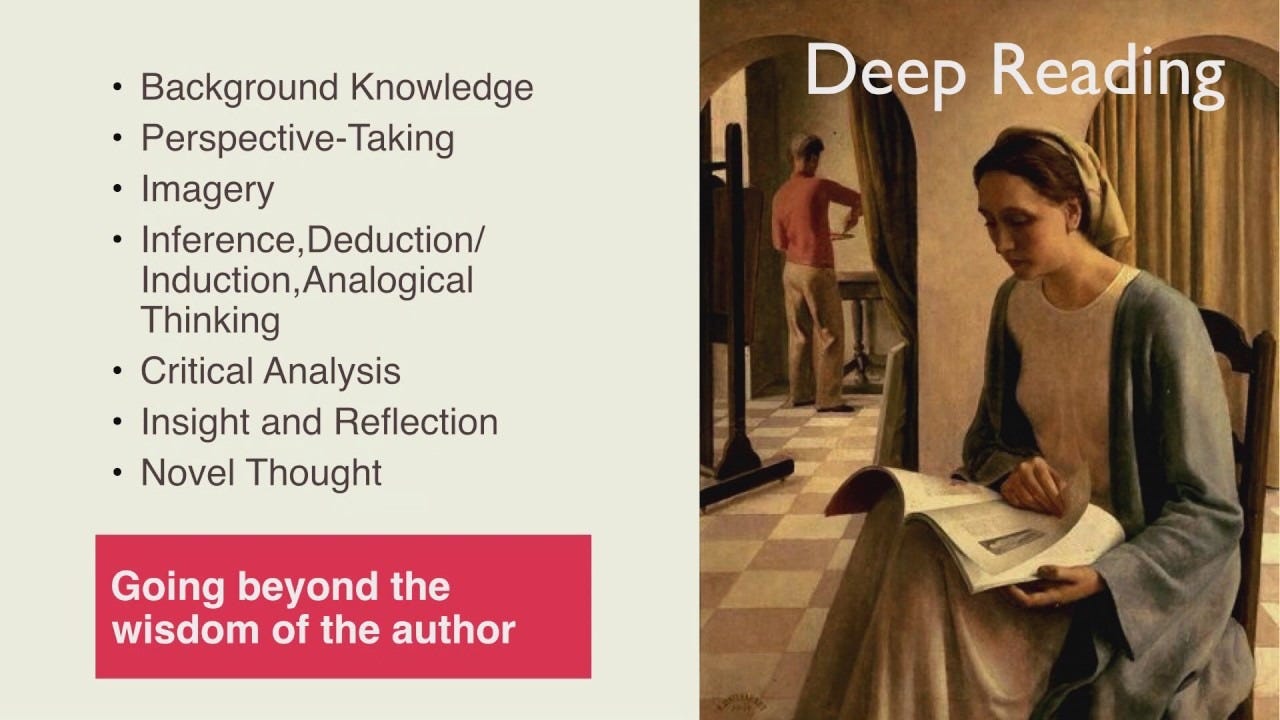
Basic literacy serves as the foundation for a much larger apparatus: the cognitive and sociopolitical infrastructure of print culture. This infrastructure allowed for the cultivation of habits of attention, inference, curation, and public reasoning that mass print culture was able to scale and normalize over time. Schools, libraries, publishers, newspapers, and universities did not merely distribute text to mass audiences; they stabilized ways of knowing through text. A lot of the moral panic about the death of reading or the decline in literacy rates is actually an expression of anxiety about the erosion of the broader print-based social, civic, and educational arrangements that have come to define modern life. I know I’ve been fairly sanguine about the other crisis narratives thus far, but this one really concerns me for reasons I’ll explain further in Thesis #3.
Maryanne Wolf’s account of deep reading, alongside N. Katherine Hayles’s distinction between deep and hyper attention, helps clarify what is at stake in the current shift from print-based reasoning to more fragmented navigation of media environments. For these scholars, particularly Hayles, digital technology is neither good nor bad. I should note that, while it may be a popular phrase, it is not a neutral tool either. Like all tools it is made for particular purposes which shape how it is used and that use influences us in return. In essence, using different forms of media cultivates different cognitive habits, including different modes of empathy and reflection. That is why, despite the fact I think the expansion of literacy across new modes and networks to be a generative development over the last half-century or so, I also must issue a caution: the institutions and print-heavy media ecologies that historically sustained deep reading have also sustained the necessary forms of deliberate public reasoning, extended argumentation, and the disciplined attention that play a vital role in a flourishing democracy. New modes, mediums, and methods should supplement and renew our older print practices, not replace them whole sale. We live in an age of transition and should respond in kind. Print literacy is not natural and has never been inevitable, but that doesn’t mean we have to embrace its demise.
Jeff Jarvis makes a complementary historical argument in The Gutenberg Parenthesis, treating the print era as a bounded communication regime rather than a timeless norm. Together, they help clarify that what is at stake is not just whether people can decode print, but whether the institutional and medial conditions that made print-based reasoning durable will hold. When those institutional supports weaken, reading becomes easier to fragment into isolated acts of consumption rather than a shared practice of interpretation, discernment, and public judgment. The consequence is as political as it is educational: the conditions that support informed citizenship, deliberation, and collective life become easier to erode for those who would capture and monetize our individual attention and shared infrastructure.
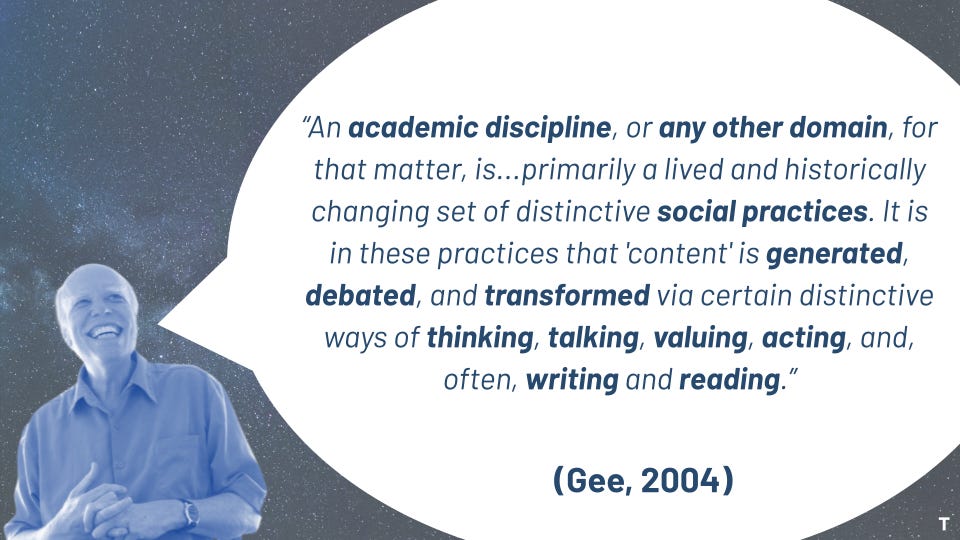
If basic literacy provides the foundation and print culture supplies the broader cognitive and institutional infrastructure, then literary studies represents a third, far more specialized layer: a set of historically sedimented, discipline-specific practices for interpreting texts and producing knowledge. These are not synonymous with “reading” in the basic literacy sense, even though public discourse routinely treats them as such—which is the problem I hope to describe in this thesis.
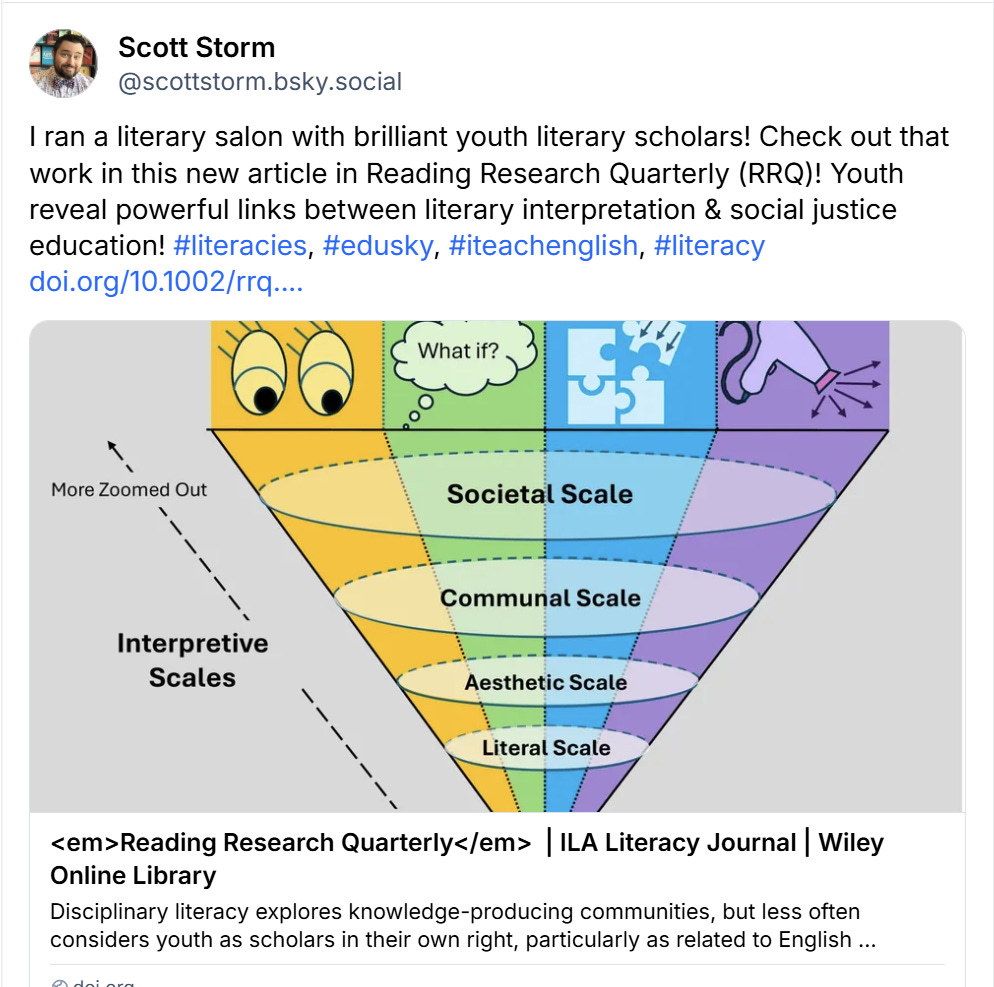
As scholars of disciplinary literacy have long argued, and as Gee describes above, all academic disciplines organize knowledge, curate evidence, conduct research, and formulate arguments differently—even if there is occasional borrowing and remixing; literary studies is no exception to either of those realities. If that sounds overly abstract for you, here’s a resource I provide for my students based on my friend and colleague Scott Storm’s research with fellow disciplinary literacy researcher Emily Rainey that attempts to offer a one page primer on what it means to “do English” (or at least do literary studies).
Literary reading, as it is cultivated in secondary and postsecondary English classrooms, involves particular habits of attention and interpretation that are socially constitutive with the discipline of literary studies. Practices like close reading, attending to form, situating texts within historical and theoretical contexts, tracking figurative language, or making intertextual connections are learned conventions produced by members of literary studies. They are the product of specific institutional histories and intellectual traditions that were developed in order to help the field of literary studies continue to produce knowledge. That means that they were not designed to be turned into standardized tests whose scores become a proxy for intelligence or worthiness. It also means that they are not natural skills that one is born with—or perhaps more importantly—without. They are communities that we must apprentice students into if we want them to have a future.
This is where much of the contemporary panic confuse students ability to decode and comprehend text with students’ ability to successfully take up the scholarly tools and practices of literary studies. When commentators lament that students “can’t read,” what they often mean (though never specify) is that students are not engaging in texts in ways that resemble the interpretive practices valued within literary studies. That’s why we should ask whether they are literate in a particular discourse instead of asking if they are literate full stop. When students, especially high school and college students, struggle to interpret literary texts, claim it’s impossible to analyze a poem, or assume that dinosaurs are literally swimming through the muddy streets of London when they read Dickens, it is not a failure to deploy the cognitive skills necessary to decode and comprehend the written word, it is an expression of the fact they are not literate in the discourse of literary studies. Expressed another way, college students can read, but they very well may not be able to read like a literary scholar, historian, philosopher, or even as a knowledge-seeking student. That is why, if we’re going to talk about pedagogical approaches that might alleviate some of these issues, we need a much more robust conversation about disciplinary literacy instruction in K-16 education.
While I’m more optimistic about the prospects and benefits of teaching these literary practices than he is, I found Aaron R. Hanlon. Hanlon’s post historicizing and labeling these interpretive practices as a form of modernism to be really compelling. While he comes at it from a different angle and scholarly tradition, his argument usefully converges with disciplinary literacy scholarship in showing that literary interpretation is not a timeless or natural capacity, but a historically produced set of reading practices organized by institutions, methods, and interpretive norms.
To be clear, just because I think histrionic op-ed writers in The Atlantic misdiagnose an erosion of literary culture as mass illiteracy doesn’t mean I’m okay with it. In fact, a large part of my research is built on apprenticing students into these disciplinary communities in ways that hopefully allow them to participate, critique, and renew them. I am incredibly committed to their continued existence and flourishing—which is why I think it’s vital we accurately diagnose why secondary teachers feel cut off from them and students often struggle to feel part of them.
What worries me most, then, is not simply that people are reading less, or reading differently, or moving across more fragmented media environments. It is the way those shifts are being interpreted as a self-evident civilizational decline rather than as symptoms of deeper transformations in the institutions and infrastructures that have historically organized literacy. Reading has never existed in a vacuum. It has always been social and communal. It has always depended on schools, libraries, publishing systems, journals, curricula, and civic institutions that taught people how to use reading as a mode of shared reasoning, critique, and public life. It has always been changing and evolving alongside our tools and technology.
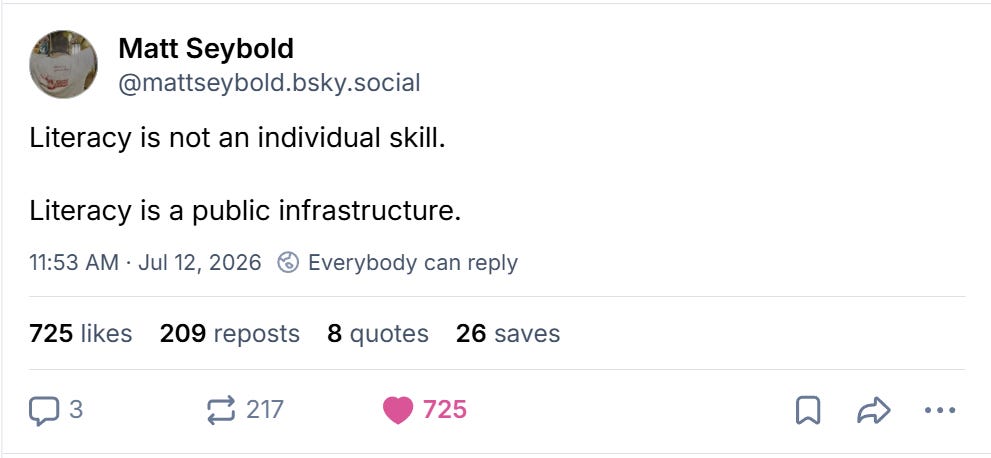
That is why I found Matt Seybold’s post so compelling. As I discussed earlier, I’m well aware that literacy is a social practice rather than an individual skill. What I hadn’t considered as deeply, however, was how many of the communities cultivating those practices rely on public infrastructure to function, thrive, and grow. Crucially for my work, this principle applies across domains that may feel quite different at first blush: digital communities rely on a free and open internet to leverage platform affordances, while disciplinary communities depend on institutional funding to advance scholarly work and invite new voices into the conversation. Whether it is the fiber-optic cable laid in the ground or the English department on a state university campus, these shared practices ultimately depend on a material commons.
By moving beyond literacy as an individual skill or communal practice and conceiving of it as public infrastructure, the terms of the discussion broaden. The central question goes beyond whether people are personally “failing” at literacy in some abstract sense and asks what social, political, and economic forces are weakening the environments that make sustained reading, interpretation, and deliberation possible. Is it the existence of screens and social media that is eroding our focus and cognitive capacities? Or is it the ways they are being deployed to harvest, capture, and monetize our attention? Or perhaps, leaving screens aside for a moment, is it that the precarity and hyper-optimization that structures the the long tail of neoliberalism have bled us of the time and attention required for deep reading?
Are students no longer capable of or interested in intensive literary study? Or have regimes of corporate-owned standardized testing alienated them from the discipline before they ever pick a major? Perhaps most damningly, have the anti-intellectual narratives used to gut humanities departments and siphon students into career-minded pseudo-majors scared a generation away from seeing English as a viable pursuit? As Christopher Newfield has passionately argued, this “crisis of interest” would be more accurately understood as the result of treating public education as a private commodity rather than a public good built on adequately funded public infrastructure.
If one considers these questions, it becomes clear that there very well may be a literacy crisis but the reasons for it are much deeper than individual students ability to decode print or interpret Chaucer. The true crisis is that the conditions that once stabilized literacy have been systematically undermined by those who wish to enclose it, privatize it, and own it for themselves. Look no further than the DOGE-led gutting of NEH grants, which went beyond the usual forms of fiscal austerity and became an assault on the institutions and scholarly work that make mass literacy and critical inquiry possible.
To borrow Matt’s phrasing one final time, if we want to move past this unproductive cycle of moral panics, we have to stop treating literacy as an isolated individual skill and start treating it as a public infrastructure. That means we must simultaneously fight like hell to preserve the existing institutions, structures, epistemologies, and practices that our last few centuries of print literacy have provided while also preparing students for the ways literacy is changing. I know some see those as antithetical goals, but I regard them as dialectical and plan on continuing to explore and theorize about how that might look in educational contexts. I simply refuse to cede the future, technology, and/or media to the forces who think they own them by right. New literacies and print literacies might be different, but they do not have to be at odds with one another.
That brings me back to the promise I made at the start of this post. Now that we’ve untangled these three distinct phenomena, I can finally turn toward solutions I’m more qualified to talk about. In my next piece, I’ll pick this thread back up to share the pedagogical framework my co-authors and I developed—a practical roadmap for what it looks like to teach English, reading, and critical inquiry in the post-digital age. Stay tuned.
