


The U.S. robotics market serving packaging and processing was worth more than $440 million in 2025 and is projected to nearly double in the next five years, reaching approximately $800 million by 2031 and representing a 10.3% compound annual growth rate, a report says.
That forecast comes from a study produced by PMMI, The Association for Packaging and Processing Technologies, and by market intelligence firm Interact Analysis.
The bulk of that fast growth will be generated by mobile robots, researchers said. Industrial robots represented 63% of the market in 2025, followed by mobile robots at 32% and collaborative robots at 5%. By 2031, mobile robots are forecast to become the largest segment, reaching a 45% market share. The report also anticipates that humanoid robots, currently a small and largely pilot-stage segment, will grow from 0.1% to 5% of the market by 2031.
“Robotics adoption is moving from targeted applications toward a broader role in packaging and processing operations,” says Jorge Izquierdo, vice president, market development, PMMI. “The research shows that end users are looking beyond labor availability alone. They are prioritizing measurable gains in throughput, cost, quality, and consistency — and they expect reliable systems, strong service, and a clear path to ROI.”
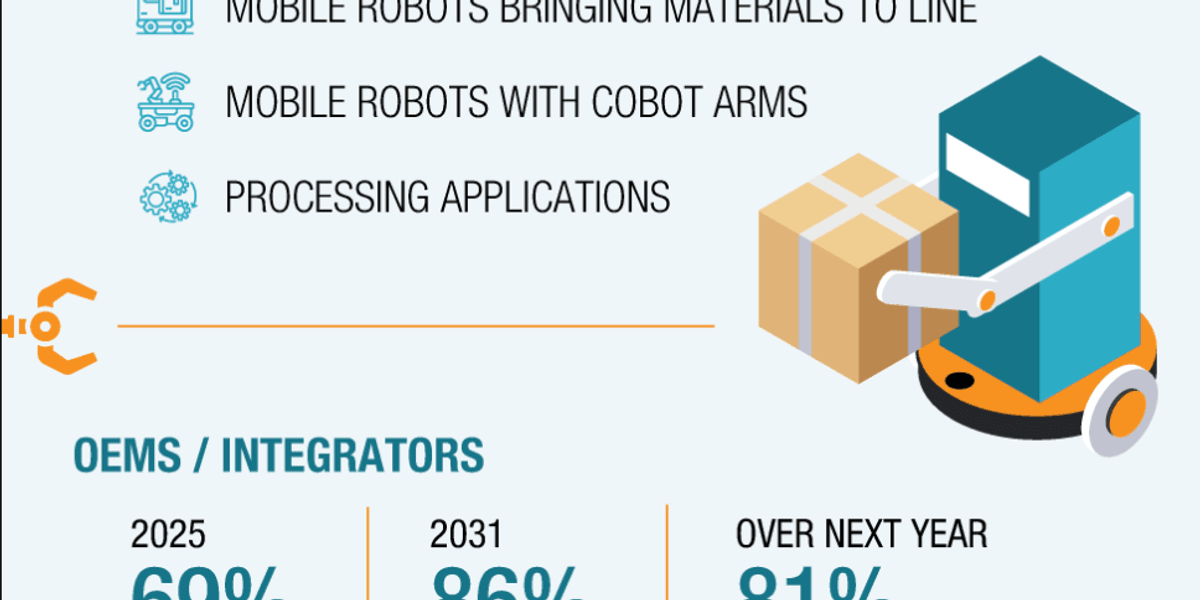
Market optimism for the technology is high. Among end users surveyed, 72% currently use robotics; that figure is expected to climb to 95% by 2031. Sixty-one percent expect to increase robotics investment over the next year. Momentum is similarly strong among OEMs and integrators: 69% currently include robotics in their portfolios, 86% expect to do so by 2031, and 81% anticipate increasing investment over the next year.
The top three drivers of robot adoption by end users are: increasing throughput and productivity, reducing costs, and improving quality and consistency. But the report also identified three persistent hurdles: high upfront cost, integration with existing equipment and systems, and maintenance and service support concerns.
