

Why Do Russians Produce So Many Musical Geniuses But Can’t Seem to Produce a Decent Smartphone? — The Nightingale’s Sonata

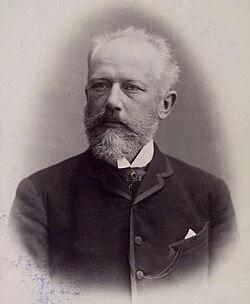
In his book, Graham pointed out that one of the most prevalent theories of why this dichotomy exists is plain wrong. Many people blame it on politics and the long history of Russian and Soviet repression. The problem with this theory is that such repression had been universal in the country—that is, it touched the arts as well as the sciences. According to Graham, “it turns out that some of the most politically repressed authors and composers in Russian history were not only the most creative, but became the best known.”[iii] One can point to Pushkin, Dostoevsky, Solzhenitsyn, Mussorgsky, and Shostakovich among many others whose careers were constantly oppressed by censors and the secret police, yet who became international sensations. Oppression, it turns out, was an equal opportunity hardship in Russia and the Soviet Union, and it was experienced across all creative occupations.
It’s Not Enough to Invent Something
So what is the explanation for why the results of invention in the arts and sciences in Russia are so different? In the arts, writing a great book or a symphony is often sufficient. The creator in many cases does not have to do anything more. In time, when the work sees the light of day and assuming it is truly great, it will ultimately be embraced, even internationally.
In the area of science and technology, however, it is not enough simply to invent something. If you wish it to become a commercially viable product and internationally accepted, the idea itself is not sufficient. There are many important steps that must be achieved and a nation must have various legal, financial, and marketing systems in place to lead a product to widespread acceptance and viability.
An invention comes into the world in an incomplete form. It becomes a widely accepted material construction only with a host of sustaining factors. Some of these include:
-
A stable research facility, often located within a large corporation, designed for the invention’s development and improvement.
-
Investors who trade patience with their money for the possibility that their investments will multiply many-fold over time.
-
Legal protections within a just system of laws including a robust patent system.
-
A chain of distributors.
-
Advertising support.
-
A reliable insurance and credit system.
-
A risk-tolerant culture experienced with the pay-offs of such a system of supports.
Graham offers the example of the transistor that many believe was invented in 1947 in the U.S. at Bell Laboratories. In truth, a quarter century earlier, it was a lone Russian, Oleg Losev, who developed transistors and diodes in the 1920s. Working alone, without the support of an industrial research laboratory, without investors (since private investors did not exist in Soviet Russia), without advertising (forbidden in the country at the time), and without a patent system that guaranteed a financial return for his invention, he simply was unable to develop and sell the product he had invented.
Technological Innovation & Timing
Another key difference between the arts and technology has to do with timing. In the arts, masterpieces can languish for a long time, but when they appear years or even decades later, they can then receive the approbation and admiration of the world, even after the creators’ deaths. Technological innovation does not enjoy the same luxury of being able to wait. If an inventor misses a time window to turn an idea into a commercially viable product, others will step in and take advantage of market demand.
